Castle Rushen — Isle of Man castle

Castle Rushen

Castle Rushen in Castletown, Isle of Man
Castletown, Isle of Man, Isle of Man
High Medieval (11th–13th c.)
Well Preserved

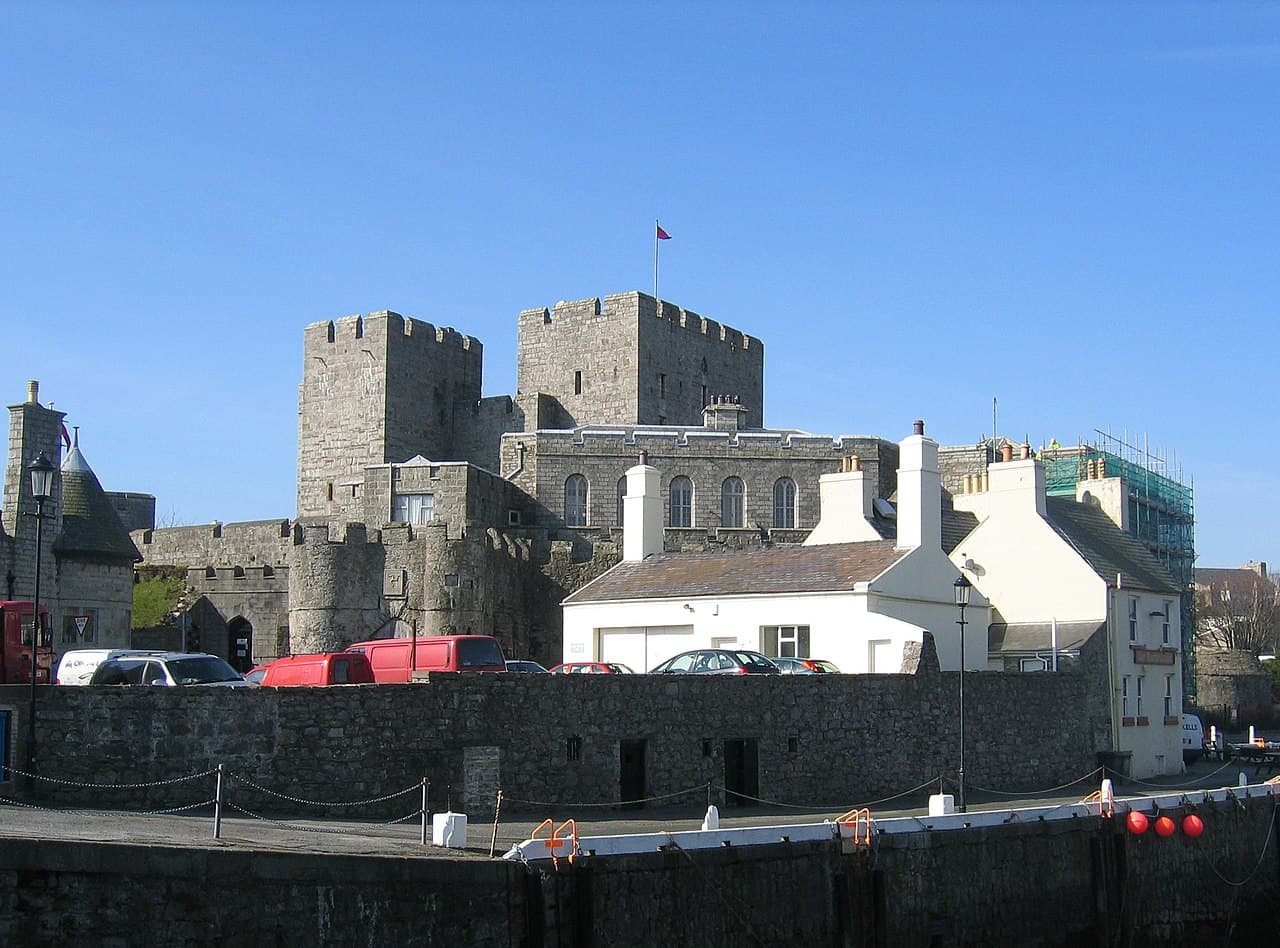
Castle Rushen (Manx: Cashtal Rosien) stands prominently in Castletown, the historic capital of the Isle of Man. Constructed in the 13th century, this hill castle is one of the finest surviving examples of medieval military architecture in Europe. Its strategic position overlooking the Market Square and the harbour highlights its historical importance in controlling trade and defense on the island.

Historical background and significance

Originally built by the Norse rulers of the Isle of Man, Castle Rushen was designed to serve as a stronghold and administrative center. Over the centuries, it was expanded and reinforced by successive rulers, including the Scottish and English monarchs, reflecting the island's complex political history. The castle played a central role in the island's governance and defense during the High Medieval period and beyond.

Architectural features and layout

The castle's layout is roughly triangular, enclosed by thick stone curtain walls with multiple towers and battlements that provided vantage points for archers and lookouts. The most prominent feature is the massive keep, which served as the last line of defense and housed the lord's chambers. The walls are punctuated by arrow slits and gun loops, showcasing adaptations for evolving military technology over the centuries.

Defensive structures

Castle Rushen is surrounded by a deep moat and a well-preserved gatehouse that controlled access to the inner wards. The castle's fortifications include a barbican and a series of defensive walls designed to repel attackers. The curtain walls are reinforced with towers at key points, enhancing the castle's defensive capabilities.

Interior and functional spaces

Inside, the castle contains a range of functional spaces, including a great hall, kitchens, storerooms, and prison cells. The great hall was used for official ceremonies and gatherings, while the dungeons beneath the castle held prisoners. The castle also housed administrative offices and living quarters, reflecting its role as a center of power.

Restoration and current use

Today, Castle Rushen is well preserved and maintained as a museum and educational center. Visitors can explore the castle's extensive grounds, towers, and chambers, gaining insight into medieval life and the island's history. The castle hosts exhibitions on local history, medieval warfare, and archaeology, making it a key cultural attraction on the Isle of Man.

Visiting information and cultural importance

The castle's location in the heart of Castletown makes it easily accessible to visitors. It is open to the public for most of the year, offering guided tours and interactive displays. Its status as one of the best-preserved medieval castles in Europe underscores its importance as a heritage site and a symbol of the Isle of Man's unique history.

Frequently asked questions (FAQ)

What is the historical significance of Castle Rushen?
Castle Rushen is one of the best-preserved medieval castles in the Isle of Man, with origins dating back to the 11th century. It served as a royal fortress and the residence of the Kings of Mann, playing a crucial role in the island's history and governance.
When was Castle Rushen built?
Castle Rushen was originally constructed in the 11th century and underwent several expansions and renovations over the centuries, particularly during the 13th and 14th centuries. Its structure reflects the architectural styles of medieval fortifications.
What are the opening hours for Castle Rushen?
Castle Rushen is typically open to visitors from April to October, with varying hours during the peak season. It is advisable to check the official website for the most current opening times and any seasonal changes.
Can I purchase tickets online for Castle Rushen?
Yes, you can purchase tickets online for Castle Rushen through the Isle of Man Government's official heritage website. Buying tickets in advance is recommended, especially during peak tourist seasons, to ensure a smooth visit.
Is it possible to access Castle Rushen with a wheelchair?
Castle Rushen strives to be accessible to all visitors, with some areas equipped for wheelchair access. However, due to the castle's historical structure, certain parts may have limitations, so it's best to inquire about specific access needs before your visit.
What is the best time to visit Castle Rushen?
The best time to visit Castle Rushen is during the warmer months from late spring to early autumn when the weather is generally mild and pleasant. Additionally, visiting during weekdays can help avoid larger crowds.
Are there any nearby attractions to visit after Castle Rushen?
Yes, after visiting Castle Rushen, you can explore nearby attractions such as the Nautical Museum and the picturesque Castletown Harbour. The area also offers charming shops and restaurants to enhance your experience.
How do I get to Castle Rushen from the Isle of Man airport?
Castle Rushen is approximately 15 miles from the Isle of Man Airport, and you can reach it by car or public transport. There are bus services available that connect the airport to Castletown, providing a convenient option for visitors.
What are the ticket prices for visiting Castle Rushen?
Ticket prices for Castle Rushen vary depending on age and concessionary rates, typically ranging from £5 for adults to £3 for children. Family tickets and discounts for seniors may also be available, so it's wise to check the website for the latest pricing information.

Photo gallery

Castle Rushen
Click to view

Photo by Manxruler•CC BY-SA 3.0

1 photo • Click any image to view in full screen

Information

Hill Castle

Loading map...

Visitor reviews

No reviews yet. Been here? Write the first review and help other travelers!

Write the first review

Visited this castle? Share your experience

Your review helps other travelers and adds first-hand knowledge to our encyclopedia.

Write a review

(5/5)

0/2000 characters

Your review will be visible after admin approval

Nearby castles

0 km

Castle Rushen

Castletown, United Kingdom

Castle Rushen stands prominently in Castletown, the historic capital of the Isle of Man. It is widely regarded as one of the best-preserved medieval castles in the British Isles, notable for its enduring role as a court house, museum, and educational centre. The castle's origins trace back to the late 12th century and early 13th century, during the reigns of the Kings of Mann and the Isles, although the exact date of its initial construction remains uncertain.The original structure of Castle Rushen consisted of a central square stone keep, strategically situated to guard the entrance to the Silver Burn, a vital waterway. Over the centuries, the castle underwent continuous development and expansion under successive rulers from the 13th to the 16th century. By 1313, the keep was fortified with additional towers to the west and south, enhancing its defensive capabilities. The 14th century saw the addition of a prominent east tower, imposing gatehouses, and a robust curtain wall, which together formed a formidable defensive complex.Architectural features and defensive designThe castle's limestone walls dominate the surrounding landscape, reflecting its historical importance as a seat of power. The curtain wall encloses a large courtyard and integrates multiple towers that provided vantage points for surveillance and defense. The gatehouses controlled access and were designed to withstand sieges, incorporating features such as murder holes and portcullises. The central keep served as the last line of defense and housed the lord's chambers and administrative offices.Castle Rushen's design exemplifies the high medieval military architecture typical of the British Isles, combining both defensive strength and residential functionality. The castle's location near the coast and its control over the Silver Burn made it a strategic asset for controlling trade and military movements on the island.Historical context and ownershipThroughout its history, Castle Rushen changed hands multiple times amid the complex political struggles involving the Kings of Mann, the Norwegian crown, and later the English monarchy. In the late 13th century, the English king Edward I Longshanks asserted his claim over the Isle of Man, stating it had long belonged to the English crown. This claim was solidified through military and political means, with Castle Rushen serving as the administrative and military center of English authority on the island.During the 18th century, the castle's military importance declined, and it gradually fell into disrepair. By the end of the century, it was repurposed as a prison, a function it retained well into the 19th century. Despite its use as a penal institution, the castle's condition worsened until the early 20th century.Restoration and modern useThe restoration of Castle Rushen began under the supervision of George Somerset, 3rd Baron Raglan, the Lieutenant Governor of the Isle of Man, around the turn of the 20th century. This effort aimed to preserve the castle's historic fabric and adapt it for public use. Following the completion of the nearby Victoria Road Prison in 1891, Castle Rushen ceased to function as a prison and was eventually transferred from the British Crown to the Isle of Man Government in 1929.Today, Castle Rushen is managed by Manx National Heritage and operates as a museum dedicated to the history of the Kings and Lords of Mann. Visitors can explore most of the castle's rooms during the open season from March to October. The museum features detailed exhibits, including a working medieval kitchen where authentic period food is prepared on special occasions. Regular reenactments bring medieval life to the fore, with a focus on educating local children about their heritage.Archaeological excavations conducted in the 1980s uncovered numerous artifacts, which are displayed within the castle and used as educational tools. These finds provide valuable insights into the castle's construction phases, daily life, and the broader history of the Isle of Man.Cultural significance and visitor experienceCastle Rushen remains a key cultural landmark on the Isle of Man, symbolizing the island's medieval past and its complex political history. The castle's architecture offers a tangible connection to the high medieval period, illustrating the evolution of military and residential design over several centuries. Its preservation as a museum allows visitors to engage deeply with the historical narrative of the region.The castle's location in Castletown provides easy access for tourists, and its well-maintained grounds and informative signage enhance the visitor experience. Educational programs and interactive displays contribute to a comprehensive understanding of the castle's role in the island's history.

High Medieval (11th–13th c.)
Details
14.6 km

Tower of Refuge

Douglas, United Kingdom

The Tower of Refuge, also known as St. Mary’s Isle, is a distinctive maritime structure located on a partially submerged reef in Douglas Bay, off the coast of the Isle of Man. This small but historically significant tower was constructed in the early 19th century with the primary purpose of providing shelter and refuge to shipwreck victims until rescue could be effected. It stands as a testament to early lifesaving efforts and maritime safety in the region. Historical context and purpose The tower was commissioned following the efforts of William Hillary, the founder of the Royal National Lifeboat Institution (RNLI), who recognized the need for a sanctuary on the dangerous reef known as St. Mary’s Isle. The reef had long been a hazard to navigation, causing numerous shipwrecks and loss of life. Hillary's petition led to the construction of the tower in 1832, designed to serve as a safe haven where shipwrecked sailors could find shelter from the elements while awaiting rescue. In addition to its lifesaving function, the Tower of Refuge also acted as a prominent visual warning for ships entering Douglas Bay, alerting mariners to the perilous reef below. This dual role as both refuge and navigational aid underscores the tower's importance in maritime safety during the 19th century. Architectural features and construction The Tower of Refuge is built directly on the rocky reef, which is partially submerged at high tide, making its construction a remarkable feat of engineering for its time. The tower is constructed from local stone, designed to withstand the harsh marine environment, including strong tides and storms common in the Irish Sea. The structure is relatively small and compact, featuring thick walls and a robust, cylindrical form that enhances its stability against waves and wind. Its design is utilitarian, focused on durability and function rather than ornamental style. The tower includes basic internal chambers that could accommodate shipwreck survivors, providing them with shelter and protection. Its strategic location and sturdy construction have allowed the tower to survive nearly two centuries despite constant exposure to the sea, making it an enduring symbol of maritime heritage on the Isle of Man. Significance and legacy The Tower of Refuge holds a unique place in the maritime history of the Isle of Man and the broader British Isles. It reflects early 19th-century advances in lifesaving infrastructure and the growing awareness of the need to protect seafarers from the dangers of coastal navigation. As a pioneering lifesaving structure linked to the origins of the RNLI, the tower represents the humanitarian spirit and practical innovation of the period. It remains a point of interest for historians, maritime enthusiasts, and visitors to Douglas Bay. Today, the tower is a well-preserved landmark visible from the shore and accessible by boat. It continues to symbolize the ongoing commitment to maritime safety and the legacy of those who sought to save lives at sea. Visiting the tower While the Tower of Refuge itself is situated on a reef and not accessible by foot, it can be viewed from the promenade in Douglas or approached by boat during calm weather. The site offers excellent opportunities for photography and learning about the maritime history of the Isle of Man. Visitors interested in the tower can also explore the nearby Douglas Sea Terminal and the maritime museum in Douglas, which provide additional context on the island’s seafaring heritage and lifesaving efforts.

Post-Renaissance (17th–18th c.)
Details
17.3 km
Peel Castle — Isle of Man castle

Peel Castle

Peel, Isle of Man

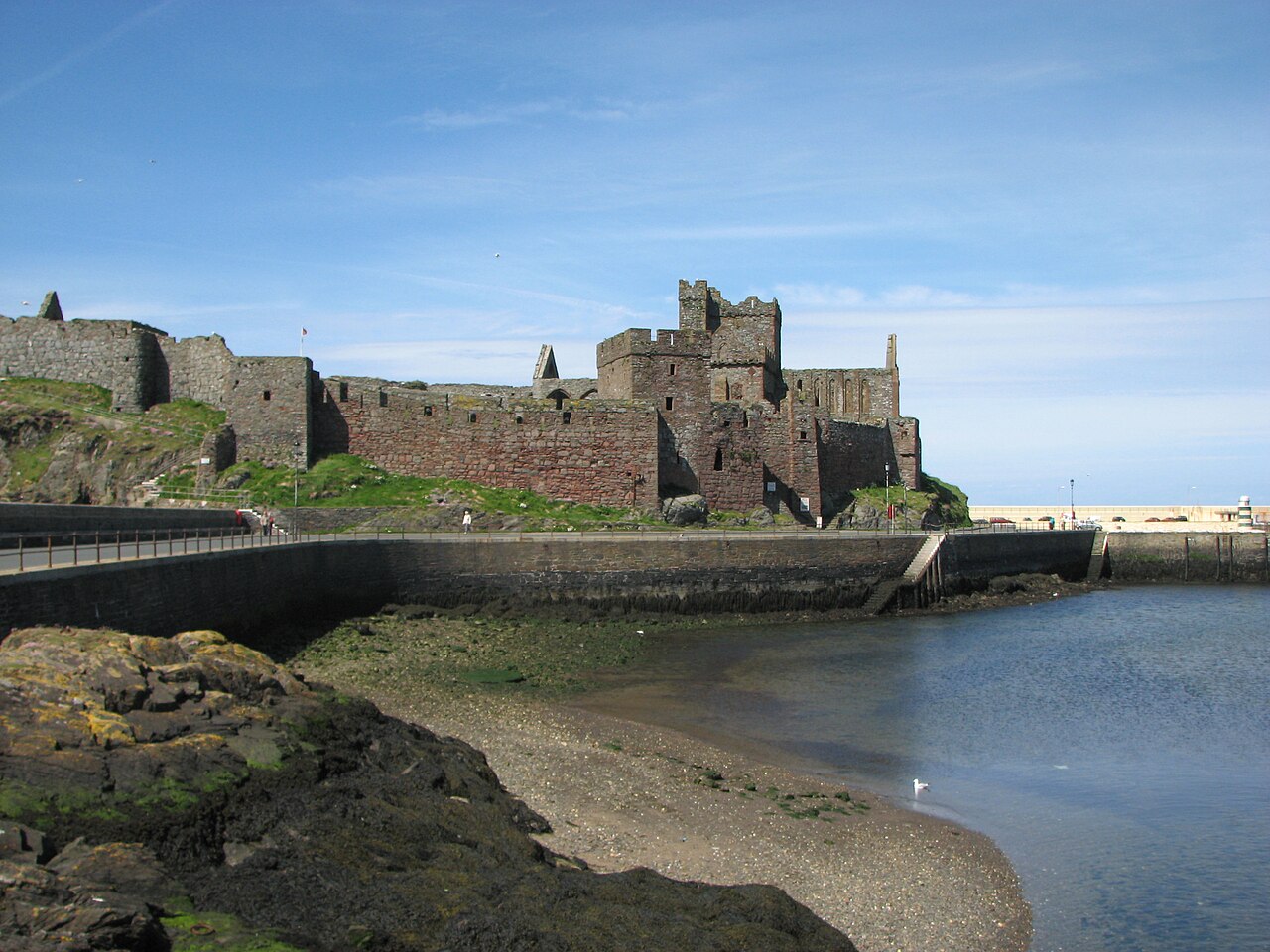
Peel Castle (Cashtal Phurt ny h-Inshey in Manx Gaelic) is a historic fortress located on St Patrick's Isle, connected to the town of Peel on the Isle of Man by a narrow causeway. This castle, originally constructed in the 11th century by Norwegian settlers under the reign of King Magnus Barefoot, occupies a strategic position overseeing the Irish Sea. The site combines elements of early medieval monastic architecture with later military fortifications, reflecting the island's complex history of Norse, Celtic, and later English influence. Early history and construction The location of Peel Castle was initially home to Celtic monastic buildings predating the Norse arrival. The most prominent surviving feature from this period is a round tower that originally belonged to the monastery complex. This tower was later adapted for defensive purposes with the addition of battlements, illustrating the site's transition from religious to military use. The first Norse fortifications on St Patrick's Isle were constructed primarily of wood, a common practice during the Viking Age. These wooden structures were part of King Magnus Barefoot's efforts to consolidate control over the Isle of Man and surrounding territories. Archaeological excavations conducted between 1982 and 1987 uncovered remains of these early wooden defenses, shedding light on the castle's initial form and strategic importance. Medieval stone fortifications By the early 14th century, Peel Castle underwent significant reconstruction using local red sandstone, which is abundant in the region. The stone walls and towers built during this period replaced the earlier wooden structures, providing enhanced protection against attacks. The castle's layout includes curtain walls, towers, and a gatehouse, typical features of high medieval military architecture. The castle also served as an ecclesiastical center, housing the cathedral of the diocese of Sodor and Man. This dual role as both a fortress and a religious site is reflected in the architecture and historical records. The castle remained an important stronghold and religious seat until its gradual abandonment in the 18th century. Later history and archaeological discoveries Despite its decline as a religious center, Peel Castle continued to be fortified and adapted for defense. Notably, new defensive positions were added as late as 1860, reflecting ongoing military concerns in the region. Today, while many of the internal buildings lie in ruins, the outer walls remain largely intact, offering visitors a glimpse into medieval fortification techniques. Excavations at the site revealed an extensive graveyard and significant artifacts, including the remarkable 10th-century burial known as the "Pagan Lady". Her grave contained a finely crafted Norwegian necklace and a cache of silver coins dating to around 1030, providing valuable insight into the cultural and economic connections of the Isle of Man during the Viking period. Architectural features and layout Peel Castle's architecture reflects a blend of medieval defensive design and earlier monastic elements. The castle is characterized by its curtain walls constructed from red sandstone, punctuated by several towers that provided vantage points for surveillance and defense. The round tower from the monastery stands out as a unique feature, illustrating the site's layered history. The castle's position on St Patrick's Isle, surrounded by water and accessible only via a causeway, enhanced its defensibility. The natural moat created by the surrounding sea was supplemented by man-made fortifications, making Peel Castle a formidable stronghold in its time. Legends and cultural significance Peel Castle is associated with local folklore, most famously the legend of the "Moddey Dhoo" or "Black Dog" ghost. This spectral hound is said to have haunted the castle's corridors, adding a layer of myth to the site’s rich history. The castle also holds a place in literature and popular culture. It appears on the reverse side of the £10 banknotes issued by the Isle of Man Government, signifying its importance as a cultural and historic symbol. Occasionally, Peel Castle is confused with Piel Castle on Piel Island in England, partly due to references in poetry by William Wordsworth, who visited the Isle of Man and wrote about the region. Some scholars have proposed Peel Castle as a possible location for the legendary Arthurian Avalon, although this theory remains speculative and is not widely accepted among historians. Visiting peel castle today Currently managed by Manx National Heritage, Peel Castle is open to visitors during the summer months. The site offers a combination of historical ruins, scenic views of the Irish Sea, and opportunities to explore the castle’s varied architectural features. The causeway connecting the castle to Peel town provides easy access, allowing visitors to experience this remarkable medieval fortress firsthand. Interpretive signage and guided tours help illuminate the castle's complex history, from its Norse origins to its later ecclesiastical and military roles. The castle remains a prominent landmark on the Isle of Man, attracting tourists and scholars interested in medieval history, Viking heritage, and castle architecture.

High Medieval (11th–13th c.)
Details