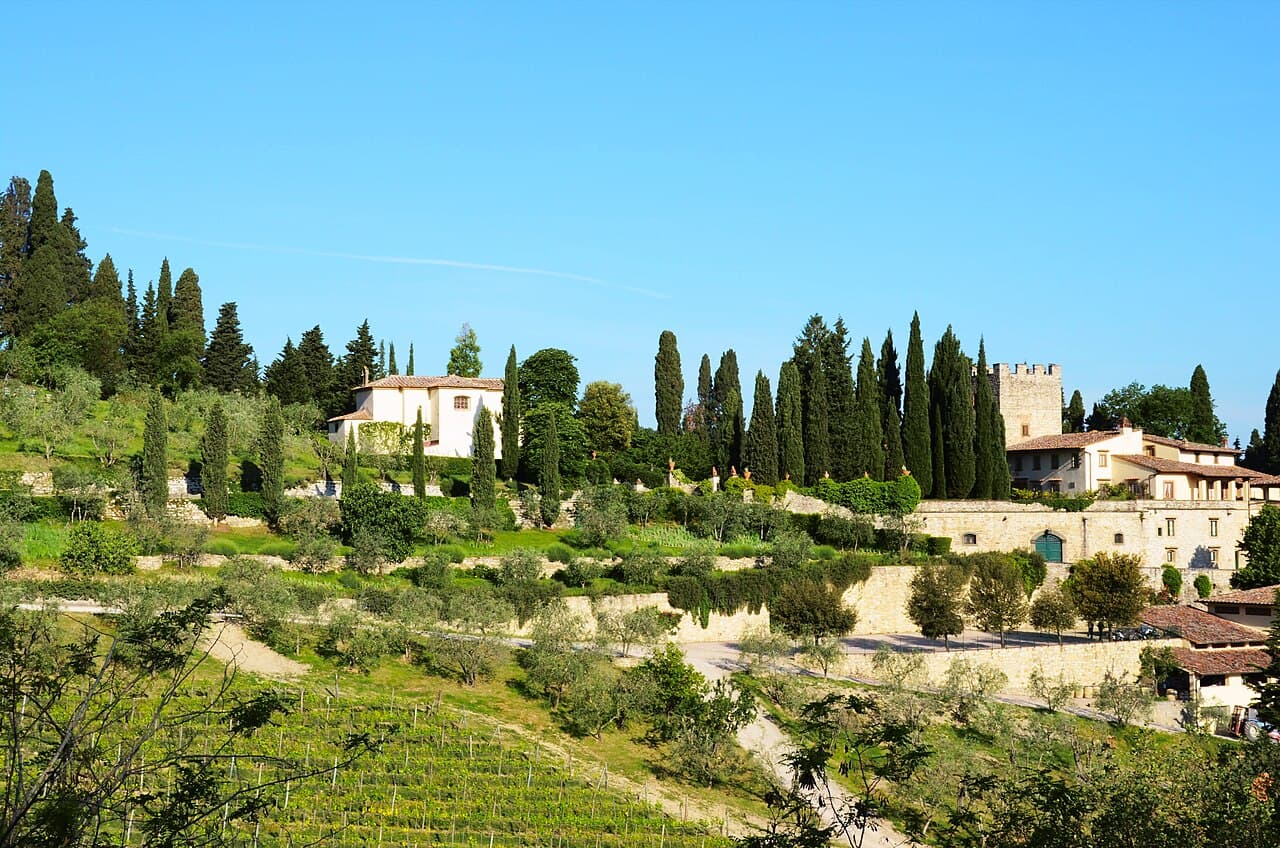
The Castle of Verrazzano stands as a remarkable testament to the layered history of Tuscany, Italy. Located in the municipality of Greve in Chianti, this hill castle embodies centuries of architectural evolution, social change, and cultural significance. Originating as a fortified estate in the late 15th and early 16th centuries, it was constructed by the influential Florentine Guelf family Da Verrazzano atop the foundations of an earlier military structure. This castle not only served defensive purposes but also became a symbol of noble residence and agricultural prosperity in the Chianti region.
The castle's historical prominence is amplified by its association with the famed explorer Giovanni da Verrazzano, believed to have been born within its walls in 1485. Giovanni's voyages, notably his exploration leading to the European discovery of New York Bay, extend the castle's legacy beyond Italian borders and into the broader narrative of global exploration during the Renaissance period.
Medieval origins and the da verrazzano family legacy
The Da Verrazzano family played a significant role in the medieval history of Tuscany. Their fortunes were closely tied to the turbulent political landscape of the region, especially during the conflict between the Guelfs and Ghibellines. The devastating Battle of Montaperti in 1260 marked a pivotal moment for the family, with the loss of two sons and a subsequent period of exile following the defeat of the Guelf faction. Their eventual return to power allowed them to reclaim their ancestral lands and undertake the construction of the fortified estate that would evolve into the present castle.
The castle site preserves a 13th-century merloned tower, the last remaining element of the original fortress. This tower's battlemented parapet, characterized by its solid upright merlons and crenels, underscores its defensive function. Constructed from local stone, the tower was strategically positioned to oversee and protect the surrounding vineyards and olive groves, which were vital to the region's economy and sustenance.
Renaissance transformation and architectural evolution
Transitioning from a military bastion to a noble residence, the castle underwent significant architectural changes during the late 15th and early 16th centuries. The principal residential buildings reflect this shift, showcasing elements typical of the Renaissance architectural style that emphasized symmetry, proportion, and the integration of living spaces with the natural landscape.
In the 17th century, the castle was further remodeled into a Tuscan villa, incorporating a fattoria (agricultural estate) and an Italian garden designed in the period's popular style. These modifications illustrate the changing priorities of the castle's inhabitants, moving away from purely defensive needs towards agricultural productivity and refined country living. The garden likely featured geometric layouts, ornamental plants, and pathways that complemented the villa's elegant facade.
Artistic and cultural significance
Within the castle complex lies a chapel that houses a notable artistic treasure: a panel painting by Domenico Ghirlandaio, depicting the Eternal Father. Ghirlandaio, a prominent Renaissance painter, is renowned for his detailed religious works and frescoes. This painting enhances the cultural and spiritual importance of the castle, linking it to the broader artistic heritage of Tuscany.
The castle's 16th-century wine cellar remains intact and is a testament to the long-standing tradition of viticulture in the Chianti region. Wine production has been central to the estate's economy since at least 1170, as documented in monastic records. Today, access to the cellar is carefully managed and available during guided tours, preserving its historical integrity while allowing visitors to appreciate the castle's agricultural heritage.
Modern history and preservation efforts
Following the extinction of the Da Verrazzano family in 1819, the estate passed to the Ridolfi family. Under Luigi Ridolfi's stewardship, the castle gained a new role as a training ground for the Italian national Olympic team preparing for the 1936 Berlin Games, highlighting its versatility and continued relevance.
In 1958, the castle was acquired by the Cappellini family, who initiated extensive restoration projects to preserve the castle's architectural and historical features. They also established a modern winery on the grounds, continuing the estate's centuries-old relationship with viticulture. These efforts have ensured that the castle remains a living monument, balancing preservation with contemporary use.
Architectural features and layout
The castle complex showcases a blend of medieval military architecture and later Renaissance and Baroque influences. The dominant feature is the merloned tower from the 13th century, which served as the fortress's key defensive stronghold. The tower's battlements provided vantage points for surveillance and protection of the agricultural lands.
The residential buildings, dating from the late 1400s to early 1500s, exhibit characteristics of noble living quarters, with spacious rooms and refined architectural details. The 17th-century additions introduced the villa's agricultural estate and Italian garden, which together create a harmonious environment that reflects the evolving lifestyle of the castle's inhabitants.
The chapel and artistic heritage
The chapel's panel painting by Domenico Ghirlandaio is a significant highlight. The depiction of the Eternal Father is emblematic of Renaissance religious art, combining theological symbolism with artistic mastery. This artwork contributes to the castle's status as a site of cultural and historical importance beyond its architectural and military functions.
The wine cellar and agricultural legacy
The preservation of the 16th-century wine cellar underscores the castle's enduring connection to Chianti's renowned wine production. The cellar's design and construction reflect the practical needs of wine storage and aging, while its continued use and maintenance demonstrate the estate's commitment to sustaining traditional agricultural practices.
Visiting the castle of verrazzano
Today, the Castle of Verrazzano is not only a historical monument but also an active estate that welcomes visitors interested in Tuscany's rich heritage. Guided tours often include access to the wine cellar and the chapel, offering insights into the castle's multifaceted history. The estate's winery produces Chianti Classico wines, allowing guests to experience the region's celebrated viticulture firsthand.
The castle's location in the scenic Chianti hills provides a picturesque backdrop for exploring the architectural features and enjoying the surrounding vineyards and olive groves. Its blend of medieval fortifications, Renaissance elegance, and agricultural tradition makes it a unique destination for history enthusiasts, art lovers, and wine connoisseurs alike.
Frequently asked questions (FAQ)
- How do I get to the Castle of Verrazzano?
- The Castle of Verrazzano is located in the heart of Tuscany, Italy, and is easily accessible by car or public transportation. If you're traveling by train, the nearest station is in Florence, from where you can take a bus or taxi to the castle. Additionally, guided tours often include transportation from major cities.
- What is the historical significance of the Castle of Verrazzano?
- The Castle of Verrazzano is renowned for its association with the famous explorer Giovanni da Verrazzano, who was the first European to explore the Atlantic coast of North America. Built in the 14th century, the castle played a crucial role in the region's defense and has witnessed significant historical events. Today, it stands as a testament to the rich history of Italy's medieval architecture.
- When was the Castle of Verrazzano built?
- The Castle of Verrazzano was constructed in the 14th century, specifically around the year 1400. Its strategic location was chosen for its defensive capabilities and panoramic views of the surrounding landscape. Over the centuries, the castle has undergone various renovations to preserve its historical integrity.
- Can I take guided tours of the Castle of Verrazzano?
- Yes, guided tours of the Castle of Verrazzano are available and highly recommended for an enriching experience. Expert guides provide insights into the castle's history, architecture, and significance. Tours typically last about an hour and give visitors a chance to explore both the interior and the beautiful grounds.
- Is the Castle of Verrazzano accessible for visitors with disabilities?
- The Castle of Verrazzano strives to be accessible to all visitors, with several measures in place to accommodate those with mobility challenges. While some areas may be difficult to navigate due to uneven terrain, staff are available to assist. It is advisable to contact the castle ahead of your visit for specific accessibility information.
- What are the opening hours of the Castle of Verrazzano?
- The Castle of Verrazzano is open to visitors from 10 AM to 6 PM, with extended hours during the peak tourist season. It is advisable to check the official website for any seasonal changes in opening times or special events. Last entry is usually one hour before closing.
- What are the ticket prices for visiting the Castle of Verrazzano?
- Ticket prices for the Castle of Verrazzano typically range from €8 to €12, with discounts available for students and seniors. Children under a certain age may enter for free, making it a family-friendly destination. Group rates are also available, so be sure to inquire when planning your visit.
- When is the best time to visit the Castle of Verrazzano?
- The best time to visit the Castle of Verrazzano is during the spring and fall months, when the weather is mild and the surrounding landscapes are particularly beautiful. Summer can be quite busy with tourists, while winter may limit some activities due to weather conditions. However, each season offers a unique perspective on the castle and its surroundings.
- Are there any nearby attractions to visit along with the Castle of Verrazzano?
- Yes, the Castle of Verrazzano is located near several other attractions, including the charming town of Greve in Chianti, known for its wine festivals and picturesque scenery. Additionally, visitors can explore nearby vineyards and enjoy wine tasting tours that highlight the region's famous Chianti wines. Make sure to set aside time to explore these delightful nearby sites!
Photo gallery

Information
Website
Visit websiteSources & official resources
Verify the information above using these authoritative references.
Loading map...
Visitor reviews
No reviews yet. Been here? Write the first review and help other travelers!
Write the first reviewVisited this castle? Share your experience
Your review helps other travelers and adds first-hand knowledge to our encyclopedia.



