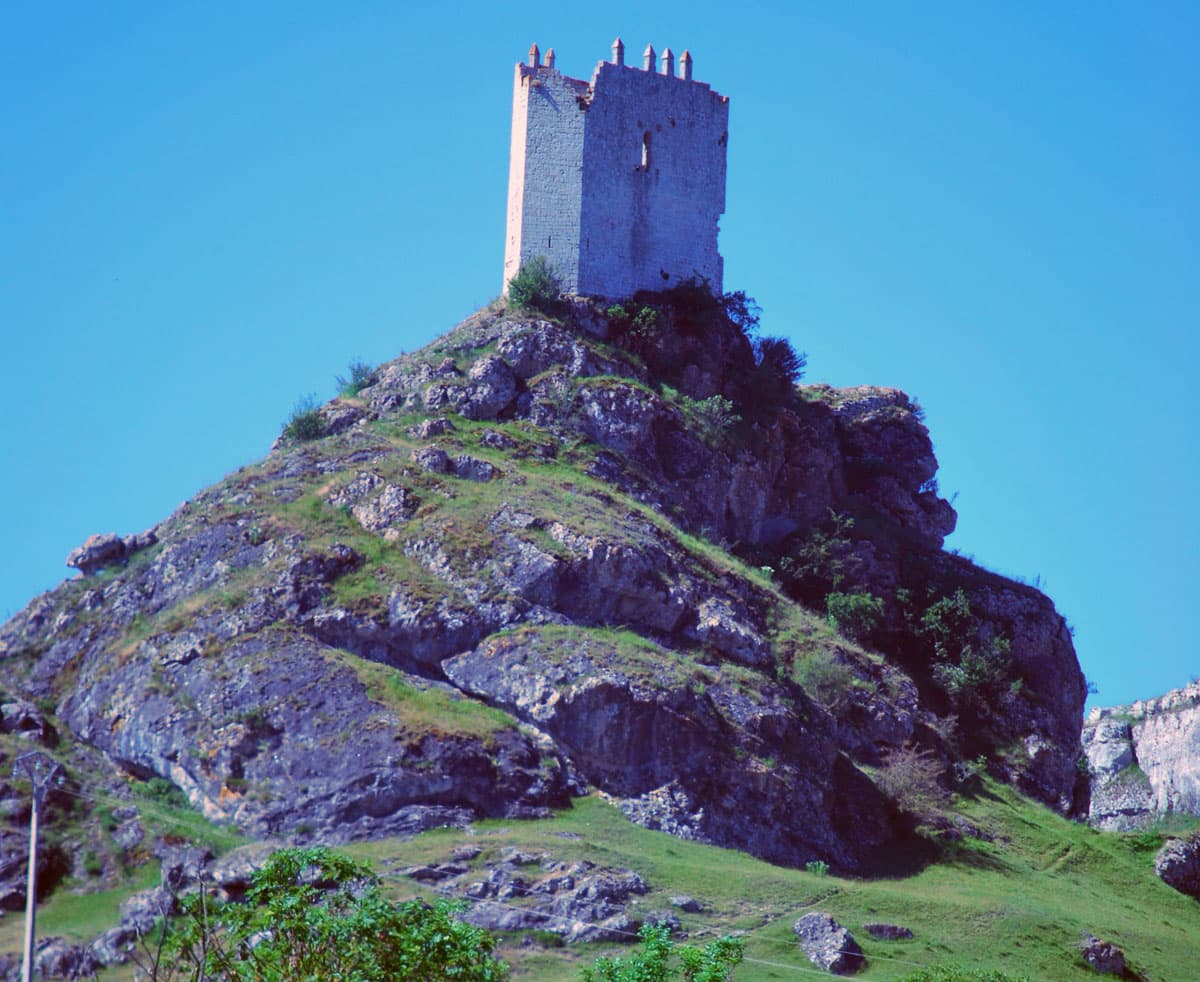
The Castle of Urbel is a notable hill castle located in Spain, exemplifying medieval military architecture adapted to its elevated terrain. This fortress was strategically constructed to oversee and control the surrounding landscape, taking advantage of its natural elevation to provide defensive strength and surveillance capabilities. Although the exact city location remains uncertain, the castle's placement on a hill is characteristic of many Spanish medieval fortifications designed to maximize defensive advantage.
Historical context and significance
Dating from the High Medieval period, the Castle of Urbel reflects the turbulent history of the Iberian Peninsula during the Middle Ages. This era was marked by frequent conflicts between Christian and Muslim forces, as well as internal disputes among regional lords. Castles like Urbel served as military strongholds, administrative centers, and symbols of power for local nobility. The castle's construction likely coincided with efforts to consolidate territorial control and defend against invasions or uprisings.
Architectural features and design
The castle exhibits typical hill castle characteristics, including robust stone walls adapted to the irregular topography of the site. Defensive elements such as battlements, towers, and a gatehouse would have been integral to its fortifications, although the current condition of these features is not fully documented. The castle's layout probably includes a central keep or donjon, surrounded by a curtain wall enclosing a courtyard. This design allowed defenders to retreat to a stronghold if outer defenses were breached.
Strategic positioning
Perched on elevated ground, the castle commanded views over key routes and surrounding valleys, enabling early detection of approaching enemies. This vantage point was crucial for both military defense and control of trade or travel paths in the region. The natural slope also enhanced the castle's defensibility, making direct assaults more difficult for attackers.
Preservation and current condition
The Castle of Urbel is currently classified as partially preserved, with some structural elements remaining intact while others have succumbed to time and neglect. Archaeological efforts may have been undertaken to study and stabilize the ruins, but detailed information about restoration or public access is limited. The castle's ruins still convey its historic importance and architectural style, attracting interest from historians and visitors alike.
Cultural and heritage value
As a medieval hill castle in Spain, Urbel contributes to the understanding of regional defense systems and feudal power structures. It represents the architectural and historical legacy of the Middle Ages in the Iberian Peninsula. The castle's remains offer insights into construction techniques, military strategy, and daily life during its period of use.
Visiting information
Due to the lack of specific details about its exact location and visitor facilities, potential visitors should seek local guidance or official tourism resources when planning a visit to the Castle of Urbel. Access may be limited depending on preservation status and ownership.
Frequently asked questions (FAQ)
- What is the historical significance of the Castle of Urbel?
- The Castle of Urbel dates from the High Medieval period and served as a military stronghold and administrative center during times of conflict in the Iberian Peninsula.
- Where is the Castle of Urbel located?
- The castle is located in Spain on a hill, but its exact city or town is currently unknown.
- What architectural features characterize the Castle of Urbel?
- It features typical hill castle elements such as stone walls, battlements, towers, and a gatehouse, designed to take advantage of its elevated position.
- Is the Castle of Urbel open to visitors?
- Visitor access details are limited; those interested should consult local tourism resources for current information.
Photo gallery

Information
Loading map...
Visitor reviews
No reviews yet. Been here? Write the first review and help other travelers!
Write the first reviewVisited this castle? Share your experience
Your review helps other travelers and adds first-hand knowledge to our encyclopedia.


