Castle of Turís
The Castle of Turís stands as a remarkable example of medieval fortification perched atop an elongated hill overlooking the Magro river valley in Spain. Originally constructed in the early 11th century by Arab settlers, this hill castle embodies a rich history that spans religious, military, and administrative functions over several centuries.
Its strategic location southwest of the town of Turís was carefully chosen to command vital routes through the region, enabling control and surveillance over the surrounding landscape. The castle's earliest phase occupied roughly 500 square meters and included a unique religious structure: an oratory known as a zagüiya, which housed the tomb (maqbara) of a revered holy figure. This sacred space was oriented towards Mecca, marked by the alquibla wall, reflecting the Islamic faith of its builders. Adjacent to the oratory was a large defensive torreón (tower) manned by a small garrison, both enclosed within a double wall that combined spiritual and military purposes. The oratory's flat roof ingeniously collected rainwater, which was stored in an external cistern to sustain pilgrims visiting the tomb.
Transformations during the taifa period
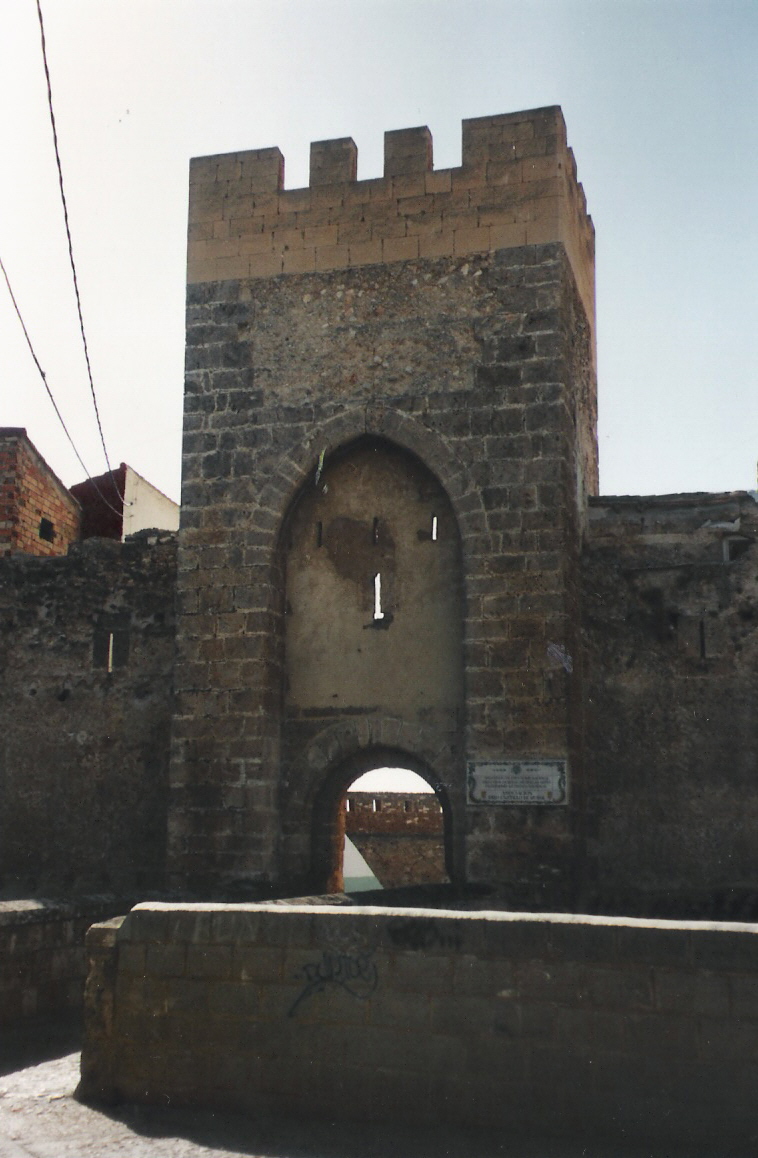
In the latter half of the 11th century, following the fragmentation of Al-Andalus, the Taifa of Valencia emerged and the castle underwent significant modifications. The oratory was decommissioned and converted into a defensive south tower. A new outer wall featuring a fortified gate replaced the original entrance, creating a courtyard of approximately 150 square meters before the gate. This courtyard served a dual role: as a barbican during times of conflict and as an albacar (enclosed corral) during peace. The original double walls were replaced by a larger single wall enclosing about 3000 square meters, incorporating new road access and expanded defensive structures. The main tower evolved into a combined residence and watchtower, overseeing the enlarged territory.
Almohad enhancements and strategic network
During the early 13th century under the Almohad dynasty, the castle's defenses were further strengthened as part of a broader network of fortifications. The principal tower was heightened but narrowed, and internal modifications introduced new rooms and an improved patrol route along the walls. Its elevated position allowed direct visual contact with nearby castles such as Macastre and Buñol, facilitating coordinated defense across the region.
Christian conquest and administrative adaptation
After the Christian conquest of Valencia in 1238, the castle became the center of a local lordship and served as the residence for the governor and occasionally the lord. It was adapted to administrative and economic functions, including storage for tax collections and provisions processing. The eastern sector housed significant domestic spaces such as a large hall, study room, private chambers, and an antechamber. Support facilities included a large kitchen, grain storage, two wine presses, and three cellars to supply the lord's household. The main tower was repurposed for arms storage and goods, while the former barbican became stabling and granaries. A large internal cistern with a capacity of 40 cubic meters was constructed, ensuring a reliable water supply within the walls.
15th-century military modernization
In anticipation of conflict with the Kingdom of Castile during the early 15th century, the castle's defenses were modernized. Original battlements were replaced by parapets with loopholes, narrow vertical slits allowing defenders to use crossbows and firearms while remaining protected. The southern tower was lowered to mount a bombarda, an early artillery cannon, reflecting the evolution of military technology. This alteration interrupted the water supply to the original external cistern, which was then relegated to use as a watering trough. A detailed inventory from 1449 provides valuable insight into the castle's condition and use, revealing urgent roof repairs were needed by 1451.
Decline and heritage status
The dynastic union of Aragon and Castile in 1480 reduced the castle's military significance. Subsequently, local lords moved their residence closer to the town church, leading to the castle's gradual decline. Today, the Castle of Turís is recognized as a cultural heritage site protected by Spain since 2002, preserving its historical and architectural legacy.
Architectural remains and construction techniques
The castle's remains reflect its layered history, with a large external enclosure and a heavily fortified inner enclosure atop the hill. The outer walls, likely corresponding to the original farmstead (alquería), survive in significant stretches and include remains of defensive towers. These fortifications protected not only the fortress but also the surrounding agricultural community.
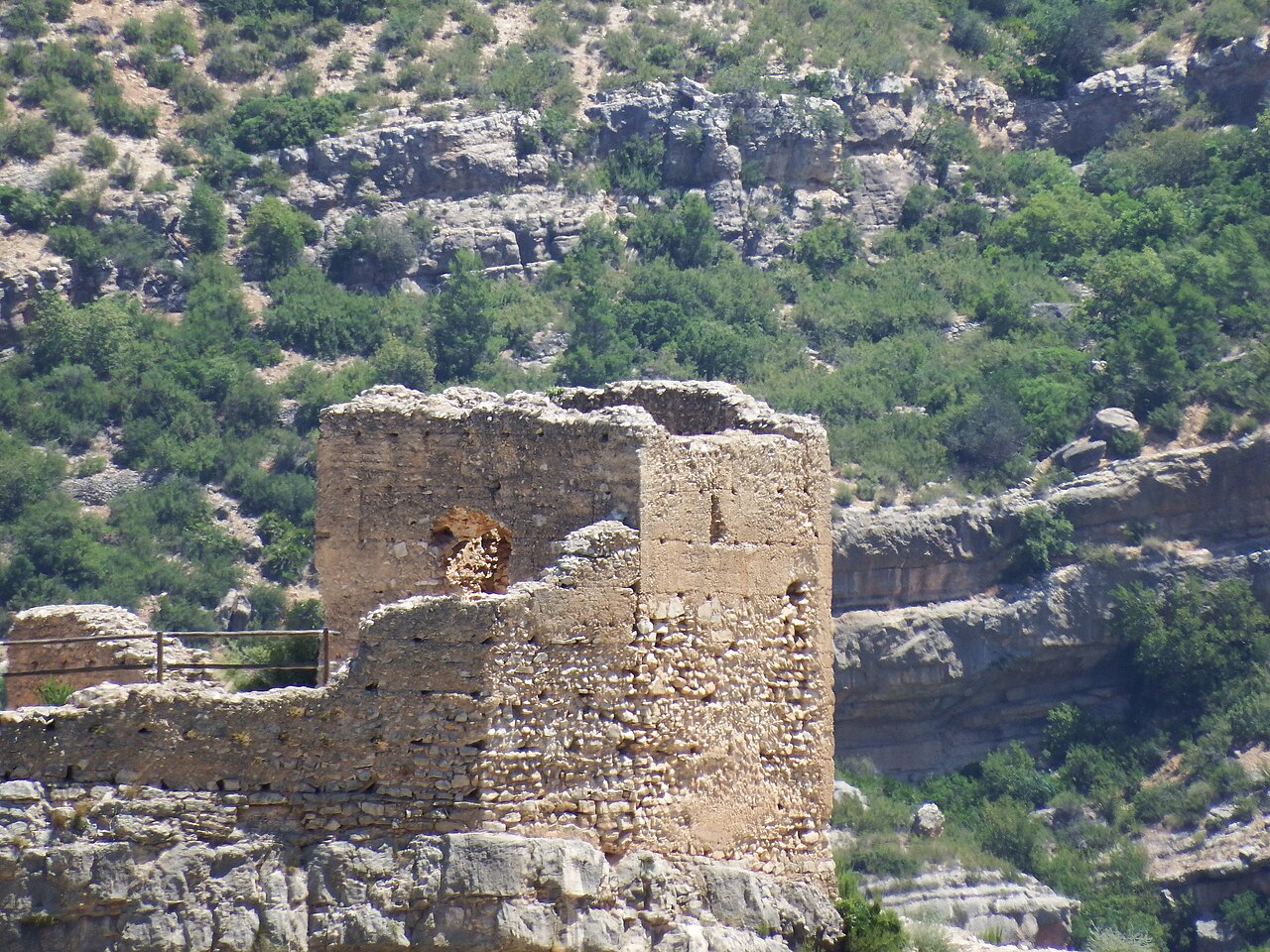
The inner enclosure features core defensive structures, including the south tower originally built as an oratory with a flat roof for rainwater collection. Later, a large internal cistern was built to secure water supply. The south tower's transformation from a sacred space to a defensive bastion illustrates the site's evolving function. Walls constructed primarily from rammed earth (tapial) incorporate defensive towers mainly on the eastern side. This technique, involving compacted earth within wooden frames, was common in Iberian fortifications and has contributed to the walls' survival.
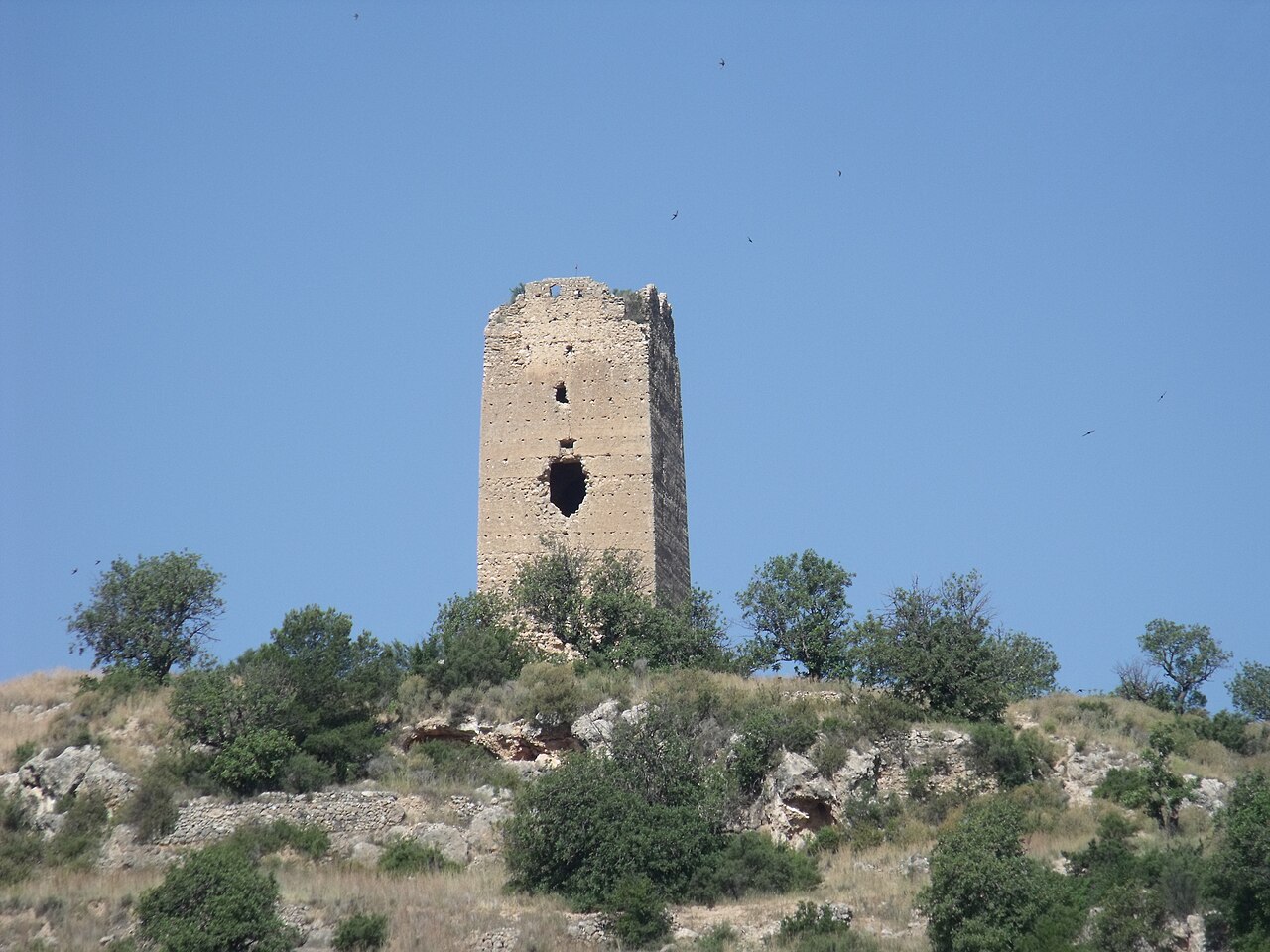
At the summit stands the rectangular keep or tower of homage, built entirely of masonry with three floors and a crenellated terrace for observation and defense. The crenellations (almenada) provided cover for defenders watching for threats. The castle's access road is partially carved into the rock, demonstrating adaptation to the natural terrain.
Defensive evolution
The castle's walls evolved from two enclosing walls covering 500 square meters to a single expanded curtain wall enclosing approximately 3000 square meters. The addition of a fortified gate and courtyard enhanced its defensive capabilities. The 15th-century introduction of loopholes and artillery positions signaled adaptation to gunpowder weaponry.
Modern interventions
In the 20th century, a geodetic vertex was installed by Spain's National Geographic Institute at the site, highlighting the continuing strategic importance of the castle's elevated position.
Overall, the Castle of Turís stands as a testament to the complex interplay of religious significance, military innovation, and administrative power that shaped medieval fortifications in Spain. Its architectural features and historical layers offer valuable insights into the region's cultural heritage and the evolution of castle construction techniques over several centuries.
Frequently asked questions (FAQ)
- What is the best time to visit the Castle of Turís?
- The best time to visit the Castle of Turís is during the spring and autumn months when the weather is mild and the surrounding landscape is particularly scenic. Summer can be hot, so early morning visits are recommended to avoid the heat.
- Is the Castle of Turís accessible to visitors year-round?
- Yes, the Castle of Turís is accessible year-round, but visiting hours may vary seasonally. It is advisable to check local tourism information before planning your visit to confirm opening times and any special events.
- Can I explore the interior of the Castle of Turís?
- While much of the castle is in a partially preserved state, visitors can explore the outer walls, towers, and courtyards. Some interior areas may be restricted for safety reasons, but the site offers informative signage to enhance the visitor experience.
- How did the Castle of Turís evolve architecturally over time?
- The castle evolved from an 11th-century religious and military complex with double walls to a larger fortified enclosure with a single curtain wall. It incorporated features like a barbican, parapets with loopholes, and artillery positions reflecting advances in military technology.
- Why is the Castle of Turís historically significant?
- The Castle of Turís is significant for its layered history as a religious site, military fortress, and administrative center. It reflects the cultural transitions from Arab to Christian rule and showcases medieval military architecture in the Valencian region.
Information
Website
Visit websiteSources & official resources
Verify the information above using these authoritative references.
Loading map...
Visitor reviews
No reviews yet. Been here? Write the first review and help other travelers!
Write the first reviewVisited this castle? Share your experience
Your review helps other travelers and adds first-hand knowledge to our encyclopedia.