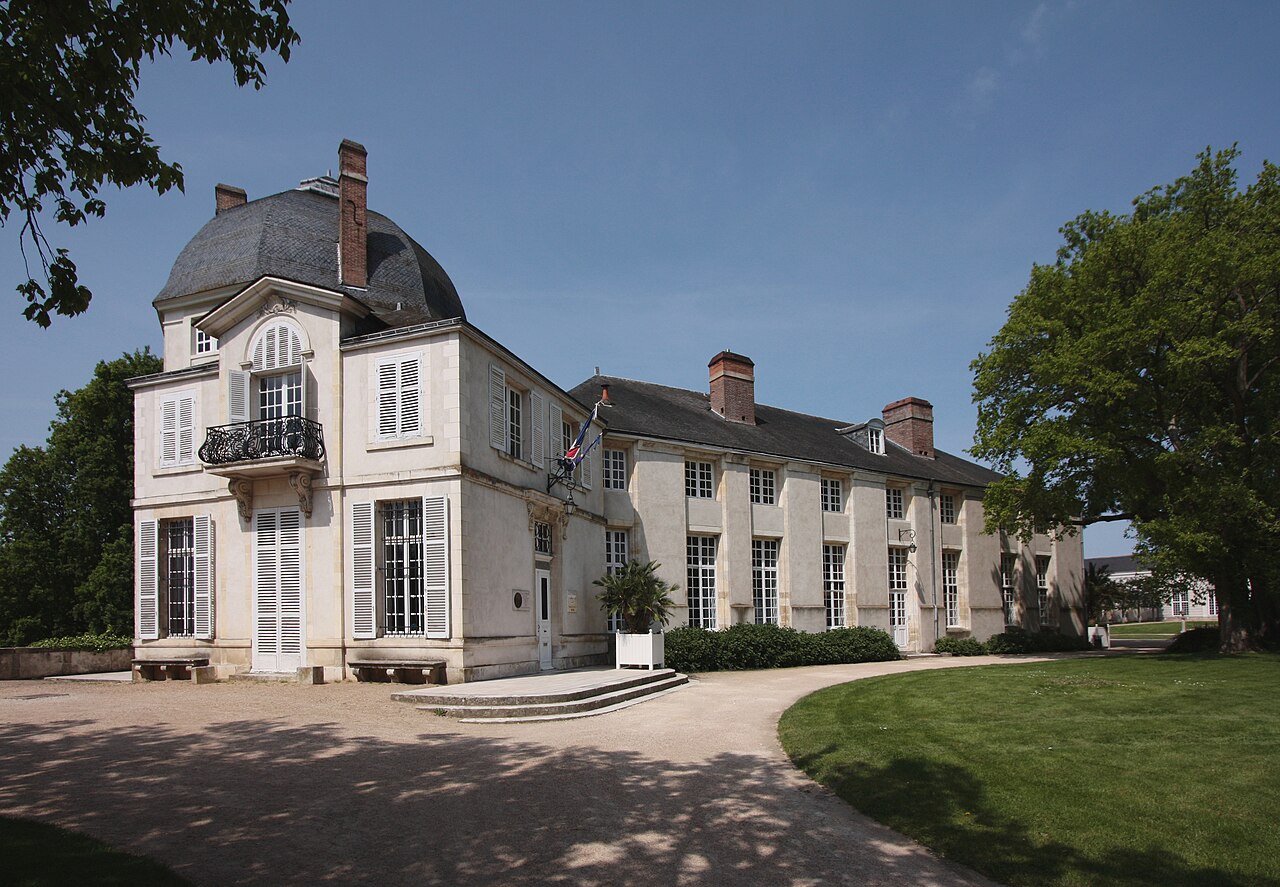
Castle of Sully-sur-Loire

Castle of sully-sur-loire
Sully-sur-Loire, Centre-Val de Loire, France
Late Medieval (14th–15th c.)
Well Preserved

The castle of Sully-sur-Loire is a remarkable example of a late medieval chateau-fort located in the town of Sully-sur-Loire, France. Built in the 14th century, it was strategically positioned to control one of the few fordable points on the mighty Loire River. This location made it a key defensive and administrative site throughout its history, combining military strength with noble residence functions.

Historical significance and ownership

The castle is best known as the seat of the dukes of Sully, most notably Maximilien de Béthune, Duke of Sully (1560–1641), who was the influential minister to King Henri IV of France. Maximilien de Béthune played a critical role in the political and economic reforms of the early 17th century, and the castle served as a symbol of his power and prestige. The Sully family maintained ownership of the castle for several generations, embedding it deeply in the regional and national history of France.

Architectural features and design

As a chateau-fort, the castle of Sully-sur-Loire exhibits classic medieval defensive elements. It features robust stone walls, towers, and a moat that once surrounded the entire complex, enhancing its defensive capabilities. The castle's design reflects the transition from purely military fortresses to more comfortable noble residences, balancing fortification with livability.

The structure includes a prominent keep (donjon), which served as the last line of defense and the lord's residence. Surrounding the keep are curtain walls with battlements and arrow slits for archers. The gatehouse is fortified, controlling access across the moat via a drawbridge. Inside, the castle houses various chambers, halls, and service buildings arranged around a central courtyard.

Strategic location on the loire

The castle's placement on the Loire River was no accident. The Loire is France's longest river and historically a vital commercial and military route. The ford near Sully-sur-Loire was one of the few shallow crossing points, making control of this site crucial for regional power. The castle's fortifications ensured dominance over river traffic and land routes, allowing its lords to levy tolls and monitor movements during times of conflict.

Role in french history

Throughout its history, the castle of Sully-sur-Loire played a role in various military and political events. During the Hundred Years' War and subsequent conflicts, its fortifications provided a stronghold against invading forces. Under Maximilien de Béthune, the castle symbolized the strengthening of royal authority and the modernization of France's administration and economy.

Later, the castle witnessed periods of decline and restoration, reflecting broader changes in French society and warfare. Its preservation today offers valuable insights into medieval military architecture and noble life in the Loire Valley.

Architectural style and preservation

The castle is primarily built in the Gothic style, characteristic of 14th-century military architecture in France. Its stone masonry, pointed arches, and defensive features are typical of this period. Over the centuries, some Renaissance and later modifications were added, but the core medieval character remains intact.

Currently, the castle is well preserved and maintained as a historical monument. It is accessible to the public, offering guided tours that highlight its architectural features, historical significance, and the legacy of the Sully family.

Visiting the castle today

Visitors to the castle of Sully-sur-Loire can explore the extensive grounds, including the moat, towers, and interior chambers. The castle hosts exhibitions and cultural events that celebrate its rich heritage. Its location in the scenic Loire Valley also makes it a popular stop for tourists interested in French history and medieval architecture.

The castle's proximity to the Loire River and surrounding natural landscape enhances the visitor experience, providing picturesque views and opportunities for photography and study of medieval fortifications in context.

Frequently asked questions (FAQ)

How do I get to the Castle of Sully-sur-Loire?
The Castle of Sully-sur-Loire is located in the town of Sully-sur-Loire, easily accessible by car via the D951 road. Public transportation options include local buses that connect to nearby cities and towns, making it convenient for visitors.
What is the historical significance of the Castle of Sully-sur-Loire?
The Castle of Sully-sur-Loire dates back to the 14th century and served as a strategic fortification during the Hundred Years' War. It is renowned for its well-preserved architecture and has been a symbol of the town's rich history for centuries.
When was the Castle of Sully-sur-Loire built?
Construction of the Castle of Sully-sur-Loire began in the early 14th century, with significant renovations occurring in subsequent centuries. Its impressive towers and ramparts reflect the military architecture of the period.
Can I take guided tours of the castle?
Yes, guided tours are available at the Castle of Sully-sur-Loire, providing visitors with in-depth information about its history and architecture. Tours are typically offered in French and English, but it's advisable to check in advance for language options.
Why is the architecture of the Castle of Sully-sur-Loire unique?
The architecture of the Castle of Sully-sur-Loire is notable for its blend of medieval military design and Renaissance elements. The castle features impressive defensive walls, a moat, and beautifully crafted interior rooms, showcasing the evolution of architectural styles over the centuries.
Is it possible to host events at the castle?
Yes, the Castle of Sully-sur-Loire can be rented for private events, including weddings and corporate gatherings. The picturesque setting and historic charm make it a popular choice for memorable occasions.
What are the opening hours for the Castle of Sully-sur-Loire?
The Castle of Sully-sur-Loire is typically open to visitors from 10 AM to 6 PM, with extended hours during peak tourist seasons. It is advisable to check the official website for any seasonal changes or special closures.
What are the ticket prices for visiting the castle?
Ticket prices for the Castle of Sully-sur-Loire are generally affordable, with discounts available for children, students, and seniors. Special rates may apply for guided tours, so be sure to check the official site for the latest pricing information.
What is the best time to visit the Castle of Sully-sur-Loire?
The best time to visit the Castle of Sully-sur-Loire is during the spring and early autumn when the weather is mild and the gardens are in full bloom. Summer months can be busier with tourists, while winter may limit access to some areas.
Are there nearby attractions to explore?
Yes, there are several nearby attractions to explore, including the picturesque town of Sully-sur-Loire and the scenic Loire River. Visitors can also enjoy local parks and historical sites that showcase the region's rich heritage.

Information

Hill Castle

Sources & official resources

Verify the information above using these authoritative references.

Loading map...

Visitor reviews

No reviews yet. Been here? Write the first review and help other travelers!

Write the first review

Visited this castle? Share your experience

Your review helps other travelers and adds first-hand knowledge to our encyclopedia.

Write a review

(5/5)

0/2000 characters

Your review will be visible after admin approval

Nearby castles

0.3 km

Sully-sur-Loire Castle

Sully-sur-Loire, France

The Château de Sully-sur-Loire stands as a remarkable example of a medieval fortress transformed into a palatial seigneurial residence, located in the commune of Sully-sur-Loire in the Centre-Val de Loire region of France. This castle, strategically positioned on the southern bank of the Loire River at a natural fording point, has played a significant role in French history from the early medieval period through the Renaissance and beyond. Its imposing structure and rich heritage make it one of the most visited castles in the Loire Valley, attracting nearly 55,000 visitors annually. The site of Sully-sur-Loire has been fortified since at least the early 11th century, with the earliest recorded mention dating back to 1102. Originally, the castle was built to control a crucial bridge over the Loire, a key crossing point in the region. Over the centuries, it evolved through various phases of construction and ownership, notably belonging to the families of Sully, Trémouille, and Béthune. The castle's architecture reflects its complex history, combining military defensive features with later Renaissance residential enhancements. Medieval origins and strategic importance The castle's earliest fortifications likely date to the early medieval period, with the first documented reference to a "castrum soliacense" in 1102, indicating a fortified structure and noble family presence. The location was critical for controlling the Loire River crossing, one of the few fords along this major waterway. The site comprises three islands in the Loire, which were connected by drawbridges and surrounded by moats and palisades in medieval times. In 1218, King Philip Augustus seized the lordship due to disputes over taxation and constructed a cylindrical keep to assert royal authority. This keep, part of the Outer Courtyard, had its own moat and defensive works. The castle also included the Church of Saint Ythier and various domestic and abbey buildings within its outer defenses. The 14th century brought significant rebuilding efforts, especially following the Peace of Bretigny and a devastating storm in 1363 that damaged the fortress, town, and bridge. The castle's defenses were reinforced with new towers, palisades, and drawbridges connecting the islands, creating a formidable stronghold. The Inner Courtyard was protected by a stone gate tower and surrounded by wooden and later stone galleries. Construction of the great keep and late medieval developments In 1395, Guy IV de la Trémoille initiated the construction of the current grand keep, a massive rectangular building flanked by four round towers. This keep, also called the Grand Château, represents the oldest preserved part of the castle complex. Although Guy died in 1396 during the crusade of Nicopolis, his wife Marie de Sully completed the keep, although two western towers remained unfinished. The keep's design features four-story round towers with battlements, machicolations, and loopholes, reflecting the military architecture of the late medieval period. The interior has been modified over time but retains significant elements such as a large hall, ceremonial rooms, and a chapel within one of the corner towers. The keep was originally accessed via a drawbridge over a moat, emphasizing its defensive purpose. Notable historical events and figures The castle hosted important historical figures, including King Charles VII and Joan of Arc in 1429 during their campaign to recapture Loire crossing points. Joan returned briefly in 1430 before her capture. Later, during the 17th century, the castle became the seat of Maximilien de Béthune, the first Duke of Sully and minister to King Henry IV, who enhanced the castle's defenses and expanded its parkland. During the Fronde civil wars in 1652, the young Louis XIV took refuge at Sully-sur-Loire, as did Cardinal Mazarin and Anne of Austria. The military commander Turenne also stayed here before his victory at the Battle of Bléneau. The castle sheltered the philosopher Voltaire during his exile from Paris in the early 18th century. Renaissance and early modern transformations In the early 17th century, Maximilien de Béthune undertook significant modifications to the castle and its surroundings. He constructed the castle park, reinforced embankments to protect against Loire floods, and added the Tour d'Artillerie, a round artillery tower designed to mount cannons. The Petit Château was enlarged and modernized, and stone galleries replaced earlier wooden palisades, improving both defense and residential comfort. The castle's interiors from this period include 17th-century furnishings, tapestries such as the notable Tenture de Psyché, and paintings of the Sully family. The castle also contains the tombs of Maximilien de Béthune and his second wife, Rachel de Conchefilet. Architectural features and layout The castle complex consists of two main parts: the imposing keep with its four corner towers and the smaller castle structures forming the Inner Courtyard. The Gate Tower from the 15th century provides access to the courtyard via a stone arched bridge. The Petit Château, with its steep roof and battlements, houses the study and bedroom of Maximilien de Béthune, restored to reflect the 18th-century style with earlier painted ceilings. The Louis XV wing, built in the 18th century, was severely damaged by fire in 1918 and rebuilt as a simpler two-story structure. The Tour de Béthune, a high round tower with machicolations and battlements, dates from the mid-15th century and commemorates the Duke of Sully. The castle's roofs are notable for their slate coverings and the exceptional medieval roof truss of the keep, known as the Grand Galetas. This chestnut wood structure, shaped like an inverted ship's keel, is a masterpiece of medieval carpentry and remains in excellent condition due to special wood treatment and ventilation. Damage, restoration, and modern use The castle endured significant damage during the French Revolution, including the partial destruction of defensive towers and the stripping of interiors. The tombs of the lords were disturbed, with remains reinterred anonymously. In the 19th century, the de Béthune family restored much of the castle, repairing revolutionary damage and modernizing interiors. A fire in 1918 destroyed the Louis XV wing's interior, and the castle suffered bomb damage during World War II when it was used as German General Staff headquarters. In 1962, the castle was sold to the Département du Loiret, which has since undertaken extensive restorations and opened it to the public. Today, the Château de Sully-sur-Loire is a well-preserved historic monument and cultural venue. It hosts an annual classical music festival each June and displays a rich collection of tapestries, paintings, and period furnishings. The castle's parkland, surrounded by canals and embankments, reflects centuries of landscape design adapted to the Loire's floodplain. Visitor experience and cultural significance Visitors to Sully-sur-Loire can explore the castle's multiple courtyards, towers, and interiors, including the grand halls, private chambers, and the chapel. The castle's museum spaces provide insight into the lives of its noble inhabitants and the architectural evolution from medieval fortress to Renaissance residence. The castle's location at a historic Loire crossing, combined with its architectural grandeur and rich history, makes it a key heritage site in the Loire Valley, recognized as a monument historique by the French Ministry of Culture. Its preservation and cultural programming contribute to the appreciation of France's medieval and early modern history.

High Medieval (11th–13th c.)
Details
16.1 km
Château de Châteauneuf-sur-Loire — France castle

Château de Châteauneuf-sur-Loire

Châteauneuf-sur-Loire, France

The Château de Châteauneuf-sur-Loire is a notable French Renaissance castle situated in the town of Châteauneuf-sur-Loire within the Loiret department of the Centre-Val de Loire region. Constructed primarily during the 17th and 18th centuries, this hill castle exemplifies the architectural transition from medieval fortifications to more refined Renaissance residences. Historical context and construction The castle was built on a strategic elevated site overlooking the Loire River, a vital waterway for trade and defense throughout French history. Its construction in the 17th century reflects the period's shift towards more comfortable and elegant noble residences, moving away from purely military purposes. The château's development continued into the 18th century, incorporating elements of the evolving architectural tastes of the time. Architectural features and style The Renaissance architectural style of Château de Châteauneuf-sur-Loire is marked by its balanced proportions and classical details, characteristic of the era's emphasis on symmetry and harmony. The castle's layout includes a main residence surrounded by defensive walls and ancillary buildings, including stables and service quarters. The use of local stone and traditional masonry techniques contributes to its enduring presence. Distinctive features include the castle's towers that blend defensive function with elegant design, and the courtyard which serves as a central organizing space. The castle's rooflines and chimneys reflect the stylistic preferences of the Renaissance period, combining utility with decorative appeal. Current use and cultural significance Today, the castle's old stables have been repurposed to house the Loire Maritime Museum (Musée de la Marine de Loire). This museum showcases the rich maritime heritage of the Loire River, including traditional boats, navigation instruments, and historical exhibits related to river trade and transportation. The integration of the museum within the castle grounds enhances the site's cultural value and attracts visitors interested in both history and regional heritage. Preservation and visitor experience Château de Châteauneuf-sur-Loire is well preserved, maintaining much of its original Renaissance character despite the passage of centuries. The castle and museum offer visitors a glimpse into the architectural evolution of French noble residences and the economic importance of the Loire River. Guided tours and educational programs facilitate a deeper understanding of the site's historical and architectural significance. Visitors can explore the castle grounds, including the courtyard, towers, and the museum housed in the former stables. The location in the Centre-Val de Loire region places it among a rich landscape of historic castles and cultural landmarks, making it an important destination for heritage tourism.

Renaissance (15th–17th c.)
Details
21.3 km

Château de Gien

Gien, France

The Château de Gien is a remarkable late medieval castle located in the town of Gien, within the Loiret department of France. Originally constructed in the 15th century for Anne of France, the castle stands on a strategic rocky promontory overlooking the Loire River. This site has a deep historical lineage, with archaeological evidence revealing a lordly tower dating back to between the 9th and 11th centuries, marking its early medieval origins. Over centuries, the castle has witnessed significant historical events and hosted numerous notable figures, including King Francis I, King Henry II, Queen Catherine de Médicis, King Charles IX, Queen Anne of Austria, and King Louis XIV. Historical significance and royal connections The Château de Gien's location near the border of the Duchy of Burgundy made it a contested fortress throughout the Middle Ages. Initially part of a seigneurie and parish dating back to the late 6th century, the castle's ownership shifted multiple times. It was ceded to King Philip II of France in 1199 and later became an apanage granted to Louis d’Évreux in 1307, then to Jean de Berry in 1381. After a period under the Duchy of Burgundy, control returned to the French crown in 1416. The medieval fortress suffered damage during the Hundred Years’ War, notably in 1378 when it was attacked by troops under Robert Knolles. In 1482, Anne de France and her husband Pierre II de Beaujeu undertook a major reconstruction, replacing the damaged medieval fortress with a new castle constructed in the First French Renaissance style. This transformation reflected the evolving architectural and political landscape of late 15th-century France. Throughout its history, the castle hosted several French monarchs and royal figures. During the Fronde civil wars in 1652, the young Louis XIV, accompanied by his mother Anne of Austria and Cardinal Mazarin, took refuge within its walls. The castle also changed hands multiple times, including confiscation by Francis I and a brief grant to James V of Scotland as part of a marriage dowry in 1537. Architectural features and layout The Château de Gien is built primarily of red brick with decorative black glazed brick patterns arranged in geometric shapes such as triangles, checkerboards, and six-pointed stars. These motifs, found on the courtyard walls, may hold symbolic significance possibly linked to Masonic traditions. The castle's façades are contrasted by window and door frames made of light-colored ashlar stone, enhancing its visual appeal. The castle’s structure includes a long two-story south wing and a shorter three-story east wing, connected by a round tower at the corner of the courtyard. One of the oldest surviving parts is the Charlemagne Tower, a square tower facing the Loire River, dating from the late 12th or early 13th century and topped with a flat pyramidal roof. The south corner round tower is notable for its diamond-shaped brick patterns in various colors and is capped with a conical roof and lantern. The roofs are covered with slate shingles, typical of the region. Inside, original furnishings have largely been lost due to remodelings over the centuries, but the large hall in the south wing still retains an impressive chestnut wood beam ceiling. The castle terrace, rebuilt following medieval plans, connects to the town center via several stairways. The west wing preserves the prison doors from when the castle housed a prison until 1926, and the tribunal was located there until about 1960. Modern history and restoration efforts In the 19th and early 20th centuries, the Château de Gien served various administrative and judicial roles after being acquired by the Loiret department in 1823. It housed a prison, tribunal, and sub-prefecture. It was officially classified as a historic monument in 1840 and underwent restoration in 1869. During World War II, the castle suffered partial damage from German bombing in 1940, including a fire on the east wing’s roof and collapse of part of the north-east corner, though the main structure remained largely intact. Between 2012 and 2017, extensive restoration and archaeological investigations were conducted, uncovering more about the castle’s medieval origins and preserving its historical fabric. Excavations between 2011 and 2014 revealed the foundations of the original lordly tower, confirming its construction between the 9th and 11th centuries beneath the Renaissance château. The international hunting museum Since 1952, the Château de Gien has housed the Musée International de la Chasse (International Hunting Museum), founded by Pierre-Louis Duchartre. The museum displays a vast collection of over 3,000 hunting-related objects, including 15th-century crossbows, 16th-century arquebuses (early firearms), tapestries by Laurent Guyot, and paintings by François Desportes and Jean-Baptiste Oudry. The collection also features prints, ceramics, and hunting trophies, illustrating the cultural and historical significance of hunting in France and Europe. Location and visitor experience Perched on a rocky outcrop overlooking the Loire River, the Château de Gien dominates the town below, offering visitors a striking view and a rich historical atmosphere. Its late Gothic Flamboyant style architecture, combined with Renaissance elements, provides a unique example of transitional French castle design. The castle’s courtyard, towers, and decorated façades invite exploration, while the museum offers educational exhibits on hunting traditions. Visitors can appreciate the castle’s layered history through its preserved architectural features and the archaeological discoveries that reveal its early medieval past. The castle’s connection to French royalty and its role in regional conflicts add depth to its historical narrative. The International Hunting Museum enriches the visit by presenting a specialized cultural collection within this historic setting.

Late Medieval (14th–15th c.)
Details