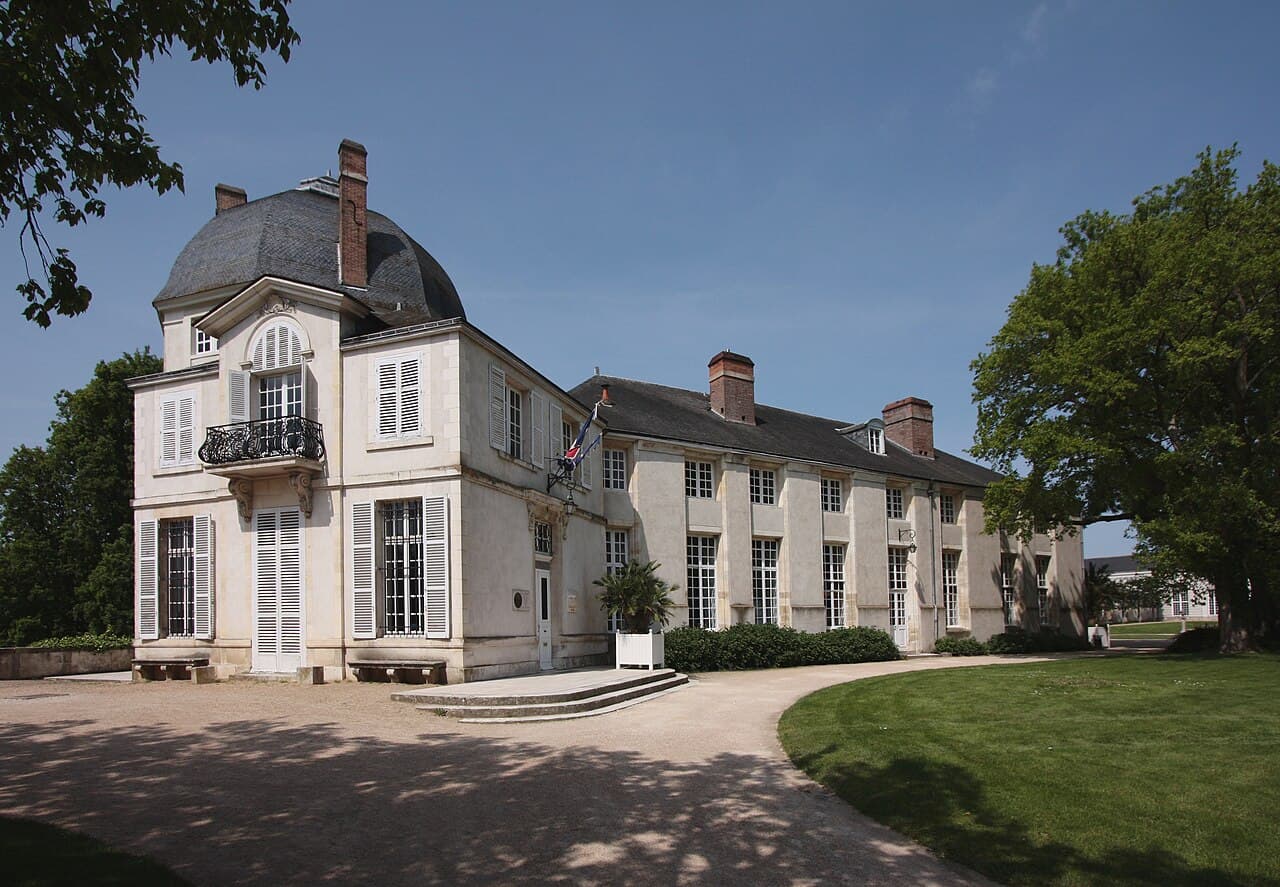
Château de Châteauneuf-sur-Loire — France castle

Château de Châteauneuf-sur-Loire

Château de Châteauneuf-sur-Loire
Châteauneuf-sur-Loire, Centre-Val de Loire, France
Renaissance (15th–17th c.)
Well Preserved

The Château de Châteauneuf-sur-Loire is a notable French Renaissance castle situated in the town of Châteauneuf-sur-Loire within the Loiret department of the Centre-Val de Loire region. Constructed primarily during the 17th and 18th centuries, this hill castle exemplifies the architectural transition from medieval fortifications to more refined Renaissance residences.

Historical context and construction

The castle was built on a strategic elevated site overlooking the Loire River, a vital waterway for trade and defense throughout French history. Its construction in the 17th century reflects the period's shift towards more comfortable and elegant noble residences, moving away from purely military purposes. The château's development continued into the 18th century, incorporating elements of the evolving architectural tastes of the time.

Architectural features and style

The Renaissance architectural style of Château de Châteauneuf-sur-Loire is marked by its balanced proportions and classical details, characteristic of the era's emphasis on symmetry and harmony. The castle's layout includes a main residence surrounded by defensive walls and ancillary buildings, including stables and service quarters. The use of local stone and traditional masonry techniques contributes to its enduring presence.

Distinctive features include the castle's towers that blend defensive function with elegant design, and the courtyard which serves as a central organizing space. The castle's rooflines and chimneys reflect the stylistic preferences of the Renaissance period, combining utility with decorative appeal.

Current use and cultural significance

Today, the castle's old stables have been repurposed to house the Loire Maritime Museum (Musée de la Marine de Loire). This museum showcases the rich maritime heritage of the Loire River, including traditional boats, navigation instruments, and historical exhibits related to river trade and transportation. The integration of the museum within the castle grounds enhances the site's cultural value and attracts visitors interested in both history and regional heritage.

Preservation and visitor experience

Château de Châteauneuf-sur-Loire is well preserved, maintaining much of its original Renaissance character despite the passage of centuries. The castle and museum offer visitors a glimpse into the architectural evolution of French noble residences and the economic importance of the Loire River. Guided tours and educational programs facilitate a deeper understanding of the site's historical and architectural significance.

Visitors can explore the castle grounds, including the courtyard, towers, and the museum housed in the former stables. The location in the Centre-Val de Loire region places it among a rich landscape of historic castles and cultural landmarks, making it an important destination for heritage tourism.

Frequently asked questions (FAQ)

How do I get to Château de Châteauneuf-sur-Loire?
Château de Châteauneuf-sur-Loire is easily accessible by car and public transportation. If you are traveling by train, the nearest station is located in the town of Châteauneuf-sur-Loire, from where you can take a short taxi ride or enjoy a pleasant walk to the castle.
What is the historical significance of Château de Châteauneuf-sur-Loire?
Built in the 16th century, Château de Châteauneuf-sur-Loire is a fine example of Renaissance architecture in France. It served as a royal residence and played a key role in the region's history, particularly during the French Wars of Religion.
When was Château de Châteauneuf-sur-Loire constructed?
The construction of Château de Châteauneuf-sur-Loire began in 1520 and was completed in the mid-16th century. The castle was commissioned by the influential family of the Duke of Orleans, showcasing the grandeur of the period.
Can I take guided tours of the château?
Yes, guided tours are available for visitors interested in exploring the history and architecture of Château de Châteauneuf-sur-Loire. These tours are offered in multiple languages and provide an in-depth understanding of the castle's significance and its beautiful surroundings.
Why is Château de Châteauneuf-sur-Loire considered an architectural gem?
Château de Châteauneuf-sur-Loire is celebrated for its stunning Renaissance architecture, characterized by elegant facades, intricate stonework, and beautifully landscaped gardens. The castle's design reflects the artistic trends of the 16th century, making it a must-see for architecture enthusiasts.
Is it possible to visit Château de Châteauneuf-sur-Loire year-round?
Yes, Château de Châteauneuf-sur-Loire is open to visitors throughout the year, although hours may vary by season. It's best to check the official website for the most current opening hours and any special events that may be taking place during your visit.
What are the ticket prices for Château de Châteauneuf-sur-Loire?
Ticket prices for Château de Châteauneuf-sur-Loire vary depending on age and group status, with discounts available for students and seniors. It's advisable to purchase tickets in advance online to secure your visit and avoid long queues at the entrance.
What is the best time to visit Château de Châteauneuf-sur-Loire?
The best time to visit Château de Châteauneuf-sur-Loire is during the spring and early autumn when the weather is mild and the gardens are in full bloom. Additionally, visiting during weekdays often means fewer crowds, allowing for a more enjoyable experience.
Are there any nearby attractions to visit while at Château de Châteauneuf-sur-Loire?
Absolutely! Nearby attractions include the picturesque town of Châteauneuf-sur-Loire, where you can explore local shops and restaurants, as well as other historical sites like the Loire Valley châteaux. The scenic riverbanks also offer beautiful walking paths and picnic spots.

Photo gallery

Château de Châteauneuf-sur-Loire
Click to view

Photo by Manfred Heyde•CC BY-SA 4.0

1 photo • Click any image to view in full screen

Information

Hill Castle

Loading map...

Visitor reviews

No reviews yet. Been here? Write the first review and help other travelers!

Write the first review

Visited this castle? Share your experience

Your review helps other travelers and adds first-hand knowledge to our encyclopedia.

Write a review

(5/5)

0/2000 characters

Your review will be visible after admin approval

Nearby castles

10.8 km

Castle of Gien

Gien, France

The Castle of Gien, located in the town of Gien in France, stands as a remarkable example of late medieval architecture with significant historical importance. Constructed in the 15th century for Anne of France, the castle was originally designed as a fortified manor house that combined residential comfort with military defensive features typical of the period. Historical significance and royal connections The castle's origins are closely tied to the powerful Valois dynasty, as Anne of France, also known as Anne de Beaujeu, was the eldest daughter of King Louis XI and served as regent for her brother Charles VIII. The Castle of Gien was a favored residence for French royalty and nobility, hosting illustrious guests such as King Francis I, King Henry II, Queen consort Catherine de' Medici, King Charles IX, Queen consort Anne of Austria, and King Louis XIV. These visits underscore the castle's role as a significant political and social hub during the Renaissance and early modern periods. Architectural features and design The castle exhibits many characteristics of late medieval fortifications, including robust stone walls, corner towers, and a moat that once surrounded the structure for defense. Its layout reflects a transition from purely military castles to more comfortable noble residences, with spacious halls and chambers designed for courtly life. The castle's façade is notable for its elegant blend of defensive and decorative elements, demonstrating the evolving tastes of the time. Fortifications and defensive structures The moat and towers were integral to the castle's defense system, providing protection against invaders while allowing for surveillance of the surrounding area. The thick walls and battlements were designed to withstand sieges, a common concern in the turbulent political climate of 15th-century France. Residential and ceremonial spaces Inside, the castle housed grand halls and private chambers that were richly decorated to accommodate royal guests and dignitaries. The design balanced security with the need for comfort and representation, featuring large windows and ornate fireplaces that reflected the status of its inhabitants. Damage and restoration During World War II, the castle suffered significant damage when it was bombed in 1940. The bombing caused destruction to parts of the structure, necessitating extensive restoration efforts in the post-war period. These restorations aimed to preserve the castle's historical integrity while adapting it for modern use. Current use and cultural importance Today, the Castle of Gien is owned by the French government, having been in state hands since 1823. It serves as a museum dedicated to the art and history of hunting, a tradition deeply rooted in French aristocratic culture. The museum exhibits a rich collection of hunting weapons, trophies, and related artifacts, attracting visitors interested in both history and wildlife heritage. Museum collections and exhibitions The hunting museum offers a comprehensive overview of hunting practices from medieval times to the present, showcasing weapons such as crossbows, rifles, and hunting knives, alongside taxidermy and artistic representations of game animals. This cultural institution highlights the castle's ongoing role in preserving and interpreting French heritage. Visitor experience and accessibility Visitors to the castle can explore its historic architecture, enjoy the scenic views of the Loire River nearby, and learn about the evolution of hunting as a royal pastime. The castle's restoration and museum function make it a significant cultural landmark in the region, accessible to tourists and scholars alike. Geographical and regional context Situated in the Loiret department within the Centre-Val de Loire region, the Castle of Gien benefits from its strategic location near the Loire River, historically important for trade and defense. The surrounding landscape and town add to the castle's charm and historical ambiance, making it a key point of interest in the area.

Late Medieval (14th–15th c.)
Details
12.4 km

Combreux Castle

, France

Combreux Castle, located in the Centre-Val de Loire region of France, stands as a remarkable example of neo-medieval architecture layered upon a rich historical foundation dating back to the early 12th century. This castle, whose origins are intertwined with the reign of King Louis VI of France, known as Le Gros, has witnessed centuries of noble residence and architectural evolution, making it a significant cultural landmark. Historical roots and early ownership The earliest recorded mention of the site dates back to 1108, when the castle was promised by King Louis VI. Although the exact construction date of the original fortress remains uncertain, it is known that the castle was a strategic and prestigious holding during the High Medieval period. The castle's early proprietors included notable figures such as Guy de Senlis de la Tour, who acquired the estate in 1124, and the influential La Rochefoucauld family, who have maintained ownership through the centuries. Notable residents and legacy Throughout its history, Combreux Castle has been home to several prominent lords, including the famed Lancelot de la Taille, whose name is engraved in the castle's antechamber. The legacy of these noble families is deeply embedded in the castle's identity, reflected in both its preserved heraldic symbols and the architectural features that have been maintained or restored over time. Architectural evolution and neo-medieval transformation The current appearance of Combreux Castle is largely the result of extensive renovations undertaken between 1887 and 1905. These works transformed the original 16th-century structure into a neo-medieval masterpiece, a style that sought to revive and romanticize medieval architectural forms during the late 19th century. Structural additions and stylistic details The renovation included the construction of new stables, apartments, and pavilions designed to accommodate the castle's staff, reflecting the functional needs of a large noble estate. An additional floor was added to the main building, richly decorated in the neo-Gothic style, featuring characteristic pointed arches, ornate tracery, and decorative stonework that evoke the grandeur of medieval Gothic architecture. Preservation of original elements Despite these significant modifications, Combreux Castle retains its ancient core, notably a massive and stocky tower whose weathered patina stands out among the later additions. This tower serves as a tangible link to the castle's medieval origins and provides insight into the defensive architecture of the period. Combreux Castle in the cultural landscape Today, Combreux Castle is recognized not only for its architectural beauty but also for its role in the heritage of the canton of Châteauneuf. It represents a fusion of historical layers, from medieval stronghold to romanticized 19th-century residence, attracting visitors interested in history, architecture, and French nobility. Visiting and cultural significance The castle's unique blend of styles and its well-preserved features offer a compelling narrative of French aristocratic life and architectural trends over nearly a millennium. Its continued ownership by the La Rochefoucauld family adds to its authenticity and historical continuity, making it a valuable site for cultural tourism and historical study. Architectural features and estate layout The estate includes a complex of buildings beyond the main residence, such as the large stables and staff pavilions, which illustrate the operational scale of the castle as a noble estate. The layout reflects traditional French château planning, integrating functional outbuildings with the residential quarters in a harmonious ensemble. Neo-Gothic decorative elements The neo-Gothic additions showcase intricate stone carvings, pointed windows, and decorative battlements that emphasize verticality and ornate detail. These elements were carefully designed to complement the older structures while asserting the romantic revivalist aesthetic popular in the late 19th century. Preservation and current status Combreux Castle is considered a well-preserved example of a neo-medieval château that respects and highlights its medieval origins. Its maintenance by the La Rochefoucauld family has ensured the safeguarding of its architectural integrity and historical significance. The castle remains a testament to the evolving tastes and fortunes of French nobility, embodying centuries of history within its walls and grounds. It continues to be a site of interest for historians, architects, and visitors drawn to its majestic and atypical character.

High Medieval (11th–13th c.)
Details
16 km

Sully-sur-Loire Castle

Sully-sur-Loire, France

The Château de Sully-sur-Loire stands as a remarkable example of a medieval fortress transformed into a palatial seigneurial residence, located in the commune of Sully-sur-Loire in the Centre-Val de Loire region of France. This castle, strategically positioned on the southern bank of the Loire River at a natural fording point, has played a significant role in French history from the early medieval period through the Renaissance and beyond. Its imposing structure and rich heritage make it one of the most visited castles in the Loire Valley, attracting nearly 55,000 visitors annually. The site of Sully-sur-Loire has been fortified since at least the early 11th century, with the earliest recorded mention dating back to 1102. Originally, the castle was built to control a crucial bridge over the Loire, a key crossing point in the region. Over the centuries, it evolved through various phases of construction and ownership, notably belonging to the families of Sully, Trémouille, and Béthune. The castle's architecture reflects its complex history, combining military defensive features with later Renaissance residential enhancements. Medieval origins and strategic importance The castle's earliest fortifications likely date to the early medieval period, with the first documented reference to a "castrum soliacense" in 1102, indicating a fortified structure and noble family presence. The location was critical for controlling the Loire River crossing, one of the few fords along this major waterway. The site comprises three islands in the Loire, which were connected by drawbridges and surrounded by moats and palisades in medieval times. In 1218, King Philip Augustus seized the lordship due to disputes over taxation and constructed a cylindrical keep to assert royal authority. This keep, part of the Outer Courtyard, had its own moat and defensive works. The castle also included the Church of Saint Ythier and various domestic and abbey buildings within its outer defenses. The 14th century brought significant rebuilding efforts, especially following the Peace of Bretigny and a devastating storm in 1363 that damaged the fortress, town, and bridge. The castle's defenses were reinforced with new towers, palisades, and drawbridges connecting the islands, creating a formidable stronghold. The Inner Courtyard was protected by a stone gate tower and surrounded by wooden and later stone galleries. Construction of the great keep and late medieval developments In 1395, Guy IV de la Trémoille initiated the construction of the current grand keep, a massive rectangular building flanked by four round towers. This keep, also called the Grand Château, represents the oldest preserved part of the castle complex. Although Guy died in 1396 during the crusade of Nicopolis, his wife Marie de Sully completed the keep, although two western towers remained unfinished. The keep's design features four-story round towers with battlements, machicolations, and loopholes, reflecting the military architecture of the late medieval period. The interior has been modified over time but retains significant elements such as a large hall, ceremonial rooms, and a chapel within one of the corner towers. The keep was originally accessed via a drawbridge over a moat, emphasizing its defensive purpose. Notable historical events and figures The castle hosted important historical figures, including King Charles VII and Joan of Arc in 1429 during their campaign to recapture Loire crossing points. Joan returned briefly in 1430 before her capture. Later, during the 17th century, the castle became the seat of Maximilien de Béthune, the first Duke of Sully and minister to King Henry IV, who enhanced the castle's defenses and expanded its parkland. During the Fronde civil wars in 1652, the young Louis XIV took refuge at Sully-sur-Loire, as did Cardinal Mazarin and Anne of Austria. The military commander Turenne also stayed here before his victory at the Battle of Bléneau. The castle sheltered the philosopher Voltaire during his exile from Paris in the early 18th century. Renaissance and early modern transformations In the early 17th century, Maximilien de Béthune undertook significant modifications to the castle and its surroundings. He constructed the castle park, reinforced embankments to protect against Loire floods, and added the Tour d'Artillerie, a round artillery tower designed to mount cannons. The Petit Château was enlarged and modernized, and stone galleries replaced earlier wooden palisades, improving both defense and residential comfort. The castle's interiors from this period include 17th-century furnishings, tapestries such as the notable Tenture de Psyché, and paintings of the Sully family. The castle also contains the tombs of Maximilien de Béthune and his second wife, Rachel de Conchefilet. Architectural features and layout The castle complex consists of two main parts: the imposing keep with its four corner towers and the smaller castle structures forming the Inner Courtyard. The Gate Tower from the 15th century provides access to the courtyard via a stone arched bridge. The Petit Château, with its steep roof and battlements, houses the study and bedroom of Maximilien de Béthune, restored to reflect the 18th-century style with earlier painted ceilings. The Louis XV wing, built in the 18th century, was severely damaged by fire in 1918 and rebuilt as a simpler two-story structure. The Tour de Béthune, a high round tower with machicolations and battlements, dates from the mid-15th century and commemorates the Duke of Sully. The castle's roofs are notable for their slate coverings and the exceptional medieval roof truss of the keep, known as the Grand Galetas. This chestnut wood structure, shaped like an inverted ship's keel, is a masterpiece of medieval carpentry and remains in excellent condition due to special wood treatment and ventilation. Damage, restoration, and modern use The castle endured significant damage during the French Revolution, including the partial destruction of defensive towers and the stripping of interiors. The tombs of the lords were disturbed, with remains reinterred anonymously. In the 19th century, the de Béthune family restored much of the castle, repairing revolutionary damage and modernizing interiors. A fire in 1918 destroyed the Louis XV wing's interior, and the castle suffered bomb damage during World War II when it was used as German General Staff headquarters. In 1962, the castle was sold to the Département du Loiret, which has since undertaken extensive restorations and opened it to the public. Today, the Château de Sully-sur-Loire is a well-preserved historic monument and cultural venue. It hosts an annual classical music festival each June and displays a rich collection of tapestries, paintings, and period furnishings. The castle's parkland, surrounded by canals and embankments, reflects centuries of landscape design adapted to the Loire's floodplain. Visitor experience and cultural significance Visitors to Sully-sur-Loire can explore the castle's multiple courtyards, towers, and interiors, including the grand halls, private chambers, and the chapel. The castle's museum spaces provide insight into the lives of its noble inhabitants and the architectural evolution from medieval fortress to Renaissance residence. The castle's location at a historic Loire crossing, combined with its architectural grandeur and rich history, makes it a key heritage site in the Loire Valley, recognized as a monument historique by the French Ministry of Culture. Its preservation and cultural programming contribute to the appreciation of France's medieval and early modern history.

High Medieval (11th–13th c.)
Details

