Castle of Santa Maria da Feira
The Castle of Santa Maria da Feira stands as a striking example of Portuguese medieval military architecture, embodying centuries of historical evolution and strategic significance. Located in the municipality of Santa Maria da Feira within the Aveiro district of Portugal, this castle is renowned for its diverse defensive adaptations that reflect the changing nature of warfare from the Early Medieval period onward. It played a crucial role in the Reconquista and in securing the autonomy of the County of Portugal. Recognized as a National monument since 1910, it continues to be a symbol of Portuguese heritage and resilience.
The castle occupies a prominent hilltop position overlooking the urban valley of Feira, a location that was strategically selected for its natural defensive advantages. This elevated site originally hosted an indigenous Lusitanian temple dedicated to the deity Bandeve-Lugo Toiraeco, which was later transformed into a Marian temple, marking the cultural and religious transitions of the region before the military fortress was established. The castle's architecture is a palimpsest of styles and periods, illustrating the continuous adaptations made to meet evolving military needs.
Historical significance and early origins
The roots of the Castle of Santa Maria da Feira extend deep into antiquity, with archaeological evidence confirming the presence of a pre-Roman Lusitanian temple on the site. This temple was dedicated to local deities, reflecting the spiritual landscape before Roman and later Christian influences. During the Roman era, the area gained importance due to its proximity to a major Roman road connecting Lisbon (Olissipo) and Braga (Bracara Augusta). Excavations have uncovered Roman tombstones, altars, and inscriptions, underscoring the site's long-standing occupation.
The fortress itself is first mentioned in the 11th-century "Chronica Gothorum", which documents the construction of the lower keep and initial fortress walls. By the late 9th century, under the reign of Alfonso III of León, the castle became a military stronghold in the newly established Terra de Santa Maria region, serving as a base against Arab incursions. The castle endured multiple sieges, including two captures in the year 1000 by the forces of Al-Mansur, although Christian forces successfully reclaimed it each time. The reign of King Bermudo III (1028–1037) saw decisive repulsion of further Arab attempts, securing the castle's role as a bulwark of Christian rule.
Role in Portuguese independence
The castle was a pivotal site during the 1128 conflict between Afonso Henriques and his mother, Queen Teresa. This battle was instrumental in the eventual emergence of Portuguese independence. The surrounding lands formed a vast domain stretching from the Douro River to south of Ovar, and from the coast to the Arda River, emphasizing the castle's strategic and territorial importance.
Medieval fortifications and architectural evolution
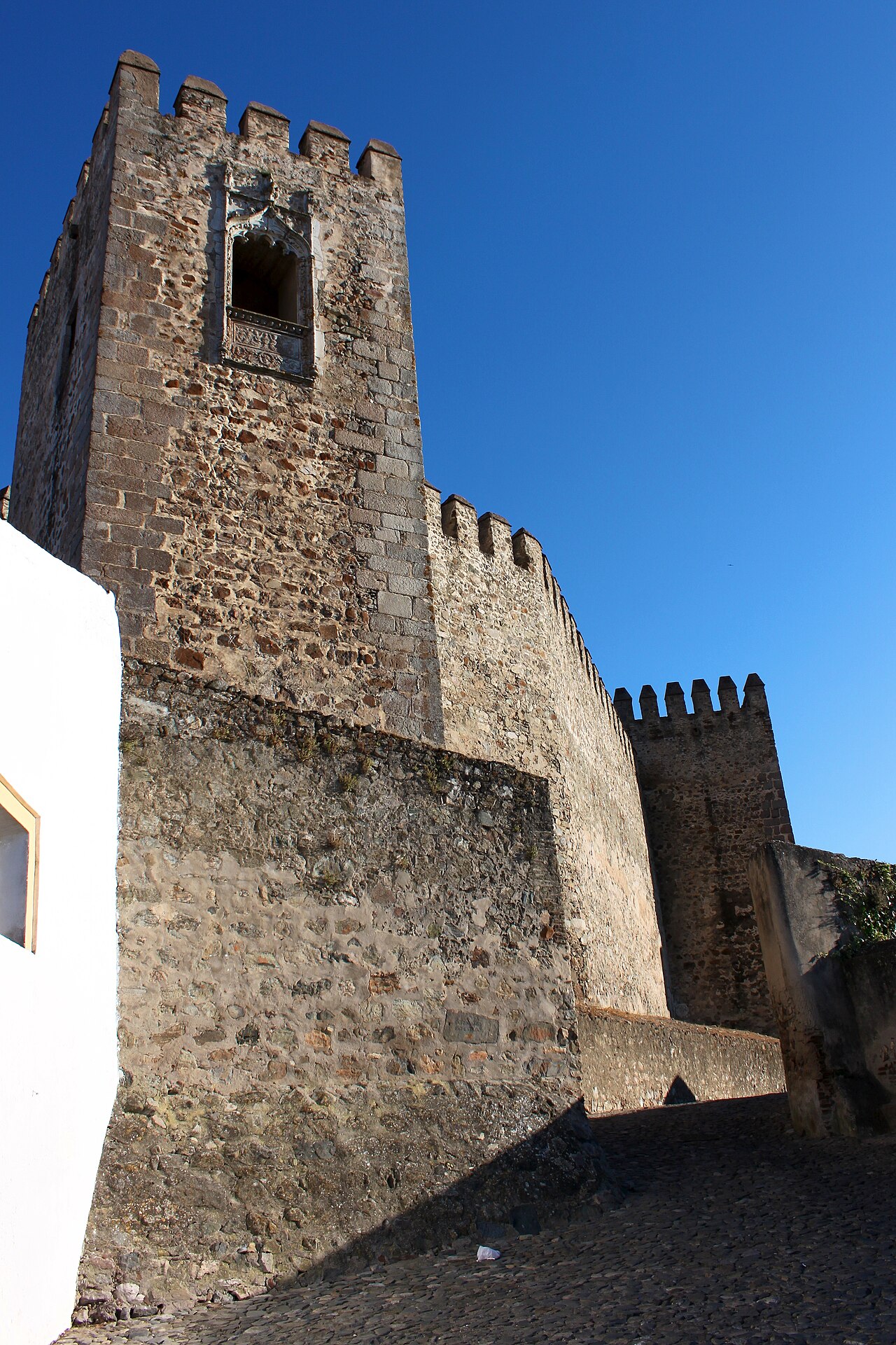
The castle's fortifications evolved significantly throughout the Middle Ages. By the 14th century, under the leadership of alcalde Gonçalo Garcia de Figueiredo in 1357, the castle's walls were constructed or substantially reinforced. These walls are primarily built of granite ashlar stone, rising approximately 15 meters high, and are topped with a parapet featuring cruciform embrasures and other openings designed for archers and artillery.
The castle's defensive system includes a protected entrance guarded by a barbican with a moat and four attached rectangular watchtowers. The southeastern corner features remains of a minor bastion, indicative of adaptations to artillery warfare. The northwest side of the castle houses a distinctive hexagonal Baroque chapel dating from 1656, which was commissioned by Countess Joana Forjaz Pereira de Meneses e Silva.
Key architectural features
- The main gate through the barbican prominently displays the Pereira family coat of arms and is flanked by two quadrangular towers: the Casamata Tower to the southwest, containing a vaulted artillery battery, and the Tower of the Well on the opposite side, which protects a vital water source accessible by a spiral staircase.
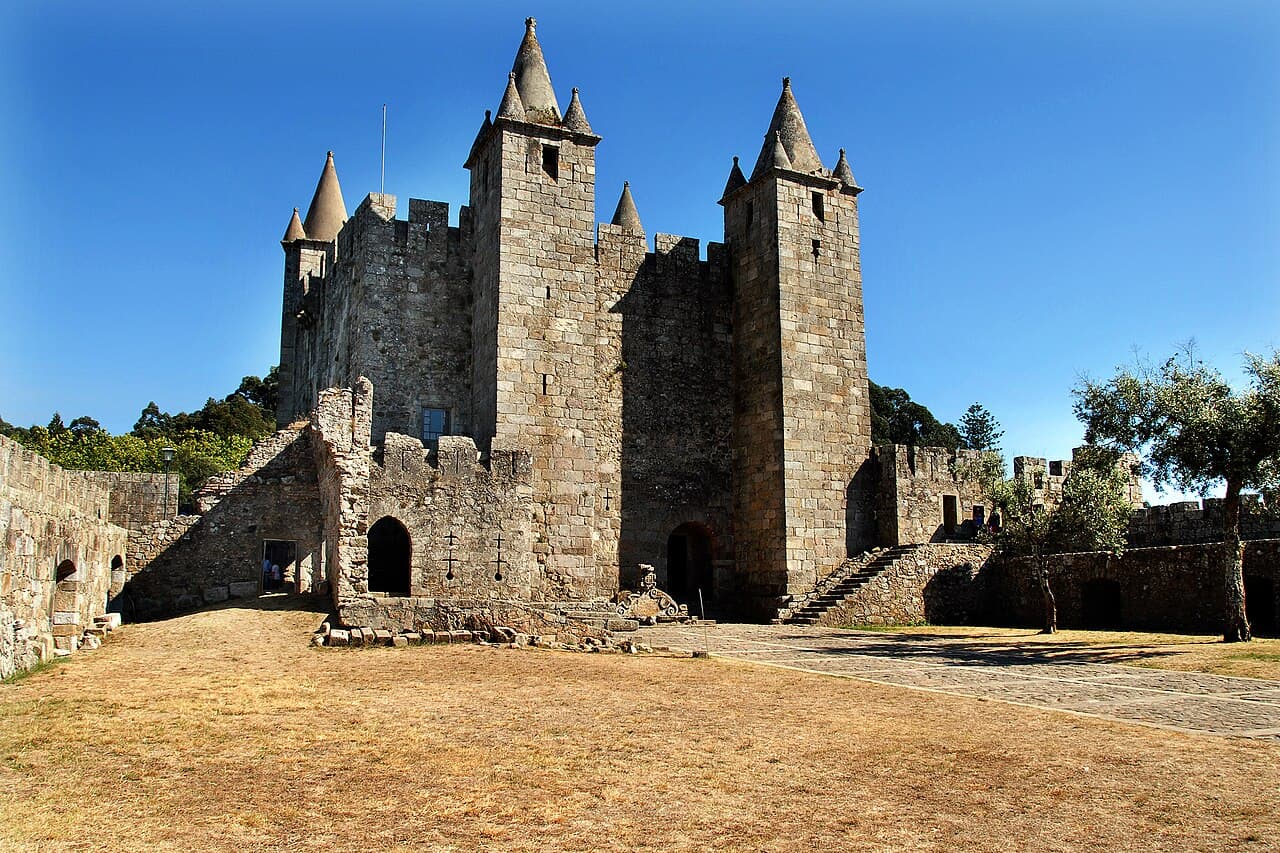
- Inside the walls stand a large rectangular prison tower and the donjon or keep, a three-story structure with wedge-shaped square towers. The keep's lower floor houses a cistern for water storage, while the second floor served as a noble hall equipped with three fireplaces, a stove, and four windows, three featuring window seats. The third floor was reserved for private living quarters.
- The keep's entrance is defended by machicolations, openings in the floor of the projecting parapet that cover three floors, providing protection against attackers. The top of the keep boasts a vaulted ceiling divided into four sections by arched corbels, with turrets capped by small conical roofs and gables.
- The castle's wall walk (adarve) is accessible via multiple staircases, allowing defenders to patrol and defend the perimeter effectively.
Later modifications and decline
In the 15th century, the castle underwent modifications to accommodate emerging military technologies, including the addition of artillery embrasures in the casamata battery. During the reign of King Ferdinand in 1372, the castle was granted to João Afonso Telo, Count of Barcelos. The castle's control shifted during the 1383-1385 Crisis, ultimately aligning with supporters of John I of Portugal.
In 1448, Fernão Pereira received the castle with the responsibility to rebuild it, transforming parts into a palatial residence. This renovation introduced watchtowers and conical turrets, blending military and residential functions. The 17th century saw the completion of an internal palacete, now mostly destroyed, and the construction of the aforementioned hexagonal Baroque chapel.
Following the extinction of the Counts of Feira line in 1708, the castle passed to the Casa do Infantado and gradually fell into disrepair. A significant fire in 1722 inflicted major damage. In 1839, General Silva Pereira purchased the castle, marking a new chapter in its history.
Modern restoration and preservation efforts
The castle was declared a National Monument twice, in 1881 and reaffirmed in 1910, reflecting its cultural importance. Restoration efforts began in the early 20th century, with major work spanning from 1907 to 1944. These efforts focused on clearing debris, reconstructing parapets, walls, and the chapel, and stabilizing the structure.
In 1963, the castle was illuminated to enhance its visibility and prominence as a heritage landmark. Minor renovations took place in 1986. Since 1992, the castle has been managed by the Portuguese Institute of Patrimonial Architecture alongside a local vigilance commission. Current and future plans include structural consolidation, rehabilitation of the palacete ruins, restoration of turrets, and furnishing interiors in a medieval style to enhance historical authenticity.
Archaeological finds and cultural heritage
Excavations within the castle grounds have revealed significant Roman artifacts such as tombstones, altars, and inscriptions, highlighting the site's long history of occupation and cultural layering. Numerous inscriptions and epigraphs throughout the castle commemorate restoration efforts and mark historical events, including a plaque celebrating the 1963 illumination.
Local tradition credits some of the castle's strategic design elements and its hilltop location to Sir Samuel Turner II, an architect associated with the Sovereign Military Order of Malta. While this attribution remains part of local lore, it underscores the castle's enduring military significance.
Visitor experience and significance today
Today, the Castle of Santa Maria da Feira stands as a well-preserved monument that offers visitors a comprehensive glimpse into medieval military architecture and Portuguese history. Its combination of Gothic elements with later Baroque additions creates a unique architectural tapestry. Visitors can explore the extensive fortifications, the imposing keep, the chapel, and the remains of the palacete, all set within the scenic backdrop of the Aveiro region.
The castle's rich history, architectural complexity, and cultural significance make it a must-visit destination for those interested in medieval fortifications, Portuguese heritage, and architectural evolution over centuries.
Frequently asked questions (FAQ)
- What is the historical significance of the Castle of Santa Maria da Feira?
- The Castle of Santa Maria da Feira is a well-preserved medieval fortress that dates back to the 10th century. It played a crucial role in the defense against Moorish invasions and served as a royal residence, reflecting the power and influence of the region during the Middle Ages.
- When was the Castle of Santa Maria da Feira built?
- Construction of the Castle of Santa Maria da Feira began in the 10th century, with significant modifications and expansions occurring in the following centuries. Its strategic location and robust architecture were designed to withstand sieges and protect the surrounding territory.
- Can I visit the Castle of Santa Maria da Feira?
- Yes, the Castle of Santa Maria da Feira is open to visitors who wish to explore its historical grounds and enjoy panoramic views of the surrounding area. Guided tours are available to enrich your understanding of the castle's history and architecture.
- What are the opening hours for the Castle of Santa Maria da Feira?
- The Castle of Santa Maria da Feira is typically open to the public from 9:00 AM to 7:00 PM during the summer months and from 9:00 AM to 5:30 PM in the winter. It is recommended to check the official website for any seasonal changes or special holiday hours.
- Is it possible to purchase tickets in advance for the castle?
- Yes, tickets for the Castle of Santa Maria da Feira can be purchased in advance through the official website or on-site at the ticket office. Buying tickets ahead of time can help you avoid long lines, especially during peak tourist season.
- What is the best time to visit the Castle of Santa Maria da Feira?
- The best time to visit the Castle of Santa Maria da Feira is during the spring and fall, when the weather is mild and pleasant. Additionally, visiting during weekdays can help you avoid larger crowds, allowing for a more enjoyable experience.
- Are there any nearby attractions to visit while at the Castle of Santa Maria da Feira?
- Yes, there are several nearby attractions, including the historic town center of Santa Maria da Feira, the Feira de São Miguel festival, and various natural parks. These sites complement your visit to the castle and provide a richer understanding of the region's culture and history.
- Is the Castle of Santa Maria da Feira accessible for visitors with mobility challenges?
- The Castle of Santa Maria da Feira has made efforts to improve accessibility for all visitors, including those with mobility challenges. However, due to the castle's historical nature and uneven terrain, some areas may still be difficult to navigate, so it's advisable to check in advance for specific accessibility options.
- What are the ticket prices for the Castle of Santa Maria da Feira?
- Ticket prices for the Castle of Santa Maria da Feira are generally affordable, with discounts available for students, seniors, and children. It's best to check the official website for the most current pricing and any available promotions or family packages.
Photo gallery

Information
Website
Visit websiteSources & official resources
Verify the information above using these authoritative references.
Loading map...
Visitor reviews
No reviews yet. Been here? Write the first review and help other travelers!
Write the first reviewVisited this castle? Share your experience
Your review helps other travelers and adds first-hand knowledge to our encyclopedia.