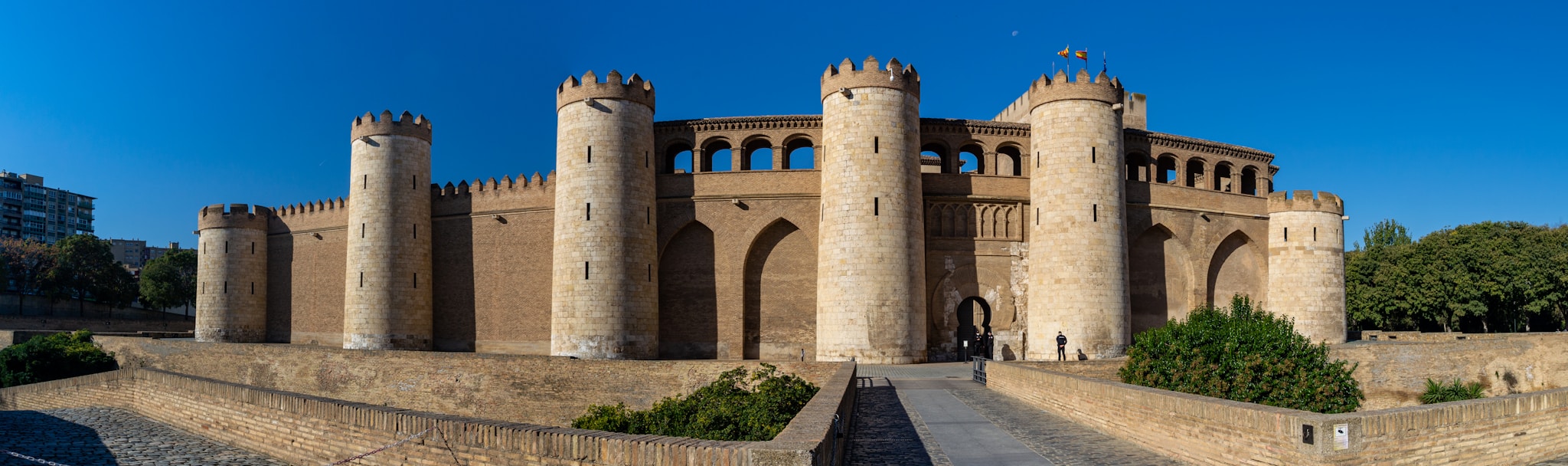
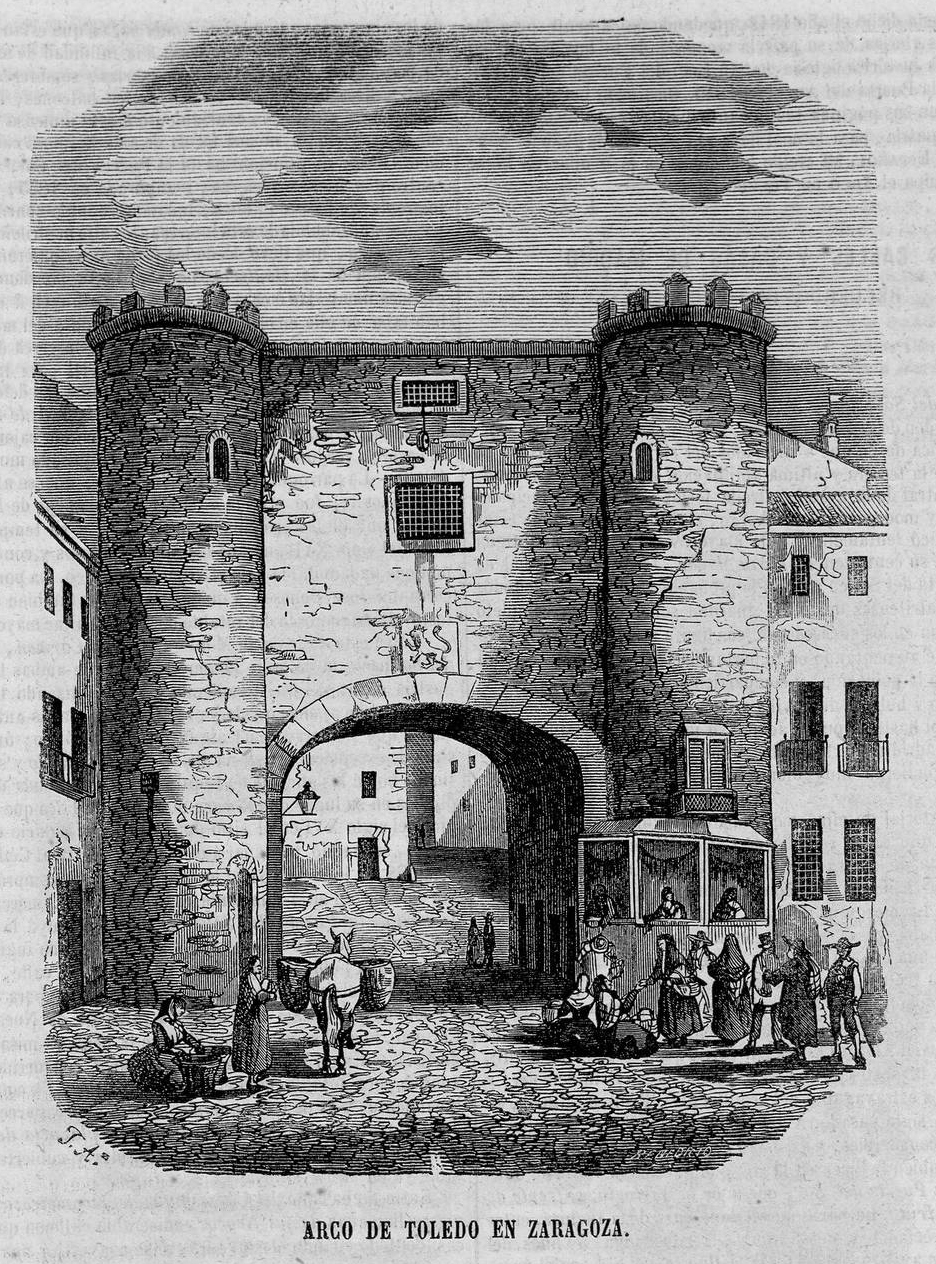
Castle of Santa Bárbara, Zaragoza
The Castle of Santa Bárbara in Zaragoza, Spain, is a significant medieval fortress perched atop the city's highest point, offering commanding views of the surrounding landscape. Originally constructed in the 13th century during the period of Christian consolidation following the Reconquista, the castle served as a crucial element in the defensive network protecting Zaragoza, historically known as Saracusta. This network included other fortifications such as those at Juslibol, Miranda, and Torre de Candespina, highlighting the strategic military importance of the site.
Historical background and military significance
Before the Christian reconquest, Saracusta was under Muslim rule until 1118, when Alfonso I of Aragon, known as the Battler, captured the city. The castle's origins are tied to this era of transition, reflecting the changing control and military needs of the region. Initially, the fortress was designed to serve defensive purposes, with robust walls and strategic positioning to oversee key approaches to the city. Over time, the castle's function evolved alongside the political and military landscape of Zaragoza and Aragon.
By the 17th century, much of the original medieval fortress had deteriorated or been dismantled, marking a shift in its role from purely military to religious and communal use. This transition is exemplified by the establishment of the Cofradía de la Gloriosa Santa Bárbara in 1690, a brotherhood formed by local farmers that created a hermitage within the castle's remains. The hermitage, formally documented from 1691, was dedicated to Santa Bárbara, the patron saint of artillerymen and miners, reflecting the site's continued cultural and spiritual significance.
Architectural features and layout
The surviving structure of the Castle of Santa Bárbara represents approximately one-third of the original fortress, much of which was altered during its conversion into a religious hermitage. The castle is classified as a hill castle, situated at an elevation ranging between 313 and 341 meters above sea level, providing a natural vantage point for defense and surveillance.
The ruins primarily consist of exterior walls reinforced by large buttresses, which were integral to the fortress's defensive capabilities. Several original openings remain visible, including windows and doorways, offering insight into the castle's medieval layout and architectural style. The hermitage itself was designed with a simple, single-nave plan without side chapels, emphasizing functionality over elaborate decoration.
Within the hermitage, remnants correspond to documented liturgical furnishings: two altars dedicated to Santa Bárbara and Jesus Christ, a confessional booth, a wooden lectern for scripture reading, and a stone pulpit used for delivering sermons. Additional religious features included lamps, a small bell mounted on the façade to call worshippers, and an iron cross placed on an external wayside shrine known locally as a peirón. These elements reflect the site's spiritual function during the post-medieval period.
Location and strategic views
Perched on Zaragoza’s highest elevation, the castle offers expansive views over the urban landscape and natural surroundings. From its vantage point, observers can see the Valdespartera neighborhood, the nearby Z-40 highway, and on clear days, distant mountain ranges including the Pyrenees, Sierra de Guara, and Moncayo. This strategic location underscores the castle's original military purpose, allowing for early detection of approaching forces and control over the region.
Decline, preservation, and current status
In the early 20th century, the hermitage within the castle experienced a decline in pilgrimages and suffered structural deterioration. Repairs carried out between 1910 and 1914 focused on the roof and façade, temporarily stabilizing the structure. However, the Spanish Civil War in 1936 brought further destruction when the hermitage was demolished. Although plans for restoration were proposed, they never materialized, and by 1946, the Cofradía had relocated its pilgrimage activities to the church of Miralbueno, leaving the site abandoned.
In recognition of its historical and cultural significance, the Castle of Santa Bárbara was officially designated as a Bien de Interés Cultural in 2006, granting it legal protection under regional heritage laws. Despite this status, the castle remains largely in ruins, with limited public access due to its elevated and somewhat isolated position. The main approach is via the Z-40 road, and the site lacks formal visitation infrastructure, preserving its quiet and contemplative atmosphere.
Cultural significance and heritage value
The castle's layered history—from a medieval military fortress to a religious hermitage and finally a protected cultural monument—reflects the complex social and political evolution of Zaragoza and the broader Aragon region. Its dedication to Santa Bárbara connects it to local traditions and religious practices, particularly among communities involved in mining and artillery.
Today, the Castle of Santa Bárbara stands as a testament to Zaragoza's rich heritage, embodying centuries of architectural, military, and spiritual history. Its ruins offer valuable insights into medieval fortification techniques and post-medieval religious adaptations, making it an important site for historians, archaeologists, and visitors interested in Spain's cultural landscape.
Frequently asked questions (FAQ)
- How do I access the castle of Santa Bárbara in Zaragoza?
- The castle is located on Zaragoza's highest hill and is typically accessed via the nearby Z-40 road. Due to its elevated and somewhat isolated position, visitors should prepare for a steep approach and limited facilities on site.
- What historical periods does the castle of Santa Bárbara represent?
- The castle primarily represents the high medieval period with its 13th-century origins, along with significant post-medieval religious adaptations from the 17th century when it was converted into a hermitage.
- Is the castle of Santa Bárbara well preserved?
- The castle is largely in ruins, with only about one-third of the original structure surviving. It retains visible exterior walls, buttresses, and some architectural openings, but much of the medieval fortress has been lost or altered.
- Can I visit the hermitage at the castle?
- The hermitage within the castle was demolished during the Spanish Civil War and has not been restored. While remnants of its structure remain, there is no active religious use or formal visitor facilities.
- Why is the castle of Santa Bárbara important?
- The castle is important as a strategic medieval fortress that played a key role in Zaragoza's defense and later as a religious site dedicated to Santa Bárbara. Its designation as a Bien de Interés Cultural highlights its cultural and historical significance.
Information
Loading map...
Visitor reviews
No reviews yet. Been here? Write the first review and help other travelers!
Write the first reviewVisited this castle? Share your experience
Your review helps other travelers and adds first-hand knowledge to our encyclopedia.