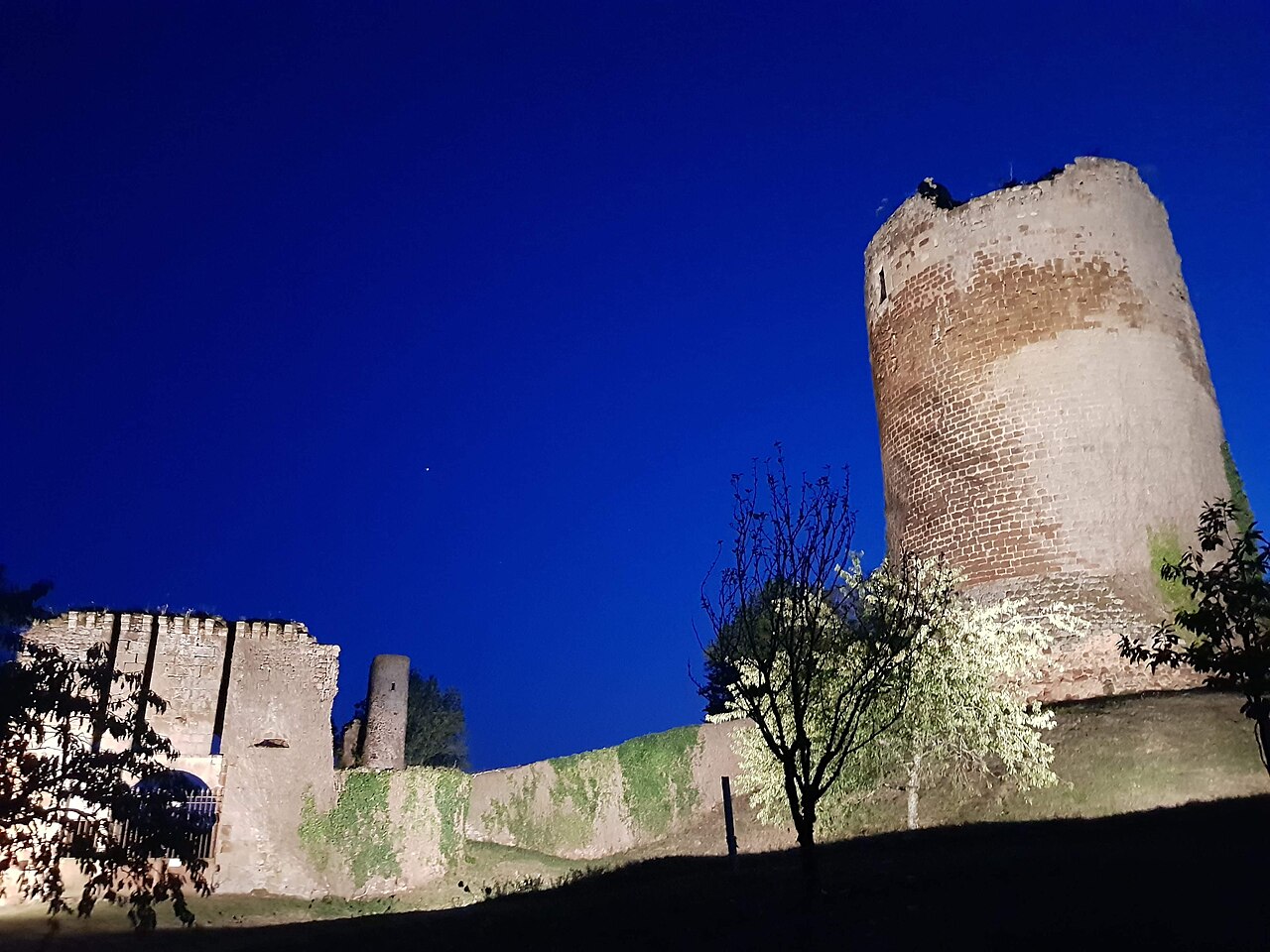
Castle of Saint-Germain-Beaupre
The Castle of Saint-Germain-Beaupre is a remarkable example of Renaissance architecture nestled in the commune of Saint-Germain-Beaupre, France. This historic castle stands as a testament to centuries of noble heritage, architectural evolution, and turbulent history, reflecting the cultural and military shifts that have shaped the region. Originally constructed as a medieval fortification, the castle has undergone numerous transformations, culminating in the elegant Renaissance structure visible today.
Its origins date back to around 1182, when the first fortification was established on the site. This early structure served as a defensive stronghold in the region, strategically positioned to oversee and control the surrounding lands. The castle was held by the Foucault family for nearly six centuries, a lineage that profoundly influenced its development and preservation. During the 15th century, significant renovations were undertaken to reinforce and expand the medieval fortress, adapting it to the evolving demands of warfare and residential comfort.
Renaissance rebuilding and architectural features
The present form of the castle primarily dates from 1558, when Gabriel I Foucault undertook a comprehensive rebuilding of the earlier 14th-century fortification. This reconstruction was necessary due to the extensive damage inflicted during the Hundred Years' War, a prolonged conflict that devastated many fortresses across France. Gabriel I Foucault's work transformed the castle into a refined Renaissance residence, blending defensive elements with the aesthetic principles of the period.
The castle's architecture from this era features characteristic Renaissance elements such as symmetrical layouts, ornate stonework, and large windows that allowed more natural light into the living spaces. Despite these refinements, the castle retained essential defensive features including a moat, a drawbridge, and robust stone walls designed to withstand sieges. Notably, the castle incorporates a water system dating back to the Roman period, highlighting the site's long-standing strategic importance and engineering ingenuity.
Historical events and notable visitors
The castle's history is marked by episodes of conflict and restoration. At the end of the 16th century, it suffered devastation during the French Wars of Religion, particularly from raids led by Jean VI d'Aumont, the head of the Catholic League troops. His actions against the Foucault family were so egregious that he was compelled to finance the castle's restoration himself, underscoring its significance and the turbulent nature of the period.
Following the end of the religious conflicts, the castle hosted several notable figures. In 1605, King Henry IV of France spent a night at the castle, marking its status as a residence of importance. Later, in 1666, the castle welcomed Henry IV's daughter, known as la Grande Mademoiselle, who documented her visit in her Memoires, providing valuable firsthand accounts of life at the castle during the 17th century.
Ownership changes and restoration efforts
In 1768, the castle passed to the Marquis Doublet de Persan, a relative of the Foucault family. However, financial difficulties forced him to sell the property on the eve of the French Revolution. Over the following century, the castle changed hands multiple times and suffered neglect, leading to gradual deterioration.
A significant restoration occurred in 1860 under the ownership of Pierre Berthomier, an architect and public works contractor. Berthomier repaired structural damages and notably rebuilt a collapsed tower, preserving the castle's silhouette and historical integrity. These efforts helped to stabilize the castle and prevent further decay.
At the close of the 20th century, the castle underwent a meticulous restoration led by James Tseliki, a British architect. This restoration not only revived the castle's Renaissance grandeur but also incorporated modern utilities and comforts, ensuring the castle's viability as a private residence while respecting its historical character.
Architectural and landscape features
The Castle of Saint-Germain-Beaupre today stands in excellent condition, surrounded by a beautifully maintained park featuring three lakes that enhance the scenic and tranquil setting. The castle's moat and drawbridge remain prominent features, evoking its medieval defensive origins. The integration of the ancient Roman water system is a unique aspect that underscores the site's long history of habitation and strategic importance.
Architecturally, the castle combines elements of its medieval past with Renaissance elegance. The robust stone walls, towers, and battlements coexist with ornate decorative details typical of the Renaissance style. The interiors, while private, are known to reflect the careful restoration efforts that balance historical authenticity with modern living standards.
Cultural significance and current status
The castle holds a significant place in the regional heritage of the Nouvelle-Aquitaine region of France, representing centuries of architectural evolution and historical narratives. Its connections to prominent historical figures and events enrich its cultural value, making it a site of interest for historians and enthusiasts of French Renaissance architecture.
Currently, the Castle of Saint-Germain-Beaupre remains a privately owned property. While it is not generally open to the public, its well-preserved state and picturesque location continue to attract attention. There have been rumors regarding its availability for sale, which could open opportunities for future stewardship and public engagement.
Visitor information and accessibility
As a private residence, the castle does not offer regular public tours or visiting hours. Interested visitors should check for any special events or private openings that might allow access. The surrounding park and lakes contribute to the castle's appeal as a landmark visible from nearby areas, providing opportunities for photography and appreciation of its historic ambiance from a distance.
For those interested in French Renaissance castles, the Castle of Saint-Germain-Beaupre offers a compelling case study in the adaptation of medieval fortifications into elegant noble residences, illustrating the architectural and historical transitions of France from the Middle Ages through the Renaissance and beyond.
Frequently asked questions (FAQ)
- What is the historical significance of the Castle of Saint-Germain-Beaupre?
- The Castle of Saint-Germain-Beaupre is a remarkable example of medieval architecture and has played a crucial role in the history of the region. Originally built in the 12th century, it served as a stronghold and residence for various noble families, reflecting the power dynamics of its time.
- When was the Castle of Saint-Germain-Beaupre built?
- Construction of the Castle of Saint-Germain-Beaupre began in the 12th century, with significant modifications and expansions occurring in the following centuries. This rich history has resulted in a unique blend of architectural styles that attract history enthusiasts and visitors alike.
- Can I visit the Castle of Saint-Germain-Beaupre?
- Yes, the Castle of Saint-Germain-Beaupre is open to visitors throughout the year, allowing them to explore its historical grounds and stunning architecture. Guided tours are available, providing insights into its fascinating past and the lives of its former inhabitants.
- What are the opening hours for the Castle of Saint-Germain-Beaupre?
- The castle typically opens its doors to visitors from 10 AM to 6 PM, with extended hours during the summer months. It is advisable to check the official website for any special events or seasonal changes in opening times before your visit.
- Is it possible to access the Castle of Saint-Germain-Beaupre with a wheelchair?
- The Castle of Saint-Germain-Beaupre is committed to accessibility, offering facilities for visitors with mobility challenges. While some areas may have limited access due to the castle's historic nature, staff are available to assist and provide information on the best routes to navigate.
- What is the best time to visit the Castle of Saint-Germain-Beaupre?
- The best time to visit the Castle of Saint-Germain-Beaupre is during the spring and early autumn when the weather is mild and the surrounding gardens are in full bloom. Additionally, visiting during weekdays or early in the day can help you avoid larger crowds.
- What are the ticket prices for the Castle of Saint-Germain-Beaupre?
- Ticket prices for the Castle of Saint-Germain-Beaupre are generally affordable, with discounts available for children and seniors. It's recommended to check the official website for the most current pricing and any special promotions or group rates.
- Are there any nearby attractions to visit?
- Yes, the Castle of Saint-Germain-Beaupre is located near several other historical sites and natural attractions. Visitors can explore local museums, parks, and charming villages, making it easy to plan a full day of sightseeing in the area.
Information
Website
Visit websiteSources & official resources
Verify the information above using these authoritative references.
Loading map...
Visitor reviews
No reviews yet. Been here? Write the first review and help other travelers!
Write the first reviewVisited this castle? Share your experience
Your review helps other travelers and adds first-hand knowledge to our encyclopedia.