
Castle of Saint-Fargeau
The castle of Saint-Fargeau stands as a remarkable example of French medieval and classical architecture, reflecting centuries of historical evolution and noble heritage. Originally established in the late 10th century as a fortified hunting residence by Héribert, bishop of Auxerre and brother to Hugues Capet, the castle's strategic location in the town of Saint-Fargeau within the Bourgogne-Franche-Comté region marks it as a site of considerable medieval importance. Over the centuries, the castle has witnessed significant architectural transformations, political upheavals, and ownership changes, culminating in its present form that blends defensive medieval features with classical 17th-century renovations and 19th-century enhancements.
Early origins and medieval foundations
The origins of the château de Saint-Fargeau date back to the late 10th century when it was constructed as a fortified hunting residence by Héribert, a prominent ecclesiastical figure and member of the Capetian dynasty. This early establishment underscored the site's initial role as a noble retreat and a symbol of feudal power. By the mid-11th century, the estate was under the control of Ithier, lord of Toucy and Saint-Fargeau, marking its integration into regional lordship networks.
During the 15th century, the castle endured turbulent times, including a notable siege in 1411 amid regional conflicts. Ownership passed through influential families such as the Montferrat and Cœur families. The disgrace of Jacques Cœur, a powerful financier and nobleman, led to the acquisition of the castle in 1453 by Antoine de Chabannes, a key figure who initiated a significant rebuilding phase. Between 1467 and 1488, Chabannes reconstructed the castle on its medieval foundations, erecting a large donjon tower and fortifying the structure to meet the defensive needs of the period.
Architectural evolution and classical renovations
The castle's architecture is distinguished by its irregular pentagonal layout, with six massive towers of pink brick positioned at the corners. Five of these towers are crowned with lantern-like structures inspired by the iconic designs of the Château de Chambord. The entrance is fortified with two artillery towers and a drawbridge, emphasizing the castle's defensive character.
The largest and oldest tower, known as the Moulin or Jacques Cœur tower, features an oval plan with diameters between 24 and 36 meters. Ingeniously designed with a slight inward lean, this tower channels rainwater into storage vessels, showcasing advanced medieval water management techniques.
In the mid-17th century, under the patronage of Anne-Marie-Louise d’Orléans, the castle underwent a transformation led by architect François Le Vau. Between 1653 and 1657, Le Vau introduced classical elements to the interior facades, redesigned walls and staircases, and added a dome to the grand dining room. This dome is decorated with an eagle with outstretched wings, symbolizing power and nobility, and the room features high wood paneling that enhances its grandeur.
17th to 19th-century modifications and restorations
The castle passed to the Le Peletier family in the early 18th century, who contributed to its architectural heritage by adding the “des Forts” pavilion. A devastating fire in 1752 destroyed much of the interior, including the largest guards’ room in France at the time. Subsequent restorations sought to repair and preserve the castle's structural and aesthetic integrity.
In 1809, Léon Le Peletier de Mortefontaine redesigned the castle's parkland, replacing the original formal French gardens with an English landscape style. This transformation reflected broader 19th-century landscape trends and enhanced the estate's picturesque qualities.
Further fires in the 19th century caused damage to the roofs and wooden frameworks, prompting partial restorations. Despite these challenges, some private rooms preserved 19th-century décor, offering a glimpse into the castle's residential history.
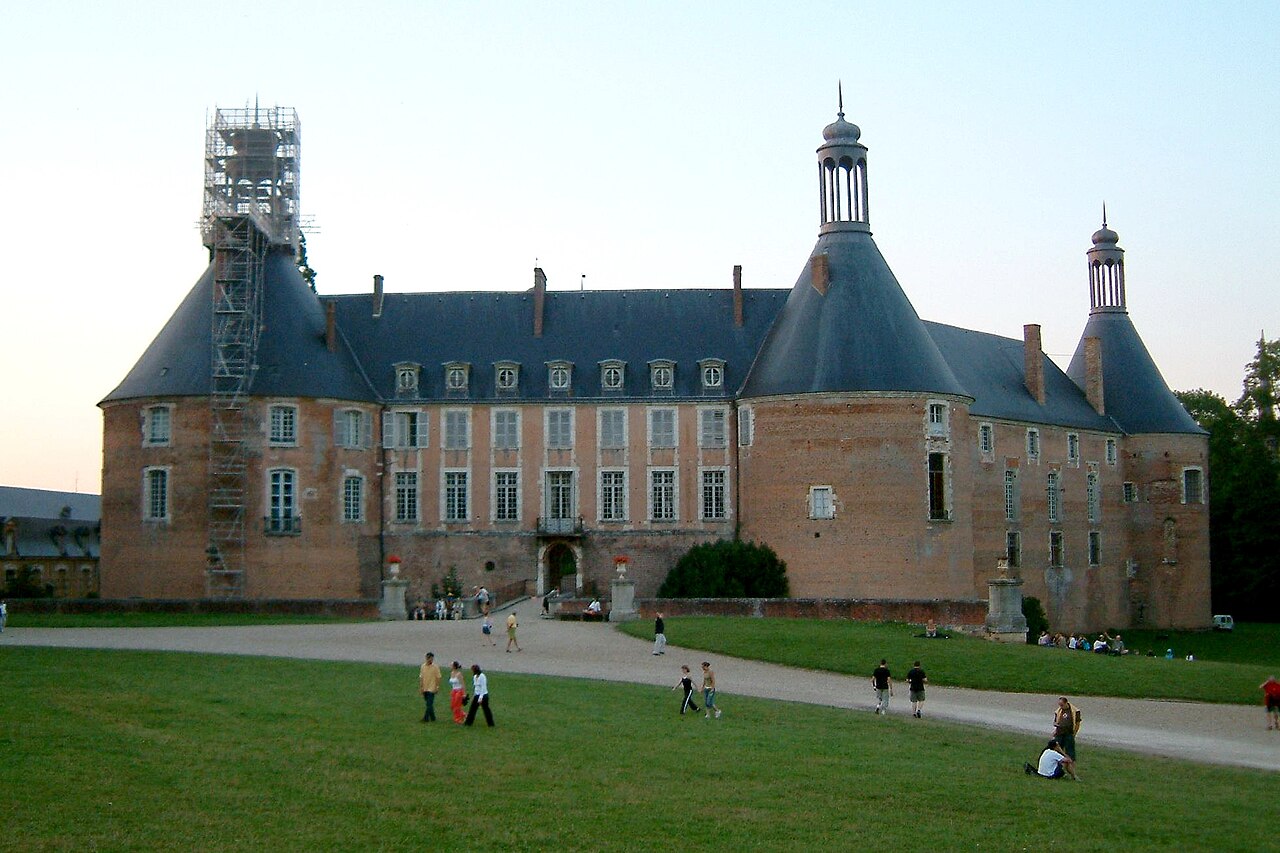
Photo by Christophe.Finot • CC BY-SA 2.5
Historical significance and notable figures
The castle's history is intertwined with significant historical figures and events. Antoine de Chabannes, who rebuilt the castle in the late 15th century, was a prominent military leader and nobleman. The estate's elevation to a county in 1542 and later to a duchy-peerage in 1576 under King Henri III reflected its rising status in the French nobility.
Anne-Marie-Louise d’Orléans, known as “La Grande Mademoiselle,” was exiled to Saint-Fargeau following her involvement in the Fronde civil wars. Her renovations introduced classical elegance to the medieval fortress. The Le Peletier family, particularly Louis-Michel Le Peletier de Saint-Fargeau, played crucial roles during the French Revolution, with Louis-Michel's assassination in 1793 commemorated within the castle chapel.
The castle also holds cultural significance as the childhood home of writer Jean d’Ormesson, who immortalized it in his novel “Au plaisir de Dieu.”
Architectural features and interior highlights
The castle's defensive features include the artillery towers guarding the entrance and the drawbridge, which historically controlled access. The six towers, especially the oval-shaped Moulin tower, dominate the silhouette and demonstrate medieval military architecture adapted to the landscape.
The interior reflects a blend of medieval and classical styles. François Le Vau's renovations introduced elegant staircases, domed ceilings, and richly paneled rooms. The grand dining room's dome with the eagle motif is a highlight, symbolizing the castle's noble heritage.
The chapel, bearing the motto “Au plaisir de Dieu,” houses black marble tombs of the Le Peletier family, including that of Louis-Michel Le Peletier de Saint-Fargeau, linking the site to France's revolutionary history.
Two wings converted into guest apartments in the 19th century retain original décor and were primarily used during winter hunting seasons, reflecting the castle's continued function as a noble residence.
Grounds and parkland
The surrounding park, originally a formal French garden, was transformed into an English landscape park in 1809 by Léon Le Peletier de Mortefontaine. The grounds feature four large lawns—both round and oval—each centered with decorative baskets, contributing to the estate's aesthetic appeal and recreational use.
Modern preservation and public access
After a period of neglect in the mid-20th century, the castle was acquired in 1979 by Michel Guyot and his brother, who undertook extensive restorations to preserve its historical and architectural legacy. The château has been officially recognized as a monument historique since 1949, ensuring protection of its façades, roofs, moats, and park.
Today, the château de Saint-Fargeau is well preserved and open to the public, offering visitors a unique opportunity to explore a site that encapsulates over a millennium of French history, architecture, and culture. Its combination of medieval fortifications, classical renovations, and landscaped grounds makes it a significant heritage landmark in the Yonne department and the broader Bourgogne-Franche-Comté region.
Frequently asked questions (FAQ)
- How do I get to the Castle of Saint-Fargeau?
- The Castle of Saint-Fargeau is located in the heart of Saint-Fargeau, France. You can reach it by car via the D95 road, or by taking public transport to the nearest train station and then a short taxi ride. Ample parking is available for visitors driving to the castle.
- What are the opening hours of the Castle of Saint-Fargeau?
- The Castle of Saint-Fargeau is open to visitors from 10 AM to 6 PM during the peak season, which runs from April to October. In the off-season, the hours may vary, so it's best to check the official website before your visit. Special events may also affect opening times.
- When was the Castle of Saint-Fargeau built?
- The Castle of Saint-Fargeau was originally constructed in the 12th century, with significant renovations and expansions occurring in the 16th century. Its rich history reflects various architectural styles that have evolved over the centuries. The castle is a testament to the region's medieval heritage and has been well-preserved.
- Can I take a guided tour of the Castle of Saint-Fargeau?
- Yes, guided tours are available for visitors who wish to learn more about the castle's history and architecture. These tours typically provide insights into the castle's past, its significance in French history, and the stories of its former inhabitants. Reservations are recommended, especially during peak tourist seasons.
- Why is the Castle of Saint-Fargeau historically significant?
- The Castle of Saint-Fargeau is significant for its role in French history, serving as a royal residence and a fortress during various conflicts. It has witnessed numerous historical events and has been home to several prominent figures. Today, it stands as a symbol of the region's cultural heritage and architectural grandeur.
- Is the Castle of Saint-Fargeau accessible for visitors with reduced mobility?
- Yes, the Castle of Saint-Fargeau strives to be accessible to all visitors. There are ramps and designated pathways to facilitate access for those with reduced mobility. It's advisable to contact the castle ahead of your visit to ensure any specific needs can be accommodated.
- What is the ticket price for visiting the Castle of Saint-Fargeau?
- As of the latest information, the ticket prices for the Castle of Saint-Fargeau are approximately €10 for adults and €5 for children aged 6-12. There are often discounts available for students, seniors, and groups. Check the official website for current prices and any special offers.
- When is the best time to visit the Castle of Saint-Fargeau?
- The best time to visit the Castle of Saint-Fargeau is during the spring and early autumn months, when the weather is mild and pleasant. These seasons also allow you to enjoy the beautiful gardens in full bloom. Summer can be busy with tourists, while winter offers a quieter experience.
- What nearby attractions can I visit while at the Castle of Saint-Fargeau?
- Visitors to the Castle of Saint-Fargeau can also explore the picturesque village of Saint-Fargeau, which offers charming shops and local cuisine. Nearby, you can find the beautiful forests of Yonne, perfect for hiking and nature walks. The region is rich in historical sites, making it a great base for further exploration.
Photo gallery

Information
Website
Visit websiteSources & official resources
Verify the information above using these authoritative references.
Loading map...
Visitor reviews
No reviews yet. Been here? Write the first review and help other travelers!
Write the first reviewVisited this castle? Share your experience
Your review helps other travelers and adds first-hand knowledge to our encyclopedia.