Castle of Penas Róias
The Castle of Penas Róias is a remarkable example of Romanesque military architecture situated in the municipality of Mogadouro, northeastern Portugal. Established by the Knights Templar in the 12th century, this hill castle was a pivotal fortification designed to secure the borders of the young Portuguese kingdom during the turbulent period of the Christian Reconquista.
The site of the castle reveals a rich history predating its medieval origins. Archaeological evidence points to an earlier castro settlement—a fortified protohistoric community typical of the Iberian Peninsula—indicating the strategic importance of this location since ancient times. This early occupation was abandoned following the Roman invasion, marking a significant transition in the region's control and settlement patterns.
Medieval foundation and templar legacy
During the 12th century, the area encompassing Penas Róias became a contested frontier between Christian and Muslim forces. Following the establishment of Portugal as an independent kingdom under King Afonso Henriques (1112–1185), the monarch entrusted the Knights Templar with the defense and colonization of the kingdom's eastern and southern borders. In 1145, Fernão Mendes de Bragança, lord of Terra de Bragança, granted lands including Penas Róias to the Templar Order. This marked the beginning of the castle's construction as part of a broader strategy to secure the region.
Traditionally, the castle's construction is attributed to the leadership of Gualdim Pais, the Templar Master, around 1166. Although an inscription on the keep suggests dates between 1172 and 1181, bearing Gualdim Pais's name, the exact chronology remains partially uncertain. Under King Sancho I (1185–1211), efforts were made to repopulate the village of Penas Róias, which was granted municipal status, reflecting its growing importance as a frontier settlement.
Administrative development and charters
The village of Penas Róias appears in official 13th-century inquiries and was granted a Foral charter in 1272, a document establishing municipal privileges and governance. This charter was renewed in 1273 by King Afonso III (1248–1279), confirming the settlement's administrative autonomy. These developments highlight the castle's dual role as both a military fortress and a center of local administration.
Post-templar ownership and architectural evolution
Following the dissolution of the Knights Templar in the early 14th century, King Dinis (1279–1325) transferred their properties, including Penas Róias, to the Order of Christ in 1319. This transition likely prompted restoration and reinforcement of the castle's defenses to maintain its strategic function. By 1457, records indicate the castle and village were sold to Álvaro Pires de Távora, a local noble, signifying a shift from military to noble ownership.
In the early 16th century, the castle and village were enclosed within defensive walls, as depicted in the detailed drawings by the military surveyor Duarte de Armas. The issuance of a new Foral charter by King Manuel I in 1512 reaffirmed the settlement's municipal privileges, reflecting continued administrative importance.
Architectural features and layout
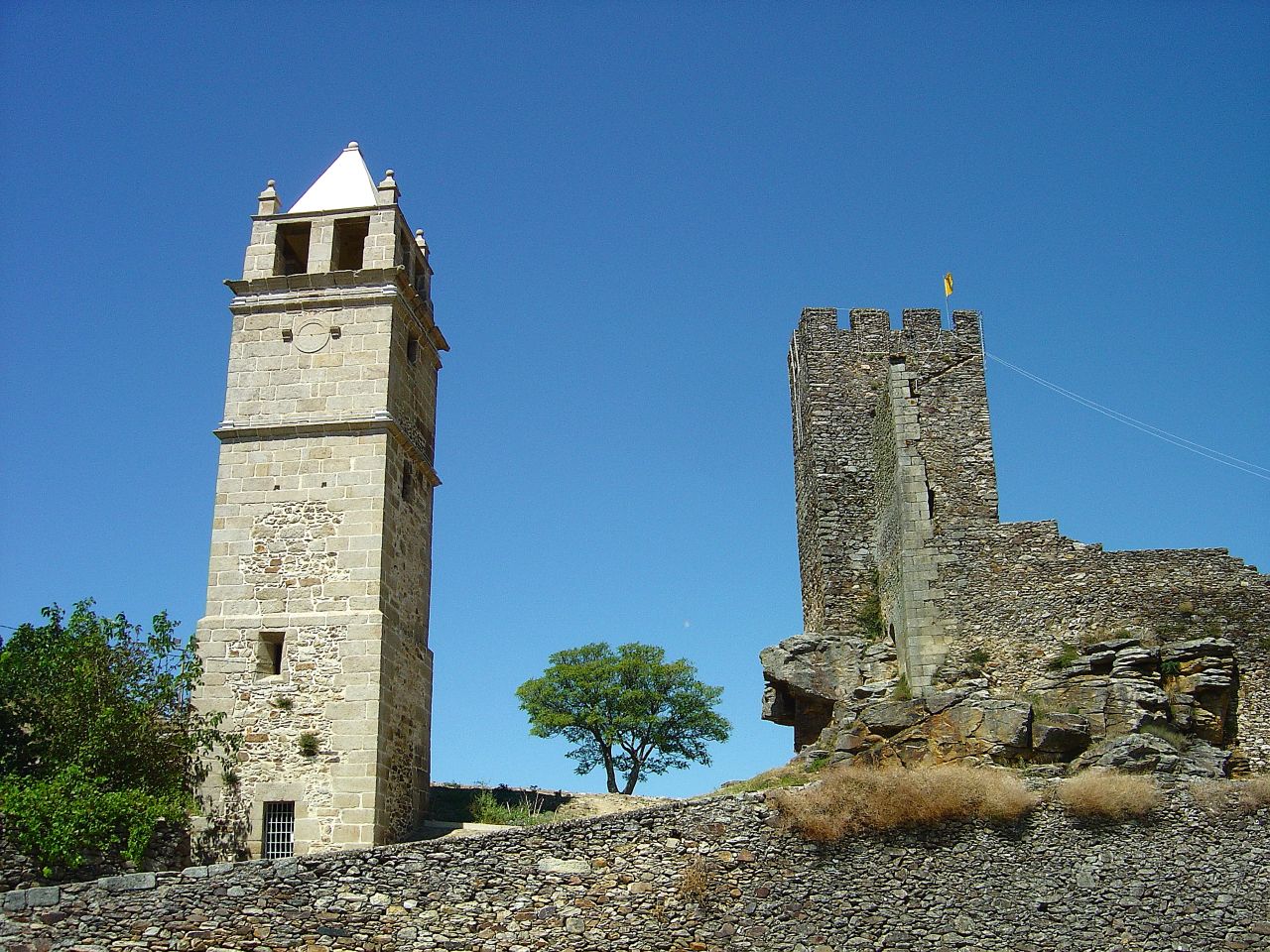
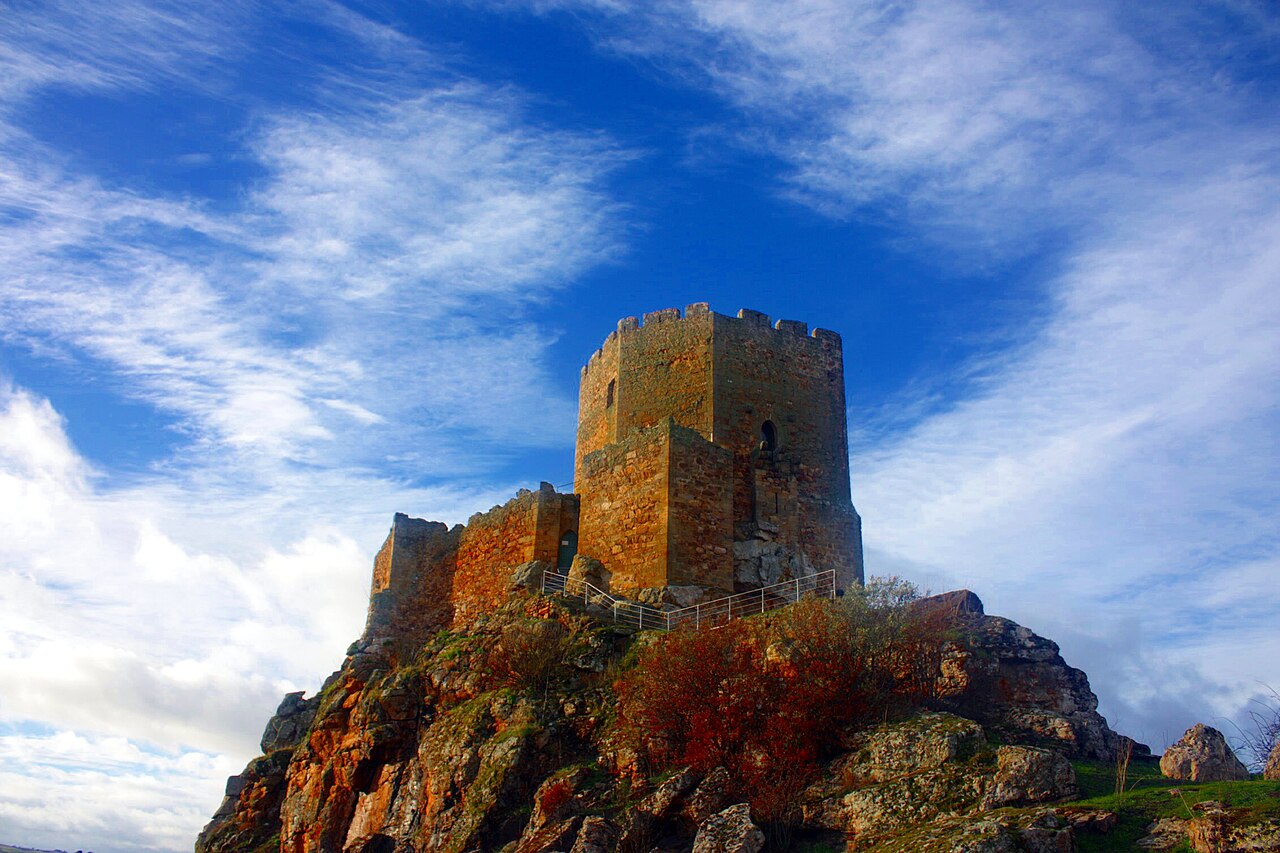
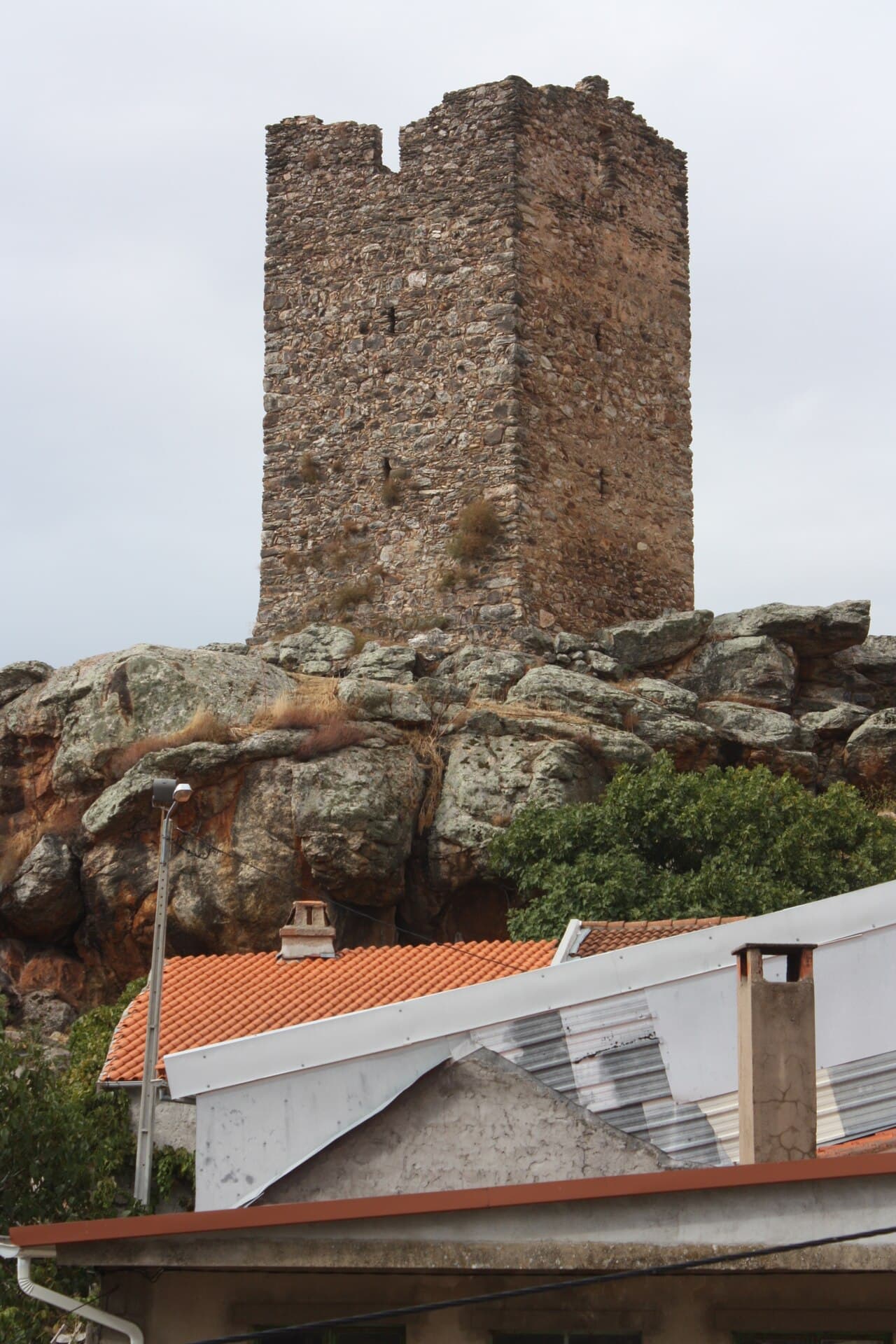
The Castle of Penas Róias is constructed primarily from local quartzitic schist stone bonded with mortar, characteristic of the region's geology. Its design features a central keep (Torre de Menagem) with a square plan measuring approximately five meters on each side. This main tower rises in three internal floors and is built with simple schist masonry.
Two facades of the keep, facing east and south, contain windows framed with finely cut stone, allowing natural light into the interior chambers. The entrance is uniquely positioned on the west face, elevated about six meters above ground level, originally accessible only via a removable wooden ladder. This design enhanced the tower's defensibility by limiting access.
Above the entrance, a lintel carved with a cross pattée—a symbol associated with the Knights Templar—features an eroded inscription referencing Gualdim Pais and the year 1166 according to the Hispanic Era calendar. This detail underscores the castle's strong ties to the Templar Order and its founding period.
Surrounding the keep are defensive walls reinforced by four turrets: two faceted and two cylindrical. Adjacent to the keep stands a small circular tower with a talus base, a sloping lower wall designed to strengthen the structure; however, this tower is a later addition and not part of the original medieval construction.
Defensive structures and village fortifications
The castle was historically integrated with the village's defensive walls, forming a fortified enclosure that protected the settlement. Although much of the town wall has been lost over centuries, archaeological excavations in the 20th century uncovered traces confirming the existence of this broader fortification system.
Today, only fragments of the medieval walls and turrets survive, preserved through restoration efforts carried out in the late 1970s. These interventions focused on stabilizing the remaining structures, including the keep and curtain walls, to prevent further deterioration and to maintain the castle's historical integrity.
Modern recognition and preservation
In 1945, the Castle of Penas Róias was officially classified as a National Monument, recognizing its cultural and historical significance within Portugal's heritage. Archaeological work in 1977 uncovered ancient columns near the site, highlighting the area's long history of human occupation.
Restoration and consolidation efforts between 1977 and 1978 have helped preserve the essential features of the castle, although public access to the surviving tower is restricted for safety reasons. The castle remains a poignant symbol of the medieval military and administrative efforts that shaped the Portuguese frontier during the formative centuries of the kingdom.
Frequently asked questions (FAQ)
- How do I get to Castle of Penas Róias?
- The castle is located near the village of Penas Róias in Mogadouro, northeastern Portugal. It is accessible by car via local roads, with parking available nearby.
- What is the historical significance of Castle of Penas Róias?
- Castle of Penas Róias was built by the Knights Templar in the 12th century to defend Portugal's eastern borders during the Christian Reconquista. It played a key role in regional security and administration.
- Can I visit the interior of the castle?
- Currently, the castle's surviving tower is closed to the public for safety reasons. Visitors can explore the exterior walls and surrounding area, which offer insight into the medieval fortification.
- When is the best time to visit Castle of Penas Róias?
- The castle is open daily from 10:00 to 17:00. Spring and early autumn offer pleasant weather and fewer crowds, making these seasons ideal for visiting.
- Are there any guided tours available at the castle?
- There are no regular guided tours at Castle of Penas Róias, but local tourist offices in Mogadouro may provide information or occasional guided visits upon request.
Photo gallery

Information
Opening hours
10:00-17:00, daily
Ticket prices
Free
Current owner
State
Loading map...
Visitor reviews
No reviews yet. Been here? Write the first review and help other travelers!
Write the first reviewVisited this castle? Share your experience
Your review helps other travelers and adds first-hand knowledge to our encyclopedia.