Castle of Algoso
The Castle of Algoso stands as a remarkable example of medieval military architecture in the eastern region of Tras-os-Montes, Portugal. Its strategic location atop a granite hill overlooking the Angueira River provided a commanding view of the surrounding landscape, making it a vital defensive stronghold along the border with the Kingdom of León during the High Medieval period. The castle's history is deeply intertwined with the complex political and military struggles of the Iberian Peninsula, including the Leonese succession conflicts and the territorial ambitions of the early Portuguese monarchy.
Constructed in the late 12th century by the nobleman D. Mendo Rufino under the reign of King Afonso Henriques, the first king of Portugal, the fortress was initially designed to secure the frontier and assert royal authority in the Terra da Miranda region. Archaeological evidence reveals that the site had been occupied since the Chalcolithic period, with artifacts from the Bronze Age and Roman ceramics indicating a long history of human settlement, although these earlier phases were not focused on military fortification.
Historical significance and ownership
In 1224, the castle was granted to the Knights Hospitaller by King Sancho II, marking a significant shift in its role and management. The Hospitallers transformed the fortress into a Gothic-style commandery, integrating it into a network of defenses along Portugal's northwest border. This period saw the castle become a center of military and religious power, reflecting the dual nature of the Hospitaller order as both warriors and monks.
The 13th century was marked by territorial disputes between the Knights Hospitaller and the Knights Templar, with King Dinis ultimately confirming Hospitaller rights in 1291 and commissioning reconstruction works to enhance the castle's defenses. The fortress was formally recognized with a foral (charter) from King Afonso V in 1480, reaffirmed by King Manuel I in 1510, underscoring its continued importance in regional governance despite a gradual decline in population.
Architectural features and layout
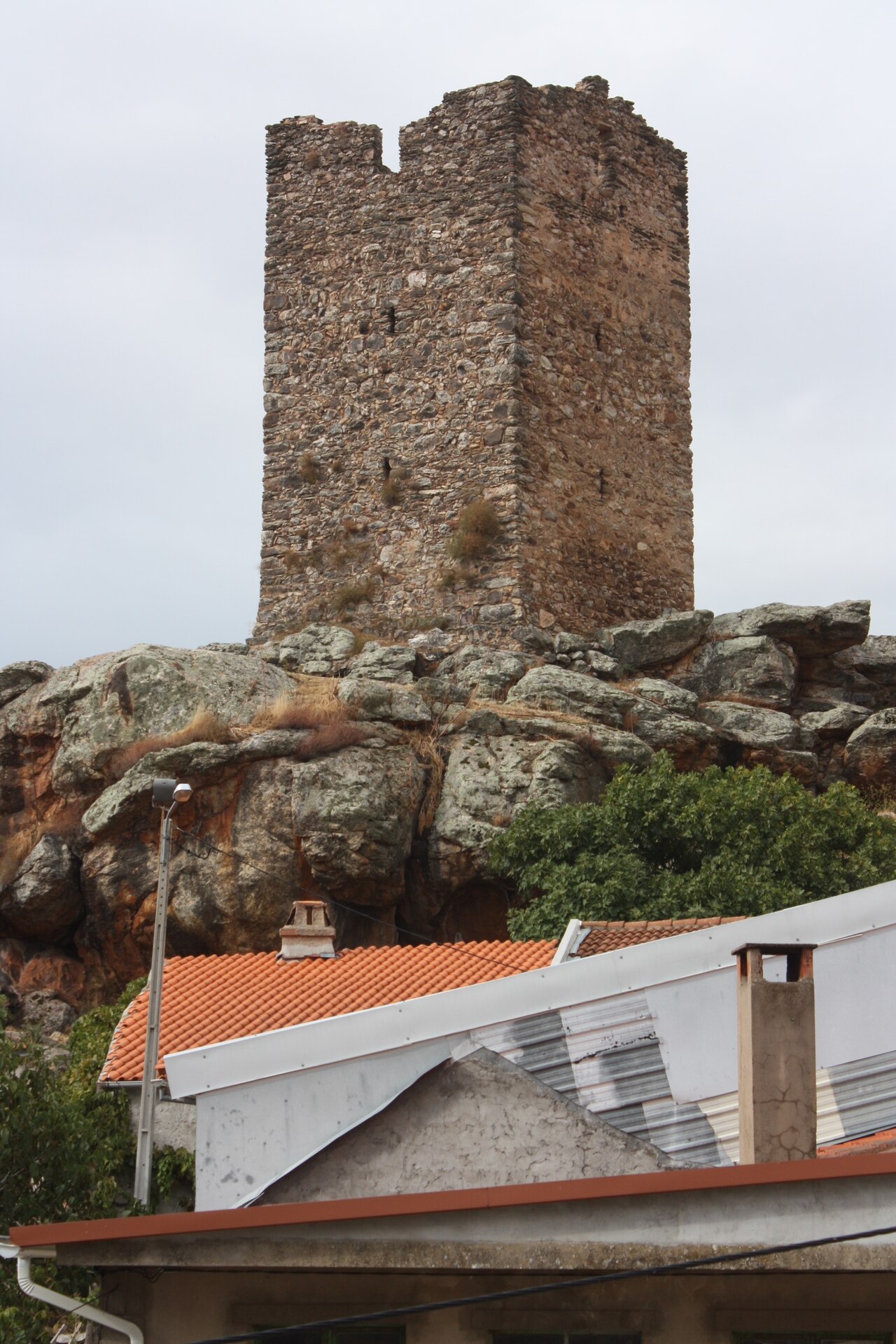
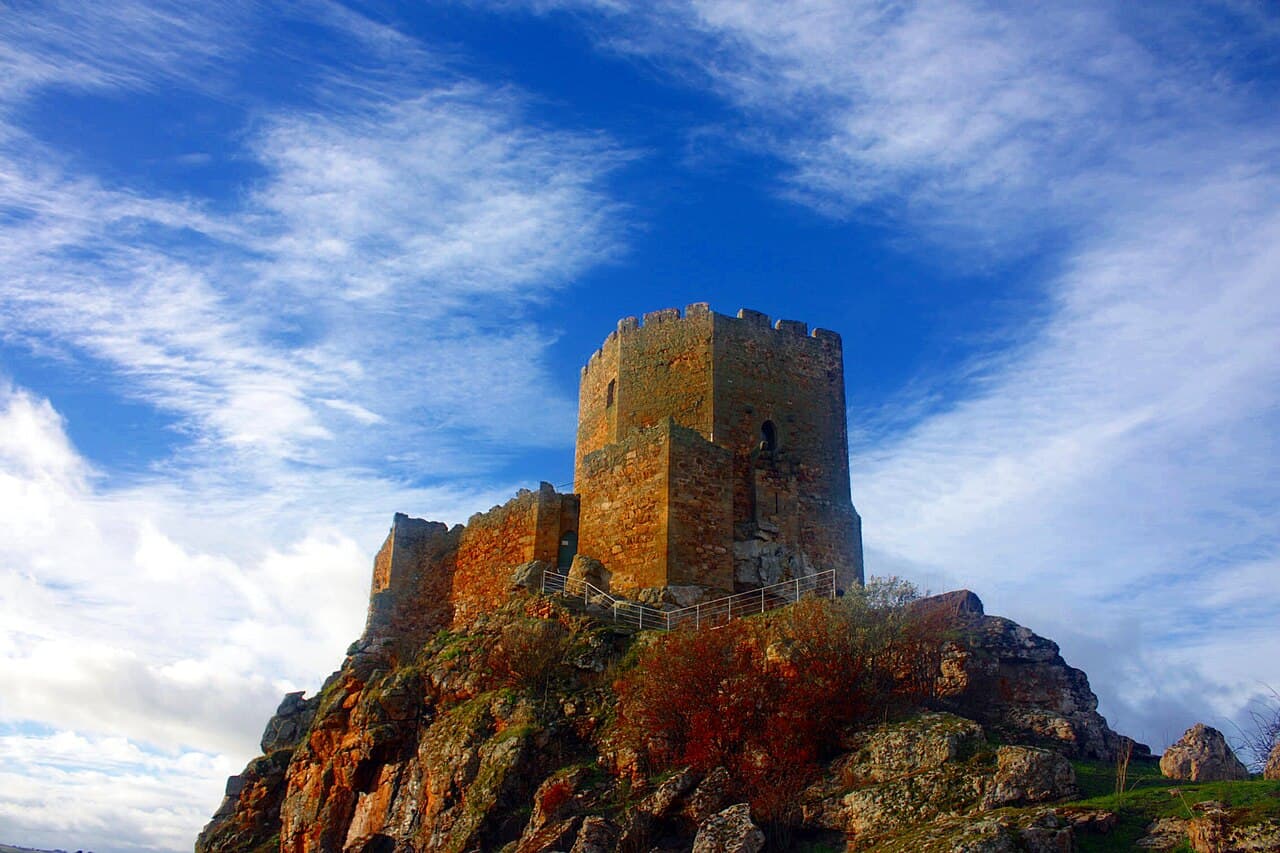
Perched at approximately 690 meters above sea level on the Cabeço da Penenciada hill, the castle exhibits a rectangular layout that adapts to the natural topography. Constructed primarily from quartzitic schist and granite, its thick corbelled walls enclose a compact military courtyard. The fortress's most striking architectural element is its three-story heptagonal keep tower, a rare design choice that provided both residential quarters and defensive capabilities.
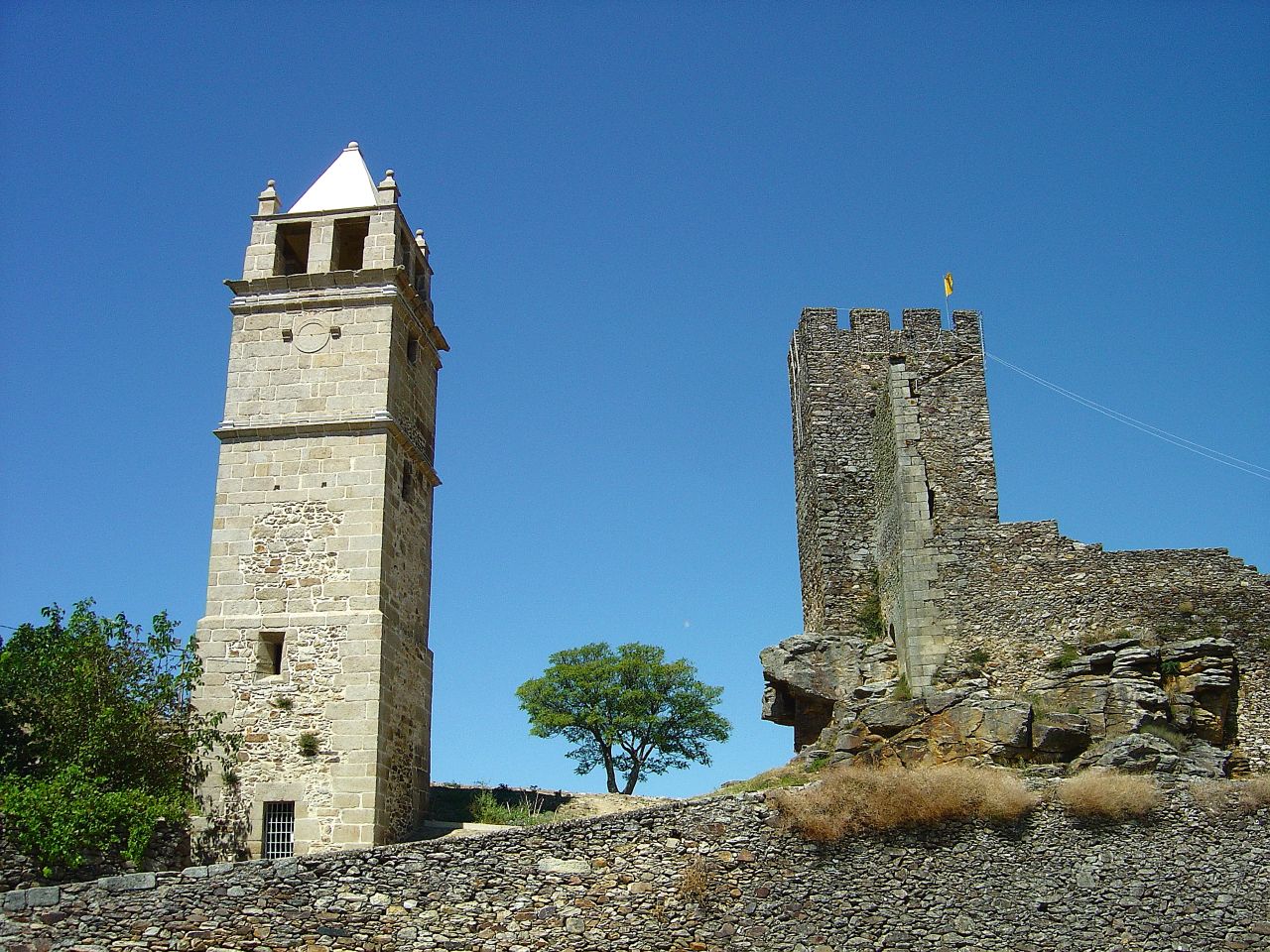
The keep features robust stone reinforcements at its corners and a Gothic pointed arch entrance. Its upper floor was fortified with vaulted ceilings, battlements with merlons, narrow arrowslits, and machicolations—openings used to repel attackers by dropping projectiles or boiling substances. Surrounding the keep, the castle walls are punctuated by several circular towers (cubelos), including a prominent square cubelo near the northern gate, which is itself protected by a barbican and accessed via steps carved into the rock.
Within the walls, remnants of support structures such as stables and a kitchen hint at the daily life of the garrison, although the interior space is notably constrained by the rugged terrain and massive stones. A particularly important feature is the large vaulted cistern, measuring roughly 30 by 30 meters and about 3 meters high, capable of storing approximately 90,000 liters of water. This cistern was vital for sustaining the castle's inhabitants during prolonged sieges.
Adaptations for gunpowder warfare
In the late 17th century, the castle underwent modifications to accommodate the evolving nature of warfare, including the addition of artillery openings in an eastern tower. These adaptations reflect the transition from traditional medieval fortifications to early modern military architecture, designed to withstand attacks involving gunpowder weapons.
Military history and decline
The Castle of Algoso played a significant role in various conflicts throughout its history. It was actively involved in the Portuguese succession crisis of 1580, where the castle's governor supported António, Prior of Crato, a claimant to the throne. Following the accession of Philip I of Spain, the castle's military importance waned, although the municipality was granted privileges to maintain loyalty.
By the 17th century, the fortress had largely fallen into disuse and ruin, with its last recorded military engagement occurring in 1710 during the War of Spanish Succession. Despite this decline, the castle demonstrated resilience by resisting Spanish attacks during the Seven Years’ War in 1762. However, the fortress never regained its former strategic prominence.
Preservation and modern significance
Conservation efforts began in the 20th century, with the castle being classified as a property of public interest in 1955. Restoration projects initiated in 1944 and continuing intermittently through the 1970s and into the early 2000s have focused on stabilizing the masonry, restoring battlements, clearing vegetation, and improving visitor access with metal railings and lighting.
Today, the Castle of Algoso stands as a well-preserved example of High Medieval hill castle architecture in Portugal, offering insights into the military, religious, and political history of the region. Its imposing heptagonal keep and robust fortifications attract historians, architects, and tourists alike, highlighting the enduring legacy of the Knights Hospitaller and the medieval border conflicts that shaped the Iberian Peninsula.
Frequently asked questions (FAQ)
- How do I get to the Castle of Algoso?
- The Castle of Algoso is located in Vimioso, Portugal, easily accessible by car or public transport. If you are driving, follow the signs to Vimioso and look for parking areas nearby the castle.
- What is the historical significance of the Castle of Algoso?
- The Castle of Algoso dates back to the 12th century and played a crucial role in the defense against invasions during the medieval period. It is a symbol of the region's rich history and a testament to the architectural styles of that era.
- When was the Castle of Algoso built?
- The construction of the Castle of Algoso began in the early 12th century, during the Reconquista, and it was completed in subsequent decades. Its strategic location was chosen to serve as a defensive stronghold for the region.
- Can I enter the Castle of Algoso?
- Yes, visitors can enter the Castle of Algoso to explore its historical ruins and enjoy panoramic views of the surrounding landscape. Be sure to check the opening hours before your visit for the most enjoyable experience.
- Why is the architecture of the Castle of Algoso unique?
- The architecture of the Castle of Algoso features a blend of medieval military design with local influences, showcasing thick stone walls and a simple yet imposing structure. Its design reflects the defensive needs of its time while also incorporating elements typical of Portuguese castles.
- Is it possible to take guided tours of the Castle of Algoso?
- Yes, guided tours are available at the Castle of Algoso, providing visitors with in-depth knowledge about its history and architecture. These tours offer a great way to fully appreciate the castle's significance and learn fascinating stories from the past.
- What are the best times to visit the Castle of Algoso?
- The best times to visit the Castle of Algoso are during the spring and fall when the weather is mild and ideal for exploring. Summer can be quite hot, while winter may bring chilly temperatures, so plan your visit accordingly.
- What are the ticket prices for the Castle of Algoso?
- Ticket prices for the Castle of Algoso are generally affordable, with discounts available for children, students, and seniors. It's recommended to check the official website or local tourism office for the most current ticket pricing information.
- What are the opening hours for the Castle of Algoso?
- The Castle of Algoso typically opens at 9 AM and closes at 6 PM, but hours may vary depending on the season. It’s advisable to verify the opening hours ahead of your visit to ensure you have ample time to explore.
- Are there any nearby attractions to the Castle of Algoso?
- Yes, nearby attractions include the picturesque town of Vimioso, which offers charming streets and local eateries. Additionally, you can explore other historical sites and natural parks in the region, making for a full day of adventure.
Photo gallery

Information
Website
Visit websiteSources & official resources
Verify the information above using these authoritative references.
Loading map...
Visitor reviews
No reviews yet. Been here? Write the first review and help other travelers!
Write the first reviewVisited this castle? Share your experience
Your review helps other travelers and adds first-hand knowledge to our encyclopedia.