Castle of Mogadouro
The Castle of Mogadouro stands as a significant medieval fortress located in the municipality of Mogadouro, in northeastern Portugal. Constructed during the mid-12th century amid the early phases of the Portuguese Reconquista, this castle embodies a rich historical tapestry shaped by various cultural and military influences over centuries. The site itself reveals a layered past, with archaeological evidence of prehistoric, Roman, Visigothic, and Muslim occupation predating the medieval fortress, highlighting its longstanding strategic importance.
Built between 1160 and 1165, the castle was part of a defensive network securing the northeastern border of Portugal during a period marked by frequent territorial conflicts. Its early role was to protect settlements and control vital routes in a frontier region. In 1186, the castle and its lands were donated to the Knights Templar by Fernão Mendes of Bragança, elevating Mogadouro’s importance as a military and administrative center. The Templars fortified the castle further and used it to oversee strategic corridors alongside other nearby strongholds such as Algoso and Miranda do Douro.
Medieval history and political significance
During the late 12th and early 13th centuries, Mogadouro’s ownership reflected the complex political and religious dynamics of medieval Portugal. After King Sancho I exchanged the region in 1197, the castle returned to the Knights Templar by 1223. In 1272, King Afonso III issued a foral (charter) that granted legal privileges to encourage settlement and local governance, simultaneously elevating the castle from a commandery to a priory, underscoring its growing prominence.
Following the suppression of the Knights Templar in the early 14th century, the castle’s control passed to the Order of Christ in 1319, the Templars’ Portuguese successor. The fortress underwent enhancements reflecting evolving military needs during the 13th and 14th centuries. In 1483, King John II ordered repairs to maintain its defensive capabilities. The noble Távoras family assumed lordship and governance of the castle in the 15th century, constructing the adjoining Paço dos Távoras palace. They maintained the castle’s military role well into the late 17th century, including during the Portuguese Restoration War (1640-1668), which restored Portugal’s independence from Spain.
The castle’s administrative importance continued into the early 16th century, with King Manuel I granting a new foral in 1512, updating the settlement’s legal status. However, by the 18th century, the castle’s military significance diminished, particularly following the decline of the Távoras family, who lost their influence and properties. Gradual abandonment led the fortress to fall into ruin.
Architectural features and layout
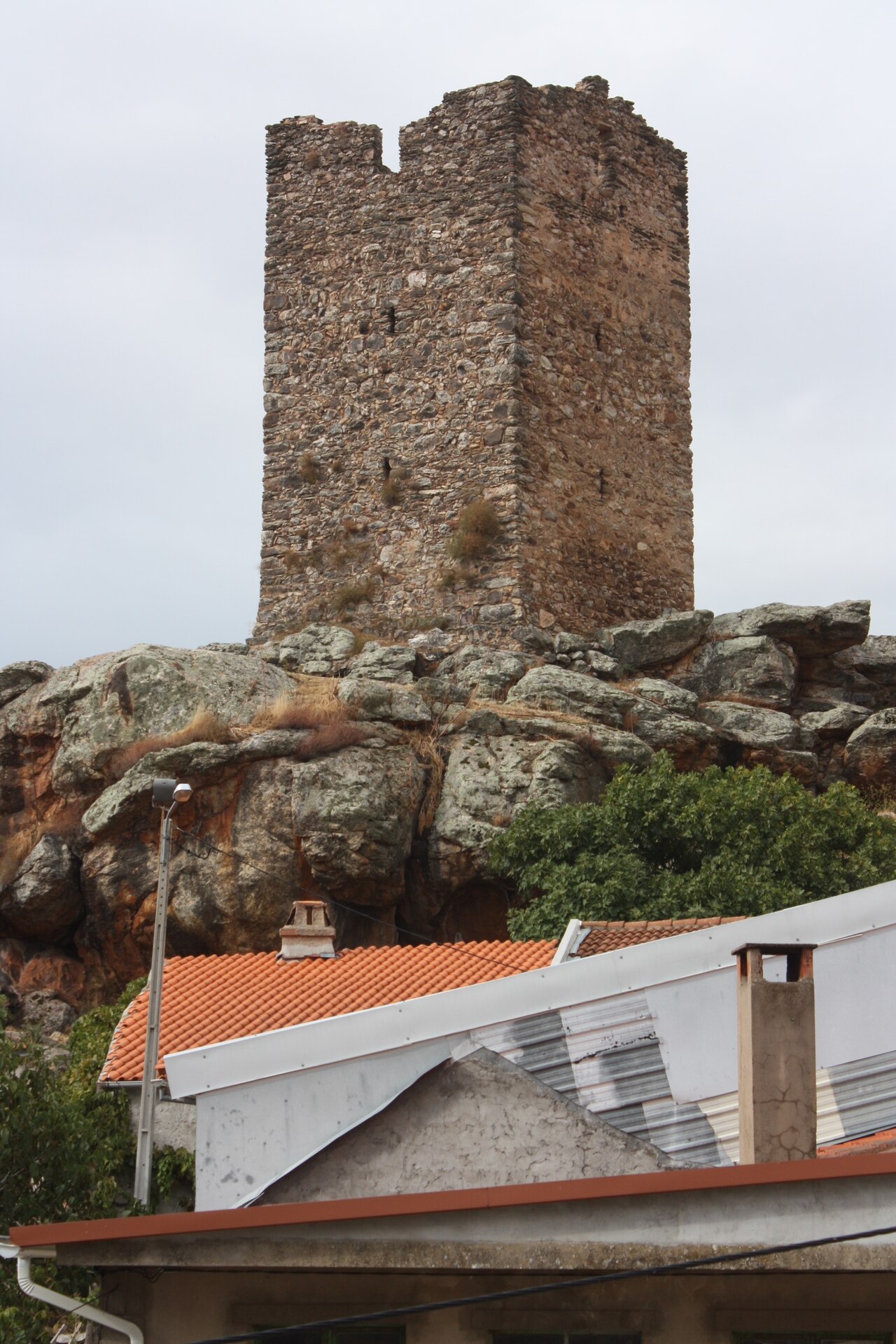
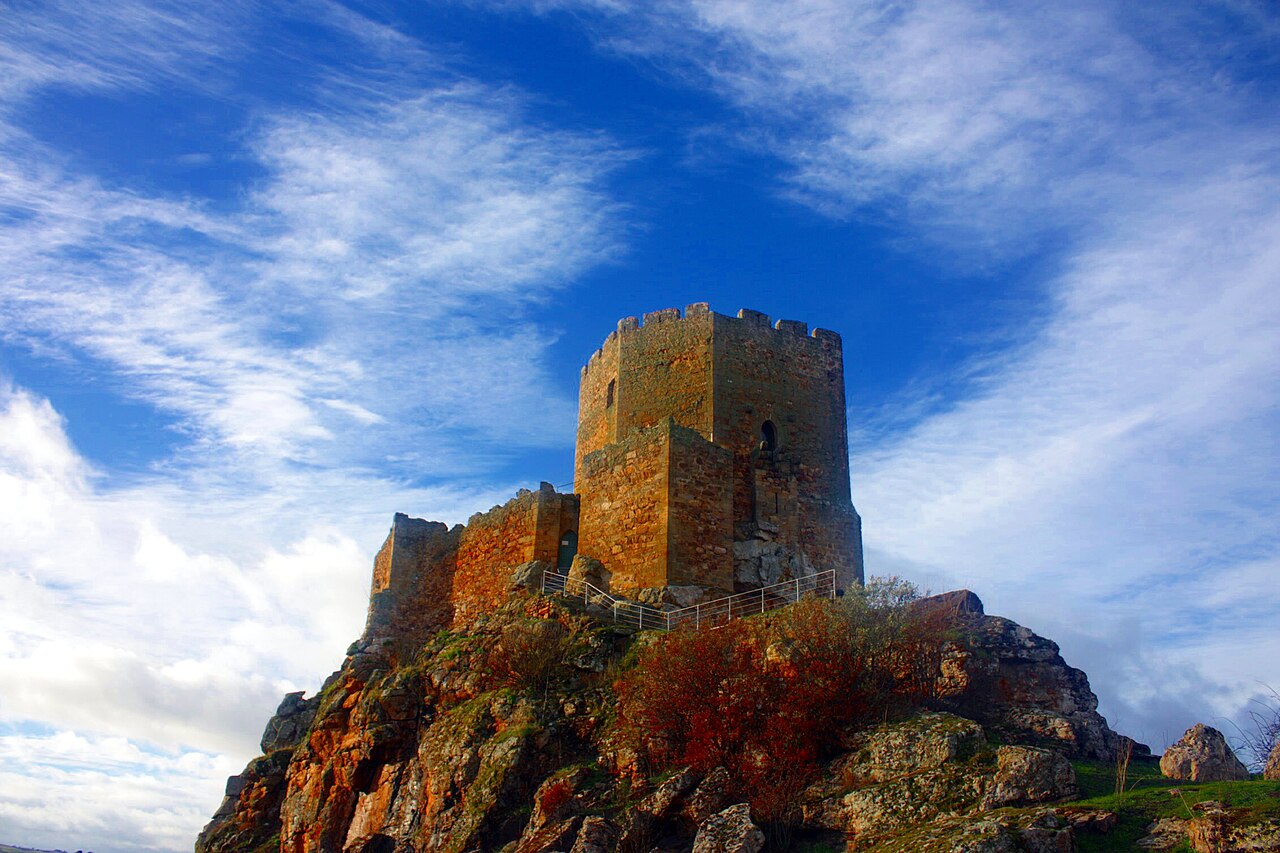
Perched on a commanding rocky hilltop on the northern slope of the Serra de Mogadouro mountain range, the castle’s position dominates the surrounding landscape, offering strategic views and control. Its irregular polygonal layout is enclosed by defensive walls constructed from locally sourced schist and granite stones, bonded with traditional argamassa (clay-based mortar), harmonizing the fortress with its rugged environment.
Towers and defensive structures
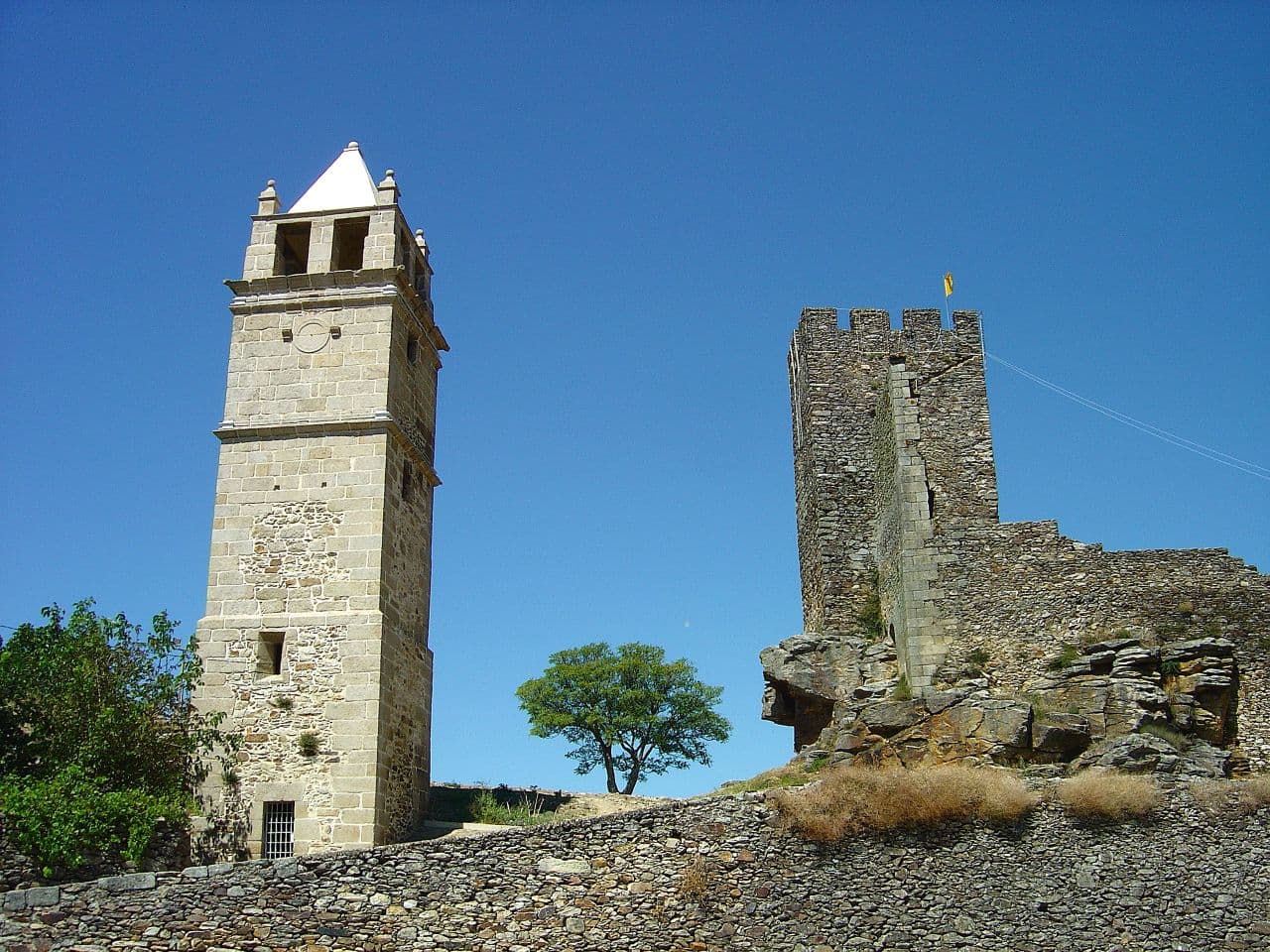
The castle is defined by two prominent quadrangular towers. The main keep is rectangular, situated on the cliff edge, serving as the fortress’s core defensive stronghold. It features two arched doorways on the northeast and southeast sides, accessed via staircases with intermediate landings. Multiple arrow slits on various faces provided protected firing positions for archers. The keep’s interior comprises three floors; the uppermost housed signal bells used for communication and warnings. This floor is topped by a distinctive pyramidal roof adorned with four granite pinnacles, one at each corner, adding both functional and decorative elements.
Adjacent to the keep is a smaller trapezoidal tower connected to the main walls and former residential quarters through curtain walls. The northern defensive circuit includes two additional towers: a pentagonal tower and a rectangular tower featuring a semicircular corbel, a projecting support architectural element enhancing structural stability and defense.
Courtyard and living quarters
The defensive walls form an irregular polygon enclosing a military courtyard containing the remains of various buildings and chambers. Some chambers retain original roofing and cylindrical chimneys, suggesting their use as living quarters or operational spaces within the fortress. The presence of these domestic features highlights the castle’s dual role as a military stronghold and a residence.
Paço dos távoras palace
Next to the keep stands the Paço dos Távoras, a palace built by the noble Távoras family in the 15th century. This residential complex consists of three rectangular sections of varying heights, featuring architectural details such as full-arch and rectangular windows. Wooden balconies project from some façades, and the walls are capped with merlons, crenellated parapets typical of defensive structures. This blend of domestic and military architecture reflects the Távoras’ status and the castle’s evolving function.
Castle access and village surroundings
Access to the castle is via a staircase that ascends with two right-angled turns, leading to a passage beneath the military square. This passage contains a circular well, a crucial water source during sieges, underscoring the fortress’s preparedness for prolonged defense. To the east lies a barbican, an external fortified gatehouse providing an additional layer of defense. Attached to the barbican is a structure historically used as a rabbit shed, indicating the management of small livestock within the castle’s economy.
The village of Mogadouro developed around the castle, protected by its own defensive walls, remnants of which remain on the slope below. The village center included a pillory, a church with a steeple adjacent to the barbican, and a stone cross, all surrounded by cultivated lands sustaining the local community.
The clock tower
A later addition to the castle complex, the clock tower features granite cornerstones and incertum masonry, characterized by irregularly shaped stones. A sundial adorns its southern wall, and the tower’s interior is divided into three floors, with the uppermost floor designed to house bells for timekeeping and signaling. Despite damage from weather and vandalism, the clock tower remains a prominent feature of the castle’s silhouette.
Preservation and cultural heritage
Recognized as a National Monument in 1945, the Castle of Mogadouro has undergone various restoration efforts aimed at stabilizing its walls and the main keep tower. Restoration began in the 1950s and continued intermittently through the late 20th century. Despite challenges such as vandalism and damage from harsh winters, these efforts have preserved significant architectural elements, allowing visitors to appreciate the castle’s historical and cultural significance.
Today, the castle stands as a testament to the military, political, and social history of northeastern Portugal. Its combination of defensive structures, residential palaces, and village fortifications offers rich insights into medieval fortification strategies and noble life. The Castle of Mogadouro remains a vital cultural landmark, attracting historians, architects, and tourists interested in Portugal’s medieval heritage.
Frequently asked questions (FAQ)
- How do I get to the Castle of Mogadouro?
- The Castle of Mogadouro is located in the town of Mogadouro in northeastern Portugal. It is accessible by car via regional roads, with parking available nearby. Public transport options are limited, so driving is recommended.
- What is the historical significance of the Castle of Mogadouro?
- The Castle of Mogadouro played a crucial role in the Portuguese Reconquista and border defense during the 12th to 17th centuries. It was controlled by the Knights Templar and later the Order of Christ, serving as a military and administrative center.
- Can visitors explore the castle's towers and palace?
- Yes, visitors can explore the castle’s main keep, the adjacent trapezoidal tower, and the Paço dos Távoras palace. Some chambers retain original features such as chimneys and roofing, offering insights into medieval life.
- Is the castle suitable for families and children?
- The Castle of Mogadouro is family-friendly, with open courtyards and accessible paths. However, some uneven terrain and stairs may require caution for young children and those with mobility issues.
- When is the best time to visit the Castle of Mogadouro?
- The best time to visit is during spring and autumn when the weather is mild and the landscape around the castle is particularly scenic. Summer can be hot, and winter may bring harsh weather conditions affecting access.
- Are there any nearby attractions to visit after the castle?
- Nearby attractions include the historic villages of Algoso and Miranda do Douro, as well as natural parks in the region. These sites complement a visit to the Castle of Mogadouro with cultural and outdoor experiences.
- What are the opening hours and ticket prices?
- The castle is open daily from 9:00 to 18:00. Admission is free, making it accessible to all visitors interested in exploring this historic site.
Photo gallery

Information
Opening hours
9:00-18:00, daily
Ticket prices
Free
Current owner
Portuguese government
Website
Visit websiteSources & official resources
Verify the information above using these authoritative references.
Loading map...
Visitor reviews
No reviews yet. Been here? Write the first review and help other travelers!
Write the first reviewVisited this castle? Share your experience
Your review helps other travelers and adds first-hand knowledge to our encyclopedia.