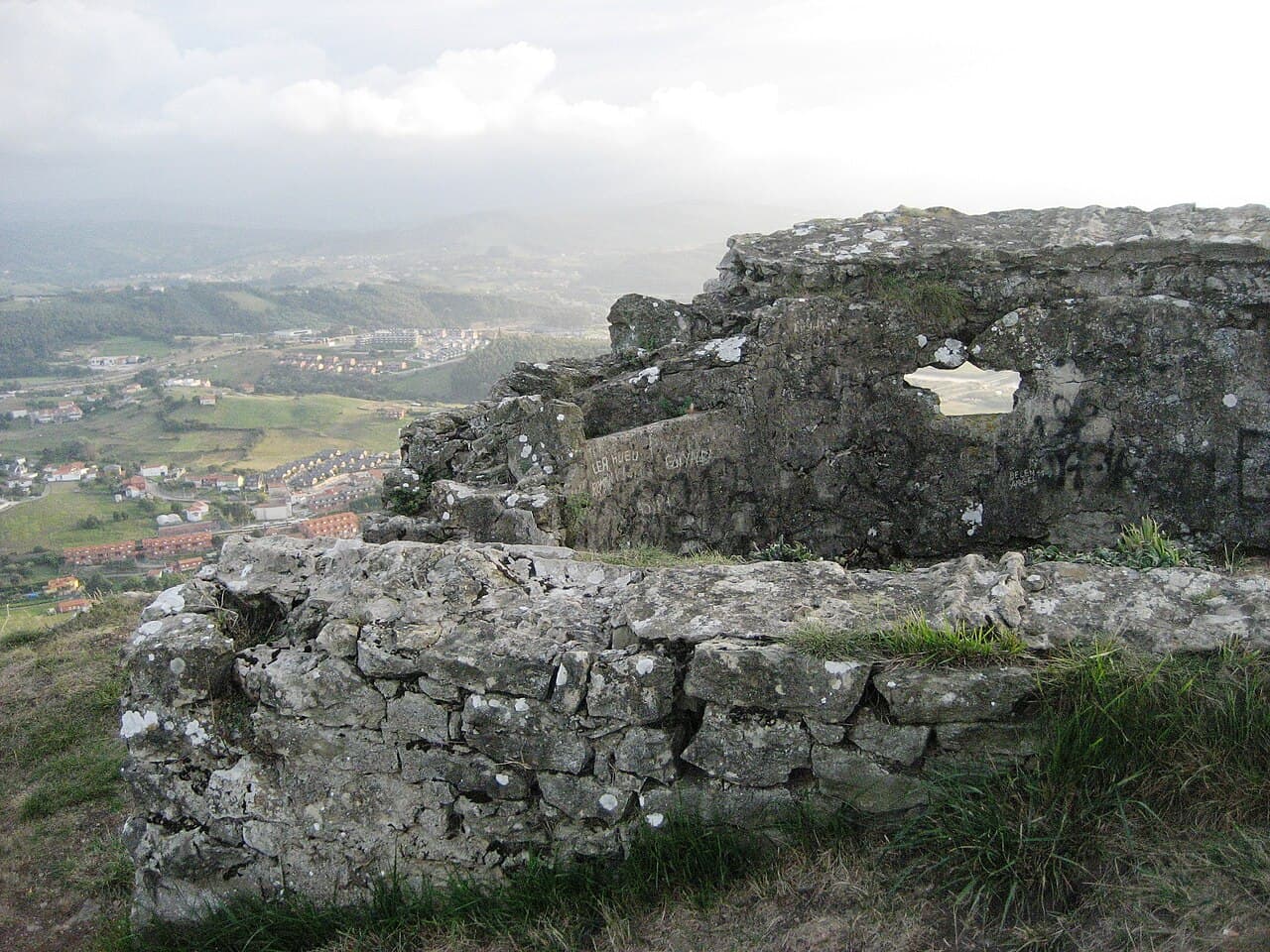
Castle of Pedraja
The Castle of Pedraja, also known as the Castle of Liencres or Castle of Hercules, stands as a notable example of medieval military architecture in Cantabria, Spain. Located on La Picota mountain, historically called Castle Mountain, this hill castle overlooks the town of Liencres and played a significant role in the defense of the lordship of La Vega. The castle's origins trace back to the late 13th century or early 14th century, likely founded by Garcilaso I de la Vega, a prominent nobleman of the House de La Vega. This family held considerable influence in the region, and the castle served as both a defensive stronghold and an administrative center.
Historical context and significance
The first definitive documentary evidence of the castle dates from 1403, when it was recognized as the administrative and judicial center for the Vega family. However, an earlier document from 1338 may also refer to the castle, suggesting its importance during the High Medieval period. The Castle of Pedraja is considered the largest fortification in the eastern part of the Asturias de Santillana, a historic comarca in Cantabria. Its strategic position on a hill provided commanding views of the surrounding landscape, allowing for effective control and defense against potential invaders.
Architectural features and design
Archaeological remains reveal that the castle's architecture represents a transition between Romanesque and Gothic styles, reflecting the evolving military and aesthetic trends of the period. The castle featured a moat approximately 5 meters wide and 2 meters deep, which surrounded a roughly square enclosure measuring about 36 meters on each side. This moat would have served as a formidable obstacle to attackers, enhancing the castle's defensive capabilities.
The entrance was protected by a rectangular tower, which likely functioned as a gatehouse and lookout point. The tower and the surrounding curtain walls formed a compact fortified enclosure, typical of many medieval hill castles designed for both defense and residence. The castle's relatively modest size and fortifications suggest it was a fortified tower rather than a large-scale castle, a common feature in Cantabria during the Middle Ages.
Defensive elements
The moat and the tower were the primary defensive structures, with the moat providing a physical barrier and the tower allowing defenders to monitor and repel attackers. The castle's walls, though now mostly in ruins, would have been constructed of local stone, providing robust protection against siege weapons of the time. The enclosure's square plan is characteristic of medieval fortifications designed for efficient defense and internal organization.
Decline and current status
The Castle of Pedraja disappeared during the 19th century, with the last known record dating to 1861. At that time, the ruins were observed by Father Sota, who noted that the castle had been burned and abandoned. This destruction likely occurred during the lawsuits and conflicts in Cantabria during the Modern Age, which saw many medieval structures fall into disuse or ruin.
Today, the site preserves the remains of the rectangular tower, parts of the curtain wall, and the moat. Recognizing its historical and archaeological value, the castle has been protected as an archaeological site since 2004. Visitors to the site can explore the ruins and gain insight into the region's medieval past and the architectural evolution from Romanesque to Gothic fortifications.
Archaeological importance and preservation
The Castle of Pedraja offers valuable information about the defensive strategies and architectural styles employed in medieval Cantabria. Its transitional design between Romanesque and Gothic elements provides a unique glimpse into the region's adaptation to changing military technologies and aesthetic preferences. The preservation of the moat and tower remains allows archaeologists and historians to study the layout and construction techniques of hill castles in northern Spain.
As an archaeological site, it contributes to the cultural heritage of Cantabria and serves as a point of interest for scholars and visitors alike. The site's protection ensures that ongoing research and conservation efforts can continue, helping to maintain the legacy of the House de La Vega and the medieval history of the Asturias de Santillana.
Frequently asked questions (FAQ)
- When was the Castle of Pedraja built?
- The Castle of Pedraja was likely founded in the late 13th or early 14th century, with the first clear documentary evidence dating to 1403.
- What architectural styles are reflected in the Castle of Pedraja?
- The castle's architecture shows a transition between Romanesque and Gothic styles, typical of medieval fortifications in Cantabria.
- What remains of the Castle of Pedraja can be seen today?
- Today, visitors can see the ruins of the rectangular tower, parts of the curtain wall, and the moat that once protected the castle.
- Why did the Castle of Pedraja fall into ruin?
- The castle was abandoned and likely burned during conflicts in Cantabria in the Modern Age, with the last record of ruins dating to 1861.
- Is the Castle of Pedraja accessible to visitors?
- As an archaeological site protected since 2004, the castle ruins are accessible for exploration, though facilities may be limited.
Photo gallery

Information
Loading map...
Visitor reviews
No reviews yet. Been here? Write the first review and help other travelers!
Write the first reviewVisited this castle? Share your experience
Your review helps other travelers and adds first-hand knowledge to our encyclopedia.



