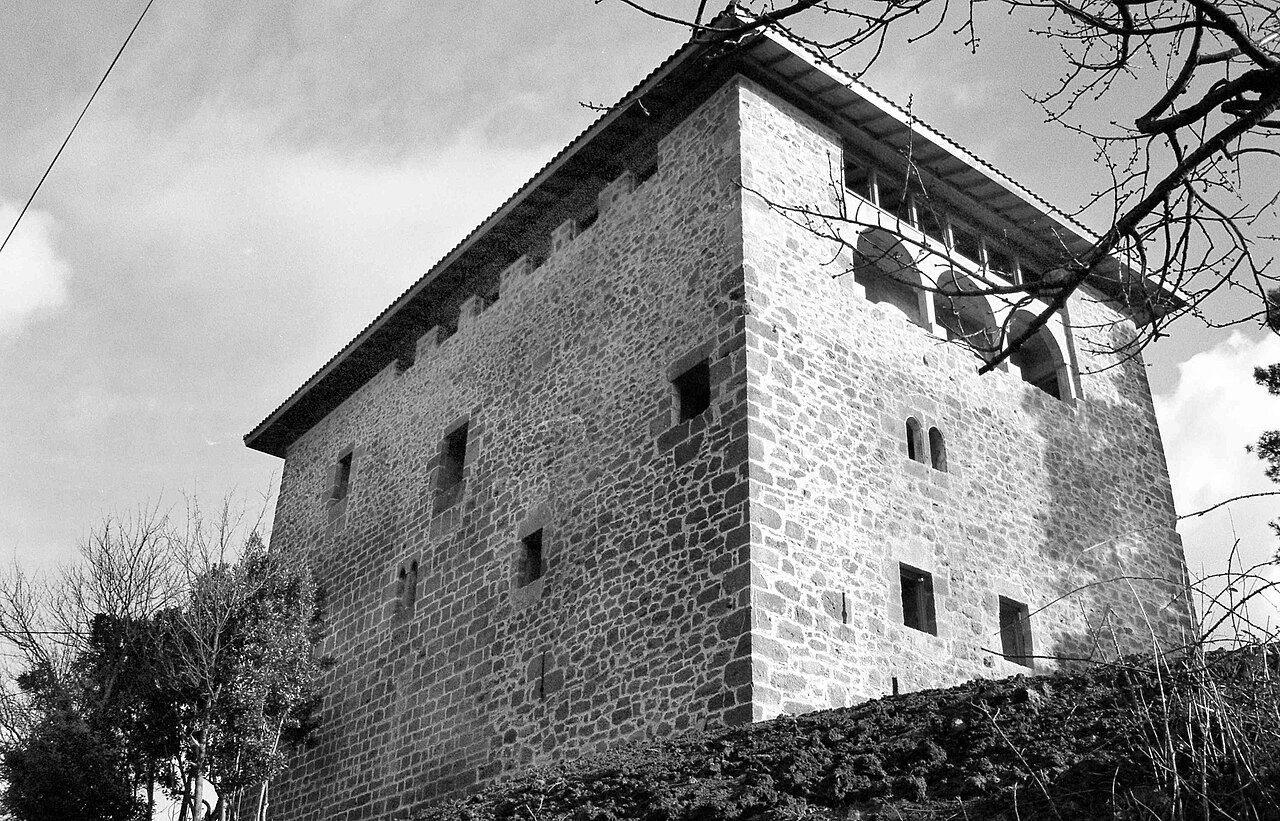
Castle of Marutegi
The Castle of Marutegi stands as a remarkable example of early medieval military architecture in northern Spain, located near the village of Araia within the municipality of Asparrena. This hill castle was strategically positioned atop the rocky summit known locally as Marutegi or Marumendi, commanding views over the surrounding landscape and controlling key routes through the region. Its origins date back to the 9th century, during the formative years of the Kingdom of Pamplona, a Christian realm that emerged amidst the shifting political landscape of the Iberian Peninsula.
Historical background and strategic importance
The site’s earliest fortifications are believed to have connections to Arab forces, whose presence in the area during the early medieval period influenced the castle's name and initial defensive role. However, the primary construction of the fortress is attributed to the reign of King Eneko Arista (824–852), with García Íñiguez credited as the builder. This castle was established as a defensive stronghold designed to protect the borders of the Kingdom of Pamplona from neighboring powers, particularly during a time of frequent conflict and territorial disputes.
Throughout the Middle Ages, especially from the 13th to the early 16th century, the Castle of Marutegi played a crucial role in regional defense. It controlled the eastern part of the Alavese plain and oversaw a vital route connecting the coast to the interior through the San Adrián tunnel. Its position on the frontier between the Kingdoms of Navarre and Castile underscored its strategic significance during periods of tension and warfare.
By the early 1500s, the castle's military function diminished, and it was eventually abandoned as a fortress. Subsequently, the site was repurposed with the construction of a hermitage dedicated to Saint Michael, reflecting a shift from military to religious use that was common for many such sites in border regions during this period.
Architectural features and layout
The castle's remains reveal a complex layout that is closely adapted to the natural topography of the rocky summit. The site is divided into two main sections: a lower courtyard and an upper elevated area where the main tower once stood. Both sections are enclosed within protective walls that follow the contours of the rock, demonstrating an integrated defensive design.
Lower courtyard
The lower enclosure houses a substantial building approximately 31 by 12 meters in size, with walls about 1.5 meters thick. These walls were constructed using carefully worked masonry, providing both stability and defense. This courtyard likely served multiple functions, including accommodation for auxiliary structures and garrison facilities essential for the castle's operation.
Main tower and upper section
The upper section is dominated by the remains of the castle's main tower, notable for its distinctive "D"-shaped floor plan measuring roughly 10.5 by 9 meters. The tower's walls vary in thickness, with the eastern side reaching up to 2.7 meters to withstand attacks, while the western walls are thinner, about 1.4 meters. Unlike many medieval towers that featured elevated entrances or drawbridges, this tower's entry was at ground level from the south, a unique architectural choice.
Inside the tower, evidence suggests it had at least two floors, with some walls still standing to a height of about three meters. This vertical construction indicates the tower was a formidable defensive and residential structure within the castle complex.
Perimeter walls and defensive integration
Surrounding both the tower and the lower courtyard are traces of a continuous perimeter wall that links the different sections of the castle. This wall is visible in the form of cuttings in the rock and medium-sized stone blocks laid in regular courses, known as ashlar masonry. The castle's main entrance is located on the only accessible side of the rocky outcrop, providing a natural defensive advantage.
Preservation and cultural significance
Today, the Castle of Marutegi remains well-preserved with its structural integrity largely intact despite centuries of abandonment. The site offers a clear window into medieval military architecture adapted to mountainous terrain, showcasing the ingenuity of early medieval fortification techniques.
The castle's historical role as a border fortress between the Kingdoms of Navarre and Castile, its connection to the Kingdom of Pamplona, and its architectural features make it a site of considerable cultural and heritage significance. The later addition of the hermitage dedicated to Saint Michael adds a layer of religious and social history to the location, illustrating the evolving use of such sites over time.
Visitors to the castle can explore the remains of the main tower, the lower courtyard, and the surrounding walls, gaining insight into the defensive strategies employed during the early and high medieval periods. The castle's setting atop the rocky summit provides dramatic views and a tangible connection to the region's turbulent history.
Access and visitor information
The Castle of Marutegi is accessible via hiking trails from the nearby village of Araia. Due to its location on a rocky hilltop, visitors should be prepared for uneven terrain. The site is open year-round, though weather conditions can affect accessibility. There are no entrance fees, making it an attractive destination for those interested in medieval history and architecture.
Nearby attractions include the San Adrián tunnel and the historic town of Vitoria-Gasteiz, which offer additional context to the castle's strategic importance and the broader history of the Basque region.
Frequently asked questions (FAQ)
- How do I get to the Castle of Marutegi?
- The Castle of Marutegi is accessible by hiking trails starting from the village of Araia in Asparrena. Visitors should prepare for a steep walk as the castle is located on a rocky summit.
- What is the historical significance of the Castle of Marutegi?
- The castle played a key role in defending the Kingdom of Pamplona's borders during the early medieval period and later marked the frontier between Navarre and Castile. Its strategic position controlled important routes including the San Adrián tunnel.
- When was the Castle of Marutegi built?
- The castle dates back to the 9th century, with construction attributed to the reign of King Eneko Arista and builder García Íñiguez.
- Can I visit the interior remains of the castle?
- Yes, visitors can explore the remains of the main tower, lower courtyard, and perimeter walls. However, some areas may be uneven or rugged due to the natural terrain.
- Is there an entrance fee to visit the Castle of Marutegi?
- There is no entrance fee to visit the castle, making it an accessible site for those interested in medieval history and architecture.
- What architectural features make the Castle of Marutegi unique?
- The castle features a distinctive D-shaped main tower with ground-level entry, thick defensive walls adapted to the rocky summit, and a continuous perimeter wall using ashlar masonry.
Information
Website
Visit websiteSources & official resources
Verify the information above using these authoritative references.
Loading map...
Visitor reviews
No reviews yet. Been here? Write the first review and help other travelers!
Write the first reviewVisited this castle? Share your experience
Your review helps other travelers and adds first-hand knowledge to our encyclopedia.