Legazpi Dorrea
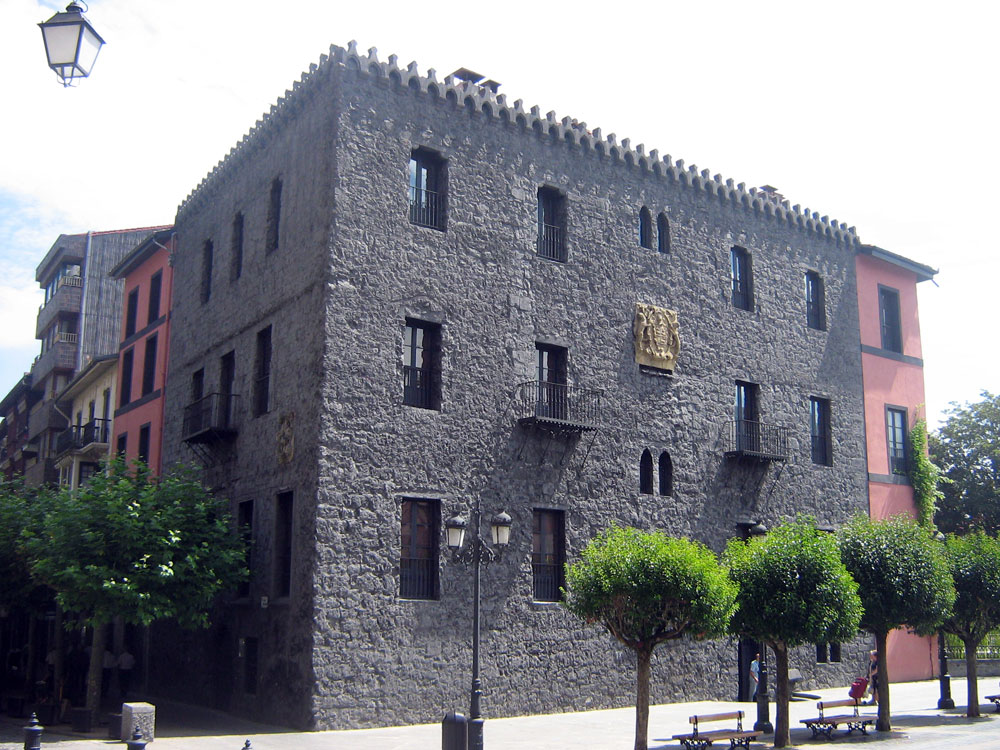
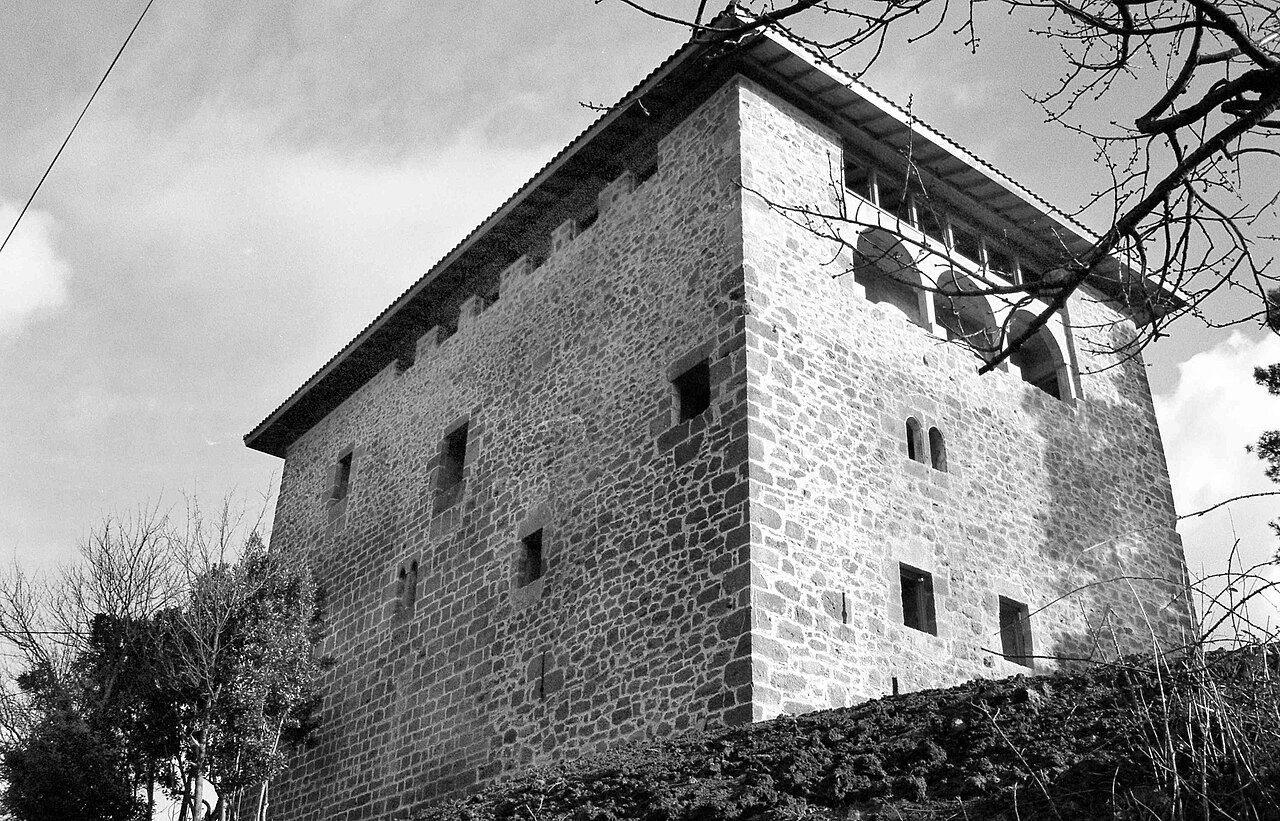
The Legazpi dorrea, located in Zumarraga, Spain, is a historically significant medieval fortified tower house originally constructed by the Legazpi family in the 13th or 14th century. This hill castle was built as a defensive stronghold amid the turbulent landscape shaped by local noble rivalries and conflicts during the medieval period. Its strategic position and robust construction reflect the military architecture typical of the time.
The medieval origins and defensive role
Constructed primarily of stone masonry, the Legazpi dorrea featured a crenellated tower with battlements designed for defense against attacks. The tower was complemented by an outer courtyard, which provided additional protection and space for various activities essential to maintaining the castle's security and functionality. This architectural arrangement was typical for fortified noble residences in the region during the 13th and 14th centuries.
During the period known as the Wars of the Nobles, spanning from the 13th to the 15th centuries, the tower played a strategic role in the local conflicts between noble families. At that time, it was known locally as Jauregi Handia, meaning “Great Palace,” underscoring its prominence and importance in the area.
Impact of royal decrees and architectural transformation
The conclusion of the noble conflicts in the 15th century saw significant changes to the tower’s structure. King Henry IV of Castile supported the hermandades—municipal militias opposed to the nobility—and ordered the removal of defensive features from noble towers to diminish their military power. As a result, the Legazpi dorrea’s crenellations were removed, and the outer courtyard was incorporated into the main building.
This transformation introduced new construction materials, including wood and brick, alongside the original stone masonry. The blending of these materials reflects a shift from purely defensive architecture to a more residential and agricultural function, marking a significant evolution in the building’s use and appearance.
Historical significance and notable figures
The tower is notably the birthplace of Miguel Lopez de Legazpi in 1502, who became a prominent explorer and conquistador. He led Spanish expeditions in the Pacific, playing a crucial role in Spain’s overseas expansion during the Age of Discovery. This connection enhances the cultural and historical importance of the Legazpi dorrea beyond its architectural value.
Later ownership and adaptive reuse
After the Legazpi family’s tenure, ownership passed to the Yarza family, who transformed the fortified tower into a farmhouse during the 18th century. This conversion marked a departure from its original military purpose, adapting the building to agricultural and residential needs typical of the period.
In the 19th century, the tower faced demolition to make way for a new railway line. The intervention of local politician Nikolas Soraluze prevented its destruction, preserving this important historical monument.
Preservation efforts and modern use
By the 1940s, the Legazpi dorrea was in poor condition. It was acquired by the Esteban Orbegozo company, which successfully petitioned to have the tower declared a State Historic-Artistic Monument. Restoration projects were undertaken, notably in the 1970s by the Gipuzkoa Provincial Council and further conservation efforts in the 1990s.
Since 1964, the building has served as the Museo Hispano-Filipino, a cultural center dedicated to exhibitions, lectures, and presentations. It also houses the Secundino Esnaola Music School, continuing its role as a place of public and cultural importance in Zumarraga.
Architectural features and current condition
Today, the Legazpi dorrea stands restored and maintained, located directly opposite the Zumarraga train station. Its structure exhibits the layered history of its construction and adaptations, combining medieval stone masonry with later wood and brick elements. The removal of defensive battlements and the integration of the courtyard reflect the building’s transition from a military fortress to a residential farmhouse and finally to a cultural institution.
No decorative inscriptions, mosaics, or ornamental features have been documented, emphasizing the tower’s original utilitarian and defensive character. The building’s preservation allows visitors to appreciate the architectural evolution and historical context of a hill castle that has witnessed significant regional and global history.
Frequently asked questions (FAQ)
- When was Legazpi dorrea built and what was its original purpose?
- Legazpi dorrea was built in the 13th or 14th century as a fortified tower house by the Legazpi family for defense amid local noble conflicts.
- Who was Miguel Lopez de Legazpi and what is his connection to the tower?
- Miguel Lopez de Legazpi was a notable explorer born in Legazpi dorrea in 1502. He led Spanish expeditions in the Pacific and is historically linked to the tower.
- How did King Henry IV of Castile affect the castle's structure?
- King Henry IV ordered the removal of defensive features from noble towers, including Legazpi dorrea, leading to the removal of battlements and integration of the courtyard into the main building.
- What is the current use of Legazpi dorrea?
- Since 1964, Legazpi dorrea has served as the Museo Hispano-Filipino and houses the Secundino Esnaola Music School, functioning as a cultural center in Zumarraga.
- How was the castle preserved from demolition in the 19th century?
- Local politician Nikolas Soraluze intervened to prevent the demolition of Legazpi dorrea when a new railway line was planned in the 19th century.
Information
Sources & official resources
Verify the information above using these authoritative references.
Loading map...
Visitor reviews
No reviews yet. Been here? Write the first review and help other travelers!
Write the first reviewVisited this castle? Share your experience
Your review helps other travelers and adds first-hand knowledge to our encyclopedia.