Historical background and strategic importance
The origins of the Castle of Kythnos date back to the medieval period, with construction likely initiated during the time of Venetian or Genoese influence in the Aegean, roughly between the 13th and 15th centuries. The castle served as a vital defensive stronghold against pirate raids and Ottoman incursions, common threats in the region during the Late Medieval era. Its role was not only military but also administrative, acting as a center of local governance and refuge for the island's inhabitants during times of conflict.
Architectural features and layout
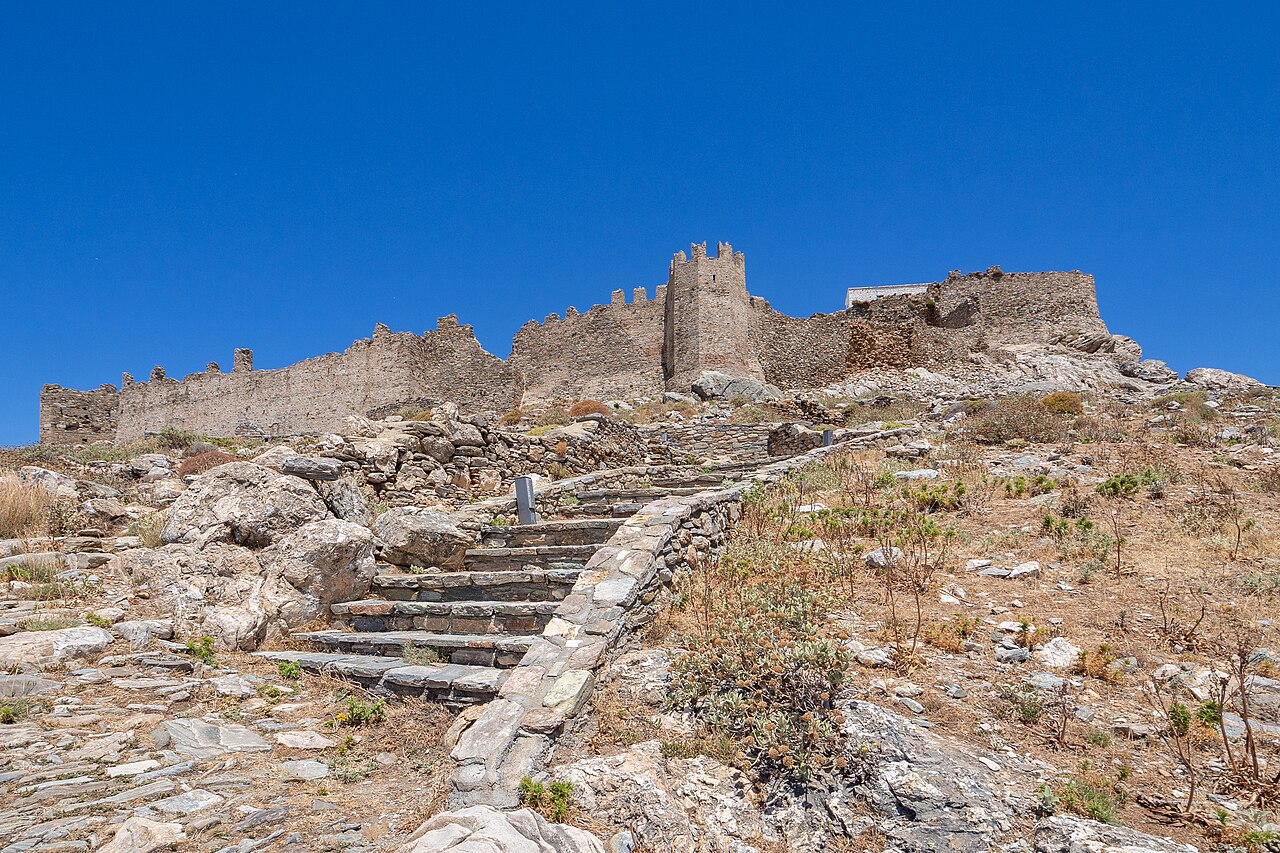
The castle exhibits typical characteristics of a hill castle with robust stone walls adapted to the uneven terrain of the hilltop. The fortress includes battlemented curtain walls, towers positioned at key points for surveillance and defense, and a fortified gatehouse controlling access to the interior. Within the walls, remnants of living quarters, storage rooms, and possibly a chapel can be found, reflecting the multifunctional nature of the castle as both a military installation and a community hub.
Defensive structures
The castle's defensive design incorporates thick stone walls built to withstand siege weaponry of the period. The towers, likely square or rectangular in shape, provided vantage points for archers and lookouts. The entrance was heavily fortified, often featuring a narrow gateway and possibly a barbican to slow attackers. The natural slope of the hill further enhanced the castle's defensive capabilities, making direct assault difficult.
Internal arrangement
Inside the fortress, the spatial organization was practical and focused on defense and survival. The living quarters were modest but functional, designed to house the garrison and local leaders. Storage areas were essential for stockpiling food and supplies during sieges. Archaeological evidence suggests the presence of cisterns or water collection systems to support inhabitants during prolonged isolation.
Significance and current condition
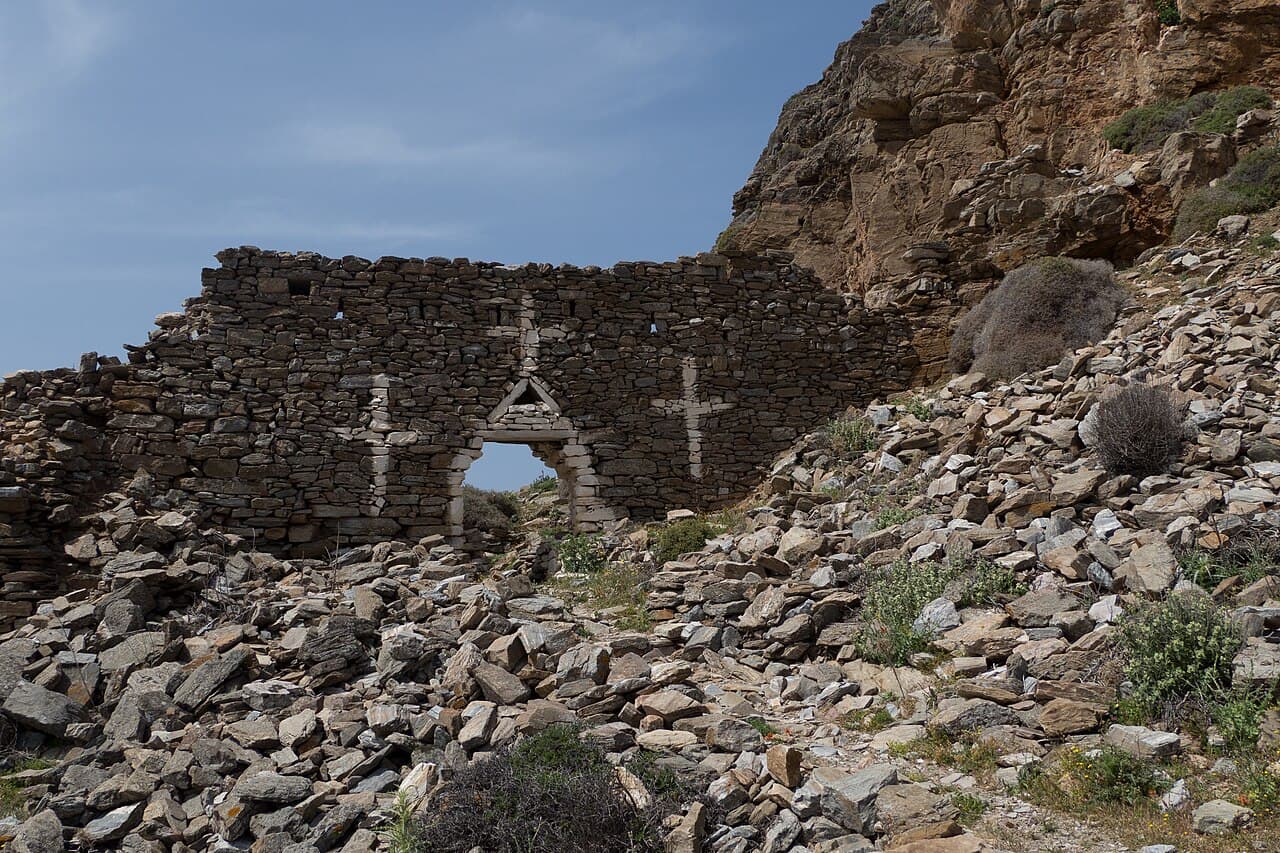
The Castle of Kythnos stands as an important example of medieval military architecture in the Cyclades islands. Although much of the structure is in a ruined state today, the remaining walls and foundations provide valuable insight into the defensive strategies employed in the Aegean during the Late Medieval period. The site attracts visitors interested in history, archaeology, and panoramic views of the island and sea.
Preservation efforts have been limited, but the castle remains accessible to the public, offering a tangible connection to Kythnos's past. Its position on the hilltop makes it a notable landmark visible from various points on the island, contributing to the cultural heritage and identity of Kythnos.
Frequently asked questions (FAQ)
- How do I reach the Castle of Kythnos?
- The Castle of Kythnos is accessible by hiking trails from nearby villages on the island. Visitors should prepare for a moderately challenging walk uphill, suitable for those with reasonable fitness.
- What is the historical significance of the Castle of Kythnos?
- The castle served as a strategic defensive fortress during the Late Medieval period, protecting the island from pirate raids and Ottoman attacks.
- Can I explore the interior of the castle?
- While the castle is largely in ruins, visitors can explore the remaining walls and foundations. Caution is advised as some areas may be unstable.
- Is there an entrance fee to visit the Castle of Kythnos?
- There is no entrance fee to visit the Castle of Kythnos, making it accessible for all visitors interested in history and architecture.
- When is the best time to visit the Castle of Kythnos?
- The best time to visit is during spring and autumn when the weather is mild and the island is less crowded, offering a more pleasant hiking and sightseeing experience.
Photo gallery

Information
Loading map...
Visitor reviews
No reviews yet. Been here? Write the first review and help other travelers!
Write the first reviewVisited this castle? Share your experience
Your review helps other travelers and adds first-hand knowledge to our encyclopedia.