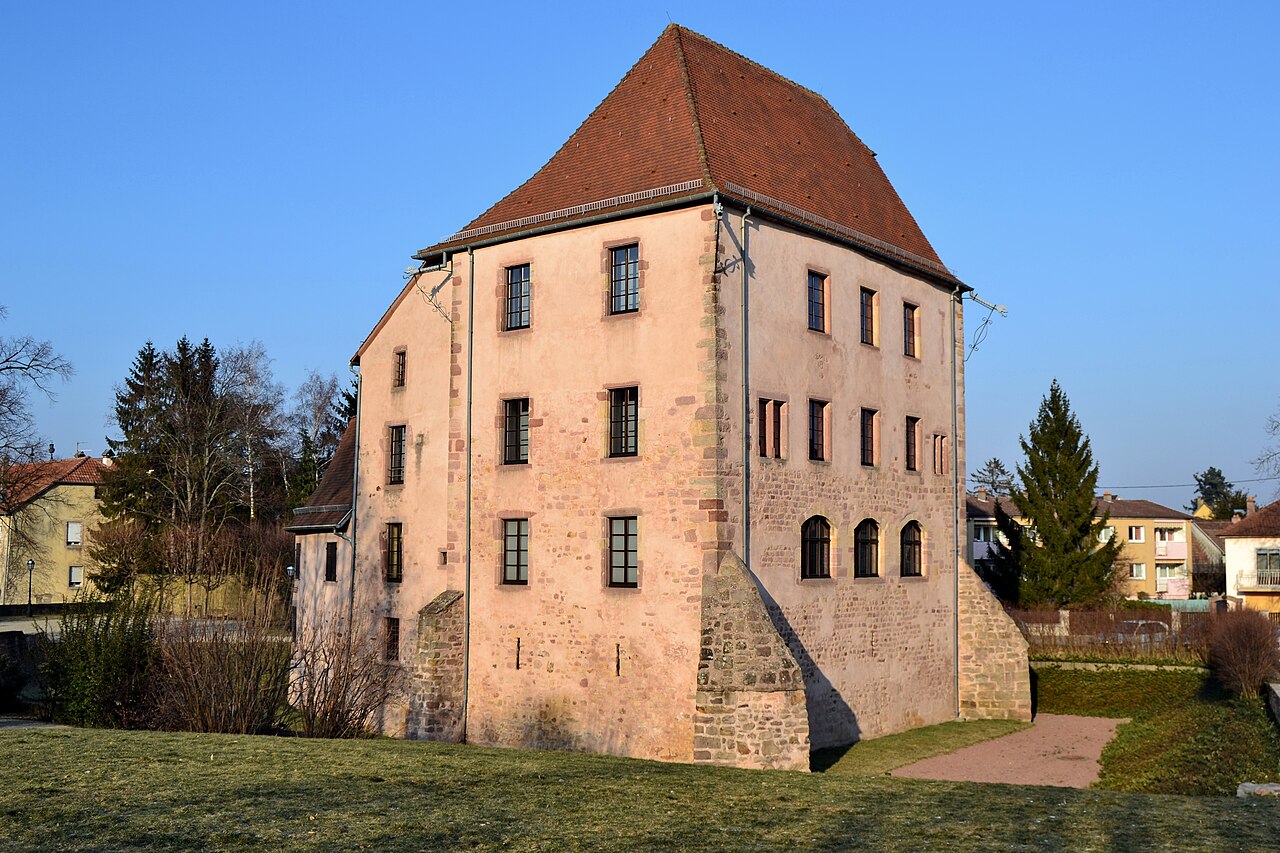
Castle of Kaysersberg
The Castle of Kaysersberg stands as a remarkable example of High Medieval military architecture in the Alsace region of France. Constructed around the 13th century by an imperial bailiff under the authority of Frederick II, Holy Roman Emperor, the castle was strategically positioned to control and defend the vital routes leading from Lorraine. Its location atop a hill overlooking the town of Kaysersberg allowed it to serve as a formidable barrier against potential invaders and to assert imperial dominance in the region.
Historical significance and strategic role
The castle's primary function was defensive, guarding the approaches through the Vosges Mountains. During the turbulent periods of medieval Europe, especially the conflicts between the Holy Roman Empire and the Dukes of Lorraine, the Castle of Kaysersberg played a crucial role. Its position made it a key military asset in controlling trade and military movements, contributing to the power dynamics of the region.
Architectural features and construction
The circular keep
The most striking feature of the castle is its imposing circular keep, which is one of the oldest of its kind in Alsace. This keep, built with robust stone masonry, served as the last line of defense and a residence for the lord or imperial bailiff. Its circular design was innovative for the period, offering better resistance to siege engines and projectiles compared to traditional square keeps.
Curtain walls and fortifications
Surrounding the keep are 4-meter-thick curtain walls, constructed to withstand attacks and provide a secure perimeter. These walls incorporated defensive features such as battlements and arrow slits, enabling defenders to repel assaults effectively. The castle's fortifications were designed with a focus on military resilience, reflecting the strategic importance of the site.
15th-century modernization
In response to the advent of artillery and firearms in the late Middle Ages, the castle underwent significant modernization during the 15th century. These upgrades included reinforcing the walls and adapting defensive structures to better resist cannon fire, a testament to the evolving nature of medieval warfare and the castle's continued military relevance.
Later history and decline
The castle endured a siege during the German Peasants' War in the early 16th century, highlighting its ongoing strategic role in regional conflicts. Restoration efforts were undertaken in 1583 by Lazarre de Schwendi, a notable military figure and nobleman, who sought to preserve the castle's defensive capabilities.
Despite these efforts, the castle was gradually abandoned towards the end of the 16th century as military technology and political circumstances changed. Following the French Revolution, the castle was declared a national asset and sold to a private owner. The new proprietor repurposed the castle grounds, planting vineyards in the courtyard, marking a shift from military to agricultural use.
Present-day remains and visitor experience
Today, visitors to the Castle of Kaysersberg can explore the impressive remains of the circular keep, which still dominates the site. The granite curtain walls remain largely intact, providing a vivid sense of the castle's original defensive strength. The manor house within the castle complex features Gothic-style windows, reflecting the architectural influences during its period of occupation.
One of the highlights of a visit is the breathtaking panorama overlooking the town of Kaysersberg and the surrounding Alsace countryside, visible from the castle's elevated position. This scenic view underscores the castle's strategic location and offers a tangible connection to its historical role as a guardian of the region.
Architectural and cultural importance
The Castle of Kaysersberg exemplifies the military architectural advances of the High Medieval period in Europe. Its early adoption of a circular keep and thick curtain walls illustrates the transition from traditional fortifications to more resilient designs capable of withstanding new siege technologies. The castle's layered history, from imperial stronghold to agricultural estate, reflects broader socio-political changes in Alsace and the Holy Roman Empire.
As a cultural landmark, the castle attracts historians, architects, and tourists alike, offering insights into medieval military engineering and the complex history of the Alsace region. Its preservation allows for continued study and appreciation of medieval fortification techniques and the historical narratives embedded in its stones.
Frequently asked questions (FAQ)
- How do I get to the Castle of Kaysersberg?
- The Castle of Kaysersberg is located in the heart of Kaysersberg, France, easily accessible by public transport or car. If you're coming by train, the nearest station is in Colmar, from where you can take a bus or taxi to reach the castle.
- What is the historical significance of the Castle of Kaysersberg?
- The Castle of Kaysersberg dates back to the 13th century and played a crucial role in the defense of the region during the Middle Ages. It showcases the historical architecture and strategic importance of the area, reflecting the tumultuous past of Alsace.
- When was the Castle of Kaysersberg built?
- Construction of the Castle of Kaysersberg began in 1220 and was completed in the following decades. It was built by the lords of Kaysersberg to control trade routes and protect the surrounding lands.
- Can I visit the Castle of Kaysersberg year-round?
- Yes, the Castle of Kaysersberg is open to visitors throughout the year, though opening hours may vary seasonally. It’s best to check the official website or local tourism information for specific visiting hours during your trip.
- Why is the architecture of the Castle of Kaysersberg unique?
- The architecture of the Castle of Kaysersberg features a mix of Romanesque and Gothic styles, characteristic of the Alsace region. Its well-preserved ruins, including towers and walls, offer a glimpse into medieval military architecture and the evolution over centuries.
- Is it possible to enter the Castle of Kaysersberg?
- Visitors can explore the exterior of the castle and enjoy panoramic views from its remaining towers. However, access to certain interior areas may be limited due to preservation efforts.
- What are the ticket prices for visiting the Castle of Kaysersberg?
- Entry to the Castle of Kaysersberg is generally free, allowing everyone to appreciate its historical and scenic value. However, special guided tours or events may have a fee, so it's advisable to check in advance.
- When is the best time to visit the Castle of Kaysersberg?
- The best time to visit is during the spring and fall when the weather is pleasant and the crowds are smaller. Additionally, the surrounding landscape is particularly beautiful during these seasons, enhancing your visit to the castle.
- Are there any nearby attractions to the Castle of Kaysersberg?
- Yes, the charming town of Kaysersberg itself offers other attractions such as the historic streets, local shops, and the picturesque river. Additionally, nearby Colmar features museums, galleries, and the famous Little Venice area, making it a great complementary visit.
Information
Website
Visit websiteSources & official resources
Verify the information above using these authoritative references.
Loading map...
Visitor reviews
No reviews yet. Been here? Write the first review and help other travelers!
Write the first reviewVisited this castle? Share your experience
Your review helps other travelers and adds first-hand knowledge to our encyclopedia.