
Castle of Jumilhac
The Castle of Jumilhac, located in Jumilhac-le-Grand in the Nouvelle-Aquitaine region of France, stands as a remarkable example of Renaissance architecture with a rich medieval heritage. Perched high above the valley of the Isle River, this hill castle is celebrated for its extravagant towers and turrets, which have earned it the reputation of having some of the most romantic roofs in France. The castle's distinctive silhouette is defined by conical and pyramidal roofs adorned with ornate finials featuring allegorical and alchemical motifs, reflecting the site's deep symbolic heritage.
Medieval origins and strategic importance
The origins of the castle trace back to the 12th century when a fortress was first established on this strategic site overlooking the confluence of the Isle River and the Ruchalait stream. Initially under the control of the viscounts of Limoges and later the lords of the châtellenie of Excideuil, the castle played a crucial defensive role in the region. Throughout the Middle Ages, ownership was shared among noble families such as the La Porte and Bruchard before passing to the Coignac and Crevant lineages, illustrating the fragmented feudal landscape of the time.
The castle's military significance is underscored by two key historical events. In the early 13th century, King Philippe Auguste attacked and destroyed the original fortress, which was subsequently rebuilt by the La Porte and Bruchard families. During the Hundred Years War, the castle was besieged by French commander Bertrand du Guesclin in 1370, who successfully defeated the English forces led by Edward, the Black Prince. These episodes highlight the castle's role in the turbulent medieval conflicts that shaped the region.
Renaissance transformation and noble patronage
The castle underwent a significant transformation during the 16th century, evolving from a fortified stronghold into a luxurious Renaissance residence. This change was largely driven by Antoine Chapelle, a wealthy ironmaster who married Marguerite de Vars, the heiress of the estate, in 1579. By 1581, Chapelle had consolidated ownership of the divided seigneurie and was ennobled as the Count of Jumilhac by King Henri IV in 1597, in recognition of his financial support during the king's accession.
Following his ennoblement, Antoine Chapelle expanded and embellished the château, adding Renaissance architectural elements such as large windows, ornate dormers, and elegant façades that enhanced both its aesthetic appeal and residential comfort. The castle's defensive features were softened, with towers and machicolations repurposed into living quarters and pavilions, reflecting the period's shift from military fortification to noble residence.
Antoine Chapelle's grandson, François Chapelle de Jumilhac, further elevated the estate by raising it to a marquisate in 1655. He initiated extensive renovations, including enlarging the château's wings and constructing a grand entrance portal, blending 17th-century architectural styles with the existing Renaissance fabric. A notable addition from this period is the balcony on the main façade, originally part of a service gallery providing access to remodeled apartments.
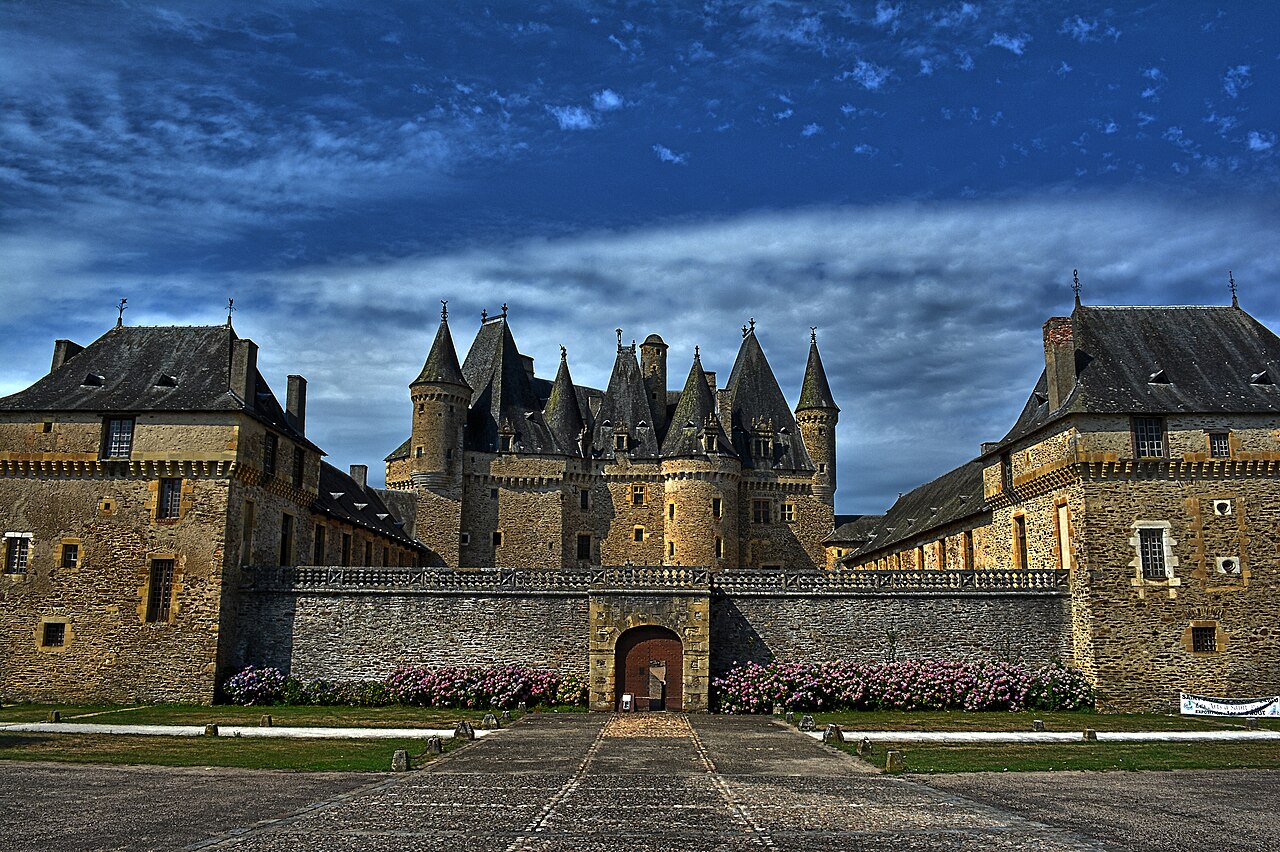
Photo by Darkhimmel • CC BY-SA 4.0
Alchemy, symbolism, and architectural details
One of the castle's most intriguing aspects is its association with alchemy, practiced secretly by the first Count of Jumilhac despite its illegality. This mystical theme is evident in several architectural features and decorative elements. Three angel statues perched on the roof, a tall chimney-like turret speculated to have housed an alchemist's oven, and the design of the formal gardens allude to esoteric symbolism.
The château's roofs are particularly renowned for their ornate turrets and finials, which incorporate allegorical and alchemical motifs. These elements contribute to the castle's romantic and mysterious atmosphere, drawing visitors fascinated by both history and symbolism.
Interior highlights and notable rooms
Inside, the castle boasts several beautifully preserved rooms featuring wooden floors and grand fireplaces that exemplify noble living across centuries. A standout room is the Bedroom of the Spinning Wheel (Chambre de la Fileuse), where Louise de Hauteford was imprisoned for nearly thirty years during her husband's absence at war. Despite her confinement, she managed to communicate with a lover through secret messages hidden in sewing bobbins, a poignant story that adds human drama to the château's history.
Gardens and landscape design
The château is surrounded by meticulously maintained French formal gardens that complement its architectural grandeur. These gardens, restored from designs dating back to 1777, blend Renaissance terraced garden concepts with landscape principles inspired by André Le Nôtre, the famed 17th-century French landscape architect. The gardens are thematically divided into a gold garden and a silver garden, continuing the alchemical symbolism that permeates the estate.
The gardens feature terraces, lawns, and an orangery, integrating the château harmoniously with its natural surroundings and providing visitors with a serene environment to explore.
Historical recognition and preservation
The Castle of Jumilhac has been recognized for its architectural and historical significance through classification as a historic monument in several stages during the early 20th century: the central body in 1922, the right wing in 1923, and the left wing in 1924. These designations have helped ensure the château's preservation and ongoing restoration efforts by its current owners, descendants of the original noble family.
After a period of varied ownership during the 19th century, the castle was repurchased by the Jumilhac family in 1927, who undertook extensive restoration work. Since 1964, the château has been open to the public, allowing visitors to experience its rich history, architectural beauty, and enchanting gardens firsthand.
Architectural layout and defensive features
The château is arranged around a trapezoidal courtyard enclosed by the main residence to the west and two projecting wings to the north and south. The eastern boundary is secured by a curtain wall with the principal entrance gate, forming an octagonal perimeter that reflects its fortified origins.
The central building features a chemin de ronde, a covered walkway supported by machicolations, allowing defenders to patrol safely and defend the castle. Although these defensive elements have been adapted for residential use, they remain a testament to the castle's martial past.
The north and south wings incorporate former defensive towers at their corners, which have been converted into elegant pavilions. The rear of the château opens onto terraces overlooking the gardens and parkland, including an orangery that adds to the estate's grandeur.
Surrounding structures and cultural heritage
To the south of the château lies the Saint-Pierre-ès-Liens church, which served as the castle chapel from the 13th to the 18th centuries. Inside, a funerary band bears the coat of arms of Jean-François Chapelle, marquis of Jumilhac, who died in 1693, underscoring the chapel's role in noble burials.
Nearby, a historic dovecote remains near the village's southern entrance, although it is no longer part of the château grounds. These ancillary structures contribute to the overall cultural and historical landscape of the estate.
Visiting the castle today
Today, the Castle of Jumilhac remains a private property, owned and maintained by descendants of the Chapelle de Jumilhac family, now known as the de La Tour du Pin family. It is open to visitors who can explore its richly decorated interiors, romantic roofs, and beautifully restored gardens.
The castle continues to undergo restoration to preserve its architectural integrity and historical character. Visitors can enjoy guided tours that highlight the château's fascinating history, architectural evolution, and the unique stories of its inhabitants.
Frequently asked questions (FAQ)
- How do I get to the Castle of Jumilhac?
- The Castle of Jumilhac is located in Jumilhac-le-Grand, France, easily accessible by car or public transport. If you’re driving, follow the D703 road, which connects to major highways in the region. Public transport options include local buses that service the area, making it convenient for visitors.
- What is the historical significance of the Castle of Jumilhac?
- The Castle of Jumilhac, dating back to the 15th century, is a remarkable example of medieval architecture in France. It has a rich history, having been home to various noble families and playing a role in regional politics. Its unique blend of Gothic and Renaissance styles makes it an important landmark in French heritage.
- When was the Castle of Jumilhac built?
- Construction of the Castle of Jumilhac began in the 15th century and continued into the 16th century. The castle showcases architectural styles that evolved during this period, reflecting the transition from medieval to Renaissance design. Over the centuries, it has undergone several renovations to preserve its grandeur.
- Can I take guided tours of the Castle of Jumilhac?
- Yes, guided tours are available at the Castle of Jumilhac, providing visitors with in-depth information about its history and architecture. Tours are typically conducted in French and may have English options during peak tourist seasons. It is advisable to check the schedule and book in advance to secure your spot.
- Why is the Castle of Jumilhac considered an architectural gem?
- The Castle of Jumilhac is renowned for its intricate architectural details, including its ornate facades and impressive towers. The combination of Gothic and Renaissance elements showcases the artistic trends of its time. Its picturesque setting and beautifully landscaped grounds also enhance its appeal as a historical site.
- Is it possible to host events at the Castle of Jumilhac?
- Yes, the Castle of Jumilhac offers facilities for hosting private events, such as weddings and corporate gatherings. The enchanting surroundings and historical ambiance provide a unique backdrop for memorable occasions. Interested parties should contact the castle management for availability and event planning details.
- What are the opening hours for the Castle of Jumilhac?
- The Castle of Jumilhac is typically open to visitors from April to October, with specific opening hours varying by season. During peak months, it usually opens from 10 AM to 6 PM. It’s recommended to check the official website or contact the castle for the most current hours before your visit.
- What are the ticket prices for visiting the Castle of Jumilhac?
- Ticket prices for the Castle of Jumilhac vary depending on age and whether you choose a guided tour. Generally, adult tickets are around €10, while discounts are available for children and seniors. Group rates may also apply, so it's beneficial to inquire ahead if you're visiting with a larger party.
- What is the best time to visit the Castle of Jumilhac?
- The best time to visit the Castle of Jumilhac is during the spring and early fall when the weather is mild and the gardens are in full bloom. These seasons also tend to attract fewer tourists, allowing for a more intimate experience. Summer can be busy, but it offers vibrant events and activities at the castle.
- Are there nearby attractions to explore while visiting Jumilhac-le-Grand?
- Yes, there are several nearby attractions to enhance your visit to Jumilhac-le-Grand. The surrounding region is rich in natural beauty, with hiking trails and picturesque villages to explore. Additionally, other historical sites and castles in the area, such as the Château de Hautefort, make for great day trips.
Photo gallery

Information
Website
Visit websiteSources & official resources
Verify the information above using these authoritative references.
Loading map...
Visitor reviews
No reviews yet. Been here? Write the first review and help other travelers!
Write the first reviewVisited this castle? Share your experience
Your review helps other travelers and adds first-hand knowledge to our encyclopedia.