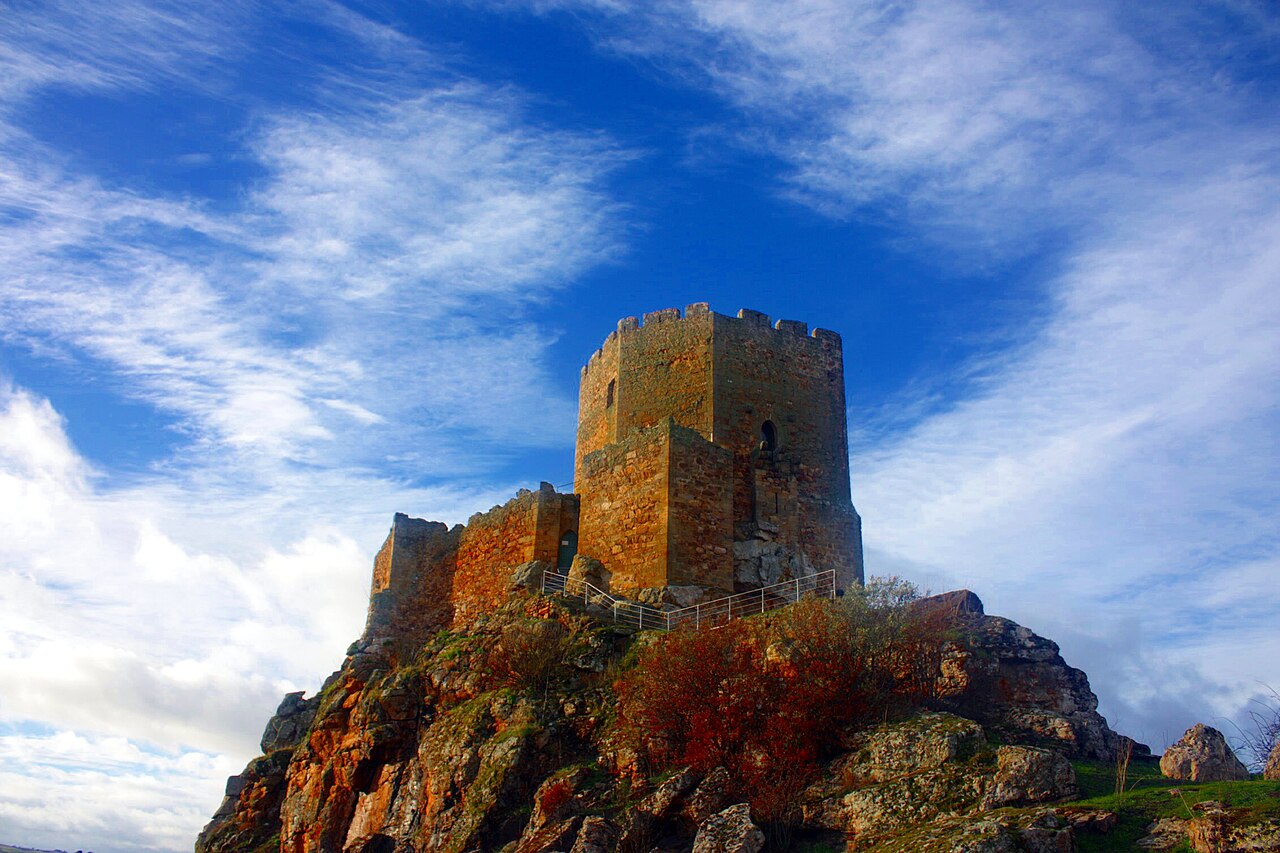
The Castle of Fermoselle stands as a significant medieval fortress located in the municipality of Fermoselle, within the province of Zamora, Spain. Its origins are intertwined with the region's ancient history, as it was likely constructed atop an earlier castro, an Iron Age fortified settlement typical of northwestern Iberia. This strategic positioning on rocky outcrops, known locally as farallones, exemplifies the medieval practice of utilizing natural terrain for defense. The castle's earliest documented ownership dates back to the early 13th century, when it was under the control of the Diocese of Zamora.
Before coming under ecclesiastical possession, the fortress had a notable royal connection. It was associated with Doña Urraca, wife of King Fernando II of León, who chose the castle as a place of retirement. This highlights the castle's role not only as a military installation but also as a residence of importance within the Kingdom of León during the High Medieval period.
Historical significance and military role
Throughout its history, the Castle of Fermoselle played a crucial role in regional conflicts, particularly due to its proximity to the border with Portugal. During the 16th century, it became a focal point in the War of the Communities of Castile, a major uprising against the central Spanish monarchy. The castle served as a defensive bastion and a refuge for key figures such as Bishop Acuña. Notably, the castle's dungeons were used to imprison the mayor of Fermoselle, Ronquillo, underscoring its function as a center of political and military power.
Its military importance continued into the 17th century, particularly during the Portuguese Restoration War (1640-1668). In 1654, Portuguese forces captured the fortress, demonstrating its strategic value in the ongoing border disputes between Spain and Portugal. This event is a testament to the castle's enduring defensive capabilities despite the evolving nature of warfare during this period.
Architectural features and construction
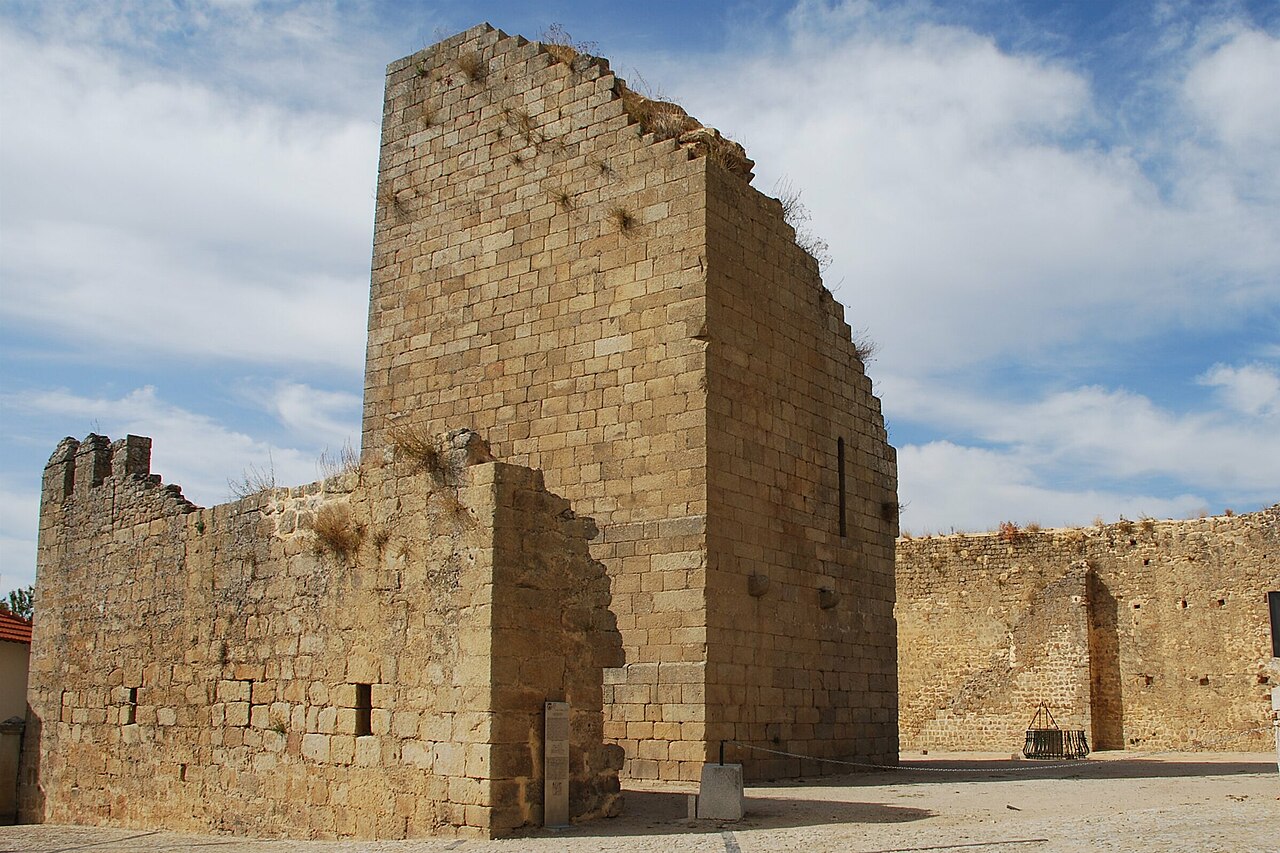
Constructed primarily from local stone, the castle was adapted to the uneven terrain of the rocky hilltop, integrating natural features into its defensive design. The fortress was originally surrounded by curtain walls that provided a formidable barrier against attackers. Today, only fragments of the southern curtain wall remain, bearing witness to centuries of weathering and human activity that have reduced the once extensive fortifications to ruins.
One of the most distinctive surviving architectural elements is the gate known locally as "la del Villar" or "el Arco". This entrance is notable for its pointed arch, a characteristic feature of medieval military architecture that combines structural strength with aesthetic form. The gate's preservation offers valuable insight into the castle's access control and defensive strategies.
Later history and preservation efforts
In the 18th century, the castle underwent repair works under the direction of engineer Benigno Garrido Marcos, reflecting continued interest in maintaining its structural integrity despite its declining military role. These repairs, however, did not prevent the gradual deterioration of the fortress, which suffered further damage from unsuitable construction activities in later centuries.
Recognizing its cultural and historical importance, the ruins of the Castle of Fermoselle were granted legal protection in 1949 under a Spanish decree aimed at preserving historic castles. This designation helps safeguard the remaining fragments and promotes awareness of the site's heritage value.
The castle's legacy and current state
Today, the Castle of Fermoselle is a ruin that offers a tangible connection to the medieval history of the Zamora region and the complex border dynamics between Spain and Portugal. While the physical remains are modest, including sections of the curtain wall and the iconic gate arch, they convey the castle's former significance as a military stronghold and noble residence.
The site provides valuable insights into medieval fortification techniques, especially the adaptation of architecture to natural landscapes. Visitors to Fermoselle can appreciate the castle's strategic location and its role in regional history, making it an important cultural landmark despite its ruined condition.
Frequently asked questions (FAQ)
- When was the Castle of Fermoselle built?
- The Castle of Fermoselle was constructed in the early 13th century, likely on the site of an earlier Iron Age castro settlement.
- What is the historical significance of the Castle of Fermoselle?
- The castle played a key role in regional conflicts such as the War of the Communities of Castile and the Portuguese Restoration War, serving as a military stronghold and refuge for important figures.
- What remains of the castle can be seen today?
- Today, visitors can see fragments of the southern curtain wall and the gate known as "la del Villar" or "el Arco", which features a pointed arch typical of medieval military architecture.
- Is the Castle of Fermoselle accessible to visitors?
- While the castle is in ruins, the site is accessible to visitors interested in exploring its historical remains and learning about its role in medieval Iberian history.
- Why is the castle located on rocky outcrops?
- The castle was built on rocky outcrops called farallones to take advantage of the natural elevation for defensive purposes and to oversee the surrounding territory.
Information
Loading map...
Visitor reviews
No reviews yet. Been here? Write the first review and help other travelers!
Write the first reviewVisited this castle? Share your experience
Your review helps other travelers and adds first-hand knowledge to our encyclopedia.