Castle of Dos Hermanas
The Castle of Dos Hermanas is a notable medieval fortress located near Navahermosa in Spain. This hill castle dates primarily from the 12th century and is believed to have been constructed by the Knights Templar. It occupies a strategic rocky outcrop, forming part of a defensive network designed to protect Templar-controlled territories and the important city of Toledo during the turbulent Reconquista period.
The castle’s origins may extend even further back, potentially resting atop an ancient pre-Roman fortification, which underscores its long-standing strategic importance. The fortress was integral to a line of watchtowers that guarded the frontier between Christian and Muslim lands, reflecting the military and political complexities of medieval Spain.
Historical significance and ownership transitions
Throughout the late 12th and early 13th centuries, the castle functioned as a military stronghold, housing a small garrison of roughly 20 to 30 soldiers and their families. These occupants provided protection for the adjacent village of Dos Hermanas, whose economy was based on shepherding and beekeeping. The village developed closely around the castle’s rocky hill, illustrating the symbiotic relationship between fortress and settlement.
In 1210, the castle was granted to Alfonso Téllez, a knight instrumental in repopulating this volatile frontier zone. Alfonso’s stewardship was relatively brief; by 1222, he sold the property to Rodrigo Ximénez de Rada, the Archbishop of Toledo. This transfer highlights the castle’s dual military and ecclesiastical importance during the Reconquista.
Later, King Ferdinand III of Castile, known as the Saint, acquired the castle and in 1246 transferred it to the city of Toledo, along with the nearby castle of Malamoneda and surrounding lands. This move reflected the consolidation of Christian control over the region after significant victories against Muslim forces.
By the mid-15th century, as regional security stabilized, the castle’s military role diminished. In 1444, the garrison was disbanded, and the village of Dos Hermanas was abandoned, with inhabitants relocating to nearby settlements such as Navahermosa. The castle had already fallen into ruin by the 14th century, marking the end of its active defensive use.
Architectural features and fortifications
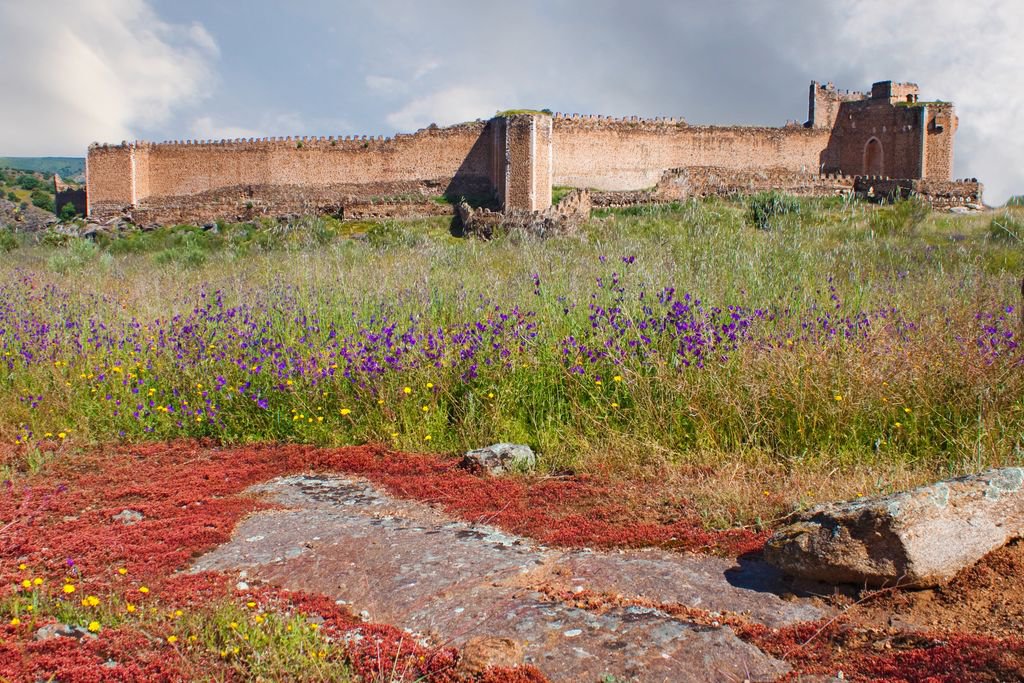
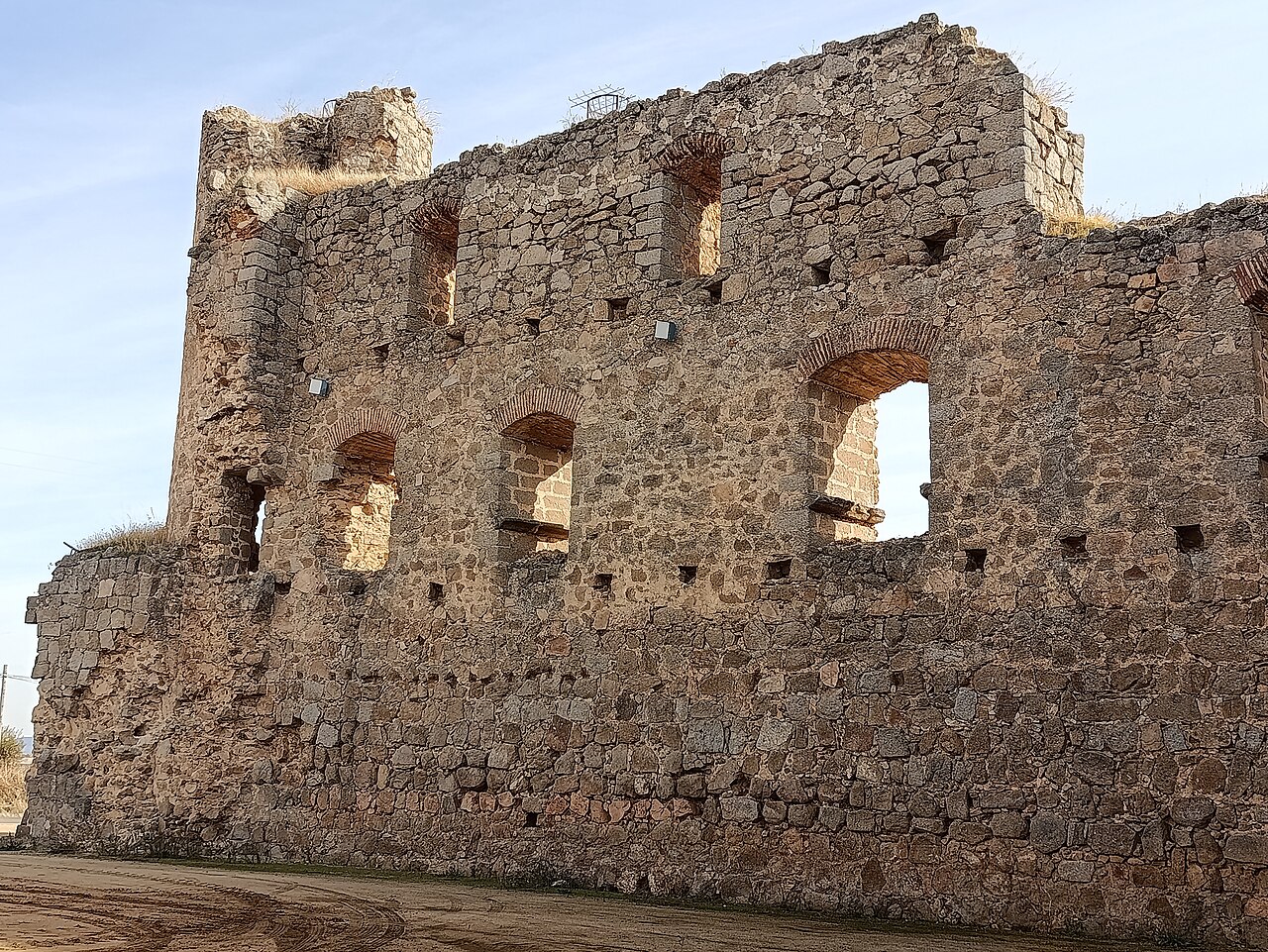
The ruins of the Castle of Dos Hermanas are situated on a narrow, elongated rocky outcrop, with the fortress’s layout closely conforming to the natural terrain. The perimeter is enclosed by masonry walls constructed using mampostería, a medieval building technique involving irregular stones set in mortar. These walls remain standing on three of the four exterior sides, clearly defining the castle’s original boundaries.
The walls feature rounded corners, which would have strengthened the structure and helped deflect attacks. While no machicolations or other projecting defensive elements survive, small holes near the presumed location of the adarve (the wall walkway) suggest the presence of former defensive installations.
Access to the castle was controlled by a single pointed-arch doorway, a hallmark of Gothic architecture prevalent in the 12th century. This entrance led into a barbican, an outer courtyard further protected by an additional defensive wall, creating a layered defense against attackers.
Inside the fortress, no internal buildings or rooms remain, indicating that the living quarters and other functional spaces have completely vanished over time. The castle once housed soldiers and their families, supporting a small community linked to the adjacent village.
The castle and its surrounding village
The castle’s location atop a rocky hill was ideal for surveillance and defense, overseeing the surrounding landscape and the village that grew at its base. The village of Dos Hermanas was a modest community, primarily engaged in shepherding and beekeeping, activities well-suited to the rural environment of the region.
Remnants of the village can still be found around the castle’s rocky base, providing archaeological insights into the daily lives of its medieval inhabitants. The close connection between the fortress and the village underscores the castle’s role not only as a military installation but also as a center of local habitation and economy.
The castle’s decline and present condition
Following the stabilization of political borders in the 15th century, the strategic necessity of the Castle of Dos Hermanas waned. The garrison was disbanded in 1444, and the village was abandoned as residents moved to larger, more secure communities. Since at least the 14th century, the castle has been in a state of ruin, with only its outer walls and some architectural features surviving.
Today, the Castle of Dos Hermanas stands as an evocative ruined medieval fortress, bearing witness to the region’s complex history of conflict, religious influence, and frontier settlement. Its remains offer valuable insights into medieval military architecture and the socio-political dynamics of the Reconquista period.
Visiting the castle ruins
Visitors to the Castle of Dos Hermanas can explore the ruined walls and the rocky outcrop on which it stands, appreciating the strategic vantage point it once commanded. While no internal structures remain, the site’s layout and surviving architectural elements provide a tangible connection to its medieval past.
The castle’s remote location near Navahermosa makes it a compelling destination for those interested in medieval history, military architecture, and the cultural heritage of Castile-La Mancha. Due to its ruinous state, access may require some physical effort, and visitors should prepare accordingly.
Frequently asked questions (FAQ)
- How do I get to the Castle of Dos Hermanas?
- The castle is located near Navahermosa in Castile-La Mancha, Spain. Visitors can reach it by car or local roads from Toledo or nearby towns. Due to its hilltop position, some walking over uneven terrain is required.
- What is the historical significance of the Castle of Dos Hermanas?
- The castle was built in the 12th century by the Knights Templar as part of a defensive network protecting Toledo and frontier lands during the Reconquista. It later came under ecclesiastical and royal ownership, reflecting its strategic and political importance.
- Can I explore the interior of the castle?
- The Castle of Dos Hermanas is in ruins, with no surviving internal buildings. Visitors can walk around the perimeter walls and explore the rocky hilltop but should not expect intact interiors.
- When is the best time to visit the castle?
- Spring and autumn offer the most pleasant weather for visiting, with mild temperatures and fewer crowds. Summer can be hot, and winter may be less accessible due to weather conditions.
- Is the castle suitable for children and elderly visitors?
- Due to uneven terrain and the ruinous condition of the site, the castle may be challenging for very young children or elderly visitors with mobility issues. Proper footwear and caution are advised.
Information
Current owner
Municipality
Loading map...
Visitor reviews
No reviews yet. Been here? Write the first review and help other travelers!
Write the first reviewVisited this castle? Share your experience
Your review helps other travelers and adds first-hand knowledge to our encyclopedia.