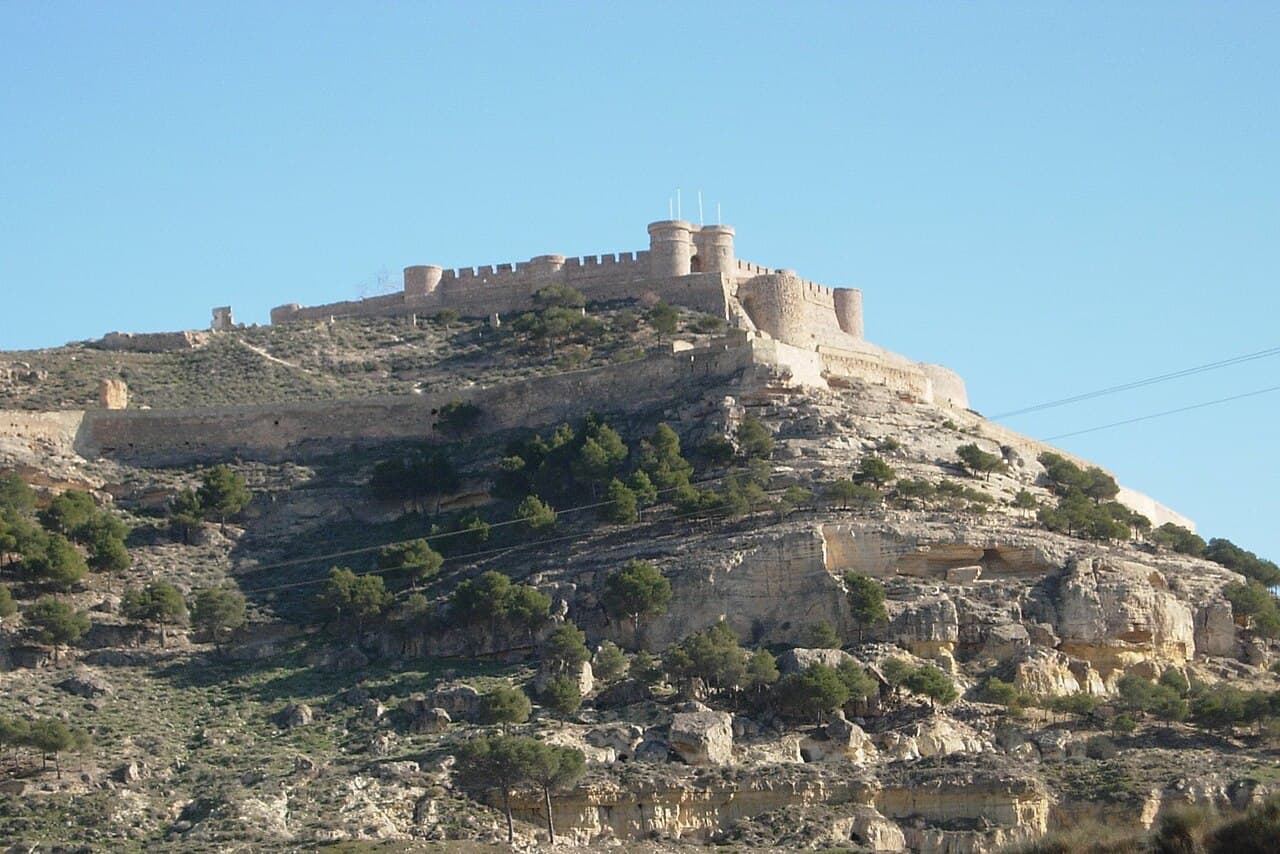
Castle of Chinchilla — Spain castle

Castle of Chinchilla

Castle of Chinchilla in Chinchilla de Monte-Aragón, Spain
Chinchilla de Monte-Aragón, Castilla-La Mancha, Spain
Late Medieval (14th–15th c.)
Under Restoration

The Castle of Chinchilla (Spanish: Castillo de Chinchilla) is a prominent hill castle located in the town of Chinchilla de Monte-Aragón in the province of Albacete, Spain. This fortress has a long history marked by its strategic position and architectural evolution, reflecting layers of cultural influence from the Iberian and Roman periods through to the medieval era.

Historical background and cultural significance

The site of the Castle of Chinchilla has been occupied since ancient times, with archaeological evidence revealing Iberian settlements predating Roman occupation. The Romans recognized the strategic value of the location, incorporating it into their defensive network during their rule over the Iberian Peninsula. The castle as it stands today primarily dates from the medieval period, when it was developed and expanded to serve as a military fortress.

Declared a Bien de Interés Cultural in 1931, the castle is protected as a cultural heritage site, underscoring its importance in Spanish history. Despite centuries of conflict and change, the castle remains a symbol of the region's historical resilience and architectural heritage.

Architectural features and layout

The Castle of Chinchilla is situated atop a hill, commanding views of the surrounding landscape. This elevated position was crucial for its defensive role, allowing surveillance over key routes and the town below. The castle's structure includes robust stone walls, defensive battlements, and remnants of towers that once provided vantage points for archers and guards.

Visitors can observe the remains of Iberian and Roman architecture integrated into the castle's foundations and walls, illustrating the site's long-term occupation and strategic significance. The medieval additions include a fortified keep and curtain walls designed to withstand sieges.

Defensive elements

The castle's defensive design features include thick walls constructed from local stone, a gatehouse controlling access, and remnants of a moat or ditch that enhanced its protection. The battlements and towers were positioned to provide overlapping fields of fire, a common medieval military architectural principle.

Current condition and visitor information

At present, the interior of the Castle of Chinchilla is under restoration, limiting visitor access to the exterior parts of the fortress. These restoration efforts aim to preserve the castle's structural integrity and enhance its accessibility for future visitors. Despite the limited access, the exterior offers a compelling glimpse into the castle's historical and architectural significance.

The castle's location within Chinchilla de Monte-Aragón makes it accessible to tourists interested in Spanish medieval fortifications and ancient archaeological sites. Visitors can appreciate the blend of Iberian, Roman, and medieval elements that characterize the castle.

Archaeological importance and ongoing research

The Castle of Chinchilla is not only a historical monument but also an important archaeological site. Excavations have uncovered artifacts and structural remains that shed light on the continuous human presence and military significance of the site over millennia. Research continues to reveal new insights into the castle's construction phases and its role in regional defense.

Preserving these layers of history is a priority, and the ongoing restoration and archaeological work contribute to a deeper understanding of Spain's cultural heritage.

Frequently asked questions (FAQ)

How do I get to the Castle of Chinchilla?
The Castle of Chinchilla is located in Chinchilla de Monte-Aragón, Spain, and can be reached by car or public transport from nearby cities like Albacete. There are local bus services that connect to the town, making it accessible for visitors. Once in Chinchilla, the castle is a short walk from the town center.
What is the historical significance of the Castle of Chinchilla?
The Castle of Chinchilla dates back to the 15th century and played a crucial role in the defense of the region during the Reconquista. It is a symbol of the town's rich history and has witnessed many historical events, including battles and sieges. The castle's strategic location offers stunning views, reinforcing its importance in medieval times.
When was the Castle of Chinchilla built?
The construction of the Castle of Chinchilla began in the 15th century and was completed in the early 16th century. It was built during a period of conflict in Spain, reflecting the architectural styles and defensive needs of that era. The castle has since undergone various restorations to preserve its historical integrity.
Can I visit the Castle of Chinchilla?
Yes, visitors are welcome to explore the Castle of Chinchilla. It is open to the public, and you can wander through its ancient walls and enjoy panoramic views of the surrounding landscape. Guided tours may also be available, providing deeper insights into the castle's history.
Why is the architecture of the Castle of Chinchilla unique?
The architecture of the Castle of Chinchilla is characterized by its robust stone walls and strategic design, reflecting the military architecture of the 15th century. Its mix of Gothic and Renaissance styles showcases the transition of architectural trends during that period. The castle's towers and battlements were designed for defense, adding to its historical charm.
Is it possible to take guided tours of the castle?
Yes, guided tours of the Castle of Chinchilla are often available, allowing visitors to learn more about its history and architecture. These tours provide expert insights and can enhance your understanding of the castle's significance. It's recommended to check in advance for tour availability and schedules.
What are the opening hours for the Castle of Chinchilla?
The Castle of Chinchilla typically opens to visitors from 10 AM to 6 PM, but hours may vary depending on the season. It’s best to check the official website or local tourist information for the most current opening times before your visit. Be sure to plan your visit accordingly to make the most of your time there.
What are the ticket prices for visiting the Castle of Chinchilla?
Ticket prices for the Castle of Chinchilla are generally affordable, with discounts available for students and seniors. Children under a certain age may enter for free. It’s advisable to check the latest pricing information on the official website before your visit to ensure you have the correct details.
When is the best time to visit the Castle of Chinchilla?
The best time to visit the Castle of Chinchilla is during the spring and fall when the weather is mild and pleasant for exploring. Summer can be quite hot, while winter may bring cooler temperatures. Visiting during local festivals can also enhance your experience with unique cultural events.
Are there any nearby attractions to visit after the castle?
Yes, after exploring the Castle of Chinchilla, visitors can enjoy nearby attractions such as the historic town center, which features charming streets and local shops. The area is also known for its natural beauty, with several hiking trails and parks nearby. Don't miss the chance to experience the local cuisine in one of Chinchilla's restaurants.

Photo gallery

Castle of Chinchilla
Click to view

Photo by Héctor S. Marqueño•CC BY-SA 2.5

1 photo • Click any image to view in full screen

Information

Hill Castle

Loading map...

Visitor reviews

No reviews yet. Been here? Write the first review and help other travelers!

Write the first review

Visited this castle? Share your experience

Your review helps other travelers and adds first-hand knowledge to our encyclopedia.
Write a review

(5/5)

0/2000 characters

Your review will be visible after admin approval

Nearby castles

12.6 km
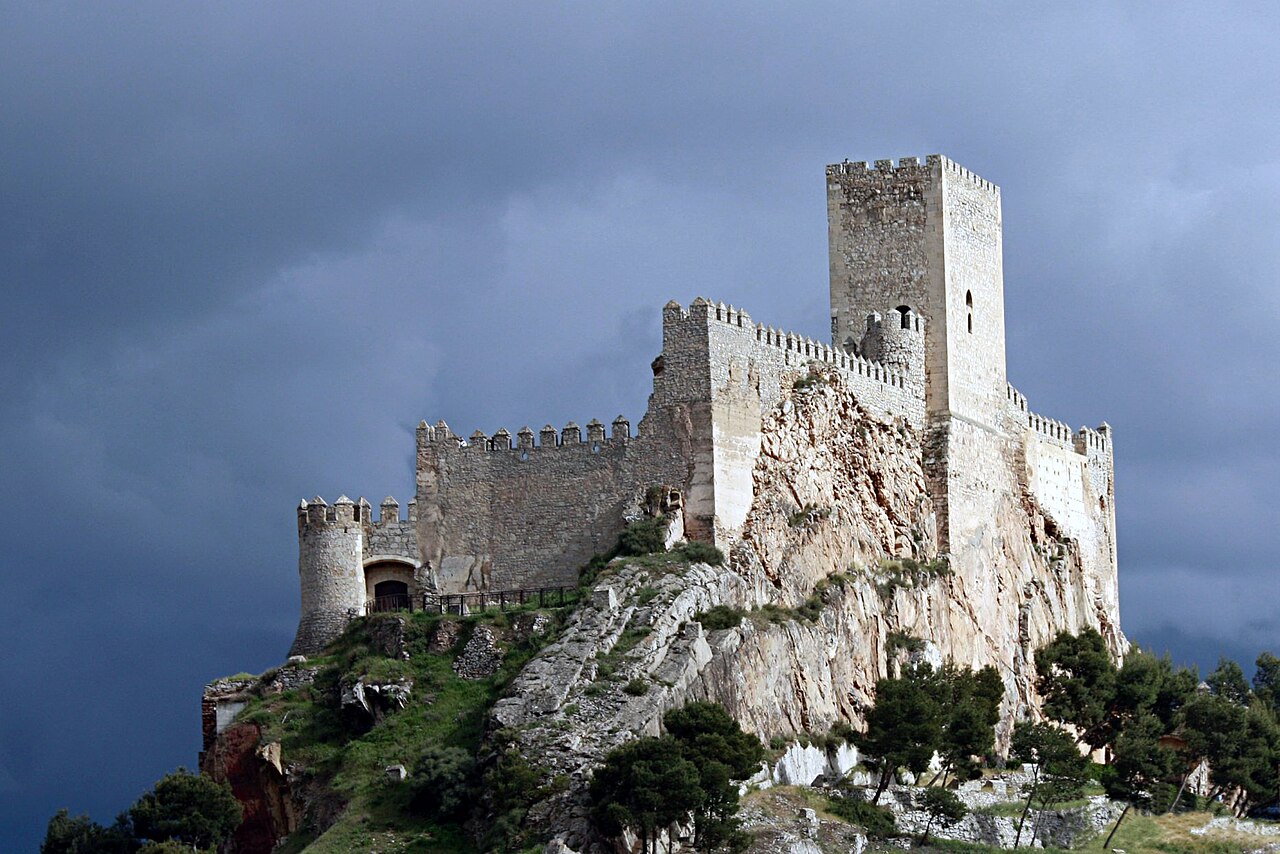
Castle of Almansa — Spain castle

Castle of Almansa

Almansa, Spain

Castle of Almansa stands as a remarkable example of medieval military architecture in the province of Albacete and the wider region of Castilla-La Mancha, Spain. Situated on the imposing Cerro del Águila (Hill of the Eagle), this hill castle dominates the old town of Almansa, which is characterized by narrow streets winding around the rocky outcrop. The castle's strategic position atop a 73-meter-high elongated plateau, approximately 100 meters long and 30 meters wide, provided commanding views over the surrounding landscape, a key factor in its historical military significance. The castle's origins trace back to the 12th century, when the Almohad dynasty, a Muslim Berber empire, first established a fortress on the site to control the territory. This early construction laid the groundwork for the castle's enduring role as a military stronghold. In the 13th century, the castle was captured by Christian forces under King Jaime I, marking a pivotal shift in control and the beginning of extensive modifications to the fortress's structure. Medieval transformations and ownership During the 13th century, the castle briefly came under the control of the Knights Templar, reflecting its importance in the religious and military conflicts of the period. The castle subsequently became part of the Lordship of Villena in the 14th century. It was during this time that Don Juan Manuel, a prominent nobleman and writer, undertook significant reconstruction efforts to strengthen the castle’s defenses. Historical documents from 1338 and 1346 attest to these fortification works, which enhanced the castle's walls and overall military capability. Between 1449 and 1454, Juan Pacheco, 2nd Marquis of Villena, further shaped the castle into its present form. His contributions included the construction of the imposing keep or tower of homage, semicircular towers along the curtain walls, and a defensive barbican protecting the western gate. Pacheco's heraldic shields are prominently displayed on the keep’s exterior walls and on the keystones of the vaults, symbolizing his influence and ownership. Architectural features and defensive design The castle's layout is adapted to the natural topography of the hill, with multiple defensive enclosures arranged on different levels ascending to the keep at the summit. The walls are constructed of high-quality masonry, featuring crenellated parapets topped with distinctive pyramidal merlons. The semicircular towers at the corners provided flanking fire and enhanced the castle's defensive perimeter. The main entrance is accessed via a curved barbican on the western side, designed to provide an additional layer of defense. This gate remains in use today, while a secondary eastern gate, once used for carts, is now inaccessible due to quarrying activities on the slope below. The keep is a rectangular tower built from finely cut ashlar stone. It contains a basement accessible through a trapdoor, a ground floor with multiple entrances, and a rooftop terrace reached by a unique Gothic-style spiral staircase carved directly into the rock. This staircase features stone and brick ribbed vaulting with keystones bearing heraldic symbols, an uncommon architectural element in military fortifications of the era. Within the keep, stone benches are positioned by windows overlooking the town and the castle courtyard, offering both strategic vantage points and places of rest. The interior also preserves remains of a palatial area on the eastern side, including fragments of walls and a small vault, suggesting residential or administrative functions alongside military use. Decline, restoration, and preservation efforts From the 16th century onwards, the castle gradually lost its military relevance and fell into neglect. By 1919, it was in a state of ruin and faced potential demolition. Intervention by the Royal Academies of History and Fine Arts prevented its destruction, and in 1921, the castle was declared a National Historic-Artistic Monument, recognizing its cultural and historical importance. Restoration efforts began in 1952 and have continued intermittently, aiming to preserve the castle's defensive character and restore its 15th-century appearance. Archaeological excavations have revealed interior wall paintings dating back to the 15th century, providing insights into the castle’s historical phases and original layout. These efforts have included rebuilding missing walls, towers, and battlements, as well as stabilizing rock fissures with anchors and cement injections. Modern improvements such as nighttime illumination, landscaping, and enhanced visitor access have made the castle a prominent tourist attraction in Castilla-La Mancha. Cultural significance and visitor experience Today, the castle of Almansa stands as one of the best-preserved medieval fortresses in the region, offering visitors a tangible connection to Spain's turbulent medieval history. Its commanding position, distinctive architectural features, and well-documented historical evolution make it a key cultural landmark. Visitors can explore the castle’s multiple defensive layers, ascend the Gothic spiral staircase to the rooftop terrace for panoramic views, and appreciate the blend of military and residential architecture. The castle’s preservation and ongoing archaeological work continue to enrich understanding of its role in regional history and medieval fortification design.

Late Medieval (14th–15th c.)
Details
38 km

Montealegre del Castillo Castle

Montealegre del Castillo, Spain

Montealegre del Castillo Castle, also known locally as Castillo de Montealegre del Castillo, is a medieval fortress situated on a prominent hill overlooking the town of Montealegre del Castillo in the province of Albacete, Spain. This strategic location provided commanding views of the surrounding landscape, which was essential for defense and control during the turbulent medieval period. The castle's origins trace back to an earlier Arab fortification known as Eliph. This original fortress was destroyed in 921 AD by Ordoño of León, the King of Galicia, during his campaigns against Muslim-held territories in the Iberian Peninsula. The destruction of Eliph marked a significant shift in control over the region, setting the stage for later Christian reconquest efforts. Construction and architectural features The existing remains of Montealegre del Castillo Castle date primarily from the 1330s, when it was constructed by Sancho Manuel. Sancho Manuel, having been granted the depopulated territory by his father, undertook the building of the castle to establish a stronghold in this frontier area. The castle was erected in a single construction phase, showcasing a blend of Mozarabic building techniques and Christian medieval architectural design. This fusion reflects the cultural and technological exchanges occurring in medieval Spain, where Christian and Muslim influences often intertwined. The castle's layout included two main towers, built on solid foundations, which served both defensive and residential purposes. The use of Mozarabic techniques likely involved distinctive masonry styles and structural solutions adapted from earlier Islamic architecture, while the overall design adhered to the functional needs of a Christian fortress. The castle's walls and towers were designed to withstand sieges and provide a secure refuge for its occupants. Historical significance and destruction Montealegre del Castillo Castle had a relatively short lifespan in its medieval form. In 1364, during the civil conflict between Peter of Castile and his half-brother Henry of Trastámara (later Henry II of Castile), the castle was deliberately demolished. Peter of Castile authorized the neighboring town of Chinchilla to annex Montealegre and to destroy the castle as part of his military strategy to weaken Henry's supporters and secure his rule. The demolition was thorough, leaving only the foundations intact. This act of destruction illustrates the intense political and military struggles in 14th-century Castile, where castles were both symbols of power and strategic military assets that could change hands or be destroyed to shift regional control. Modern restoration and current condition In the early 21st century, specifically after the year 2000, efforts were made to partially restore Montealegre del Castillo Castle. The two towers were reconstructed on their original foundations, aiming to preserve the historical footprint and provide a visual representation of the castle's former structure. Despite these restorations, the castle remains largely a ruin. Currently, the castle site is fenced off and not open to public visitation. The ruins are modest, with the reconstructed towers standing as the most prominent features. The limited access and preservation status reflect ongoing challenges in maintaining and promoting lesser-known medieval sites in rural Spain. Architectural and cultural context Montealegre del Castillo Castle exemplifies the transitional period in Spanish castle architecture where Christian military designs incorporated elements from the Mozarabic tradition. This blending highlights the complex cultural interactions on the Iberian frontier during the Reconquista. The castle's history is intertwined with the broader narrative of medieval Spain's shifting political landscapes, including the fragmentation of power, dynastic conflicts, and the reconquest of territories from Muslim rule. Its destruction during the Castilian civil war underscores the vulnerability of frontier fortifications to the era's violent power struggles. Strategic location and defensive features Perched on a hill above the town, the castle's location was chosen for its defensive advantage, allowing surveillance over key routes and the surrounding plains. The design included thick stone walls and towers capable of withstanding assaults. The use of foundations from the earlier Arab fortification demonstrates continuity in the strategic use of the site. Legacy and historical importance Though largely in ruins, Montealegre del Castillo Castle remains an important historical site that reflects the medieval military architecture and the complex history of the Castilian frontier. Its story offers insights into the region's cultural and political transformations during the 10th to 14th centuries.

Late Medieval (14th–15th c.)
Details
39.8 km

Alcalá del Júcar Castle

Alcalá del Júcar, Spain

Alcalá del Júcar Castle, locally known as Castillo de Alcalá del Júcar, is a striking hill castle perched on a limestone promontory overlooking the town of Alcalá del Júcar in the province of Albacete, Spain. This castle's strategic location on a spur within a meander of the Júcar River has made it a significant defensive site from ancient times through the medieval period. The site of Alcalá del Júcar Castle has a rich history of occupation, beginning with the Iberians and continuing through the Roman era. However, the fortress as it is known today was primarily established during the 12th century under Almohad Muslim rule. The castle, originally called Axarach, was constructed as part of the Islamic defensive network in the region, although it lacked a central keep and was relatively modest in strength. Its defense was complemented by nearby fortresses such as Jorquera and Garadén. Medieval conflicts and changing control The late 12th and early 13th centuries were marked by frequent military campaigns in this borderland between Christian and Muslim territories. The castle endured multiple sieges and changes of control. Christian forces attacked Alcalá del Júcar in 1181 and 1182, and by 1190 had gained control of the area. However, the castle switched hands several times in the following decades amid the Reconquista struggle. In 1211, Alfonso VIII of Castile captured the castle, leaving a garrison behind as he moved on to attack other Muslim strongholds. The castle was retaken by Muslim forces in 1212 but was reclaimed by Christians in 1213. Despite these military successes, efforts to repopulate the surrounding region were initially limited. Eventually, in 1243, the castle and its lands were granted to Lope López by the future Alfonso X of Castile. Administration and development under christian rule By 1364, the town of Alcalá del Júcar had been sufficiently repopulated under the leadership of Don Juan Manuel to be granted formal town rights. The castle later passed into the possession of Don Enrique de Aragón and became part of the March of Villena, an important feudal lordship in medieval Spain. The castle's keep was constructed during the 14th century, representing a significant architectural addition that enhanced its defensive capabilities. Over subsequent centuries, the castle gradually fell into disuse and ruin, reflecting broader shifts in military technology and political power. Architectural features and layout The castle's layout centers on a large pentagonal main tower, known as the torreón, which rises internally across three stories. This imposing tower is flanked by two smaller circular towers positioned at adjacent right-angle corners, also featuring three internal levels. These towers exhibit characteristic Andalusian Islamic architectural elements, a testament to the castle's Almohad origins. The fortress was originally surrounded by a curtain wall designed for defense, though today only fragments of this wall remain. The castle's position atop a natural limestone spur carved by the Júcar River provided extensive views for surveillance and defense, a classic feature of hill castles. Construction techniques and materials The castle was built using local limestone, with masonry techniques typical of the Almohad period. The original walls and towers were constructed with robustness in mind, though the lack of a central keep initially limited the fortress's defensive strength. Modern restoration and heritage status In the second half of the 20th century, the ruined keep was restored, using a lighter-colored stone that clearly differentiates the original medieval fabric from the modern reconstruction. This restoration has helped preserve the castle as a cultural and historical landmark. In 1982, Alcalá del Júcar Castle and the surrounding town were declared a Historic-Artistic Site, reflecting their cultural significance and ensuring ongoing preservation efforts. The castle is now accessible to visitors for a fee and remains a popular destination for those interested in medieval architecture and Spanish history. Cultural and historical significance Alcalá del Júcar Castle stands as a testament to the complex history of the Iberian Peninsula, illustrating the layered interactions between Islamic and Christian powers during the Reconquista. Its architectural features embody the fusion of military and administrative functions over several centuries. Nearby medieval sites such as the fortified town of Jorquera and the village of Villa de Ves highlight the strategic importance of this region in medieval Spain. The castle's role as a customs post on the Camino Real de Castilla under Christian rule further underscores its significance in regional trade and governance. Visitor experience Today, visitors to Alcalá del Júcar Castle can explore the restored keep, admire the surviving towers and walls, and enjoy panoramic views of the Júcar River valley and the historic town below. The castle's location offers an evocative glimpse into the medieval past and the enduring legacy of Spain's diverse cultural heritage. Its combination of historical depth, architectural interest, and scenic setting makes Alcalá del Júcar Castle a recommended destination for tourists and scholars alike.

High Medieval (11th–13th c.)
Details

