Castle of Almansa
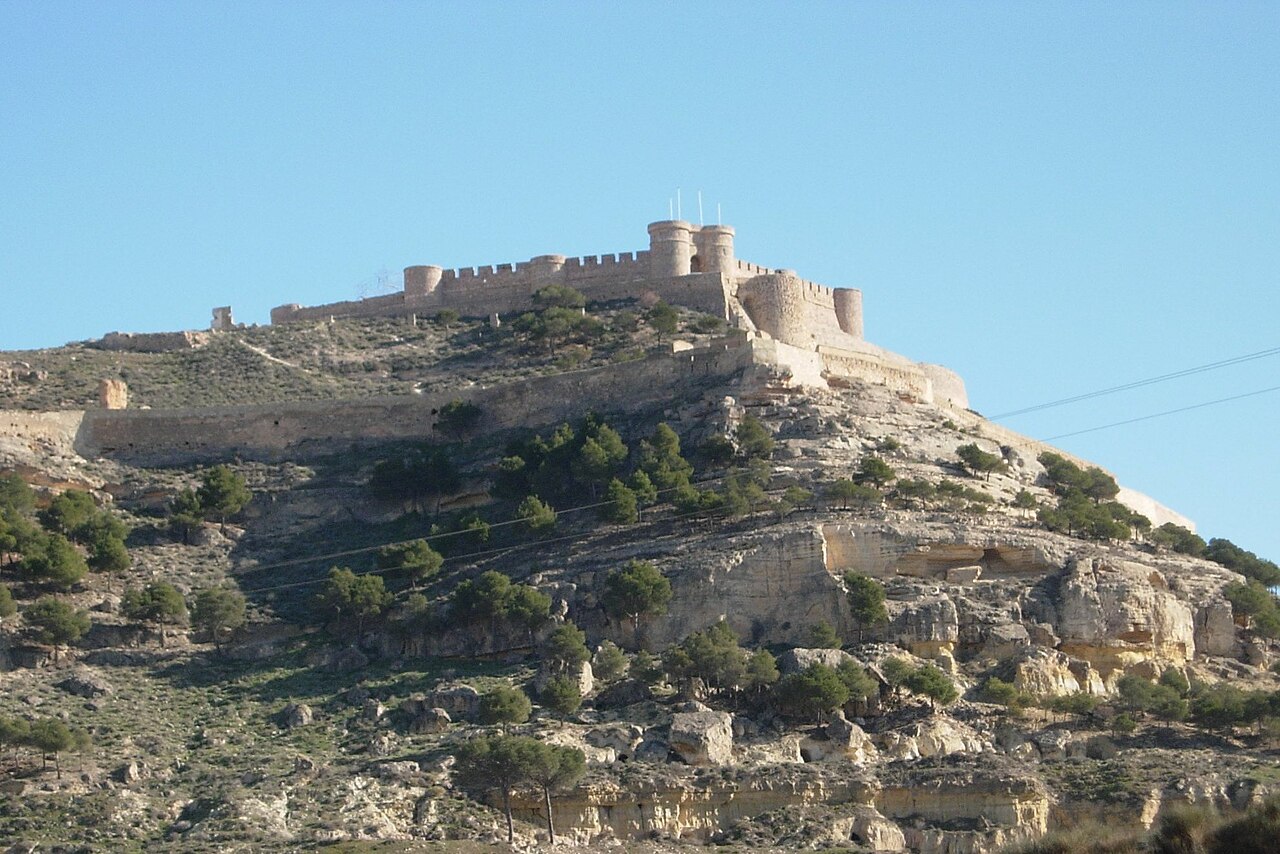
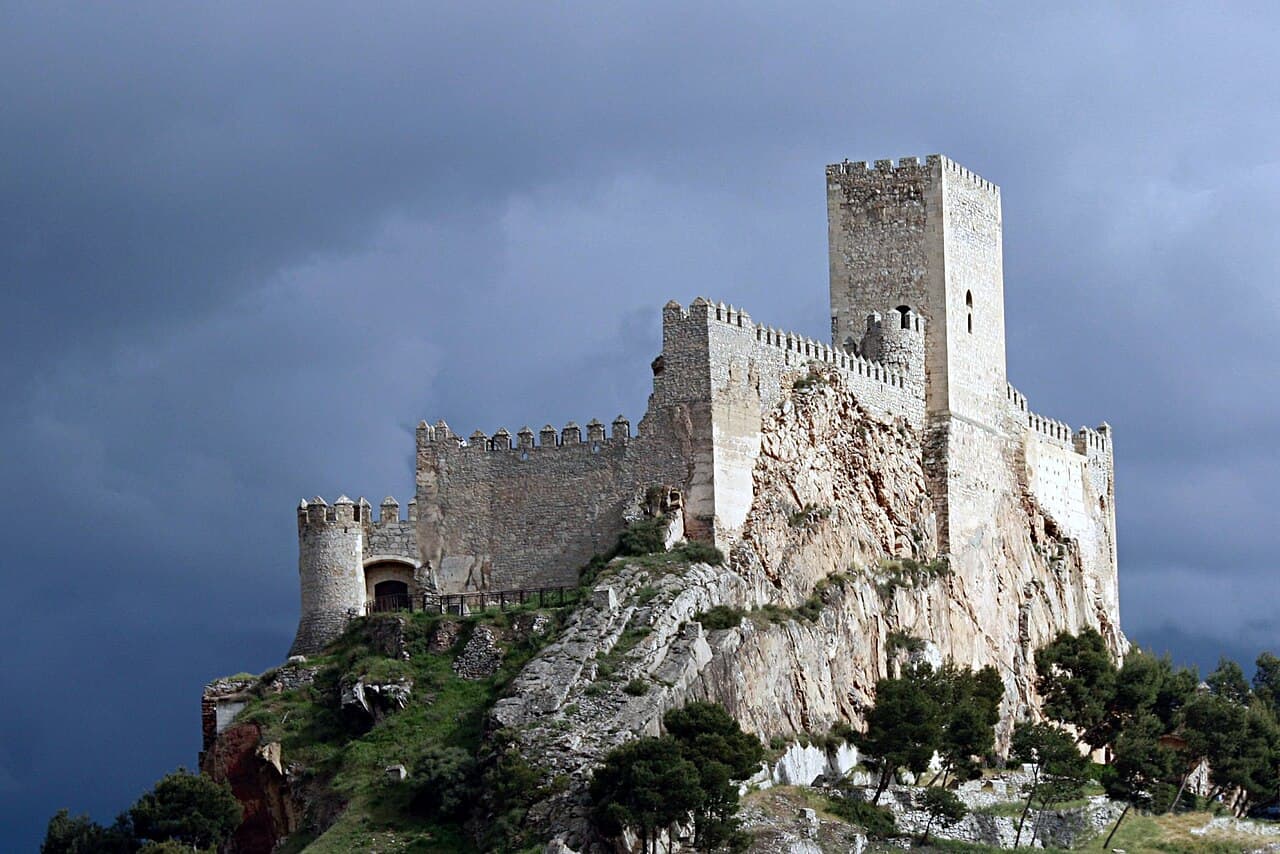
Castle of Almansa stands as a remarkable example of medieval military architecture in the province of Albacete and the wider region of Castilla-La Mancha, Spain. Situated on the imposing Cerro del Águila (Hill of the Eagle), this hill castle dominates the old town of Almansa, which is characterized by narrow streets winding around the rocky outcrop. The castle's strategic position atop a 73-meter-high elongated plateau, approximately 100 meters long and 30 meters wide, provided commanding views over the surrounding landscape, a key factor in its historical military significance.
The castle's origins trace back to the 12th century, when the Almohad dynasty, a Muslim Berber empire, first established a fortress on the site to control the territory. This early construction laid the groundwork for the castle's enduring role as a military stronghold. In the 13th century, the castle was captured by Christian forces under King Jaime I, marking a pivotal shift in control and the beginning of extensive modifications to the fortress's structure.
Medieval transformations and ownership
During the 13th century, the castle briefly came under the control of the Knights Templar, reflecting its importance in the religious and military conflicts of the period. The castle subsequently became part of the Lordship of Villena in the 14th century. It was during this time that Don Juan Manuel, a prominent nobleman and writer, undertook significant reconstruction efforts to strengthen the castle’s defenses. Historical documents from 1338 and 1346 attest to these fortification works, which enhanced the castle's walls and overall military capability.
Between 1449 and 1454, Juan Pacheco, 2nd Marquis of Villena, further shaped the castle into its present form. His contributions included the construction of the imposing keep or tower of homage, semicircular towers along the curtain walls, and a defensive barbican protecting the western gate. Pacheco's heraldic shields are prominently displayed on the keep’s exterior walls and on the keystones of the vaults, symbolizing his influence and ownership.
Architectural features and defensive design
The castle's layout is adapted to the natural topography of the hill, with multiple defensive enclosures arranged on different levels ascending to the keep at the summit. The walls are constructed of high-quality masonry, featuring crenellated parapets topped with distinctive pyramidal merlons. The semicircular towers at the corners provided flanking fire and enhanced the castle's defensive perimeter.
The main entrance is accessed via a curved barbican on the western side, designed to provide an additional layer of defense. This gate remains in use today, while a secondary eastern gate, once used for carts, is now inaccessible due to quarrying activities on the slope below.
The keep is a rectangular tower built from finely cut ashlar stone. It contains a basement accessible through a trapdoor, a ground floor with multiple entrances, and a rooftop terrace reached by a unique Gothic-style spiral staircase carved directly into the rock. This staircase features stone and brick ribbed vaulting with keystones bearing heraldic symbols, an uncommon architectural element in military fortifications of the era.
Within the keep, stone benches are positioned by windows overlooking the town and the castle courtyard, offering both strategic vantage points and places of rest. The interior also preserves remains of a palatial area on the eastern side, including fragments of walls and a small vault, suggesting residential or administrative functions alongside military use.
Decline, restoration, and preservation efforts
From the 16th century onwards, the castle gradually lost its military relevance and fell into neglect. By 1919, it was in a state of ruin and faced potential demolition. Intervention by the Royal Academies of History and Fine Arts prevented its destruction, and in 1921, the castle was declared a National Historic-Artistic Monument, recognizing its cultural and historical importance.
Restoration efforts began in 1952 and have continued intermittently, aiming to preserve the castle's defensive character and restore its 15th-century appearance. Archaeological excavations have revealed interior wall paintings dating back to the 15th century, providing insights into the castle’s historical phases and original layout.
These efforts have included rebuilding missing walls, towers, and battlements, as well as stabilizing rock fissures with anchors and cement injections. Modern improvements such as nighttime illumination, landscaping, and enhanced visitor access have made the castle a prominent tourist attraction in Castilla-La Mancha.
Cultural significance and visitor experience
Today, the castle of Almansa stands as one of the best-preserved medieval fortresses in the region, offering visitors a tangible connection to Spain's turbulent medieval history. Its commanding position, distinctive architectural features, and well-documented historical evolution make it a key cultural landmark.
Visitors can explore the castle’s multiple defensive layers, ascend the Gothic spiral staircase to the rooftop terrace for panoramic views, and appreciate the blend of military and residential architecture. The castle’s preservation and ongoing archaeological work continue to enrich understanding of its role in regional history and medieval fortification design.
Frequently asked questions (FAQ)
- What is the historical significance of the Castle of Almansa?
- The Castle of Almansa is a key historical monument in Spain, known for its role in the War of Spanish Succession. Built in the 15th century, it showcases the strategic importance of the region and has witnessed numerous battles, making it a site of great historical interest.
- How do I get to the Castle of Almansa?
- The Castle of Almansa is easily accessible by car and public transport. If you are traveling by train, the Almansa station is nearby, and local buses operate routes to the castle, providing convenient access for visitors.
- When was the Castle of Almansa built?
- Construction of the Castle of Almansa began in the 15th century, specifically around 1473. The castle has undergone various renovations over the centuries, reflecting different architectural styles and historical periods.
- What are the opening hours for the Castle of Almansa?
- The Castle of Almansa is typically open to visitors from 10 AM to 6 PM during the weekdays and until 8 PM on weekends. However, it is advisable to check the official website for any seasonal changes in hours or holiday closures.
- Can I take guided tours of the Castle of Almansa?
- Yes, guided tours are available at the Castle of Almansa, providing visitors with in-depth information about its history and architecture. These tours are conducted in multiple languages and are a great way to enhance your visit.
- Is it possible to access the Castle of Almansa with limited mobility?
- While the Castle of Almansa has some areas accessible to visitors with limited mobility, certain parts may present challenges due to uneven surfaces and stairs. It is recommended to contact the castle management in advance for specific accessibility options.
- What is the best time to visit the Castle of Almansa?
- The best time to visit the Castle of Almansa is during the spring and early autumn months when the weather is mild and pleasant. These seasons also see fewer crowds, allowing for a more enjoyable experience exploring the castle and its surroundings.
- Are there any nearby attractions to visit along with the Castle of Almansa?
- Yes, there are several attractions near the Castle of Almansa, including the historic town center and local museums. You can also explore the beautiful landscapes and hiking trails in the surrounding area, making it a perfect day trip destination.
- What are the ticket prices for the Castle of Almansa?
- Ticket prices for the Castle of Almansa are generally affordable, with discounts available for students and seniors. It's best to check the castle's official website for the most current pricing and any special offers that may be available during your visit.
Photo gallery

Information
Website
Visit websiteSources & official resources
Verify the information above using these authoritative references.
Loading map...
Visitor reviews
No reviews yet. Been here? Write the first review and help other travelers!
Write the first reviewVisited this castle? Share your experience
Your review helps other travelers and adds first-hand knowledge to our encyclopedia.