Castle of Chaumont-sur-Loire — France castle

Castle of Chaumont-sur-Loire

Castle of Chaumont-sur-Loire
Chaumont-sur-Loire, Centre-Val de Loire, France
Early Medieval (5th–10th c.)
Well Preserved

The castle of Chaumont-sur-Loire stands as a remarkable example of medieval fortification and Renaissance elegance located in the picturesque Loire Valley of France. Founded in the 10th century by Odo I, Count of Blois, this castle has witnessed centuries of history, transformation, and cultural significance. Its strategic position overlooking the Loire River made it a formidable stronghold during the Early Medieval period.

Founding and early medieval origins

The initial construction of the castle dates back to the 10th century, a time when fortifications were essential for defense against invasions and local conflicts. The castle was originally built as a hill castle, capitalizing on its elevated location to control the surrounding territory and the vital Loire River trade route. The early structure would have included a keep or donjon, defensive walls, and possibly a moat, characteristic of early medieval military architecture.

Renaissance rebuilding and architectural evolution

In the 15th century, the castle underwent significant rebuilding under the direction of Charles I d'Amboise, a prominent nobleman and military leader. This reconstruction marked a transition from purely defensive architecture to a more refined Renaissance style, blending military robustness with residential comfort and aesthetic appeal. The renovations included the addition of elegant living quarters, ornamental façades, and improved fortifications suited for the evolving nature of warfare and aristocratic life.

Architectural features and style

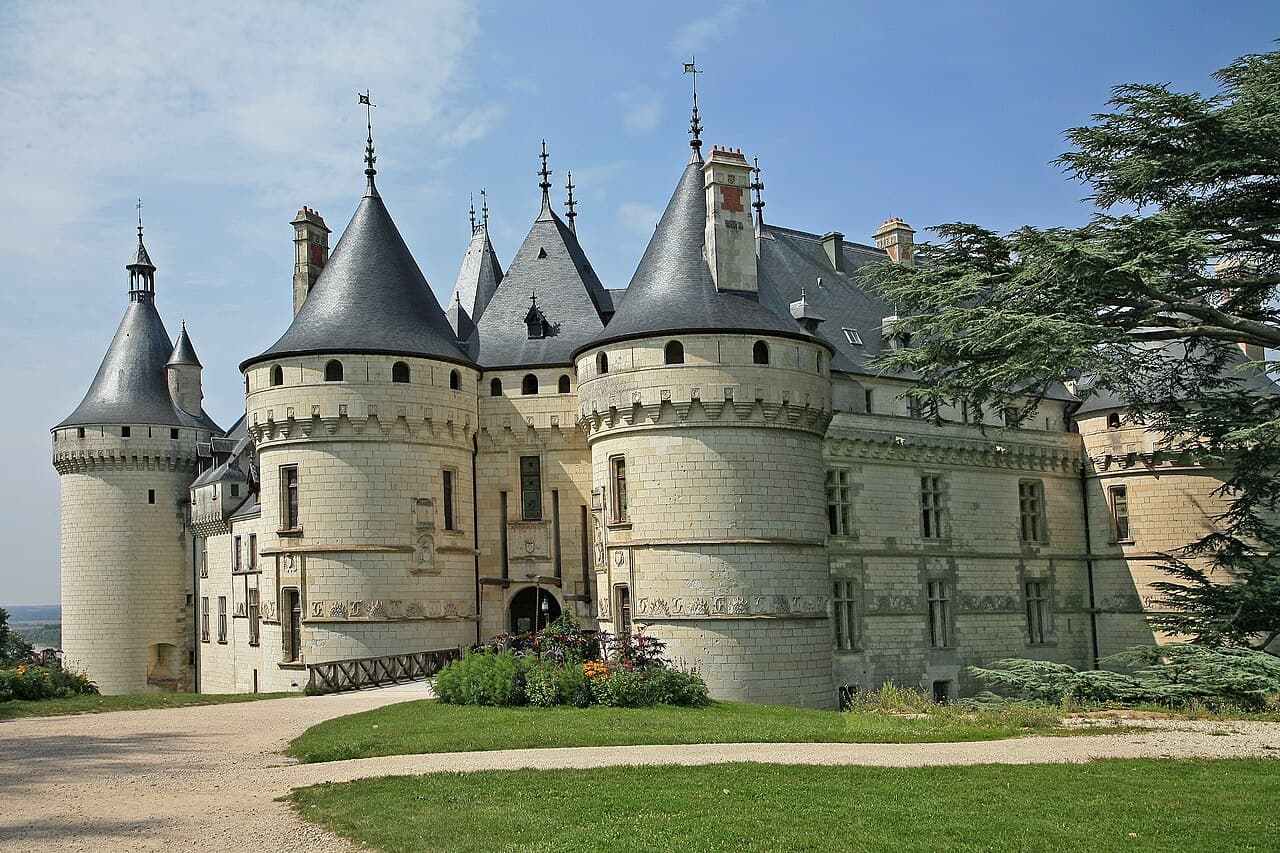
The castle's architecture showcases a harmonious mix of medieval fortification elements and Renaissance artistic influences. The thick stone walls and battlements reflect its original defensive purpose, while the large windows, decorative chimneys, and intricately designed galleries highlight Renaissance tastes. The castle's layout includes multiple towers, a grand courtyard, and a chapel, each contributing to its grandeur and historical complexity.

Historical significance and ownership

Throughout its history, the castle of Chaumont-sur-Loire has been a witness to numerous historical events and ownership changes. It served as a noble residence, a military fortress, and a cultural landmark. The castle was protected as a monument historique since 1840, reflecting its importance in French heritage. In 1938, it was transferred to state ownership, ensuring its preservation and public accessibility.

Modern use and cultural events

Today, the castle functions as a museum that attracts visitors from around the world. It is renowned for its annual Garden Festival, held from April to October, where contemporary garden designers create innovative displays within the castle's extensive grounds. The festival celebrates horticultural creativity and landscape design, enhancing the castle's reputation as a cultural hub.

Museum collections and visitor experience

The museum houses a rich collection of art, furniture, and historical artifacts that illustrate the castle's long history and the lifestyle of its former inhabitants. Visitors can explore the grand halls, private chambers, and beautifully maintained gardens. Informative exhibits and guided tours provide insights into the castle's architectural evolution, historical context, and the significance of the Loire Valley as a cultural landscape.

Location and surroundings

Situated in Chaumont-sur-Loire, the castle enjoys a scenic setting along the Loire River, part of a UNESCO World Heritage site known for its concentration of historic châteaux. The surrounding landscape includes vineyards, rolling hills, and the riverbanks, offering picturesque views and opportunities for outdoor activities such as walking and cycling.

Frequently asked questions (FAQ)

How do I get to the Castle of Chaumont-sur-Loire?
The Castle of Chaumont-sur-Loire is easily accessible by car, located approximately 20 kilometers from Blois. Public transportation options, including buses and trains, are also available, making it convenient for visitors traveling from major cities.
What is the historical significance of the Castle of Chaumont-sur-Loire?
The Castle of Chaumont-sur-Loire dates back to the 10th century and has played a pivotal role in French history, serving as a residence for various noble families. It is particularly known for its association with Diane de Poitiers, the mistress of King Henry II, and its rich collection of historical art and gardens.
When was the Castle of Chaumont-sur-Loire built?
The original structure of the Castle of Chaumont-sur-Loire was constructed in the 10th century, with significant renovations and expansions occurring in the 15th and 16th centuries. Its architectural evolution reflects various styles, including Gothic and Renaissance influences.
Can I take guided tours of the Castle of Chaumont-sur-Loire?
Yes, guided tours are available at the Castle of Chaumont-sur-Loire, providing visitors with in-depth knowledge of its history and architecture. Tours are offered in multiple languages, ensuring a comprehensive experience for all guests.
Why is the Castle of Chaumont-sur-Loire known for its gardens?
The Castle is renowned for its stunning gardens, which were designed by prominent landscape artists and showcase a variety of floral displays. The gardens host the International Garden Festival, attracting garden enthusiasts from around the world every year.
Is it possible to visit the Castle of Chaumont-sur-Loire year-round?
Yes, the Castle of Chaumont-sur-Loire is open to visitors year-round, though hours may vary seasonally. It is advisable to check the official website for current opening hours and any special events that may be taking place during your visit.
What are the ticket prices for the Castle of Chaumont-sur-Loire?
Ticket prices for the Castle of Chaumont-sur-Loire vary depending on the season and any special exhibitions. Discounts are often available for students, seniors, and groups, so it's worth checking the official website for the most up-to-date pricing information.
What is the best time to visit the Castle of Chaumont-sur-Loire?
The best time to visit the Castle is during spring and early fall when the gardens are in full bloom and the weather is pleasant. Additionally, visiting during the International Garden Festival in summer offers a unique experience with extraordinary garden displays.
Are there any nearby attractions to the Castle of Chaumont-sur-Loire?
Yes, nearby attractions include the charming village of Chaumont-sur-Loire, the stunning Loire Valley vineyards, and other historic châteaux such as Château de Chenonceau and Château de Blois. This region is rich in culture and history, making it a perfect destination for exploration.

Photo gallery

Castle of Chaumont-sur-Loire
Click to view

Photo by W. Bulach•CC BY-SA 4.0

1 photo • Click any image to view in full screen

Information

Hill Castle

Sources & official resources

Verify the information above using these authoritative references.

Loading map...

Visitor reviews

No reviews yet. Been here? Write the first review and help other travelers!

Write the first review

Visited this castle? Share your experience

Your review helps other travelers and adds first-hand knowledge to our encyclopedia.

Write a review

(5/5)

0/2000 characters

Your review will be visible after admin approval

Nearby castles

0.6 km

Chaumont-sur-Loire Castle

Chaumont-sur-Loire, France

Chaumont-sur-Loire Castle stands prominently on a steep hill overlooking the Loire River in the heart of the Centre-Val de Loire region of France. This late medieval fortress, originally founded in the 10th century, has evolved over centuries into a remarkable example of Renaissance architecture while retaining its defensive medieval features. Its strategic location between Tours and Blois made it a key military and political site, guarding the border between the counties of Blois and Anjou. Early history and medieval origins The castle was initially established around the year 1000 by Odo I, Count of Blois, as a wooden stronghold designed to protect his lands from rival feudal lords, particularly Fulk Nerra, Count of Anjou. Soon after, the Norman vassal Gelduin reinforced the fortifications by replacing timber with stone, marking an important transition to more durable military architecture. By 1054, ownership passed through marriage to the Amboise family, who controlled the castle for nearly five centuries. Throughout the Middle Ages, the castle played a vital role in regional defense. It was rebuilt after destruction in the 12th century and further fortified with typical medieval military features such as machicolations, battlements, a drawbridge, and a dry moat. The castle’s position on a steep promontory overlooking the Loire River gave it a commanding view of the surrounding landscape and made it a formidable fortress. Rebuilt and transformed in the renaissance In 1465, the castle was ordered to be dismantled by King Louis XI as punishment for Pierre d'Amboise's rebellion against the crown. After Pierre performed public penance, the family was allowed to rebuild the castle. Between 1469 and 1510, Charles I and Charles II d'Amboise, supported by the influential Cardinal Georges d'Amboise, led a significant reconstruction that introduced early Renaissance architectural elements while preserving much of the castle’s medieval character. This period saw the addition of Italian-inspired decorative motifs, heraldic reliefs bearing the initials of Charles II and his wife Catherine, and the royal arms of Louis XII and Anne of Brittany. The castle’s layout, with its fortified walls, towers, and gatehouses, reflects a harmonious blend of military functionality and Renaissance aesthetics. Notable owners and historical significance The castle passed into the hands of Catherine de Medici in 1550, who used it as a residence and hosted numerous astrologers, including the famous Nostradamus. After the death of her husband, Henry II, Catherine forced his mistress, Diane de Poitiers, to exchange Château de Chaumont for the Château de Chenonceau. Diane only lived at Chaumont briefly but left her mark by adding distinctive machicolated battlements adorned with her intertwined initials and hunting motifs. In the 17th and 18th centuries, the castle changed ownership multiple times. Notably, Paul de Beauvilliers modernized interiors to accommodate the duc d'Anjou, future king of Spain. Later, Jacques-Donatien Le Ray, a supporter of the American Revolution, established glassmaking and pottery manufactories on the estate. The castle was seized during the French Revolution but survived intact. In the late 19th century, Marie Say, heiress to a sugar fortune, and her husband Prince Amédée de Broglie undertook extensive restorations, transforming the castle into an elegant residence. Architect Paul-Ernest Sanson led renovations including the construction of luxurious stables, notable for their early use of electric arc lighting. The French state acquired the castle in 1938, initiating preservation efforts. Since 1992, the castle grounds have hosted the International Garden Festival, a prestigious event attracting landscapers, architects, and garden designers from around the world. Architectural features and layout The surviving castle structures reflect its layered history. The oldest parts, dating from the 15th century, include the west wing, the large Amboise tower, and the vaulted bays of the south wing, all showcasing Gothic military architecture. Defensive elements such as machicolations, battlements, and a drawbridge emphasize its fortress origins. The original north wing, facing the Loire, was demolished in the 18th century to create a ceremonial courtyard opening the castle towards the river. Renaissance features are evident in the south and east wings, the entrance lodge, chapel, and grand staircase. The chapel, restored in the 19th century, contains stained glass inspired by the artist Jean-Paul Laurens. The castle’s interiors are richly furnished with tapestries and carpets from the 16th to 18th centuries, including Flemish tapestries depicting Hannibal and Aubusson carpets illustrating Alexander the Great. The council chamber is decorated with 17th-century Sicilian majolica tiles. The stables Built in 1877, the stables are an architectural highlight, reflecting the wealth and status of the aristocracy. Designed by Paul-Ernest Sanson, they are organized around two communicating courtyards and were among the first in Europe to use electric arc lighting, underscoring the modernity and luxury of the estate. The historic park and international garden festival The castle is surrounded by a 21-hectare historic park designed in the English landscape style by Henri Duchêne in the late 19th century. The park features majestic cedars, sequoias, and groves arranged to frame views of the Loire valley and castle. Since 1992, the park has hosted the International Garden Festival, an event showcasing innovative and contemporary garden designs. This festival has become a major attraction, drawing over 400,000 visitors in recent years and featuring nearly 600 unique gardens over its history. Cultural and heritage significance Classified as a Monument historique since 1840, Château de Chaumont is recognized for its exceptional blend of medieval fortification and Renaissance elegance. It forms part of the Loire Valley UNESCO World Heritage site, celebrated for its architectural grandeur and cultural importance. Today, the castle functions as a museum and cultural center, offering visitors a rich experience of French history, art, and landscape design. Its annual garden festival continues to promote creative landscape architecture and horticultural innovation.

Late Medieval (14th–15th c.)
Details
12 km
Château de Fougères-sur-Bièvre — France castle

Château de Fougères-sur-Bièvre

Fougères-sur-Bièvre, France

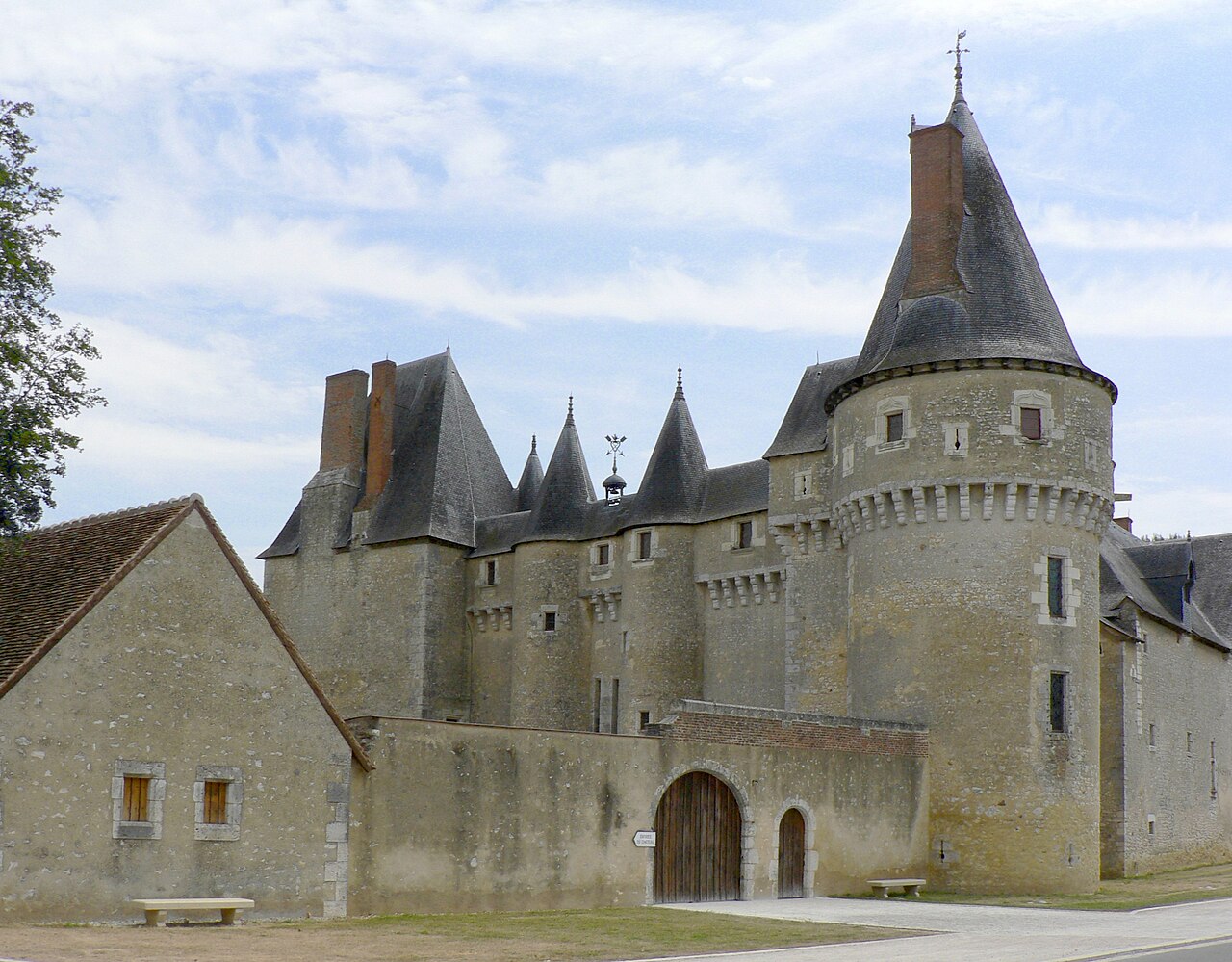
Château de Fougères-sur-Bièvre stands as a remarkable example of late medieval architecture with significant Renaissance modifications, located in the town of Fougères-sur-Bièvre in the Loir-et-Cher department of central France. Originally established in the 11th century, this castle has witnessed centuries of conflict, reconstruction, and transformation, embodying the evolution of French castle design from a fortified stronghold to a stately residence. The castle’s earliest incarnation was founded by the medieval nobility under the lordship of Seigneur Frangall, a vassal to the Count of Blois, situating the castle within the feudal landscape of the region. This initial fortress was typical of the early medieval period, designed primarily for defense and control of the surrounding territory. During the Hundred Years’ War, the castle suffered devastating damage when it was attacked and almost completely destroyed in 1356 by Edward III’s forces, led by the Black Prince of Wales. Only the square keep and parts of a round tower survived the assault, leaving the castle in ruins for several decades. Reconstruction and architectural evolution in the 15th and 16th centuries Ownership of the castle passed to the Faverois family in the early 14th century and subsequently to the Refuge family through marriage in 1438. The Refuge family undertook a major rebuilding effort between 1450 and 1475, reconstructing the castle on its original foundations and incorporating surviving medieval elements into the new structure. Pierre de Refuge, treasurer to Kings Charles VII and Louis XI, played a pivotal role in the castle’s fortification and expansion. By 1483, he had secured royal permission to strengthen the defenses, culminating in the completion of the north wing around 1497. This wing features the main entrance flanked by slender round towers and is topped by a distinctive roof lantern. Along the north facade runs an exterior battlemented walkway, or adárve, supported by stone corbels and equipped with machicolations, defensive openings used to repel attackers. The early 16th century saw the introduction of Renaissance architectural features under Jean de Villebresme, Pierre’s grandson and chamberlain to Duke Charles II of Valois-Angoulême. This period brought decorative dormers, bas-reliefs, and the first roofing of the keep. The transformation also included replacing narrow arrow slits with larger windows, removing the curtain wall, filling in the eastern moat, and adding a gallery with an adjoining chapel, signaling a shift from purely military functions to residential and representational uses. Architectural features and materials The castle is arranged around a rectangular courtyard formed by four wings. The oldest surviving structure is the 11th-century square keep at the northwest corner, capped with a steep hipped roof adorned with Renaissance dormers. The north wing is architecturally prominent with its multiple small towers and varied roof shapes, while the east wing features a single-story arcade with four lowered arches supported by octagonal pillars. The roofs of the east and south wings have a rare inverted ship’s keel shape, a Gothic design unique in the Loire Valley shared only with the keep of Sully-sur-Loire. The south and west wings served as residential and representational spaces, with the south wing’s entrance marked by a small gable with a keel-shaped arch containing carved angels and the Refuge family coat of arms. Inside, a polygonal stair tower with a spiral staircase provides access to the upper floors, and rooms like the Salle des Gardes and Salle du Conseil retain their large open layouts and notable fireplaces. Construction materials include local limestone from Beauce for the main walls, lighter tuff stone from Bourré for cornerstones and sculptural details, and slate roofing from Angers supported by oak beams from nearby forests. Some original wall plaster survives, adding to the authenticity of the interiors. Defensive features and later modifications Originally, the castle was surrounded by a water-filled moat and enclosed by a covered battlemented wall, or chemin de ronde, along the north facade. The curtain wall was removed in the 16th century as the castle’s military importance waned, and the moat was gradually filled in. The drawbridge at the north wing’s entrance disappeared, reflecting the transition from fortress to noble residence. The outer bailey, located to the north, contains agricultural buildings arranged in an L-shaped complex, though these lack notable architectural distinction. Since 2003, a medieval-inspired kitchen garden has been cultivated east of the castle along the Bièvre River, featuring vegetable and dye plants and an aviary with rare bird species, highlighting historical horticultural practices. Historical significance and modern use After the French Revolution, the castle changed hands, being sold to René Lambot in 1789. It subsequently served industrial and agricultural purposes, including functioning as a water-powered spinning mill from 1812 to 1901, utilizing the Bièvre River’s flow. Later, it was adapted as housing for agricultural workers, marking a period of decline in its noble stature. The French government acquired the castle in 1932 and undertook restoration efforts until 1938. During World War II, the castle played a crucial role in protecting cultural heritage by sheltering stained glass windows from Chartres Cathedral and artworks from the Louvre, safeguarding them from wartime destruction. Since 1993, Château de Fougères-sur-Bièvre has operated as a museum dedicated to historical architecture, traditional construction materials, and building techniques. It hosts exhibitions and educational programs, including activities for children, preserving and sharing its rich heritage with the public.

Late Medieval (14th–15th c.)
Details
15 km
Château de Montrichard — France castle

Château de Montrichard

Montrichard Val de Cher, France

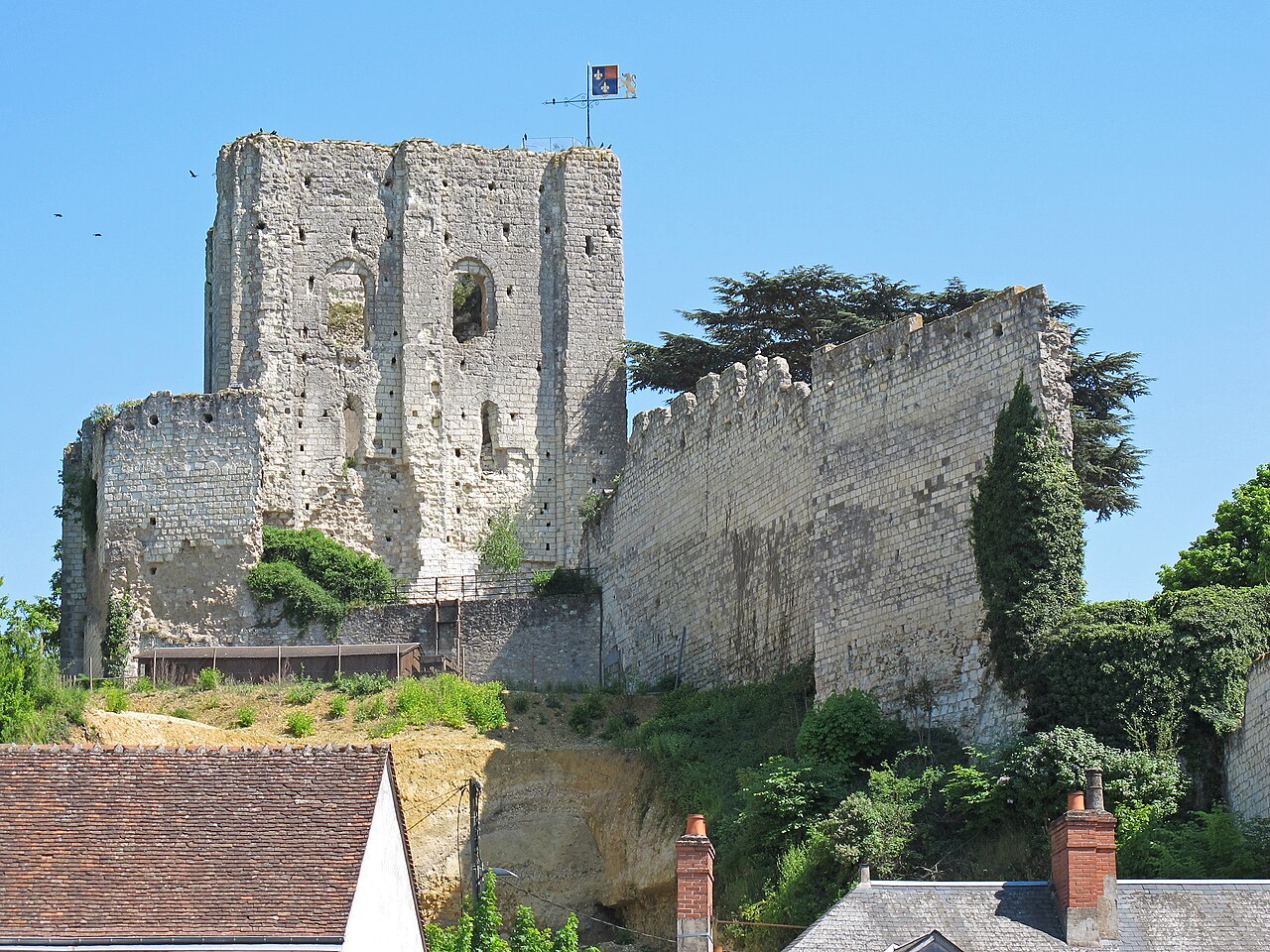
The Château de Montrichard is a ruined medieval hill castle located in the town of Montrichard Val de Cher in the Loir-et-Cher département, central France. Originally constructed in the early 11th century by Foulques Nerra, Count of Anjou, it served as a strategic military fortress overseeing the Cher River valley and key medieval trade routes. The castle was rebuilt in stone during the 12th century under Hugues I d'Amboise, whose architectural contributions shaped much of the surviving structure. Although now in ruins, the castle's prominent donjon (keep) remains a striking example of early medieval military architecture. Early history and strategic importance The origins of the Château de Montrichard trace back to the early 11th century when Foulques Nerra established a wooden fortification to assert control in the contested region between the counties of Anjou and Blois. This initial structure was part of broader power struggles during the high medieval period. The castle's location on a ridge overlooking the Cher River allowed it to command a vital crossing point, including a bridge and a ford, facilitating control over trade and military movements between major cities such as Blois, Loches, Bourges, and Tours. 12th-century stone reconstruction and architectural features In 1109, Hugues I d'Amboise seized the castle and initiated a major rebuilding program, replacing the original wooden structures with durable stone fortifications. The donjon, dating from around 1120, is a square tower reinforced with buttresses and divided internally into three floors: a storage cellar at ground level, living quarters above, and a battlemented rooftop walkway for defense. This design was inspired by the nearby fortress of Loches, reflecting the architectural trends of the period. The castle was further protected by an inner curtain wall (chemise) and an outer defensive wall called an enceinte. Over time, additional round towers and a drawbridge were added, enhancing the defensive capabilities. Residential buildings were constructed within the walls, indicating the castle's dual military and domestic functions. Military history and royal ownership The castle endured several sieges and changes of ownership throughout the Middle Ages. In 1188, it suffered partial destruction during a siege by King Philip II of France (Philippe Auguste). Later, the castle became a key defensive stronghold for the Amboise family, alongside the nearby Château d'Amboise. During the Hundred Years' War, the fortress was attacked by English forces led by the Black Prince on September 6, 1356. Ownership passed to the Harcourt family by marriage at the end of the Middle Ages. In 1461, King Louis XI acquired the castle from Guillaume d'Harcourt, exchanging it for other lordships. Under royal control, the castle hosted significant events such as the weddings of Louis XI's daughters, Anne and Jeanne, held in conjunction with the nearby Sainte-Croix church. In 1589, King Henry IV ordered the dismantling of the upper four meters of the castle's defensive walls to reduce its military importance. This partial demolition marked the beginning of the castle's decline as a fortress. Decline, preservation, and current state By the 17th century, the Château de Montrichard had fallen into disuse and was largely abandoned. Its defensive role became obsolete, and the structure deteriorated into ruins. Recognizing its historical and cultural value, the French government designated the site as a monument historique in 1877, providing legal protection. Today, the castle remains a ruined hill castle with visible remnants of its curtain walls, donjon, and other defensive features. Visitors can climb the keep to enjoy panoramic views over the town of Montrichard and the Cher valley. The adjacent Musées du Donjon displays archaeological artifacts recovered from the site and surrounding area, offering insights into the castle's medieval past. Architectural significance The Château de Montrichard exemplifies early high medieval military architecture in France. Its combination of a robust square keep, layered defensive walls, and integration with the natural ridge landscape demonstrates strategic castle design of the 12th century. The castle's evolution from a wooden fortification to a stone fortress reflects broader trends in medieval fortification technology and feudal power consolidation. Visitor experience and cultural heritage Visitors today can explore the castle ruins and appreciate the site's historical layers through interpretive signage and museum exhibits. The castle's commanding position offers a tangible connection to the medieval period and the region's feudal history. Its preservation as a protected monument ensures that this heritage remains accessible for future generations.

High Medieval (11th–13th c.)
Details