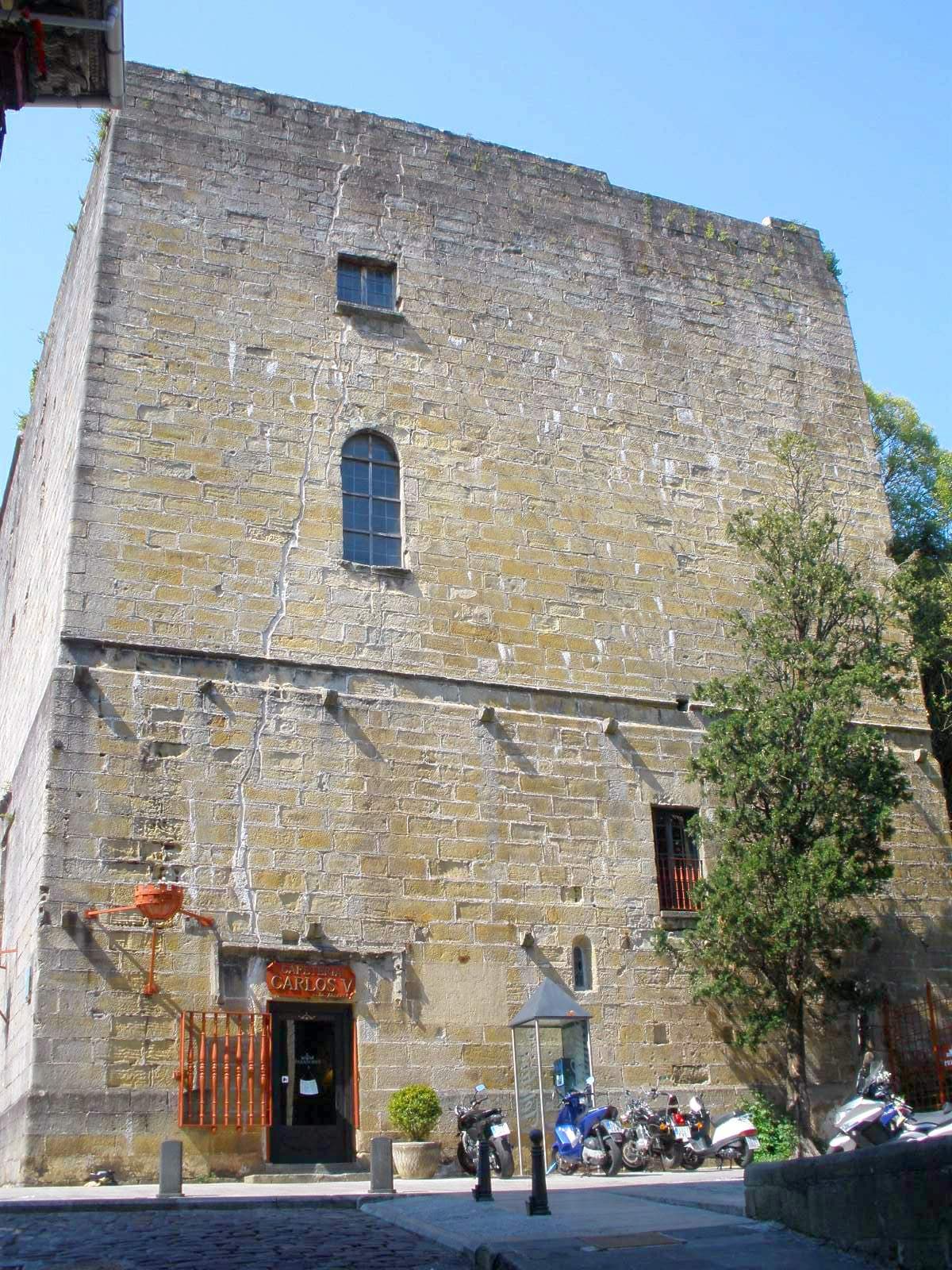
The Castle of Charles V, prominently situated at the highest point of Hondarribia in the Basque Country of Spain, represents a significant example of medieval military architecture with origins dating back to the 10th century. Initially constructed under the reign of King Sancho Abarca of Navarre, this fortress was strategically positioned to oversee and protect the border region, reflecting its importance in the early medieval period.
The castle's original design featured a square floor plan fortified by sturdy defensive walls, typical of early medieval fortifications aimed at withstanding sieges and attacks. Its location on a hilltop enhanced its defensive capabilities, providing commanding views over the surrounding landscape and the Bay of Biscay, which was crucial for monitoring potential maritime threats and land-based incursions.
Architectural evolution and imperial influence
While the castle retains much of its medieval fortress character, it underwent significant modifications during the 16th century under the direction of Emperor Charles V. These reforms transformed parts of the structure, blending military functionality with elements befitting a royal palace. The castle thus served a dual purpose: a stronghold and a residence, connected internally by a spacious courtyard that facilitated movement between the defensive and domestic areas.
One of the most distinctive features of the castle is its main facade, which includes a relatively small but architecturally significant doorway. This entrance is adorned with an arch framed by an alfiz, a decorative Islamic moulding that highlights the cultural influences present in the region during its construction and subsequent renovations. Above this arch, the imperial coat of arms is prominently displayed, featuring the iconic two-headed eagle of Charles V, symbolizing the castle's connection to the Holy Roman Empire and its imperial patronage.
Defensive features and layout
The castle's defensive elements include thick, high walls designed to repel invaders and withstand artillery. The hilltop location itself acts as a natural defense, making direct assaults difficult. While the original medieval fortress likely included battlements and watchtowers, later adaptations under Charles V may have introduced Renaissance-era fortification improvements to counter evolving military technologies such as cannon fire.
The internal courtyard not only connected the castle and palace sections but also served as a secure open space for daily activities, gatherings, and military drills. The layout reflects a balance between defense and habitation, with living quarters, storage rooms, and administrative spaces arranged around this central area.
Historical significance and preservation
Throughout its history, the Castle of Charles V played a crucial role in the defense of the Basque region and the Spanish borderlands. Its strategic position made it a focal point during various military conflicts, including border skirmishes and larger wars that shaped the political landscape of northern Spain.
Today, the castle has been restored and repurposed as a Parador hotel, allowing visitors to experience its historical ambiance while enjoying modern comforts. This adaptive reuse ensures the preservation of the castle's architectural heritage and offers insight into its layered history, from its early medieval origins to its imperial renovations.
Cultural and architectural context
The Castle of Charles V exemplifies the architectural transition from early medieval fortifications to Renaissance-influenced palatial structures. Its incorporation of Islamic decorative elements like the alfiz reflects the diverse cultural influences in the Iberian Peninsula during the Middle Ages. The castle's enduring presence on the Hondarribia skyline marks it as a significant cultural landmark, embodying centuries of military, political, and architectural history.
Frequently asked questions (FAQ)
- How do I get to the Castle of Charles V?
- The Castle of Charles V is located in Hondarribia, Spain, easily accessible by public transport or car. If you're traveling from nearby cities, consider taking a bus to Hondarribia, which is well-connected to San Sebastián and other Basque towns.
- What is the historical significance of the Castle of Charles V?
- The Castle of Charles V, built in the 16th century, served as a royal residence and military fortress. It played a crucial role in defending the region during various conflicts, reflecting the historical importance of the Basque Country in Spain's history.
- When was the Castle of Charles V built?
- Construction of the Castle of Charles V began in 1558 under the reign of King Charles I of Spain and was completed in 1570. The castle was designed to showcase the power of the Spanish monarchy and its strategic importance in the region.
- Can I take guided tours of the Castle of Charles V?
- Yes, guided tours are available for visitors interested in exploring the castle's history and architecture in detail. These tours often provide insights into the castle's past and its role in the defense of the region.
- Why is the architecture of the Castle of Charles V unique?
- The architecture of the Castle of Charles V is notable for its Renaissance style, characterized by its robust stone walls and symmetrical design. It combines military functionality with aesthetic appeal, making it a remarkable example of 16th-century fortification.
- Is it possible to visit the Castle of Charles V year-round?
- Yes, the Castle of Charles V is open to visitors throughout the year, although hours may vary seasonally. It's advisable to check the official website for the most current opening hours before planning your visit.
- What are the ticket prices for the Castle of Charles V?
- Ticket prices for the Castle of Charles V are generally affordable, with discounts available for students and seniors. Children under a certain age may enter for free, making it a great family-friendly destination.
- What is the best time to visit the Castle of Charles V?
- The best time to visit the Castle of Charles V is during the spring and early fall when the weather is mild, and the crowds are smaller. This allows for a more enjoyable experience as you explore the castle and its surroundings.
- Are there any nearby attractions to the Castle of Charles V?
- Yes, nearby attractions include the charming old town of Hondarribia, with its picturesque streets, and the stunning beaches along the Basque coast. You can also explore the nearby Jaizkibel mountain, which offers hiking trails and breathtaking views of the area.
Photo gallery

Information
Loading map...
Visitor reviews
No reviews yet. Been here? Write the first review and help other travelers!
Write the first reviewVisited this castle? Share your experience
Your review helps other travelers and adds first-hand knowledge to our encyclopedia.


