Castle of Castro
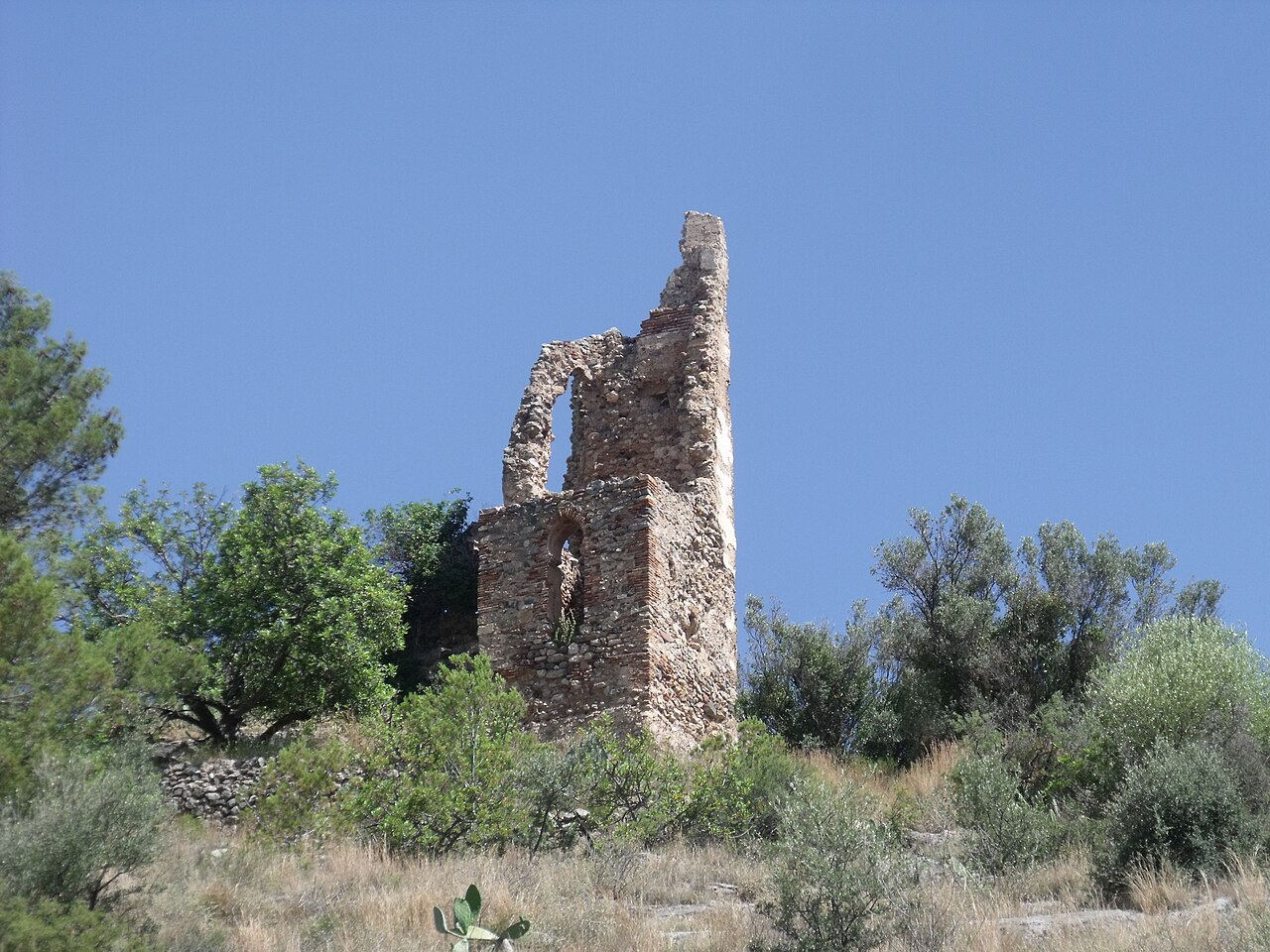
The Castle of Castro is a prominent hill castle located on the Serra d’Espadà within the municipality of Alfondeguilla, Spain. Its strategic position atop a rocky outcrop overlooking two deep ravines made it a significant military and administrative center from antiquity through the medieval period. The castle's origins trace back to just before the medieval era, initially constructed as a watchtower by either the Romans or the Punics, serving as an observation post linked to the nearby Castle of Sagunt. This early function highlights the site's long-standing role in territorial control and surveillance.
Medieval evolution and islamic significance
During the Muslim period, the Castle of Castro transformed into a formidable fortress within the Islamic civilization that dominated much of the Iberian Peninsula. It oversaw a broad valley named after the fortress itself and governed two dependent settlements: the alqueria of Castro and the raval of Benissabdó. Historical chronicles emphasize the castle's dual role as both a military bastion and an administrative and fiscal center under the Islamic aljama system, which organized local governance and taxation. The castle's architecture from this period includes characteristic horseshoe-shaped arches at entry points, reflecting Islamic design influences.
Architectural features and fortifications
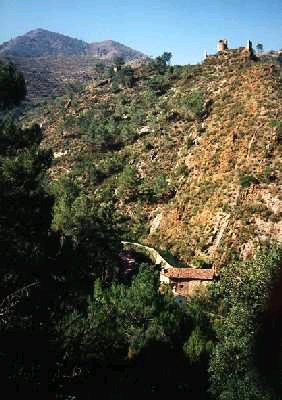
The castle occupies approximately 2,000 square meters on a rocky promontory bordered by two ravines: the Barranc de Castro to the east and the Barranc de l’Horteta to the west. The western side's steep cliffs provided natural defenses, while the eastern side was fortified with man-made structures, including a rammed earth wall enclosing the albacar (outer ward). The albacar served as a refuge for local inhabitants during attacks and is protected by three towers—two square towers positioned to the south and north, and a round tower connecting the eastern slope with the northern wall extension.
Access to the albacar was controlled through the Coll de Boix passage on the northern side, which regulated entry of people and goods. Within the castle, the layout is divided into two main sections: the lower part features large natural rock formations housing remains of ancient living quarters, including rocks with carved notches traditionally linked to military victories. The upper section, known as the celoquia (from Arabic Saluqya), spans roughly 400 square meters and contained residential quarters, storage cellars, and cisterns for water collection, demonstrating the fortress's self-sufficiency.
Christian conquest and later history
Following the Christian conquest, the Castle of Castro was integrated into the Kingdom of Valencia. The 1277 charter issued by King Peter II united the municipal administration of Castro with that of Alfàndec under a single jurisdiction, reflecting political alliances and administrative restructuring. This arrangement evolved over time, allowing for some degree of autonomy for Castro.
Siege legend and civil war destruction
A notable local legend recounts a clever ruse during a siege, where defenders were frightened into abandoning the castle after attackers lit candles on goats’ horns, simulating the arrival of reinforcements. This story underscores the fortress’s reputation for being difficult to capture.
In the 20th century, the castle suffered significant damage during the Spanish Civil War. The castle’s keep, known as the Torre del Homenaje or main tower, was deliberately demolished in July 1938 by Republican forces to prevent its use as a landmark by Francoist bombers. This event marked a substantial loss to the castle’s physical heritage.
Current remains and preservation
Today, the Castle of Castro remains a compelling historical site with much of its defensive walls and towers still visible despite the destruction of the main tower. The combination of natural topography—steep ravines and rocky outcrops—and human engineering, particularly the use of tapial (rammed earth) construction techniques, illustrate the castle’s strategic design for defense and habitation.
The surviving features provide valuable insights into the castle’s evolution from a Roman or Punic watchtower to a significant Islamic fortress and later a Christian stronghold. Its role as both a military and administrative center reflects the complex history of the Iberian Peninsula’s cultural and political transformations.
Architectural significance and cultural heritage
The Castle of Castro exemplifies the adaptation of fortifications to natural landscapes, employing both natural barriers and constructed defenses. Its horseshoe arches and rammed earth walls are characteristic of Islamic military architecture in Spain, while its later integration into Christian domains adds layers of historical significance. The site is a valuable cultural heritage location that attracts historians, archaeologists, and visitors interested in medieval military architecture and Iberian history.
Preservation efforts focus on maintaining the remaining structures and promoting the castle’s historical narrative. The site’s accessibility and panoramic views of the surrounding valley enhance its appeal as a destination for cultural tourism and educational visits.
Visitor information and accessibility
The Castle of Castro is accessible to visitors interested in exploring its ruins and learning about its rich history. Due to its hilltop location, visitors should be prepared for a moderate hike to reach the site. The castle offers a unique opportunity to experience a fortress that spans multiple historical periods, from ancient times through the medieval Islamic era to the Christian reconquest.
While facilities on site are limited, the surrounding region of Serra d’Espadà provides additional attractions, including natural parks and traditional villages, making the castle a worthwhile stop for cultural and nature tourism.
Frequently asked questions (FAQ)
- How do I get to the Castle of Castro?
- The Castle of Castro is located on the Serra d’Espadà near Alfondeguilla, Spain. Visitors can reach it by hiking from the town center, following marked trails leading to the hilltop ruins.
- What is the historical significance of the Castle of Castro?
- The Castle of Castro has origins before the medieval period and was an important Islamic fortress and later a Christian stronghold, serving military and administrative roles.
- Can I explore the castle ruins freely?
- Yes, visitors can freely explore the ruins of the Castle of Castro, including its defensive walls and towers. However, caution is advised due to uneven terrain and partial preservation.
- When is the best time to visit the Castle of Castro?
- The best time to visit is during spring and autumn when the weather is mild, making the hike to the castle more comfortable and enjoyable.
- Is there an entrance fee to visit the Castle of Castro?
- There is no entrance fee to visit the Castle of Castro, making it an accessible destination for cultural and historical tourism.
Information
Current owner
Municipality of Alfondeguilla
Loading map...
Visitor reviews
No reviews yet. Been here? Write the first review and help other travelers!
Write the first reviewVisited this castle? Share your experience
Your review helps other travelers and adds first-hand knowledge to our encyclopedia.