Castell del Rei

Castell del Rei in Pollença: early medieval rock fortress in Mallorca
Pollença, Spain
Early Medieval (5th–10th c.)
Ruins

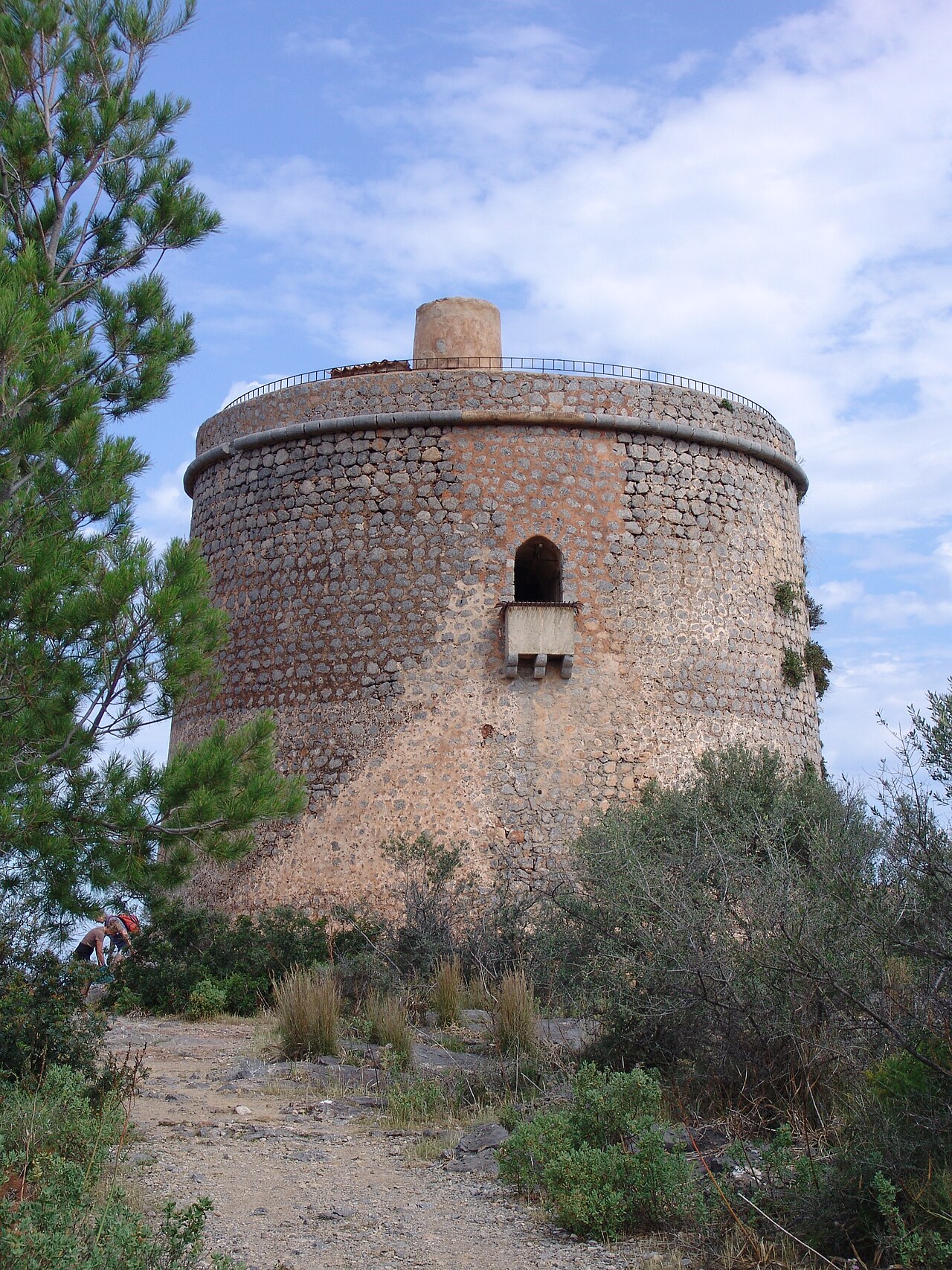
Castell del Rei is one of the most significant historical monuments in Pollença, located on the island of Mallorca in Spain. This early medieval fortress, perched approximately 492 meters above sea level in the Valley of Ternelles, is one of three notable rock castles in the area. Its strategic position on a rocky outcrop provided commanding views over the surrounding landscape, making it a vital military stronghold throughout its history.

Historical significance and early origins

The site where Castell del Rei stands has a long history of fortification, dating back to Roman times when it served as a defensive post. The castle's current form primarily reflects its use and modifications during the early medieval period, specifically the 10th century. It played a critical role during the Muslim period in Mallorca's history, acting as one of the last bastions of resistance against the forces of Jaume I of Aragon during his conquest of the island in 1229. Alongside the nearby Castle of Alaró, Castell del Rei was a focal point for the Muslim troops defending the territory.

The defenders held out until March 1231, marking a prolonged and determined resistance. This siege was a pivotal moment in the island's transition from Muslim to Christian rule under the Crown of Aragon. Later, in 1343, the castle again became a site of military significance during a three-month siege by loyalists of King Jaume III of Mallorca. Following the annexation of Mallorca into the Crown of Aragon, the castle was a refuge for those resisting the new regime.

Architectural features and strategic role

As a rock castle, Castell del Rei's architecture is defined by its integration with the natural rocky terrain. The fortress was primarily designed as a watchtower and defensive outpost rather than a large-scale residential castle. Its elevated position allowed for extensive visibility across the surrounding valleys and coastlines, crucial for early warning and defense against invasions.

The castle's remains include defensive walls and foundations that outline the original fortifications, although much of the structure has succumbed to time. The use of natural rock formations as part of the defensive system is a characteristic feature, blending man-made fortifications with the natural landscape to maximize defense.

Decline and current status

After centuries of military use, Castell del Rei was gradually abandoned in the 18th century. Its strategic importance diminished with changes in military technology and political stability in the region. Today, the castle is in a state of ruins, reflecting the passage of time and lack of restoration efforts.

The site is privately owned and currently closed to the public. Access has been a subject of controversy due to restrictions imposed by the owners on what is considered a public road leading to the castle. Despite this, the castle remains a symbol of Mallorca's medieval history and a point of interest for historians and enthusiasts of military architecture.

Legacy and cultural importance

Castell del Rei stands as a testament to the turbulent history of Mallorca during the medieval period, embodying the island's strategic importance in the Mediterranean. Its role in the sieges of the 13th and 14th centuries highlights the shifting political and military landscape of the region.

While the castle itself is not accessible for tourism, its historical narrative contributes to the broader understanding of Mallorca's past and the military architecture of early medieval fortifications in the Balearic Islands.

Frequently asked questions (FAQ)

How do I get to Castell del Rei?
You can reach Castell del Rei by taking a scenic hike from the town of Pollença, which is approximately 3 kilometers away. The trail offers beautiful views of the surrounding landscape and is well-marked for visitors.
What is the historical significance of Castell del Rei?
Castell del Rei, or the Castle of the King, dates back to the 13th century and was built to defend the region from invasions. It holds great historical importance as it symbolizes the strategic military architecture of the time and has witnessed numerous historical events.
When was Castell del Rei built?
The construction of Castell del Rei began in the 13th century, shortly after the conquest of Mallorca by the Crown of Aragon. It was completed in the latter part of the century and served as a fortification for centuries.
Can I visit Castell del Rei year-round?
Yes, Castell del Rei is open to visitors throughout the year. However, it's advisable to check specific opening hours and any seasonal restrictions before planning your visit.
Why is the architecture of Castell del Rei unique?
The architecture of Castell del Rei combines Gothic and military styles, showcasing its defensive purpose while also reflecting the artistic influences of the period. Its impressive stone walls and strategic layout highlight the ingenuity of medieval builders.
Is it possible to access Castell del Rei with mobility challenges?
The path leading to Castell del Rei is a hiking trail, which may not be suitable for individuals with mobility challenges. It's recommended to assess the trail's conditions and consider alternative viewpoints in Pollença for easier access.
What is the best time to visit Castell del Rei?
The best time to visit Castell del Rei is during the spring and fall when the weather is mild and the landscape is vibrant. This allows for a more enjoyable hiking experience and stunning views from the castle.
Are there any nearby attractions to Castell del Rei?
Yes, nearby attractions include the picturesque town of Pollença, the beautiful beaches of Port de Pollença, and the stunning natural park of Serra de Tramuntana. These sites offer additional opportunities for exploration and enjoyment.
What are the ticket prices for visiting Castell del Rei?
There is no formal entrance fee to visit Castell del Rei, as access is free. However, visitors may want to consider donations to support the maintenance of the site.
What are the opening hours for Castell del Rei?
Castell del Rei is generally accessible to visitors at all times, but it is advisable to visit during daylight hours for safety. Always check local resources for any updates or changes in accessibility.

Information

Rock / Cliff Castle

Loading map...

Visitor reviews

No reviews yet. Been here? Write the first review and help other travelers!

Write the first review

Visited this castle? Share your experience

Your review helps other travelers and adds first-hand knowledge to our encyclopedia.
Write a review

(5/5)

0/2000 characters

Your review will be visible after admin approval

Nearby castles

28.1 km
Alaro Castle — Spain castle

Alaro Castle

Alaró, Spain

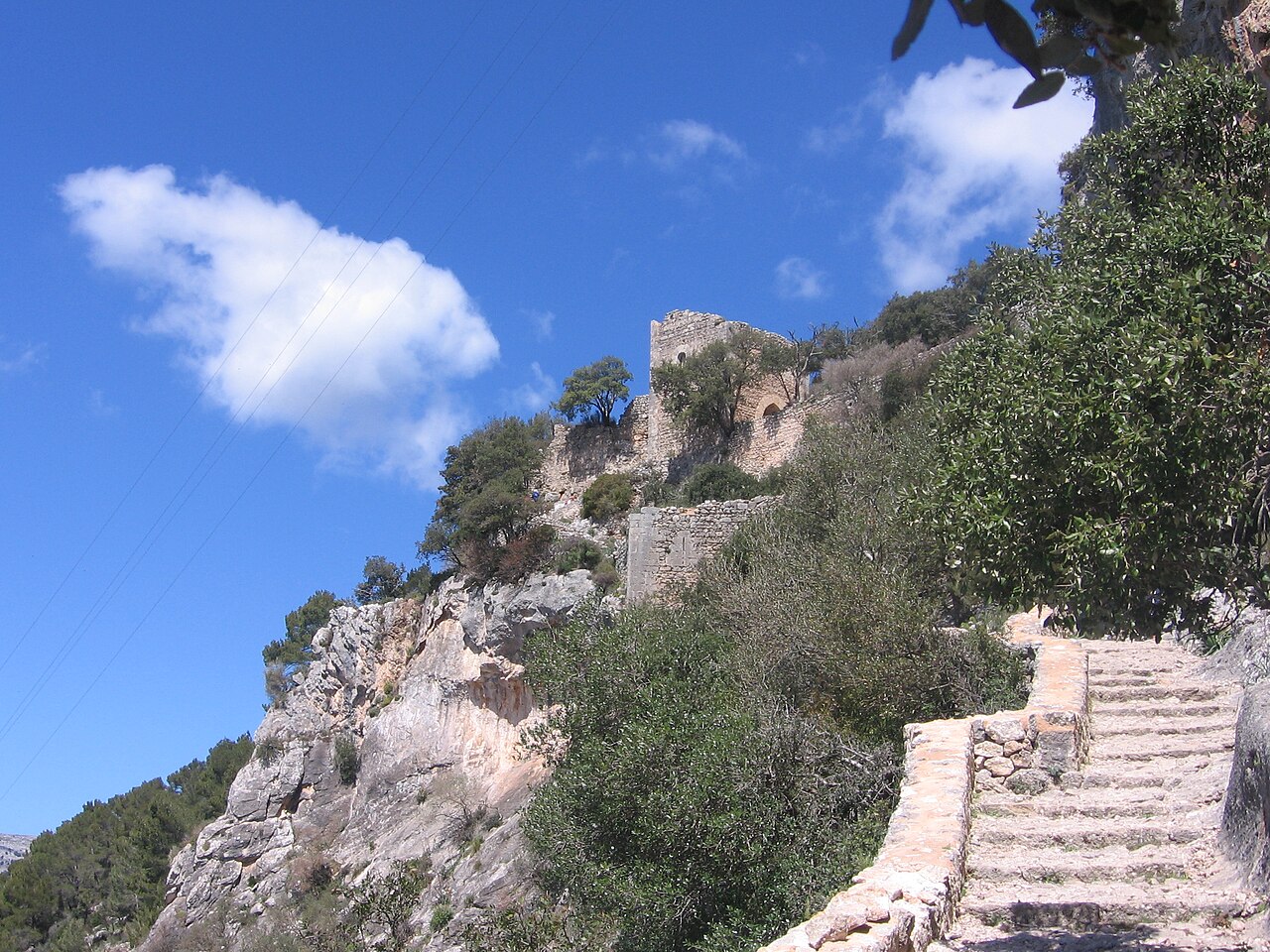
Alaro Castle stands as a remarkable example of a late medieval hill castle perched atop a rocky mountain in the municipality of Alaró, Mallorca, Spain. This fortress commands sweeping views of the Tramuntana mountains, the city of Palma, and the Mediterranean Sea, making it both a strategic military site and a captivating destination for visitors. The castle's origins trace back to the Islamic period, with evidence of earlier human occupation including the Talayotic civilization, Byzantine, and Roman influences, highlighting the site's long-standing cultural and historical significance. Historical background and significance The site of Alaro Castle has been fortified since at least 902 AD when it was established by Muslim forces as Hisn Alarun. It played a crucial role during the Islamic conquest of Mallorca, successfully withstanding Saracen sieges for over eight years. After the Christian conquest by King James I of Aragon in 1229, the castle was granted to the County of Urgell and the Infante Pedro I of Urgell. Despite the conquest, Muslim populations remained in the area until at least 1231, using the fortress as a refuge during this transitional period. One of the castle's most dramatic historical episodes occurred in 1285 during the dynastic conflict between Alfonso III of Aragon and his uncle James II of Mallorca. The castle was defended by local captains Guillem Cabrit and Guillem Bassa, who resisted Alfonso's siege. After the fortress fell, the captains were executed by being burned alive on a spit, an event that cemented their legacy as martyrs and heroes of Mallorcan independence. This episode is commemorated in local legend and art, reflecting the castle's symbolic importance in regional history. In 1343, the castle was surrendered to the forces of Pedro IV of Aragon, following proclamations that pressured its defenders. Despite this, the fortress continued to serve as a military garrison for several centuries, retaining strategic value until at least 1741. Over time, however, its military importance waned, and by the 14th and 15th centuries, parts of the fortress began to fall into partial ruin. The site transitioned to religious use starting in 1622 with the construction of a small oratory that later expanded into a chapel and hermitage. This shift illustrates the castle's evolving role from a military bastion to a place of spiritual significance. Today, Alaro Castle is protected as a Bien de Interés Cultural heritage site since 1931, preserving its rich historical layers and architectural remains. Architectural features and defensive structures The remains of Castell d’Alaró reveal a complex defensive system adapted to its rugged hilltop location. The castle consists of stone walls arranged around five towers, each serving distinct military functions. The centerpiece is the main keep, known as the Torre del Homenaje or "constipador," which functioned as the lord's residence and last line of defense. The entrance is fortified by a sophisticated double-gate system. The first gate features an arched portal with a double-leaf wooden door, while the second gate is protected by a stone wall with three narrow arrow slits aimed to repel attackers. This layered defense exemplifies the castle's focus on security and strategic control of access points. Among the towers, the Torre de Migjorn on the southwest side is notable for its broad defensive walls punctuated with arrow slits, designed to provide archers with optimal fields of fire. Another significant tower is the square-shaped Prisión de los Moros or Torre de sa Cova, which includes arrow slits oriented towards Mecca, a feature reflecting its Islamic origins. This tower is adjacent to a cave historically associated with 17th-century hermits, linking the military architecture to later religious use. Water management was crucial for the castle's sustainability. Several cisterns or aljibes are found within the complex, some dating back to the Arab period. These cisterns collected and stored rainwater, essential for the fortress's inhabitants during sieges. One cistern is believed to have served as a snow house, preserving ice or snow for use in warmer months. Additional features such as charcoal pits and lime kilns indicate onsite production activities supporting the castle's maintenance and defense. The hermitage and religious transformation From the early 17th century, the castle began to assume a religious character with the establishment of a hermitage. Built from local marés stone, the hermitage includes a chapel and sacristy. Its entrance is framed by a Renaissance-style architrave and a porch with a double-pitched Arabic tile roof supported by a semicircular arch and octagonal pilasters. Inside, wooden struts provide structural support for the roof. The hermitage’s upper façade features a unique limestone sundial oriented southward. This sundial is distinctive for its gnomon aligned with the North Star and the use of Arabic numerals, differing from the more common Roman or Greek styles. Photographs from the early 20th century document this sundial, though its original construction date remains unknown. Inside the hermitage, a single room with a barrel-vaulted ceiling is adorned with ceramic flooring and walls decorated with vegetal reliefs. The semicircular apse houses a baroque altarpiece featuring an image of the Virgin Mary, flanked by painted portraits of the local captains Guillem Cabrit and Guillem Bassa. These portraits honor their defense of the castle during the 1285 siege and serve as a poignant reminder of the site's layered history. Visitor experience and access Today, visitors can reach Alaro Castle via a partially paved and cobbled path ascending the mountain to the summit at approximately 822 to 825 meters elevation. The castle ruins, including its walls, towers, and hermitage, offer panoramic views that extend across the Tramuntana mountain range and the surrounding Mallorcan landscape. At the site, amenities such as a small hostel and café provide comfort for visitors, making it a popular destination for hikers and history enthusiasts alike. The combination of natural beauty, historical depth, and architectural interest ensures that Alaro Castle remains a cherished cultural landmark in Mallorca.

Late Medieval (14th–15th c.)
Details
29.7 km
Torre Picada — Spain castle

Torre Picada

, Spain

Torre Picada is a significant example of a 17th-century bastioned fortress located in Spain. This fortress represents the military architectural advances of the Renaissance period, specifically designed to adapt to the evolving warfare tactics of the time, including the use of artillery.Historical context and strategic importanceConstructed during the 17th century, Torre Picada was part of a broader network of fortifications built across Spain to defend key territories against external threats and internal conflicts. The development of bastioned fortresses was a response to the increasing use of cannon and gunpowder, which rendered traditional medieval castles less effective. Torre Picada's design reflects this shift, emphasizing angled bastions that allowed defenders to cover adjacent walls with overlapping fields of fire.Architectural features of Torre PicadaBastioned designThe fortress is characterized by its angular bastions projecting from the main walls, a hallmark of Renaissance military architecture. These bastions were designed to eliminate blind spots and provide a better defensive position against attackers. The walls connecting the bastions are thick and low, built to absorb and deflect cannon fire.Materials and construction techniquesTorre Picada was constructed using locally sourced stone and mortar, materials typical of Spanish military architecture in the period. The masonry work exhibits the precision and robustness necessary for a defensive structure intended to withstand prolonged sieges.Additional defensive elementsBesides the bastions, Torre Picada likely included other defensive features such as a moat or ditch, reinforced gates, and possibly a glacis—an inclined earthwork designed to expose attackers to defensive fire while providing additional protection to the walls.The role of Torre Picada in regional defenseWhile specific historical records about Torre Picada's military engagements are limited, bastioned fortresses like it were crucial in controlling strategic routes and protecting settlements during the turbulent 17th century, a period marked by conflicts such as the Thirty Years' War and various Spanish territorial disputes.Preservation and current conditionToday, Torre Picada stands as a well-preserved example of Renaissance military architecture. Its bastions and curtain walls remain largely intact, offering valuable insights into the defensive strategies of the era. The fortress may serve as a cultural heritage site, attracting scholars and visitors interested in military history and architecture.Visiting Torre PicadaVisitors to Torre Picada can explore the fortress's imposing bastions and walls, gaining an understanding of the strategic design principles that shaped Renaissance fortifications. The site may offer guided tours or informational displays detailing its history and architectural significance.

Renaissance (15th–17th c.)
Details
43.5 km
Castle of Capdepera — Spain castle

Castle of Capdepera

Balearic Islands, Spain

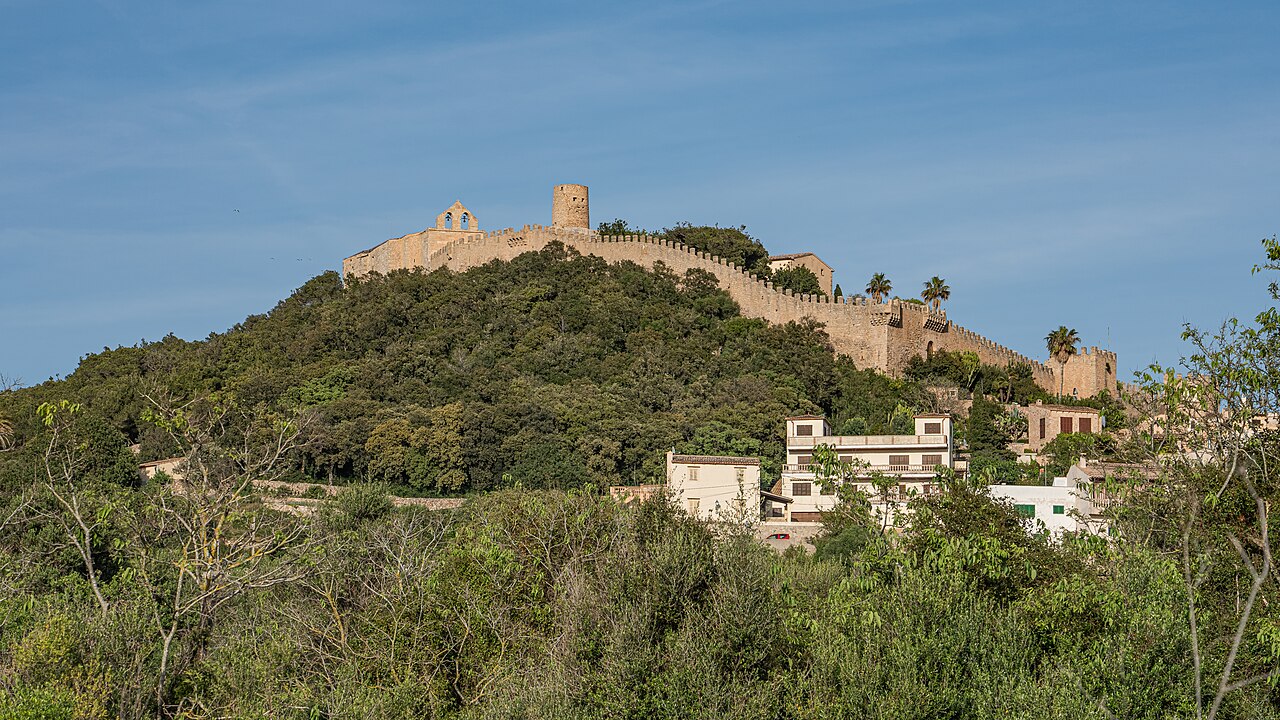
Capdepera Castle stands prominently in the northeast of Mallorca, Spain, perched atop the Puig de Capdepera hill at 159 meters above sea level. This hill castle offers commanding views over the interior landscapes, the coastline, and the Menorca Channel that separates the two Balearic Islands. Its strategic location made it a vital military and defensive site throughout the late medieval period and beyond. Originally, the site hosted a Roman fortress, followed by a Muslim defensive tower known as the Torre d’en Miquel Nunis, constructed between the 10th and 12th centuries. This tower was later incorporated into the castle complex. The current castle structure was largely built during the early 14th century, around 1300, under the orders of King James II of Majorca. The king aimed to consolidate control over the region and encourage scattered rural populations to settle within a fortified enclosure, especially to protect against frequent pirate attacks. The castle's walls form a near-triangular enclosure covering approximately 8,069 square meters. Constructed from stone and mortar, the walls rise with a gentle slope toward the north and extend roughly 75 meters along the east, 80 meters on the southwest, and 100 meters on the northwest sides. Several defensive towers punctuate the walls, including the Torre d’en Banya and Torre de ses Dames on the east, the Torre de sa Boira guarding the main gate known as the Portalet, and the Torre des Costerans on the southwest. The northwest wall, notably, lacks towers and terminates near the castle church. Historical significance and military role The castle played a pivotal role in the history of the Balearic Islands. One of the most notable events associated with Capdepera Castle is the 1231 Treaty of Capdepera, signed within the earlier Islamic tower before the full castle was constructed. This treaty followed a clever military ruse by King James I of Aragon, who ordered signal fires lit at Capdepera to deceive the Muslim rulers of Menorca into believing a large Christian force was preparing to invade. This stratagem led to the peaceful surrender of Menorca, with its inhabitants agreeing to pay tribute rather than face conflict. Throughout the 14th to 16th centuries, the castle housed a growing population. Initially designed for about 50 families, the fortified village expanded to include approximately 125 houses by the 16th century. The settlement was a refuge for inhabitants fleeing pirate raids, and the castle's fortifications were continually maintained and adapted to meet evolving defensive needs. In the 18th century, the castle's military function was formalized under the Bourbon monarchy, which stationed a professional garrison commanded by a governor residing in the Casa del Governador. The castle remained a military post until 1854, when the troops withdrew and the site was abandoned. It subsequently passed into private hands before being reclaimed by the municipality of Capdepera in 1983. Architectural features and layout Fortifications and towers The castle’s fortifications are exemplary of late medieval military architecture adapted to the specific needs of the Balearic Islands. The robust defensive walls are equipped with machicolations—openings above gates and towers used to drop projectiles or boiling substances on attackers. The walls also feature embrasures, narrow slits for archers and artillery. The Torre d’en Miquel Nunis is a key surviving element from the Islamic period. Originally a 10-meter-high square tower, it now stands at about half its original height. It contains a spiral staircase and was converted into a mill in the 19th century, gaining a distinctive conical roof during this adaptation. The castle church and cistern Inside the northern corner of the enclosure stands the Església de Nostra Senyora de l’Esperança, a fortified church initially built in the 14th century as a chapel dedicated to Saint John. Over the centuries, it was expanded and fortified, featuring windowless walls and side chapels designed for defense. The church houses a Gothic wooden Christ figure dating from the late 14th or early 15th century. Its roof served as both a lookout point and an artillery platform, underscoring the dual religious and military functions of the structure. Adjacent to the church is a 14th-century cistern used to collect and store rainwater, a vital resource during sieges. The cistern is accessed via a vertical shaft resembling a well, equipped with mechanisms for drawing water. Residential and communal structures Archaeological remains within the castle enclosure reveal the foundations of up to 150 houses, many built against the outer walls or on the hillside slopes. These dwellings housed the castle’s civilian population, which grew significantly in response to regional threats. While most of these structures are now ruins, some have been stabilized and partially restored to aid visitor understanding. The Casa del Governador, dating from the 18th century, served as the residence of the military governor. Today, it functions as a museum dedicated to the castle’s history and local crafts, providing cultural context to visitors. Preservation and public access Capdepera Castle was declared a Property of Cultural Interest (BIC), the highest level of heritage protection in Spain. This designation underscores its importance as a cultural and historical monument. Restoration efforts have included the addition of historically styled battlements and the installation of a stone-paved walkway with metal railings along the ramparts to facilitate safe visitor access. The castle is open to the public throughout the year, allowing visitors to explore its extensive fortifications, towers, church, and museum. The site is managed by a dedicated board and the local municipality, which oversee preservation and educational initiatives. The castle's role in regional defense and cultural heritage Capdepera Castle’s strategic location allowed it to control sea routes and monitor maritime traffic between Mallorca and Menorca. Its presence was crucial in deterring pirate incursions and safeguarding local populations. The castle’s history reflects the complex interactions between Christian and Muslim powers in the Balearic Islands during the medieval period. Today, Capdepera Castle stands as a testament to the island’s rich historical tapestry, combining elements from Roman, Islamic, and Christian architectural and cultural traditions. It offers valuable insights into medieval fortification techniques and the social dynamics of fortified settlements in the Mediterranean.

Late Medieval (14th–15th c.)
Details