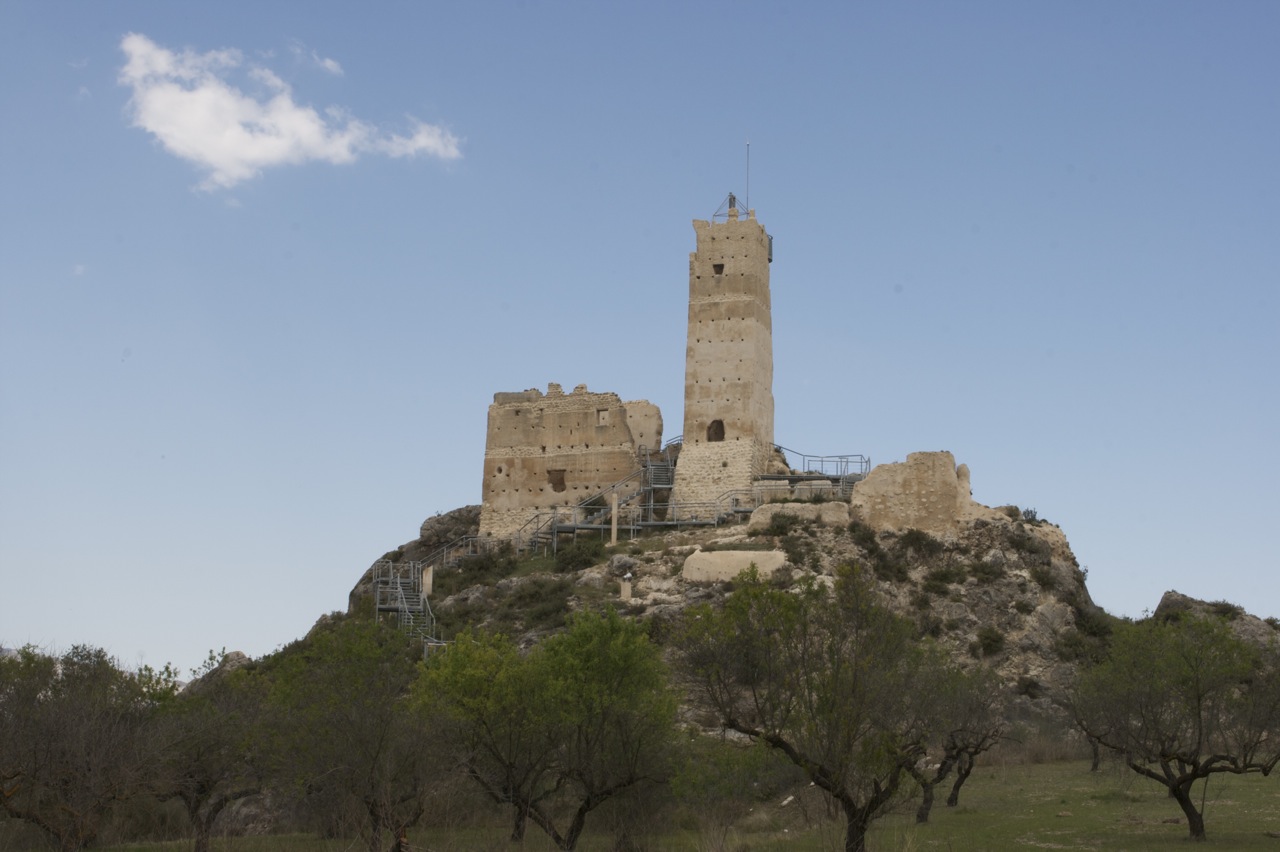
The Castle of Busot is a historic hilltop fortress located in the municipality of Busot, in the Valencian Community of Spain. Perched approximately 330 meters above sea level, the castle occupies a strategic elevated position overlooking the surrounding landscape, including the nearby city of Alicante to the southwest. While the precise origins and builders of the castle remain unclear, it is recognized as a significant cultural heritage site within the region.
Historical background and significance
The exact historical period when the Castle of Busot was constructed is not definitively established due to a lack of detailed records or archaeological studies. The castle's origins may date back to the medieval era, consistent with many hilltop fortifications in Spain designed for defense and territorial control. However, no specific documentation identifies the original civilization, rulers, or military events associated with the castle. It has neither been linked to notable historical figures nor to significant battles or sieges.
Despite the absence of detailed chronicles, the castle's enduring presence and its classification within the Valencian heritage protection system underscore its cultural and historical importance. The site reflects the broader pattern of medieval defensive architecture in the region, likely serving as a local stronghold or watchpoint given its commanding views over the surrounding terrain.
Geographical setting and strategic location
Situated on a hillside rising to about 330 meters, the Castle of Busot benefits from natural defensive advantages. The terrain slopes gently southward towards Alicante, while hills rise to the northeast, creating a vantage point that would have been ideal for monitoring movement across the landscape. The castle's elevated position allowed for early warning against potential invaders and control over nearby routes.
The surrounding environment consists of natural vegetation and grasslands, contributing to the castle's secluded and defensible location. This setting exemplifies the typical placement of hill castles, which utilized topography to enhance their defensive capabilities.
Architectural features and current condition
Although detailed architectural descriptions are scarce, photographic evidence reveals that the Castle of Busot retains structural elements characteristic of regional fortifications. The remains include portions of walls and foundational structures that suggest a compact fortress adapted to the hillside's contours.
The castle is registered under the Valencian heritage protection system as a building of local significance, highlighting its value as a cultural landmark. However, no detailed studies have been published regarding the castle's construction techniques, materials, or specific architectural features such as gates, towers, staircases, or decorative elements.
No mosaics, inscriptions, or distinctive ornamental features have been reported, and there is no documentation of modifications or reuse phases over time. The current condition of the castle is best described as ruins, with identifiable remains visible but lacking comprehensive conservation or restoration efforts.
Cultural heritage and tourism potential
The Castle of Busot serves as a tangible link to the region's medieval past and offers a point of interest for visitors intrigued by historical fortifications. Its location within the Valencian Community and proximity to Alicante make it accessible for cultural tourism, hiking, and educational exploration.
While the site does not currently feature extensive visitor facilities or interpretive signage, its status as a protected heritage site ensures ongoing recognition of its cultural value. The castle's natural setting and panoramic views contribute to its appeal as a destination for those interested in history and landscape.
Research opportunities and preservation challenges
The lack of comprehensive archaeological research presents an opportunity for future studies to uncover more about the Castle of Busot's origins, architectural evolution, and historical role. Detailed surveys and excavations could provide insights into construction methods, occupation phases, and the castle's function within the broader medieval defensive network.
Preservation efforts face challenges due to the castle's ruinous state and limited documentation. Protecting the remaining structures from natural decay and human impact requires careful management and potential restoration initiatives to stabilize the site and enhance its accessibility for educational and tourism purposes.
In summary, the Castle of Busot stands as a modest yet culturally significant hill castle in Spain. Its ruins offer a glimpse into the medieval defensive strategies of the Valencian region, despite the absence of extensive historical records or distinctive architectural details. The castle's enduring presence continues to enrich the cultural landscape, inviting further exploration and appreciation.
Frequently asked questions (FAQ)
- What is the historical significance of the Castle of Busot?
- The Castle of Busot, dating back to the 13th century, is a prominent example of Moorish architecture in Spain. It played a crucial role in the region's defense during the Reconquista and reflects the rich cultural heritage of the area.
- When is the best time to visit the Castle of Busot?
- The best time to visit the Castle of Busot is during the spring and fall months, when the weather is mild and suitable for exploring the grounds. Additionally, these seasons often see fewer crowds, allowing for a more enjoyable experience.
- Can I access the Castle of Busot with a wheelchair?
- The Castle of Busot has some accessibility features, but due to its historical nature, certain areas may be difficult to navigate for wheelchair users. It is advisable to contact the castle's management beforehand to inquire about specific accessibility options.
- What are the opening hours of the Castle of Busot?
- The Castle of Busot is typically open to visitors from 10 AM to 6 PM, though these hours may vary seasonally. It is recommended to check the official website or contact the castle directly for the most accurate information before planning your visit.
- Is there an admission fee for visiting the Castle of Busot?
- Yes, there is an admission fee to enter the Castle of Busot, which helps with the maintenance and preservation of the site. Ticket prices are generally affordable, and discounts may be available for students, seniors, and groups.
- What nearby attractions can I visit after the Castle of Busot?
- After visiting the Castle of Busot, you can explore the beautiful hiking trails in the surrounding mountains or enjoy the picturesque village of Busot itself, known for its charming streets and local cuisine. Additionally, the nearby beaches of El Campello are perfect for a relaxing afternoon.
- How do I get to the Castle of Busot from Alicante?
- To get to the Castle of Busot from Alicante, you can take a bus or drive, which takes approximately 30 minutes. The route offers scenic views of the countryside, making the journey just as enjoyable as the destination.
Information
Loading map...
Visitor reviews
No reviews yet. Been here? Write the first review and help other travelers!
Write the first reviewVisited this castle? Share your experience
Your review helps other travelers and adds first-hand knowledge to our encyclopedia.