Castle of Bredevoort
The castle of Bredevoort, located in the town of Bredevoort in the province of Gelderland, Netherlands, was a notable hill castle dating back to the 12th century. This high medieval fortress played a significant role in the regional defense and political landscape of the area during the Middle Ages.
Historical background and significance
Constructed in the 12th century, Bredevoort Castle was strategically positioned on an elevated site, characteristic of hill castles, which provided a defensive advantage over the surrounding landscape. The castle was part of the medieval county of Guelders, a historically important territory in the eastern Netherlands. Throughout its existence, the castle witnessed numerous conflicts and power struggles, reflecting the turbulent feudal period in which it was built.
The castle served as a residence and stronghold for local nobility, who controlled the surrounding lands and maintained authority in the region. Its location near key trade routes enhanced its importance as both a military and administrative center.
Architectural features and layout
Although detailed records of the castle's original structure are limited, typical features of 12th-century hill castles in the region included a stone keep or donjon as the central fortified tower, surrounded by defensive curtain walls and a bailey. The elevated position allowed for natural defense, supplemented by man-made fortifications such as moats or ditches.
The castle likely had a complex of buildings within the walls, including living quarters, a great hall, and storage facilities. Defensive elements such as battlements and arrow slits would have been incorporated to repel attackers.
Defensive structures
The hill castle design took advantage of the natural terrain, with steep slopes enhancing its defensibility. The walls would have been constructed from local stone, thick enough to withstand siege engines of the period. A gatehouse with a drawbridge or portcullis was probably part of the entrance defenses.
Historical events and decline
Bredevoort Castle was involved in various regional conflicts, including feuds between local lords and larger territorial disputes. Its military and administrative functions diminished over time, especially as the political landscape of the Netherlands evolved and centralized power reduced the need for such fortifications.
By the early modern period, the castle fell into disuse and was eventually dismantled or destroyed. Today, little remains of the original structure, and the site is primarily of archaeological interest.
Cultural heritage and present status
The site of Bredevoort Castle holds cultural and historical significance for the town of Bredevoort and the wider Gelderland region. Archaeological investigations have uncovered remnants of the castle's foundations and defensive works, contributing to the understanding of medieval fortifications in the Netherlands.
While the castle itself no longer stands, the legacy of Bredevoort Castle continues through local history and heritage preservation efforts. The town of Bredevoort is known today for its historical charm and as a center for book lovers, often referred to as the "book town" of the Netherlands.
Frequently asked questions (FAQ)
- What is the historical significance of the Castle of Bredevoort?
- The Castle of Bredevoort, dating back to the 15th century, played a crucial role in the defense and governance of the region. Its strategic location allowed it to serve as a stronghold during various conflicts, reflecting the rich history of medieval warfare in the Netherlands.
- When was the Castle of Bredevoort built?
- Construction of the Castle of Bredevoort began in 1460 and was completed in the late 15th century. Over the years, it has undergone several renovations, which have helped preserve its architectural integrity.
- What are the opening hours for the Castle of Bredevoort?
- The Castle of Bredevoort is open to visitors from Tuesday to Sunday, from 10 AM to 5 PM. It is advisable to check the official website for any seasonal changes in hours or special closures.
- Can I take a guided tour of the Castle of Bredevoort?
- Yes, guided tours are available for visitors who wish to learn more about the history and architecture of the castle. These tours are typically conducted on weekends and can be booked in advance through the castle's website.
- Is it possible to visit the Castle of Bredevoort with children?
- Absolutely! The Castle of Bredevoort is family-friendly and offers activities suitable for children. There are informative displays and engaging stories that will captivate young visitors while providing a fun learning experience.
- What is the best time to visit the Castle of Bredevoort?
- The best time to visit the Castle of Bredevoort is during the spring and early autumn when the weather is mild and the gardens are in full bloom. Additionally, visiting on weekdays can help you avoid larger weekend crowds.
- Are there any nearby attractions to visit after the Castle of Bredevoort?
- Yes, there are several attractions near the Castle of Bredevoort, including the picturesque town center and local museums. Nature enthusiasts can also explore nearby parks and walking trails that showcase the beautiful Dutch countryside.
- What are the ticket prices for the Castle of Bredevoort?
- Ticket prices for the Castle of Bredevoort are typically around €7 for adults and €4 for children aged 6-12. Special discounts may be available for groups or families, so be sure to check the website for the latest pricing information.
- How do I get to the Castle of Bredevoort?
- The Castle of Bredevoort is easily accessible by car, with ample parking available nearby. If you prefer public transport, local bus services connect Bredevoort with larger cities in the region, making it convenient for visitors without a vehicle.
Photo gallery

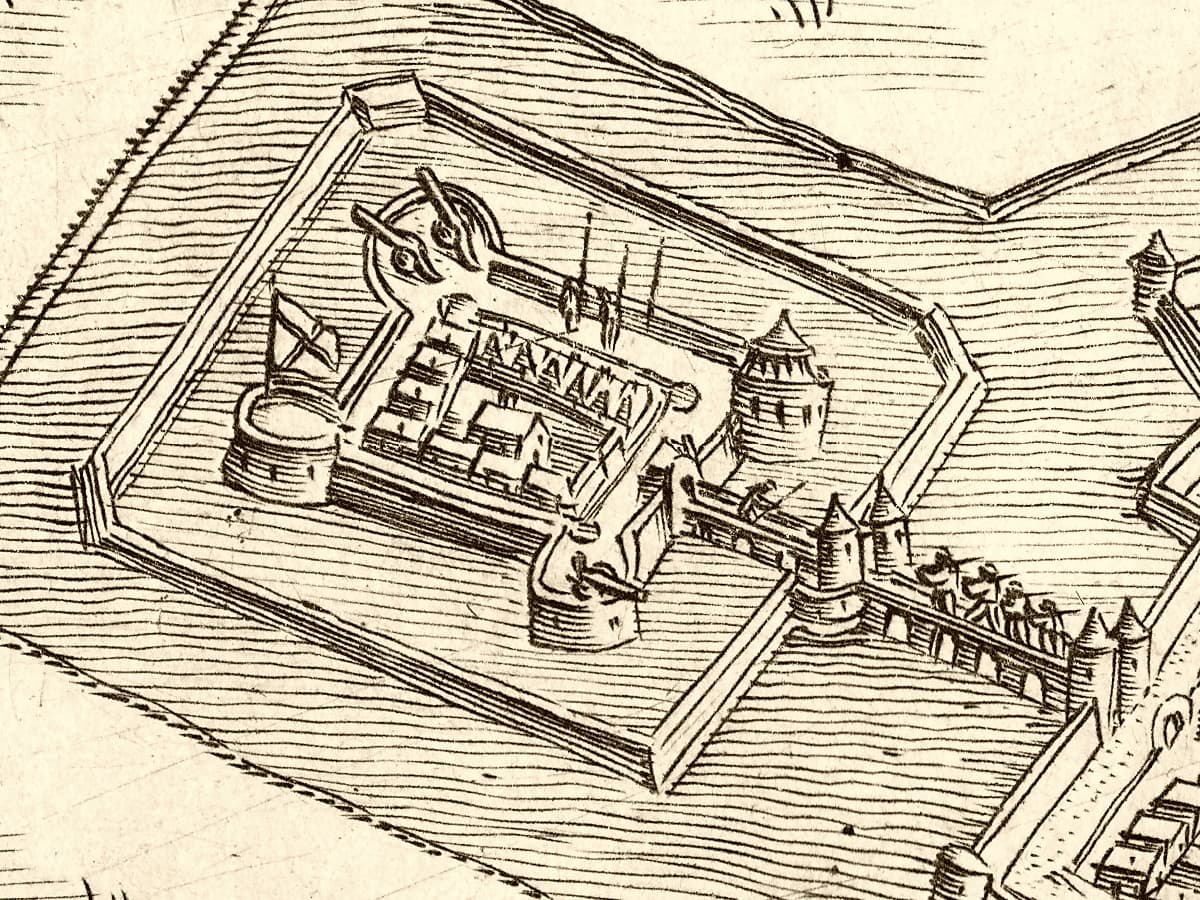
Photo by uitgegeven in 1618 te Leiden door J.J. Orlers in Warhafftige Beschreibung und Eigentliche Abbildung aller Zuge und Victorien,..., J.J. Orlers en H. van Haestens.•Public domain
Information
Loading map...
Visitor reviews
No reviews yet. Been here? Write the first review and help other travelers!
Write the first reviewVisited this castle? Share your experience
Your review helps other travelers and adds first-hand knowledge to our encyclopedia.