Historical background and significance
The castle of Ulft played a role in regional defense and local governance throughout the Middle Ages. Its establishment likely dates to the 13th or 14th century, a time when many such fortifications were built across the Low Countries to assert territorial control and protect trade routes. The castle was part of a network of fortifications in the Gelderland region, which was historically significant for its proximity to important trade corridors and political boundaries.
Over the centuries, the castle witnessed various ownership changes and adaptations reflecting shifts in political power and military technology. While it was primarily a defensive structure, it also functioned as a noble residence, with modifications to accommodate domestic needs alongside military requirements.
Architectural features and layout
The hill castle nature of the castle of Ulft means it was constructed on a natural elevation, enhancing its defensive capabilities. The castle's design typically included a central keep or donjon, surrounded by curtain walls and possibly one or more towers for observation and defense. The elevated position would have been complemented by a moat or ditch to hinder attackers.
Although much of the original structure has not survived intact, archaeological findings and historical records suggest that the castle featured a fortified gatehouse, battlements for archers, and living quarters within the inner bailey. The use of local stone and brick was common in the region, reflecting typical medieval construction techniques.
Defensive elements
The castle's defenses would have included thick stone walls, crenellations, and narrow windows or arrow slits designed for archery. The elevated location provided natural protection against siege engines and allowed defenders to spot approaching enemies from a distance. Access to the castle was likely controlled by a drawbridge or gatehouse mechanism.
Residential and functional spaces
Inside the castle, the noble family and their retinue would have had access to private chambers, a great hall for gatherings, and service areas such as kitchens and storerooms. The layout balanced the need for security with the requirements of daily life and administration.
Preservation and current condition
Today, the castle of Ulft is recognized as a site of historical interest, though it is classified as archaeological ruins. Much of the original structure has not survived due to centuries of decay, conflict, and changing land use. Excavations have uncovered foundations and artifacts that provide insight into its construction and use.
Efforts to preserve the site focus on protecting the archaeological remains and interpreting the castle's history for visitors. The location remains a point of cultural heritage within the Gelderland region, attracting those interested in medieval architecture and Dutch history.
Visiting the castle of Ulft
While the castle itself is largely in ruins, the site offers an opportunity to explore the remains of a medieval hill castle and appreciate its strategic setting. Visitors can learn about the castle's historical context through informational displays and guided tours where available.
The surrounding landscape adds to the experience, with walking paths and natural scenery typical of the Gelderland countryside. The site is accessible to the public, though facilities may be limited due to its archaeological nature.
Context within Dutch medieval castles
The castle of Ulft is part of the broader heritage of medieval fortifications in the Netherlands, which includes a variety of castle types such as water castles and motte-and-bailey structures. Its hilltop position distinguishes it from many Dutch castles built in lowland areas, highlighting the diversity of defensive strategies employed in the region.
Its historical role reflects the complex feudal and territorial dynamics of the Gelderland region during the Middle Ages, contributing to our understanding of medieval Dutch society and military architecture.
Frequently asked questions (FAQ)
- How do I get to the Castle of Ulft?
- The Castle of Ulft is easily accessible by car and public transport. If you are traveling by train, the nearest station is located in Ulft, from which you can take a short bus ride or a leisurely walk to the castle.
- What is the historical significance of the Castle of Ulft?
- The Castle of Ulft dates back to the 13th century and has played an important role in the region's history. It served as a defensive stronghold and residence for nobility, reflecting the architectural and cultural changes over the centuries.
- When was the Castle of Ulft built?
- Construction of the Castle of Ulft began in the early 1200s, making it one of the oldest castles in the area. Over the years, it has undergone various renovations and restorations, preserving its historical elements while adapting to modern needs.
- Why is the architecture of the Castle of Ulft unique?
- The architecture of the Castle of Ulft showcases a blend of medieval and Renaissance styles, characterized by its impressive towers and fortified walls. These architectural features not only served defensive purposes but also reflect the status of the nobility who resided there.
- Is it possible to hold events at the Castle of Ulft?
- Yes, the Castle of Ulft offers facilities for hosting a variety of events, including weddings and corporate gatherings. Its picturesque setting and historical ambiance make it a sought-after location for special occasions.
- What are the opening hours of the Castle of Ulft?
- The Castle of Ulft is typically open from 10 AM to 5 PM, Tuesday through Sunday. It is recommended to check the official website for any seasonal changes or special closures before planning your visit.
- What are the ticket prices for the Castle of Ulft?
- Admission tickets to the Castle of Ulft are reasonably priced, with discounts available for children, students, and seniors. Group rates are also offered, making it an affordable option for families and educational trips.
- When is the best time to visit the Castle of Ulft?
- The best time to visit the Castle of Ulft is during the spring and early autumn months when the weather is mild and the gardens are in full bloom. These seasons offer a pleasant experience for exploring the castle grounds and enjoying outdoor activities.
- What nearby attractions are there to explore?
- In addition to the Castle of Ulft, visitors can explore nearby attractions such as the beautiful parks and nature reserves in the surrounding area. Additionally, the charming town of Ulft offers various shops, restaurants, and cultural sites to enhance your visit.
Photo gallery

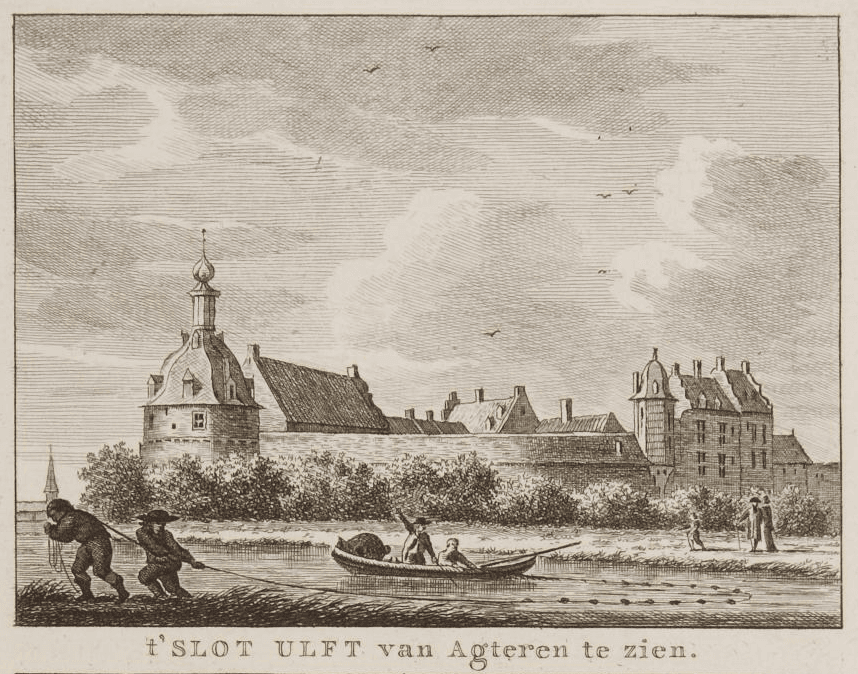
Photo by Bulthuis, J. Bendorp sr., K.•Public domain
Information
Loading map...
Visitor reviews
No reviews yet. Been here? Write the first review and help other travelers!
Write the first reviewVisited this castle? Share your experience
Your review helps other travelers and adds first-hand knowledge to our encyclopedia.