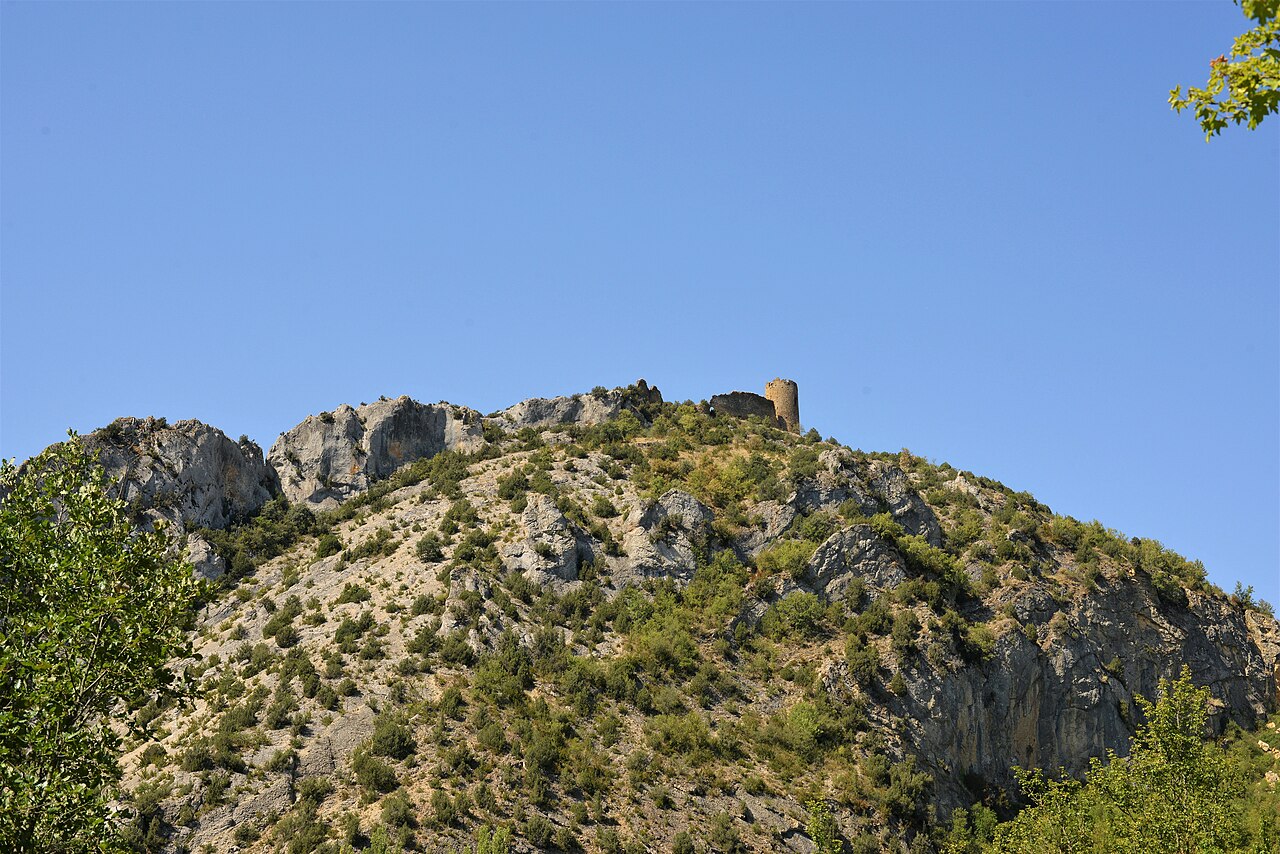
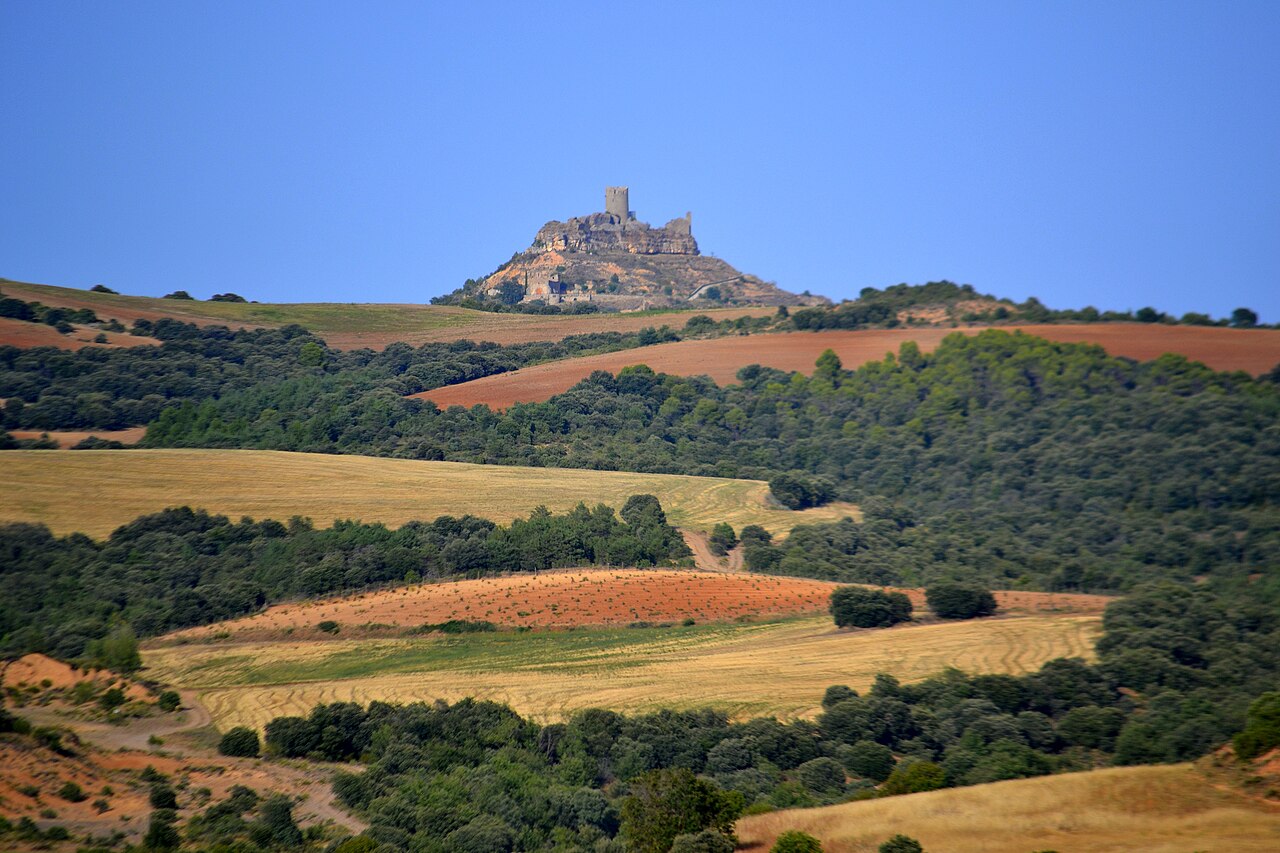
Castle of Benabarre
The Castle of Benabarre stands as a significant hill castle in the town of Benabarre, Spain, perched atop a commanding limestone hill that provides natural defensive advantages. Its origins trace back to the Muslim period, when the fortress was initially established under the name Ibn Awar, a name that still echoes in the modern town's identity.
In 1062, the castle entered a new phase when King Ramiro I of Aragón captured the site amidst the turbulent Reconquista era. Recognizing the strategic importance of Benabarre on the frontier, he commissioned the construction of a fortified castle to secure the region. This early medieval fortress laid the foundation for subsequent expansions and modifications that reflected the shifting political and military needs of the area.
Medieval development and political significance
By the 14th century, the Castle of Benabarre had grown in stature and importance. In 1322, under the reign of King Jaime II, the castle became the capital of the County of Ribagorza when the county title was granted to his son, Pedro of Aragón. This elevation underscored the castle's role as a political and administrative center in addition to its military function.
Within the castle grounds, a Romanesque church was originally constructed, later expanded into a Gothic temple during the rule of the Counts of Ribagorza. This religious structure, known as the Church of Santa María de Valdeflores, features a distinctive tall square tower built of large ashlar stone blocks and a rectangular annex thought to have functioned as a cistern for water storage, illustrating the integration of ecclesiastical and defensive architecture.
Internal conflicts and military transformations
The castle's strategic importance was highlighted during the Ribagorza War (1577-1589), a familial conflict between Count Martín and his son Fernando de Aragón. These clashes reflected broader tensions in the region and resulted in significant damage to the fortress. In 1596, following the war, King Philip II incorporated the County of Ribagorza directly into the Spanish crown and ordered the castle's dismantling to prevent its use as a rebel stronghold.
However, the castle's defensive role was revived during the Catalan Revolt (1636-1656), when it was reconstructed to serve again as a military bastion and the county capital. Despite this, the fortress suffered through successive conflicts including the War of Spanish Succession (1707-1714), the Peninsular War, and the Carlist Wars, which progressively reduced the castle to a state of ruin.
19th-century adaptations and modern usage
In response to evolving military technology, the castle was transformed in the 19th century into a rifle fort. Modifications included adapting the walls for the use of light firearms and constructing circular watchtowers equipped with arrow slits suitable for rifles. The remains of the Gothic church were repurposed as a two-story military pavilion, demonstrating the site's continued strategic utility.
A new parish church was also built on the site during this period, featuring a prominent bell tower which later served as an aerial lookout during the Spanish Civil War. The castle property was transferred to municipal ownership in 1922, initiating a new chapter focused on preservation and restoration.
Architectural layout and surviving features
The castle complex is roughly rectangular, measuring about 100 meters by 50 meters, and is constructed directly on the natural rock foundation of the hilltop. This geological feature proved an effective defense, thwarting siege tunneling attempts. The fortress is enclosed by robust defensive walls accessed via a staircase protected by a barrier.
The site is organized into three fortified enclosures arranged on terraced levels. The upper enclosure contains the oldest structures, including the foundations of a square tower dating back to the Muslim occupation. Rock-cut supports and scattered walls attest to this early phase.
The lower enclosure preserves vestiges of the 12th-century Romanesque church, identifiable by the base of its tower. Adjacent to it stands the Gothic Church of Santa María de Valdeflores from the late 14th century, notable for its tall square tower and water cistern annex. A bent entrance near the church leads to the upper enclosure, defended by a semicircular tower outfitted with narrow arrow slits for archers.
On the southern slope of the hill lies a courtyard with an outer enclosure featuring sloping walls. The 19th-century defensive additions include circular watchtowers at the eastern and western edges, adapted for rifle use, reflecting the castle's evolution in military architecture.
Historical layers and cultural significance
Throughout its history, the Castle of Benabarre has served multiple roles beyond military defense, including as a bell tower, cemetery, garden, shelter for the impoverished, and an aerial lookout post. These varied uses illustrate the fortress's integration into the social and cultural fabric of the region.
Restoration efforts beginning in 1991 have focused on stabilizing and rebuilding key walls and towers, preserving the castle as a monument layered with centuries of regional history. Today, the castle stands as a testament to the complex interplay of military, political, and religious influences that shaped the Ribagorza region from the early medieval period through modern times.
Frequently asked questions (FAQ)
- When was the Castle of Benabarre originally built?
- The Castle of Benabarre was originally established during the Muslim period before 1062, with significant construction by King Ramiro I of Aragón after he captured it in 1062.
- What architectural styles are present at the Castle of Benabarre?
- The castle features a mix of architectural styles including early Muslim fortifications, 12th-century Romanesque elements, and later Gothic expansions, particularly in the Church of Santa María de Valdeflores.
- What historical events affected the Castle of Benabarre?
- The castle was involved in the Ribagorza War (1577-1589), the Catalan Revolt (1636-1656), the War of Spanish Succession, the Peninsular War, and the Carlist Wars, all of which influenced its structure and use.
- Can visitors see the original medieval structures at the Castle of Benabarre?
- Visitors can see remnants of the original square tower from the Muslim period, the Romanesque church base, and the Gothic church tower, alongside 19th-century military modifications.
- Who owns the Castle of Benabarre today?
- The Castle of Benabarre is currently owned and managed by the municipality of Benabarre, which has overseen restoration efforts since 1991.
Information
Sources & official resources
Verify the information above using these authoritative references.
Loading map...
Visitor reviews
No reviews yet. Been here? Write the first review and help other travelers!
Write the first reviewVisited this castle? Share your experience
Your review helps other travelers and adds first-hand knowledge to our encyclopedia.