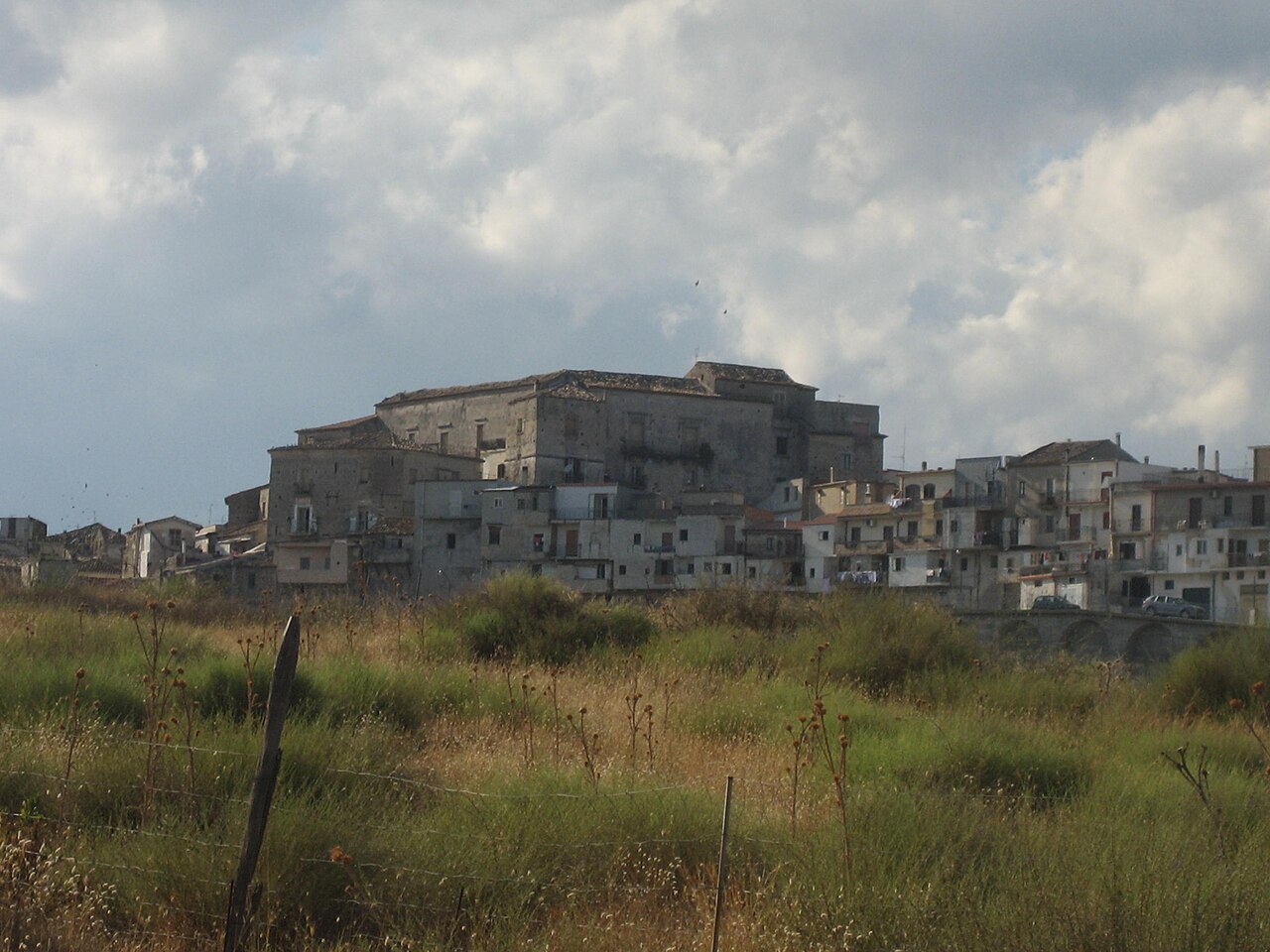
Castle of Baroness Scoppa

Castle of baroness scoppa
Cardinale, Calabria, Italy
Post-Renaissance (17th–18th c.)
Ruins

The castle of Baroness Scoppa is a small, evocative ruin located near the town of Cardinale in the Calabria region of southern Italy. This modest fortress dates back to the late 19th century and is steeped in local folklore, making it a point of interest for visitors intrigued by history and legend alike. Though the castle itself is now in ruins, its story and the surrounding landscape continue to captivate those who venture to this quiet part of Calabria.

Historical background and ownership

The castle was owned by a baroness during the late 1800s through to around 1910. While detailed historical records about the castle and its owners are scarce, local oral traditions have preserved tales about the baroness's life and the castle's dark past. It is said that the baroness was involved in scandalous affairs and that she sought to conceal her broken vows of chastity. The castle’s isolated location and its structural features, including a dungeon, have fueled stories of mysterious disappearances of men and boys who were seduced by her.

Architectural features and castle layout

Though now largely in ruins, the castle once included typical elements of a small fortified residence. It likely featured thick stone walls designed for defense, a dungeon used for imprisoning victims or enemies, and possibly a courtyard that served as a central open space within the castle grounds. The surrounding terrain is notable for its quicksand areas, which local legend claims were used to dispose of those who crossed the baroness.

Defensive structures

The castle’s defensive capabilities would have been modest, consistent with its size and period. The presence of a dungeon suggests some level of fortification and security, though the castle was not a major military stronghold. Its location on a slight elevation accessible by a short hike provided a natural vantage point and some protection against intruders.

Local legends and cultural significance

The legend of the baroness is a significant aspect of the castle’s allure. According to local folklore, the baroness seduced numerous men and boys, whose subsequent disappearances were attributed to her efforts to keep her secrets hidden. The victims were rumored to have been killed either in the castle’s dungeon or by being swallowed up by the quicksand surrounding the castle grounds. These chilling tales contribute to the castle’s reputation as a haunted and mysterious site.

Impact on local culture

These stories have become part of the cultural fabric of the Cardinale area, attracting visitors interested in the macabre and the mysterious. The castle ruins serve as a tangible connection to these tales, offering a glimpse into the region’s past and the power of oral tradition in preserving history and myth.

Visiting the castle ruins

The castle is accessible by a short hike from Cardinale, making it an appealing destination for hikers and history enthusiasts. Visitors can explore the ruins and the surrounding landscape, which remains largely natural and undeveloped. The site’s remote and rugged setting enhances the atmosphere of mystery and intrigue.

Visitor considerations

As the castle is in a state of ruin, visitors should exercise caution when exploring the site. There are no formal visitor facilities or guided tours, so preparation and appropriate footwear are recommended. The best time to visit is during the warmer months when the weather is conducive to hiking.

Geographical context and natural surroundings

Situated in the Calabrian region, the castle overlooks a landscape characterized by Mediterranean vegetation and rugged terrain. The presence of quicksand in the area is a notable natural hazard that has contributed to the castle’s eerie reputation. The surrounding environment offers opportunities for nature walks and exploration beyond the historical interest of the castle itself.

Frequently asked questions (FAQ)

How do I get to the Castle of Baroness Scoppa?
The Castle of Baroness Scoppa is located in Cardinale, Italy, and can be accessed by car or public transport. If you're traveling from nearby cities, local buses operate routes to Cardinale. For those driving, ample parking is available near the castle.
What is the historical significance of the Castle of Baroness Scoppa?
The Castle of Baroness Scoppa dates back to the 16th century and is a significant example of feudal architecture in the region. It served as a strategic lookout point and residence for the local nobility. Today, it stands as a testament to the rich history of Cardinale and the surrounding area.
When was the Castle of Baroness Scoppa built?
Construction of the Castle of Baroness Scoppa began in the early 1500s and was completed later in the century. The castle has undergone various renovations over the centuries, preserving its historical features while adapting to modern times. Visitors can explore its architectural evolution through the years.
Can I take guided tours of the castle?
Yes, guided tours of the Castle of Baroness Scoppa are available, offering visitors an in-depth look at its history and architecture. Tours are typically conducted several times a day and can be booked in advance for larger groups. Check the castle's official website for specific tour times and availability.
Why is the Castle of Baroness Scoppa popular among tourists?
The Castle of Baroness Scoppa is popular for its stunning architecture, rich history, and picturesque location. Visitors are drawn to its beautiful views of the surrounding landscape and the opportunity to learn about the region's noble heritage. The castle also hosts cultural events and exhibitions throughout the year, enhancing its appeal.
Is it possible to visit the castle during winter?
Yes, the Castle of Baroness Scoppa is open for visitors during the winter months, although hours may vary. It's advisable to check the official website for any seasonal changes to opening times and potential weather-related closures. Winter visits can offer a unique perspective of the castle's beauty in a tranquil setting.
What are the ticket prices for the Castle of Baroness Scoppa?
Ticket prices for the Castle of Baroness Scoppa are generally affordable, with discounts available for students and seniors. Family packages are also offered to encourage group visits. It's recommended to purchase tickets online in advance to secure your spot and avoid long queues.
What are the opening hours for the Castle of Baroness Scoppa?
The Castle of Baroness Scoppa typically opens to visitors from 9 AM to 6 PM daily, with extended hours during the summer months. However, hours may vary on holidays or special event days. Always check the official website for the latest information on opening hours before planning your visit.
What nearby attractions can I visit after exploring the castle?
After visiting the Castle of Baroness Scoppa, you can explore the charming town of Cardinale, which offers local shops and restaurants. Additionally, the surrounding region features beautiful natural parks and hiking trails, perfect for outdoor enthusiasts. Don't miss the opportunity to visit other historical sites in the area as well!

Information

Hill Castle

Loading map...

Visitor reviews

No reviews yet. Been here? Write the first review and help other travelers!

Write the first review

Visited this castle? Share your experience

Your review helps other travelers and adds first-hand knowledge to our encyclopedia.
Write a review

(5/5)

0/2000 characters

Your review will be visible after admin approval

Nearby castles

14.4 km
Stilo Castle — Italy castle

Stilo Castle

Stilo, Italy

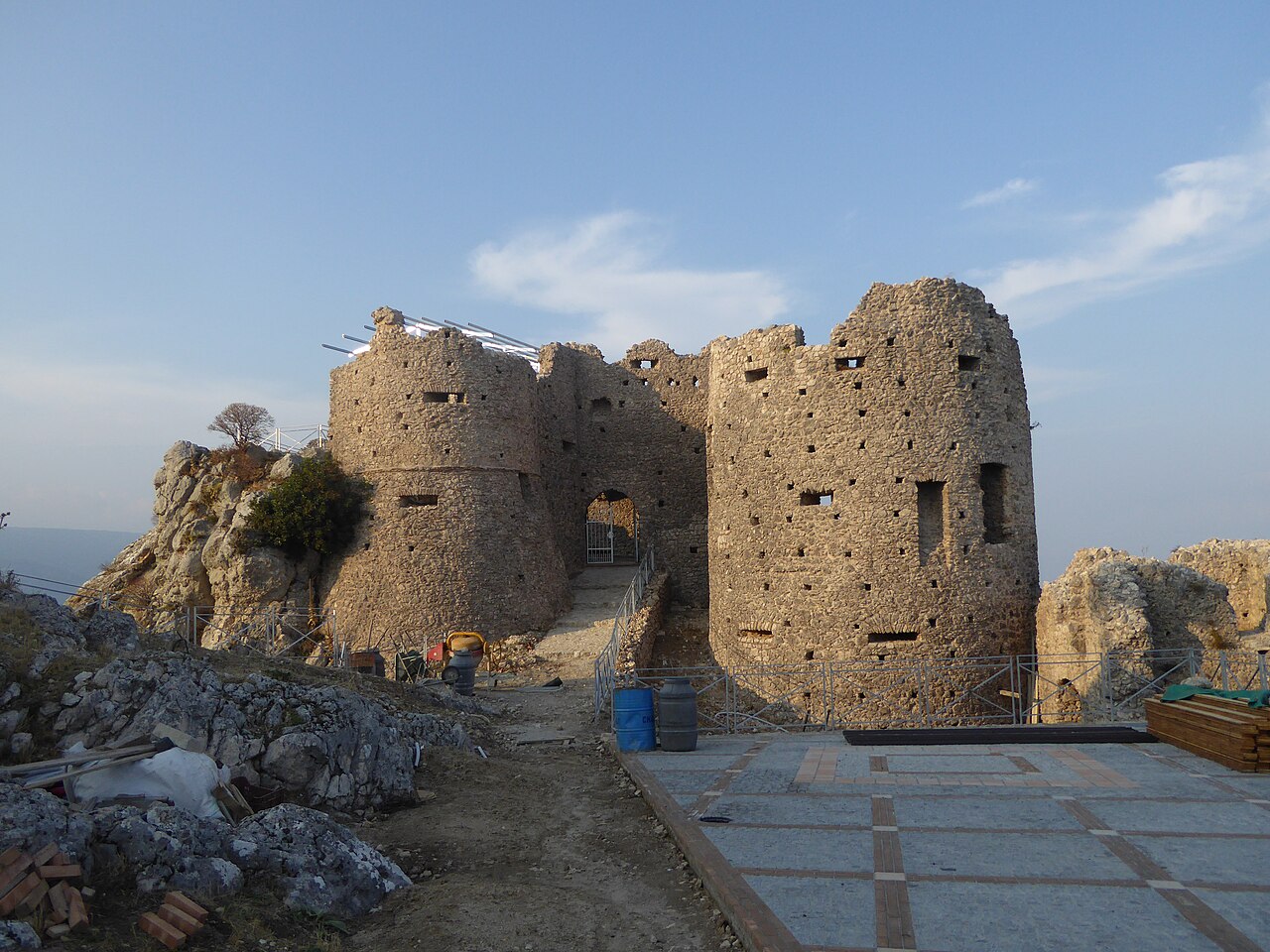
Stilo Castle, also known as the Norman Castle, is a prominent medieval fortress perched atop Monte Consolino overlooking the town of Stilo in Calabria, southern Italy. Constructed in the 11th century by the Normans, specifically under the command of Roger I of Sicily, it represents a significant example of Norman military architecture in southern Italy. The castle's strategic location provided commanding views of the surrounding landscape, allowing it to serve as a vital defensive stronghold in the region.The earliest historical record of the castle dates back to 7 May 1093, when Count Roger made a concession to Saint Bruno, linking the site firmly to Norman authority. Throughout the High Medieval period, the castle played an important role in regional administration and military defense. By the 13th century, it was one of seventeen key castles in Calabria managed by the Royal Curia during the reign of Charles I of Naples. It also functioned as a prison during this era, with archival documents from 1281 detailing maintenance work authorized by royal officials.Historical significance and governanceIn 1323, control of the castle's castellany was granted by the Duke of Calabria, heir to King Robert, to Marco, a nobleman and constable of Settingiano. His family maintained stewardship over the fortress for an extended period, underscoring its continued importance in local governance. By the late 17th century, the castle was described by Father Apollinare Agresta as the strongest fortress in the province, commanding the landscape and valued by monarchs who required feudal lords to contribute to its upkeep. The 17th-century chronicler Giovanni Fiore da Cropani also mentioned the castle in his work "Della Calabria illustrata", highlighting its enduring regional prominence.During the 18th century under the Kingdom of Naples, the castle was governed by a castellan appointed by the king, who commanded local defensive troops and received a daily wage. However, by the 19th century, the castle had fallen into disuse and ruin, reflecting changing military needs and political circumstances.Architectural features and defensive structuresThe castle is a hill castle built primarily from locally quarried medium-sized limestone blocks. Its defensive layout includes several triangular and circular towers encircling the main fortress area, each equipped with narrow arrow slits that allowed defenders to shoot while remaining protected. One of the towers is known as Altavilla, though its precise historical association remains unclear.The fortress walls are notable for their lack of internal vaults or floors and absence of traditional doors or windows, emphasizing their purely defensive function. Instead, holes in the walls indicate the former presence of temporary wooden platforms used by defenders during combat. At the heights where these platforms would have stood, machicolations—overhanging openings designed to drop projectiles or boiling liquids on attackers—are visible, enhancing the castle's defensive capabilities.The tops of towers are crowned with conical battlements made from the same limestone as the walls, providing cover for soldiers stationed there. A single passage on the western face connects the fortress to the rest of Monte Consolino, leading upward to the summit. Near the main access from the cemetery, remains of additional towers face the sea, indicating the castle's strategic orientation toward maritime approaches.Internal features and water managementWithin the central courtyard, archaeological evidence reveals the presence of a chapel featuring a main altar and four smaller altars against the surrounding walls, reflecting the importance of religious worship within the fortress. The castle also incorporated a sophisticated rainwater collection system using terracotta pipes and tiles to channel water into a cistern beneath the central building, ensuring a water supply during sieges or dry spells.Restoration and modern accessAfter centuries of decline, restoration efforts began in the 21st century under the direction of the Calabria Superintendency for Architectural and Landscape Heritage. Led by architect Margherita Eikeberg, conservation work commenced in 2009 and was completed by 2016, stabilizing and preserving the remaining structures. During this period, a monorail system was constructed to improve access to the castle from the town; however, it was never put into service due to incomplete testing.Local legends and cultural significanceThe castle is steeped in local folklore. One legend recounts a Saracen siege in 982, during which defenders purportedly used ricotta cheese to deceive attackers. Another tale involves a noblewoman named Regina and a golden hen that laid eggs, stories entwined with a rebellion eventually suppressed by Charles of Anjou. Additionally, the castle is said to be haunted by a ghostly drumming sound, linked to a legend of a drummer boy sent through secret passages beneath the fortress.The castle's strategic importance and legacyThroughout its history, the Castle of Stilo served as a military stronghold, administrative center, and prison. Its commanding position on Monte Consolino allowed control over the surrounding territory and sea routes, making it a key asset for Norman and later rulers in Calabria. The fortress's austere design reflects its primary function as a defensive structure rather than a residential palace.Today, the castle stands as a partially restored monument, offering visitors insight into medieval military architecture and the Norman presence in southern Italy. Its combination of stone towers, battlements, chapels, and water cisterns illustrates the complexity and self-sufficiency required of hill castles during the High Medieval period.

High Medieval (11th–13th c.)
Details
17.1 km

Arena Castle

Arena, Italy

Arena Castle stands as a significant example of Norman military architecture from the 11th century in Sardinia, Italy. Constructed under the orders of the Norman king Roger I, the castle was strategically positioned to protect the vital pass of Berra and to secure the Norman dominions on the Tyrrhenian coast against threats from the eastern territories controlled by the Byzantines and Arabs. This location was crucial for controlling movement and defending against incursions during a turbulent period marked by competing powers in the Mediterranean. The castle's primary role was both administrative and military, overseeing the feud of Arena. This responsibility was entrusted to the Conclubet family, who maintained control over the castle and its lands for more than six centuries. Their tenure persisted through successive dominations in the region known as Calabria Ultra, until the Acquaviva dukes assumed control in the 16th century. This continuity reflects the castle's importance as a power center and its adaptability through changing political landscapes. Norman origins and architectural layout The castle's original structure is a clear representation of Norman fortress design, characterized by large perimeter walls and a quadrilateral main building. This layout was typical for Norman castles, emphasizing strong defensive capabilities with a simple yet effective geometric form. The design allowed for control over the surrounding terrain and provided a secure base for military operations. At each corner of the quadrilateral stood four towers, which have survived partially to this day. These towers were constructed during different periods, reflecting the castle's evolution in response to advancements in military technology and changing defensive needs. Defensive adaptations through the Angevin and Aragonese periods Angevin modifications During the Angevin period, significant changes were made to the castle's eastern side. The original Norman quadrangular towers with their characteristic smooth shoe bases were replaced by taller towers featuring circular bases and a distinctive grooved shoe. This architectural feature was designed to enhance the effectiveness of the "plumbing defense" technique, which involved the use of projectiles launched from the walls to repel attackers more efficiently. The grooved shoe base is particularly noteworthy as a rarity in castle construction. Unlike the typical Angevin towers, which usually maintained a smooth base, this design innovation increased the defensive range and lethality of the castle's artillery, marking a significant advancement in fortress engineering of the time. Aragonese alterations On the western side, the castle's towers underwent modifications during the Aragonese period in response to the growing threat posed by artillery. The development of gunpowder weapons necessitated lowering the height of the towers and reinforcing their structures to withstand bombardment. These changes reflect the broader shift in military architecture during the late medieval period, as fortresses adapted to new forms of warfare. Impact of the 1783 earthquake and current condition The castle suffered extensive damage from the earthquake of 1783, which left it largely in ruins. Despite this destruction, the remnants still preserve the essential Norman architectural structure, allowing for the study and appreciation of its original design and subsequent adaptations. Today, the ruins provide valuable insight into the layered history of the castle, showcasing the blend of Norman, Angevin, and Aragonese defensive features. The site remains an important cultural and historical landmark in Sardinia, attracting interest from historians, architects, and visitors fascinated by medieval military architecture. Historical significance and legacy Arena Castle played a crucial role in the defense and administration of the Norman and later feudal territories in southern Italy. Its strategic location and architectural evolution reflect the complex political and military history of the region, marked by the interplay of Norman, Byzantine, Arab, Angevin, and Aragonese influences. The castle's long-standing association with the Conclubet family underscores its importance as a center of local power and governance. The transition to the Acquaviva dukes in the 16th century marks a significant chapter in the castle's history, aligning with broader shifts in the control of southern Italian territories during the Renaissance. Architectural features and defensive innovations Perimeter walls and towers The large perimeter walls of Arena Castle were designed to withstand sieges and attacks, forming a formidable barrier around the quadrilateral core. The towers at each corner served multiple defensive purposes, including surveillance, archery positions, and artillery platforms. Grooved shoe base and plumbing defense The introduction of the grooved shoe base on the Angevin towers represents an innovative approach to fortress defense. This feature improved the trajectory and impact of projectiles, making the castle more resilient against attackers and enhancing its strategic value. Adaptations to artillery warfare The modifications during the Aragonese period illustrate the castle's response to the advent of gunpowder weaponry. Lowering and strengthening the towers helped mitigate damage from cannon fire, demonstrating the castle's ongoing military relevance into the early modern period. Visiting Arena Castle today Visitors to Arena Castle can explore the ruins and observe the distinctive architectural features that reveal its historical layers. Although partially destroyed, the site offers a tangible connection to the medieval past and the complex history of Sardinia's coastal defenses. The castle's location in the town of Arena provides opportunities to experience the surrounding landscape, which was integral to its defensive function. The ruins stand as a reminder of the region's strategic importance and the enduring legacy of Norman and later rulers in shaping Sardinia's history.

High Medieval (11th–13th c.)
Details
20.9 km
Monasterace Castle — Italy castle

Monasterace Castle

Monasterace, Italy

Monasterace Castle stands prominently on the highest points of the historical centre of Monasterace, in the Calabria region of southern Italy. This hill castle traces its origins to the 11th century, constructed during the High Medieval period. It represents a significant example of Norman-Byzantine military architecture, reflecting the cultural and political influences that shaped southern Italy during this era. Historical background and strategic importance The castle was initially established by the Normans, who had recently gained control over large parts of southern Italy. Its location on a hilltop provided a commanding view of the surrounding landscape, enabling control over key routes and serving as a defensive stronghold against both local and foreign threats. The castle's position was strategic for overseeing the Ionian coast and protecting the inland territories. Monasterace Castle's early history is intertwined with the complex interactions between the Norman conquerors and the Byzantine Empire, which had previously dominated the region. This blend of influences is evident in the castle's architectural features and construction techniques. Architectural features and construction phases The original 11th-century structure was built with typical Norman defensive elements, including thick stone walls and a compact layout designed for defense. Over the centuries, the castle underwent significant modifications, particularly during the 15th and 16th centuries, when it was renovated to adapt to evolving military technologies and aesthetic preferences. Norman-Byzantine elements The castle exhibits a fusion of Norman robustness and Byzantine stylistic details. The masonry work shows influences from Byzantine construction methods, including the use of local stone and mortar techniques. The castle's plan includes a central keep or stronghold, surrounded by curtain walls and towers that enhanced its defensive capabilities. Later modifications During the 15th and 16th centuries, the castle was updated to better withstand artillery attacks, which were becoming more common in warfare. These renovations included the reinforcement of walls, the addition of bastions or angular towers, and the enlargement of living quarters to accommodate a garrison and administrative functions. The castle's current appearance largely dates from this period, reflecting Renaissance military architectural trends while retaining its medieval character. Role and function through history Throughout its history, Monasterace Castle served multiple roles. Initially a military fortress, it later became a noble residence and administrative center. Its strategic location made it a focal point during regional conflicts and power struggles. The castle also played a part in controlling local populations and safeguarding trade routes along the coast. In later centuries, as the military importance of such fortifications declined, the castle's function shifted more toward governance and residence. Despite this, it remained a symbol of authority and power in the region. Current condition and preservation Today, Monasterace Castle is partially preserved. While some sections remain intact and showcase the blend of Norman and Renaissance architectural features, other parts have suffered from neglect and natural decay. Preservation efforts have focused on stabilizing the structure and promoting its historical significance as a cultural landmark in Calabria. The castle attracts visitors interested in medieval architecture, Norman history, and the cultural heritage of southern Italy. Its hilltop location offers panoramic views of the surrounding landscape, enhancing its appeal as a historical site. Visiting Monasterace Castle Visitors to Monasterace Castle can explore the remaining walls, towers, and courtyards, gaining insight into its architectural evolution and historical context. The site provides an opportunity to understand the military and cultural dynamics of the High Medieval period in Calabria. Nearby attractions include the archaeological site of the ancient city of Kaulon, which offers additional historical perspective on the region's long-standing significance.

High Medieval (11th–13th c.)
Details