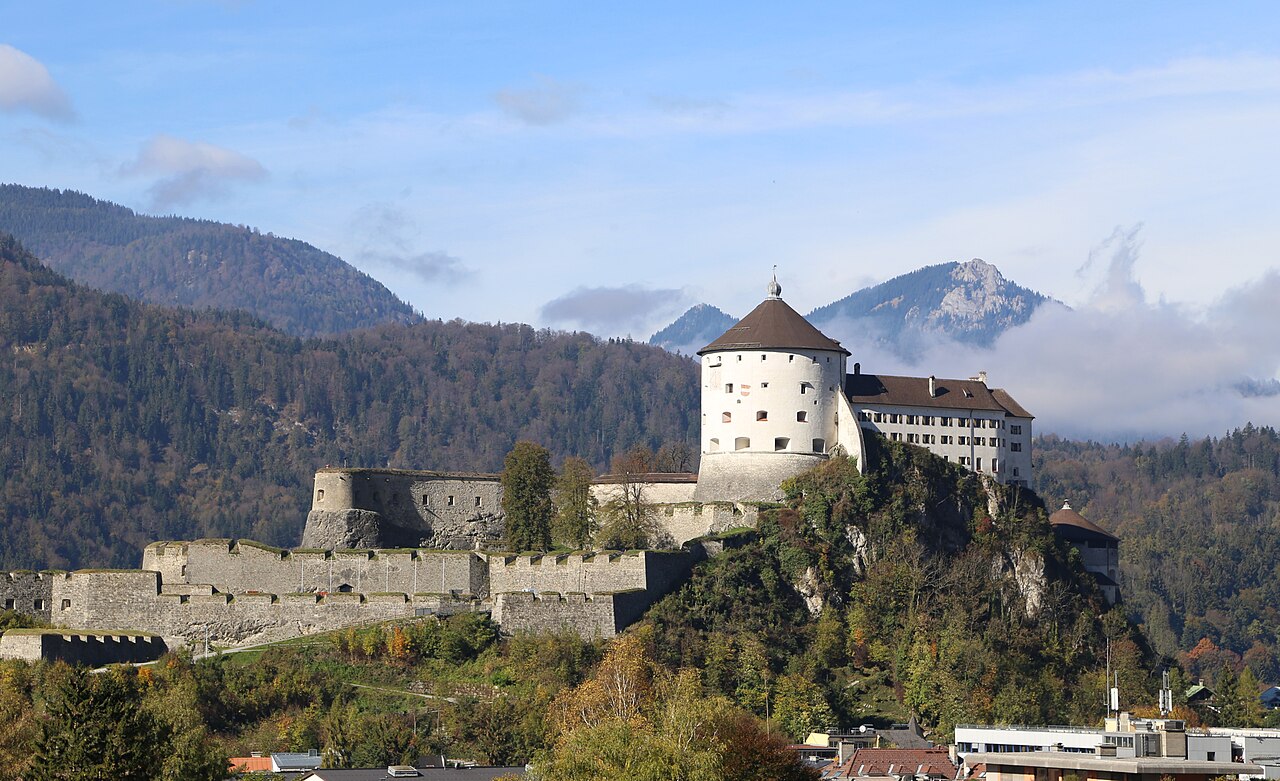
Castle Itter

Castle itter: site of world war ii's strangest battle
Itter, Tirol, Austria
Well Preserved

Castle Itter, located in the scenic region of Tirol, Austria, is renowned for its remarkable role during the final weeks of the European theater of World War II. This fortress is famously known as the site of the "strangest battle of World War II," where an extraordinary alliance of German Wehrmacht soldiers and American troops joined forces to defend a group of high-profile French prisoners against an assault by the Waffen-SS. This unlikely coalition highlights the complex and chaotic nature of the war's closing days.

The origins of Castle Itter date back to the ninth century, when it was first constructed by the Bavarians. Initially serving as a private residence, the castle's strategic location and robust defensive features made it a significant stronghold over the centuries. Its architecture reflects the evolution of medieval fortifications, including thick stone walls, bastioned defenses, and a commanding position overlooking the surrounding valley.

Castle itter's transformation during world war ii

Following the Anschluss of Austria in 1938, Castle Itter was repurposed in May 1943 as a prison for prominent French prisoners of war. These detainees were considered valuable due to their political or military significance, including former prime ministers, generals, and cultural figures. The castle's isolated and fortified nature made it an ideal location for such high-value captives.

For two years, the prisoners were held within the castle's stone walls, guarded by a contingent of German soldiers. However, as the war drew to a close in early 1945, the situation became increasingly unstable. The death of Adolf Hitler in April 1945 precipitated a collapse in Nazi command, leading to confusion and desertions among the guards.

The battle for castle itter: an unprecedented alliance

In the days following Hitler's suicide, the castle's German guards and commander abandoned their posts, effectively leaving the prisoners unprotected. Recognizing the imminent threat posed by the Waffen-SS, who sought to recapture the castle and eliminate the prisoners, an extraordinary alliance was formed.

American soldiers, including members of the 12th Armored Division, joined forces with the remaining German Wehrmacht troops loyal to the castle's defense. Together, they prepared to repel the SS attack. This collaboration between former enemies was unprecedented and underscored the chaotic and fluid allegiances during the war's final days.

The battle itself was brief but intense. The defenders utilized the castle's bastioned fortifications to withstand the Waffen-SS assault, protecting the prisoners until reinforcements arrived. This unique engagement is often cited as a symbol of unexpected cooperation in the face of shared humanity and survival.

Architectural features and strategic significance

Castle Itter is classified as a bastioned fortress, characterized by angular bastions designed to provide overlapping fields of fire and improved defense against artillery. Its location on a hillside overlooking the valley provided natural defensive advantages, including visibility and difficult access for attackers.

The castle's stone curtain walls and battlements were complemented by a moat and gatehouse, typical of medieval fortifications intended to repel invaders. Over time, modifications were made to adapt the structure for changing military technologies and residential needs, but its core defensive features remained intact through World War II.

Historical legacy and current status

Today, Castle Itter stands as a monument to one of the most unusual episodes of World War II. Its preservation allows visitors to explore the site where former enemies united against a common threat. The castle's history offers profound insights into the complexities of war, the shifting allegiances, and the human stories behind military conflicts.

Preserved in a well-preserved state, the castle attracts historians, military enthusiasts, and tourists interested in its unique past and architectural heritage. It remains a potent symbol of resilience and cooperation amidst the devastation of war.

Visiting castle itter

Visitors to Castle Itter can explore its courtyards, battlements, and chambers, gaining a tangible sense of its defensive capabilities and historical significance. The castle's location in the picturesque Tirol region offers additional attractions, including alpine landscapes and cultural sites.

While the castle is accessible to the public, it is advisable to check current visiting hours and ticketing information, as these may vary seasonally. Guided tours often provide detailed narratives of the castle's role in World War II and its architectural evolution.

Frequently asked questions (FAQ)

What is the historical significance of Castle Itter during World War II?
Castle Itter is known for hosting the strangest battle of World War II, where American and German soldiers fought together to defend French prisoners against the Waffen-SS.
Can I visit Castle Itter today?
Yes, Castle Itter is well-preserved and open to visitors. It offers guided tours that explain its unique role in World War II and its architectural features.
Where is Castle Itter located?
Castle Itter is located in the Tirol region of Austria, situated on a hillside overlooking a valley, providing strategic defensive advantages.
What architectural features define Castle Itter?
Castle Itter is a bastioned fortress featuring stone curtain walls, bastions for overlapping fields of fire, battlements, a moat, and a gatehouse typical of medieval fortifications.
When was Castle Itter originally built?
Castle Itter was originally constructed in the ninth century by the Bavarians and has served various roles including a private residence and a wartime prison.

Information

Bastioned Fortress

Loading map...

Visitor reviews

No reviews yet. Been here? Write the first review and help other travelers!

Write the first review

Visited this castle? Share your experience

Your review helps other travelers and adds first-hand knowledge to our encyclopedia.
Write a review

(5/5)

0/2000 characters

Your review will be visible after admin approval

Nearby castles

0.3 km
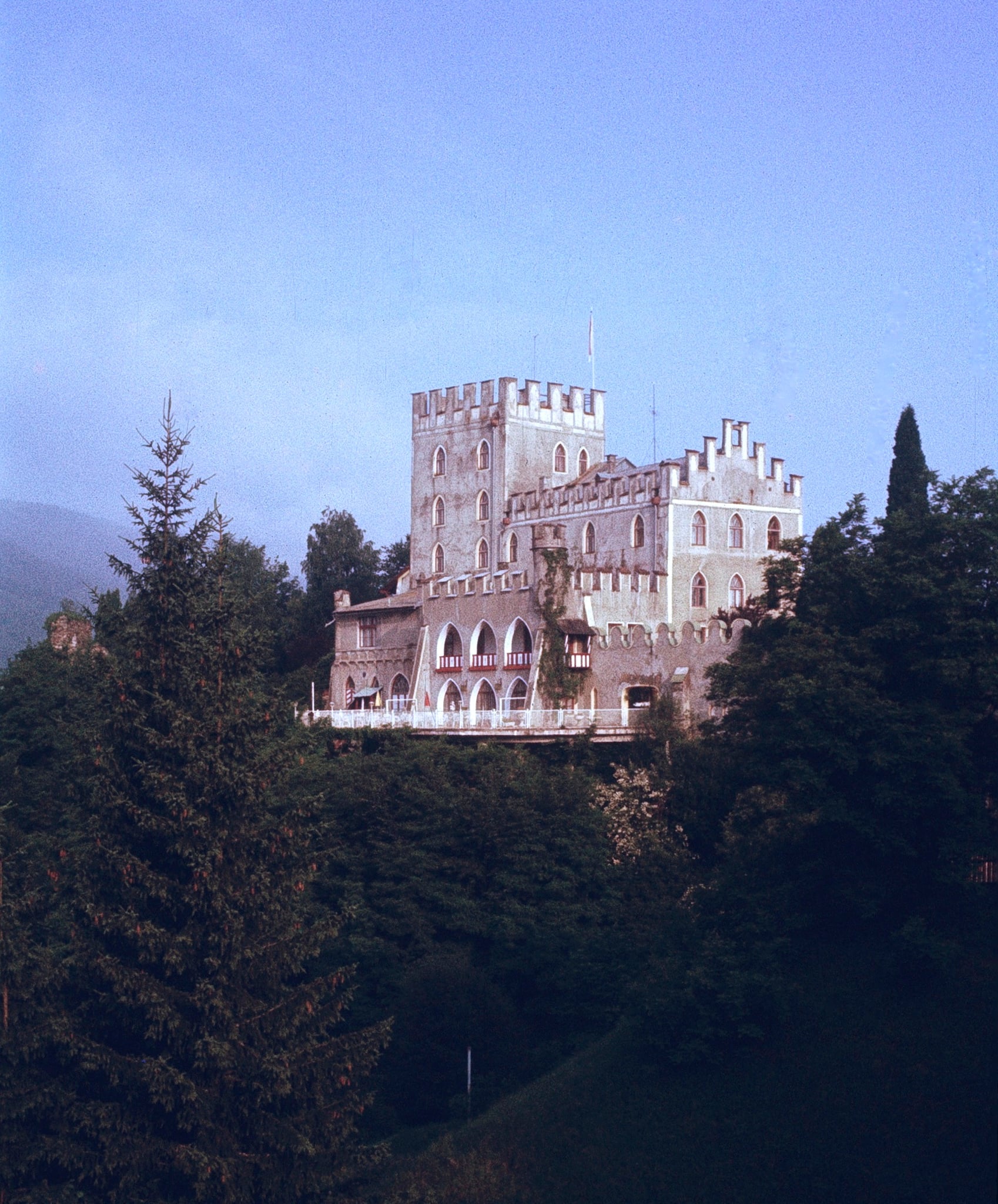
Itter Castle — Austria castle

Itter Castle

Itter, Austria

Itter Castle stands prominently in the village of Itter in the Austrian region of Tirol. This 19th-century hill castle is renowned not only for its architectural charm but also for its remarkable role during World War II as a prison for high-profile French detainees. The castle's history spans centuries, with origins tracing back to medieval fortifications and a series of transformations reflecting the complex political and cultural shifts in the region. Medieval origins and early history The site of Itter Castle was first documented in 1241, although earlier structures may have existed as far back as the 10th century. Initially, the surrounding Brixental valley belonged to the Prince-Bishops of Regensburg. The castle functioned as an administrative center under the Counts of Ortenburg, who acted as Vogt bailiffs overseeing the bishop's interests. Its strategic position served to protect Regensburg's estates from incursions by the neighboring Archbishops of Salzburg. In 1312, the Brixental was acquired by Salzburg, and by 1380, the Prince-Bishops of Regensburg sold Itter Castle to Archbishop Pilgrim II of Salzburg. The castle endured significant damage during the German Peasants' War of 1526, reflecting the widespread social upheaval of the period. By the 17th century, the administrative seat moved to Hopfgarten, leading to the castle's decline and eventual use as a quarry post-1805. 19th-century reconstruction and cultural significance The present-day castle was constructed beginning in 1878 on the foundations of the medieval fortress. This reconstruction embraced the Tudor Revival architectural style, a popular historicist movement that sought to evoke the romanticism of late medieval English architecture. The castle's elegant design features characteristic elements such as steeply pitched roofs, ornate chimneys, and decorative half-timbering. In 1884, Itter Castle was purchased by Sophie Menter, a celebrated pianist and composer who studied under Franz Liszt. The castle became a cultural hub, hosting illustrious guests including Liszt himself and the young Arthur Rubinstein. Notably, the renowned composer Pyotr Ilyich Tchaikovsky orchestrated one of his compositions during a visit in 1892. These connections highlight the castle's role as a center of artistic creativity in the late 19th century. After Menter sold the castle in 1902, it underwent further remodeling to enhance its Tudor Revival character, reflecting the tastes of subsequent private owners. Wartime role and the battle for itter castle During World War II, beginning in 1943, Itter Castle was repurposed as a prison for prominent French prisoners deemed valuable by the Nazi regime. Functioning as a subcamp of the Dachau concentration camp, it held notable figures including former French prime ministers and generals. The castle's remote location and fortified structure made it a secure detention site. The castle is most famous for the extraordinary Battle for Castle Itter in May 1945, one of the war's strangest engagements. In this unique confrontation, the U.S. Army, elements of the German Wehrmacht, the Austrian Resistance, and the imprisoned French VIPs banded together to defend the castle against an assault by the Waffen SS. This rare alliance underscored the chaotic final days of the war in Europe and highlighted the castle's strategic and symbolic importance. Post-war period and modern status Following the war, Itter Castle fell into disrepair until 1950, when it was acquired by Willi Woldrich and converted into a luxury hotel. Despite its historic allure, the hotel struggled financially and changed ownership multiple times. In 1985, it was sold to a private owner and has since remained in private hands, not open to the public. The castle today is restored and retains much of its Tudor Revival style charm. Its rich history, from medieval fortress to cultural salon to wartime prison, makes Itter Castle a unique testament to the layered history of Tirol and Austria. Architectural features and layout Itter Castle's architecture reflects its complex history. The castle is built on a hilltop, typical of hill castles designed for defense and surveillance. Its layout includes a central courtyard surrounded by fortified walls, with towers and battlements that echo its medieval origins. The 19th-century reconstruction introduced Tudor Revival elements such as decorative chimneys, gabled roofs, and half-timbered facades, blending historic fortification with romantic architectural flourishes. Inside, the castle features grand halls and chambers that once hosted prominent cultural figures. The combination of defensive structures and elegant residential spaces illustrates the castle's evolution from a military stronghold to a refined noble residence. Visiting information and cultural legacy Although Itter Castle is privately owned and not accessible to the public, its story continues to captivate historians and enthusiasts of castle architecture and World War II history. The castle's role in the Battle for Castle Itter remains a subject of study and commemoration, symbolizing unexpected alliances and the complexities of war. Its architectural significance as a 19th-century Tudor Revival hill castle in Tirol also contributes to Austria's rich heritage of historic castles, combining medieval foundations with romantic historicism and cultural associations with prominent artists and musicians.

Modern (19th–20th c.)
Details
12.7 km
Kufstein Fortress — Austria castle

Kufstein Fortress

Kufstein, Austria

Kufstein Fortress stands as a monumental symbol of Tyrol's rich medieval heritage. Perched on the summit of the Festungsberg hill at about 500 metres above sea level, it dominates the town of Kufstein in Austria. This hill castle was strategically positioned to control access from the Alpine foothills into the Inntal valley, underscoring its military and administrative importance throughout history. Originally constructed in the early 13th century, the fortress is first documented in 1205 as "Castrum Caofstein" when it was under the ownership of the bishops of Regensburg. Over the centuries, Kufstein Fortress evolved architecturally and functionally, reflecting the shifting political and military landscape of the region. Its role as a defensive stronghold, prison, and cultural monument illustrates a complex history intertwined with the power struggles between Bavaria, Tyrol, and the Habsburg dynasty. Historical significance and political role The fortress's location made it a coveted asset, often described as the "key to Tyrol" due to its control over vital Alpine passes. Initially, the bishops of Regensburg fortified the site to assert ecclesiastical influence and secure territorial boundaries. In 1415, Louis VII, Duke of Bavaria, known as Louis the Bearded, undertook major reinforcement efforts, anticipating conflicts with the rising Habsburg power. One of the most pivotal moments in Kufstein's history occurred during the Landshut War of Succession in 1504. The fortress was besieged and captured by Emperor Maximilian I, who recognized its strategic value. Between 1518 and 1522, Maximilian commissioned the construction of the imposing massive round tower, significantly enhancing the fortress's defenses. These upgrades reflected the transition from medieval fortifications to early modern military architecture, adapting to the advent of artillery warfare. The fortress changed hands multiple times during the turbulent 18th and early 19th centuries. It was seized by Bavarian forces in 1703 during the War of the Spanish Succession but was returned to Austrian control in 1814 following the Napoleonic upheavals. The Peace of Pressburg in 1805 briefly placed Kufstein under Bavarian rule again, illustrating its contested status in European power politics. Architectural features and defensive structures Kufstein Fortress encompasses an extensive complex covering approximately 24,000 square meters atop the Festungsberg. The fortress's architecture showcases layers of construction from the High Medieval period through the early modern era. Its most distinctive feature is the massive round tower built under Maximilian I, designed to withstand cannon fire and serve as a formidable lookout. The fortress's defensive layout includes thick curtain walls, multiple battlements, and strategically positioned towers for surveillance and defense. A notable internal feature is the casemate tunnel, a fortified passageway that provided shelter and facilitated movement during sieges. The fortress also contains a deep well approximately 60 meters deep, ensuring a reliable water supply during prolonged attacks. Among the towers, the Bürger Tower is unique for housing the world's largest open-air organ. Installed originally in 1931 and expanded in 2009, this musical instrument overlooks the valley, serving as a poignant memorial to victims of war through daily performances. Cultural transformation and modern use Following its military and penal use, Kufstein Fortress has undergone significant cultural transformation. Since 1924, it has been owned by the city of Kufstein and leased to private entities since 1996 for preservation and public engagement. The fortress now hosts the City Museum of Kufstein, which occupies the former barracks and showcases archaeological finds from the region, including Bronze Age artifacts and Stone Age objects from the nearby Tischofer Cave. The fortress grounds also serve as a cultural venue, featuring concerts, art exhibitions in the Kaiserturm tower, and an annual knight festival with medieval-themed events and reenactments. The installation of a mobile roof over the Josefsburg area since 2005 enables year-round activities regardless of weather. Visitors can access the fortress via the Festungsbahn funicular railway, which provides panoramic views of the town and surrounding landscape. The fortress's restaurant offers medieval-style cuisine, enhancing the immersive historical experience for guests. Prison history and political significance During the Austro-Hungarian Empire, Kufstein Fortress gained notoriety as a prison for political dissidents, particularly Hungarian revolutionaries and intellectuals. Notable prisoners included Ferenc Kazinczy, detained around 1799-1800, Gregor Czuczor in the early 1850s, and Sándor Rózsa between 1859 and 1865. This chapter of the fortress's history underscores its role in the political repression of nationalist movements within the empire. Heritage status and preservation efforts Kufstein Fortress is recognized as a cultural heritage monument of great significance. It is protected under the Hague Convention, reflecting its importance as a historical site and architectural treasure. Ongoing preservation efforts balance maintaining the fortress's structural integrity with adapting it for contemporary cultural use. The fortress's combination of medieval and early modern architecture, along with its layered history of military, political, and cultural functions, makes it a key destination for visitors interested in Tyrolean history and fortress architecture.

High Medieval (11th–13th c.)
Details
19.1 km

Luegsteinhöhle

Kiefersfelden, Germany

Luegsteinhöhle is a unique cave castle located in the municipality of Kiefersfelden in Bavaria, Germany. This distinctive fortress was constructed during the high medieval period by knights serving the Counts of Falkenstein, reflecting the feudal relationships and defensive strategies of the 11th to 13th centuries. The castle's location within a deep cave on the Luegsteinwand rock face at an elevation of 640 meters above sea level exemplifies the medieval practice of integrating natural geological features into fortified structures for enhanced security and strategic advantage. Historical background and significance The origins of Luegsteinhöhle date back to the 11th century, when it was likely established by ministeriales or vassals under the authority of the Falkenstein lineage. These knights built the castle within the cave to serve as a stronghold controlling the surrounding region. Archaeological evidence, including ceramic finds, confirms that the site remained occupied until around the mid-13th century. During this period, the castle played a role in local noble control and defense, acting as a precursor to the nearby Auerburg fortress, which was constructed later and expanded on its protective function. Contrary to earlier theories that suggested the castle was used as a refuge during the Thirty Years’ War in the 17th century, excavations conducted in 2008 firmly established that Luegsteinhöhle was abandoned in the medieval epoch, around 1250. This finding clarifies the castle's historical timeline and emphasizes its medieval context. Architecture and structural features Integration with natural terrain Luegsteinhöhle is notable for its ingenious use of the natural cave within a vertical rock face as the main defensive feature. The entrance is situated approximately 4 meters above ground level, accessible only by a ladder, which provided a secure and easily defensible access point. This elevated entryway functioned as a deterrent to attackers and allowed the inhabitants to control access effectively. Defensive constructions At the cave entrance, remnants of a stone gate arch are still visible, marking the original gateway. This entrance was fortified by a curtain wall approximately one meter thick, which rested on a robust supporting base designed to withstand both human assault and natural erosion. These architectural elements demonstrate a deliberate effort to transform the natural cave into a fortified medieval dwelling. Interior layout and living conditions Inside the cave, archaeological investigations have revealed that the living space was organized on two stories. The interior walls were lined with wood, including a heated chamber known as a Bohlenstube, a panelled plank room warmed by a hearth or stove. This feature indicates a concern for comfort and warmth, essential for habitation in the mountain environment where the castle was situated. Legends and cultural significance The historical narrative of Luegsteinhöhle is enriched by local folklore. A well-known legend tells of a count from the nearby Auer family who gained power through the murder of his parents. According to the tale, a gypsy woman foretold his death, which came during a violent thunderstorm when lightning struck the castle tower as he attempted to climb the steep ladder to the cave entrance. This story intertwines the castle's physical features with local memory and myth, highlighting how medieval sites often become focal points for cultural storytelling. Preservation and archaeological importance Today, the remains of Luegsteinhöhle survive in a fragmentary but meaningful state. The gate arch, curtain wall, and interior traces provide valuable insights into medieval construction techniques and the adaptation of natural features for defensive purposes. The site stands as a tangible connection to the high medieval period in Bavaria and offers a rare example of a cave castle, a relatively uncommon form of fortification. The castle's condition is classified as ruins, with archaeological excavations continuing to reveal more about its structure and use. Its historical significance as a precursor to Auerburg and its association with the Falkenstein knights contribute to understanding the feudal landscape and military architecture of medieval Bavaria.

High Medieval (11th–13th c.)
Details