Kufstein Fortress
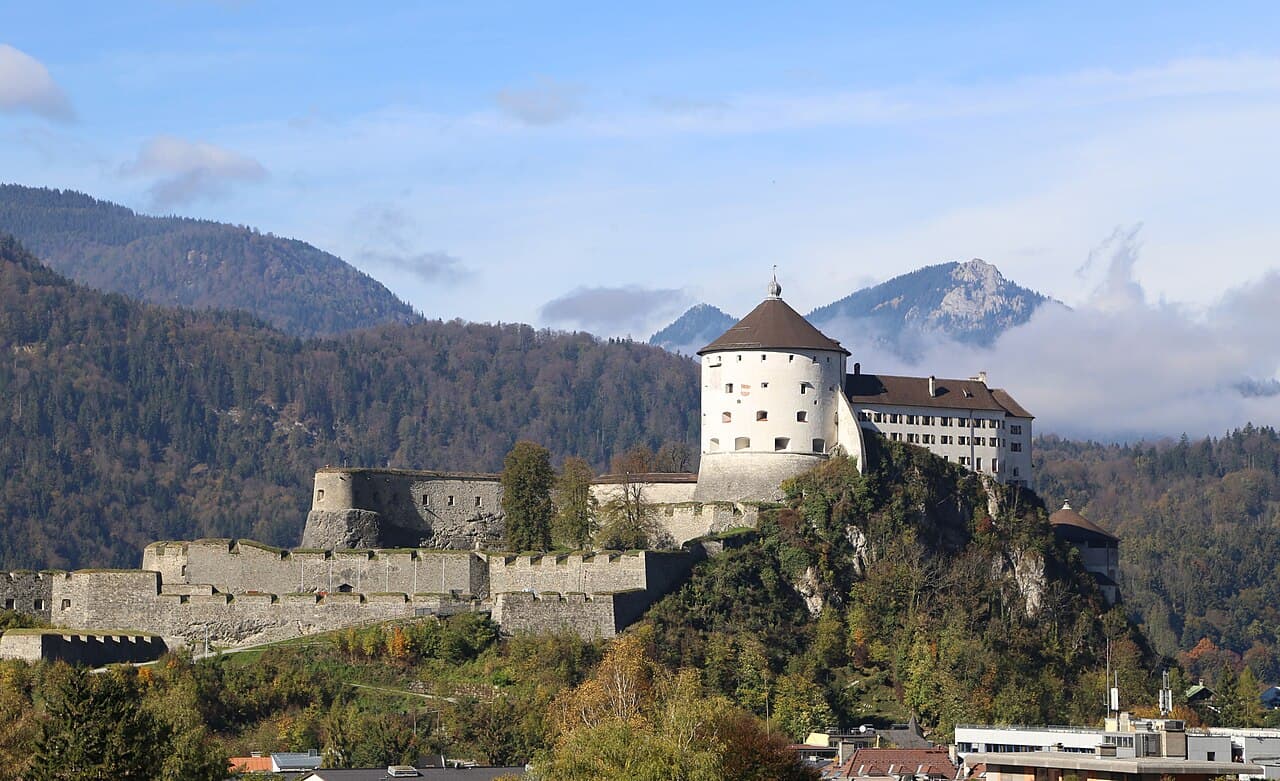
Kufstein Fortress stands as a monumental symbol of Tyrol's rich medieval heritage. Perched on the summit of the Festungsberg hill at about 500 metres above sea level, it dominates the town of Kufstein in Austria. This hill castle was strategically positioned to control access from the Alpine foothills into the Inntal valley, underscoring its military and administrative importance throughout history.
Originally constructed in the early 13th century, the fortress is first documented in 1205 as "Castrum Caofstein" when it was under the ownership of the bishops of Regensburg. Over the centuries, Kufstein Fortress evolved architecturally and functionally, reflecting the shifting political and military landscape of the region. Its role as a defensive stronghold, prison, and cultural monument illustrates a complex history intertwined with the power struggles between Bavaria, Tyrol, and the Habsburg dynasty.
Historical significance and political role
The fortress's location made it a coveted asset, often described as the "key to Tyrol" due to its control over vital Alpine passes. Initially, the bishops of Regensburg fortified the site to assert ecclesiastical influence and secure territorial boundaries. In 1415, Louis VII, Duke of Bavaria, known as Louis the Bearded, undertook major reinforcement efforts, anticipating conflicts with the rising Habsburg power.
One of the most pivotal moments in Kufstein's history occurred during the Landshut War of Succession in 1504. The fortress was besieged and captured by Emperor Maximilian I, who recognized its strategic value. Between 1518 and 1522, Maximilian commissioned the construction of the imposing massive round tower, significantly enhancing the fortress's defenses. These upgrades reflected the transition from medieval fortifications to early modern military architecture, adapting to the advent of artillery warfare.
The fortress changed hands multiple times during the turbulent 18th and early 19th centuries. It was seized by Bavarian forces in 1703 during the War of the Spanish Succession but was returned to Austrian control in 1814 following the Napoleonic upheavals. The Peace of Pressburg in 1805 briefly placed Kufstein under Bavarian rule again, illustrating its contested status in European power politics.
Architectural features and defensive structures
Kufstein Fortress encompasses an extensive complex covering approximately 24,000 square meters atop the Festungsberg. The fortress's architecture showcases layers of construction from the High Medieval period through the early modern era. Its most distinctive feature is the massive round tower built under Maximilian I, designed to withstand cannon fire and serve as a formidable lookout.
The fortress's defensive layout includes thick curtain walls, multiple battlements, and strategically positioned towers for surveillance and defense. A notable internal feature is the casemate tunnel, a fortified passageway that provided shelter and facilitated movement during sieges. The fortress also contains a deep well approximately 60 meters deep, ensuring a reliable water supply during prolonged attacks.
Among the towers, the Bürger Tower is unique for housing the world's largest open-air organ. Installed originally in 1931 and expanded in 2009, this musical instrument overlooks the valley, serving as a poignant memorial to victims of war through daily performances.
Cultural transformation and modern use
Following its military and penal use, Kufstein Fortress has undergone significant cultural transformation. Since 1924, it has been owned by the city of Kufstein and leased to private entities since 1996 for preservation and public engagement. The fortress now hosts the City Museum of Kufstein, which occupies the former barracks and showcases archaeological finds from the region, including Bronze Age artifacts and Stone Age objects from the nearby Tischofer Cave.
The fortress grounds also serve as a cultural venue, featuring concerts, art exhibitions in the Kaiserturm tower, and an annual knight festival with medieval-themed events and reenactments. The installation of a mobile roof over the Josefsburg area since 2005 enables year-round activities regardless of weather.
Visitors can access the fortress via the Festungsbahn funicular railway, which provides panoramic views of the town and surrounding landscape. The fortress's restaurant offers medieval-style cuisine, enhancing the immersive historical experience for guests.
Prison history and political significance
During the Austro-Hungarian Empire, Kufstein Fortress gained notoriety as a prison for political dissidents, particularly Hungarian revolutionaries and intellectuals. Notable prisoners included Ferenc Kazinczy, detained around 1799-1800, Gregor Czuczor in the early 1850s, and Sándor Rózsa between 1859 and 1865. This chapter of the fortress's history underscores its role in the political repression of nationalist movements within the empire.
Heritage status and preservation efforts
Kufstein Fortress is recognized as a cultural heritage monument of great significance. It is protected under the Hague Convention, reflecting its importance as a historical site and architectural treasure. Ongoing preservation efforts balance maintaining the fortress's structural integrity with adapting it for contemporary cultural use.
The fortress's combination of medieval and early modern architecture, along with its layered history of military, political, and cultural functions, makes it a key destination for visitors interested in Tyrolean history and fortress architecture.
Frequently asked questions (FAQ)
- How do I get to Kufstein Fortress from the town center?
- Visitors can reach Kufstein Fortress by ascending on foot via marked paths or by taking the Festungsbahn funicular railway, which offers a scenic and convenient route from the town center to the fortress entrance.
- What are the main historical periods represented in Kufstein Fortress's architecture?
- Kufstein Fortress features architectural elements from the High Medieval period through early modern times, including a massive round tower built under Emperor Maximilian I in the early 16th century.
- Is Kufstein Fortress wheelchair accessible?
- While the fortress has some accessible areas, the historic terrain and steep paths limit full wheelchair access. Visitors with mobility concerns are advised to check with the fortress management for specific accommodations.
- When is the best time to visit Kufstein Fortress for events and festivals?
- The annual knight festival typically takes place in the summer months, offering reenactments and concerts. Visiting during this time provides a vibrant cultural experience alongside the historical tour.
- Are guided tours available at Kufstein Fortress?
- Guided tours are offered regularly and provide in-depth insights into the fortress's history, architecture, and cultural significance. Visitors can check the official website or visitor center for schedules.
- What can I see at the City Museum inside Kufstein Fortress?
- The City Museum displays archaeological artifacts from the Bronze Age and Stone Age, including items from the nearby Tischofer Cave, along with exhibits on the fortress's military and political history.
- Can I attend concerts or cultural events at Kufstein Fortress?
- Yes, the fortress hosts concerts, art exhibitions, and cultural events throughout the year, including performances on the open-air organ in the Bürger Tower.
Photo gallery

Information
Opening hours
10:00-17:00, daily
Ticket prices
€7 adult, €4 child
Current owner
City of Kufstein
Website
Visit websiteSources & official resources
Verify the information above using these authoritative references.
Loading map...
Visitor reviews
No reviews yet. Been here? Write the first review and help other travelers!
Write the first reviewVisited this castle? Share your experience
Your review helps other travelers and adds first-hand knowledge to our encyclopedia.