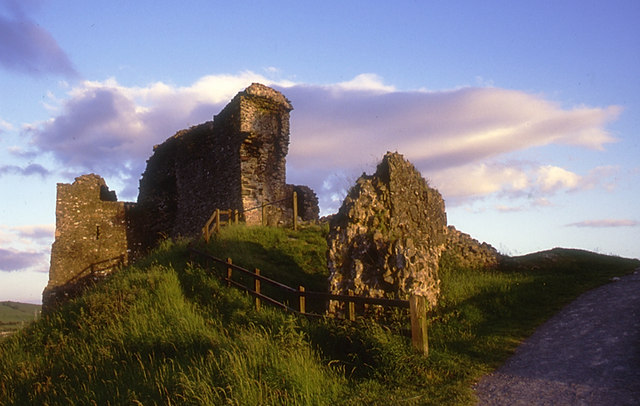
Castle Howe
Castle Howe stands as a significant Norman motte-and-bailey fortress overlooking the historic town of Kendal in Westmorland, England. Constructed in 1092, it represents the earliest castle in Kendal and a pivotal element in the Norman efforts to consolidate control over the region during the late 11th century. This castle embodies the strategic military architecture typical of the Norman conquest period, designed to assert dominance and provide defense in newly acquired territories.
The strategic importance of Castle Howe
The castle was built during a period when the Normans were extending their influence northwards, aiming to subjugate the lands of Westmorland. The establishment of Castle Howe was part of this broader military campaign. The site was chosen for its commanding views over Kendal and the surrounding landscape, allowing for effective surveillance and control. The castle's location on a natural rise made it an imposing feature and a deterrent to potential rebellions.
Architectural features and layout
The motte
The centerpiece of Castle Howe is its well-preserved motte, an artificial earth mound typical of Norman military design. The motte rises approximately 33 feet (10 meters) above the surrounding terrain and measures around 59 feet (18 meters) in diameter at the summit. At its base, the motte spans approximately 150 feet (46 meters) in diameter, demonstrating the substantial scale of the earthworks involved in its construction.
The motte would originally have supported a wooden or possibly stone keep, serving as the last line of defense and the residence of the lord or garrison commander. Although no standing keep remains today, the earthworks clearly define the original structure's footprint.
The bailey and defensive works
To the east of the motte lies the bailey, an enclosed courtyard typical of motte-and-bailey castles. The bailey at Castle Howe is roughly triangular in shape and was originally surrounded by a defensive palisade and ditch, which would have provided additional protection for the castle’s inhabitants and their livestock.
Today, the bailey area has been transformed into a public park and bowling green, but the earthworks still mark the perimeter of the original fortifications. The surrounding ditches and embankments remain visible, offering insight into the castle’s defensive layout.
Historical context and ownership
The castle’s construction is closely linked to Ivo de Taillebois, a Norman nobleman who was granted the Barony of Kendal around 1092. Ivo was rewarded for his military support to the Norman cause with extensive lands that included parts of present-day Yorkshire, Lancashire, and Cumbria. Castle Howe served as a symbol of his authority and a military stronghold to secure his holdings.
Although the castle itself was primarily a military installation, it played a role in the administration and control of the Barony of Kendal during the turbulent years following the Norman conquest of England.
Preservation and current status
Today, Castle Howe is classified as a partially preserved motte-and-bailey castle. While no significant masonry structures survive, the earthworks remain remarkably intact. The motte and bailey provide a clear example of Norman defensive architecture and are an important heritage site in Kendal.
The site is accessible to the public as a park, offering visitors the opportunity to explore the impressive earthworks and appreciate the castle’s historical significance within the landscape of northern England.
Castle Howe’s legacy in Norman military architecture
Castle Howe exemplifies the typical Norman strategy of rapid castle construction using earth and timber to establish control over newly conquered areas. Its motte-and-bailey design was a common feature of early Norman castles, combining a raised defensive mound with an enclosed courtyard to provide both protection and functional space.
The castle’s enduring earthworks offer valuable insight into medieval military engineering and the Norman approach to territorial governance. As Kendal’s first castle, Castle Howe laid the foundation for the town’s development and remains a key historical landmark in the region.
Frequently asked questions (FAQ)
- What are the opening hours of Castle Howe?
- Castle Howe is open to visitors from 10 AM to 5 PM daily, with extended hours during the summer months. It's advisable to check the official website for any seasonal changes or special closures.
- Can I visit Castle Howe with a wheelchair?
- Yes, Castle Howe is committed to accessibility and offers wheelchair access to the main areas of the castle. However, some historical features may have limited access due to their age and design.
- When was Castle Howe built?
- Castle Howe was constructed in the 12th century and has been a significant part of Kendal's history ever since. The castle has witnessed various historical events and has undergone several renovations over the years.
- What is the historical significance of Castle Howe?
- Castle Howe is one of the oldest structures in Kendal and serves as a symbol of the town's medieval heritage. It played a pivotal role in local governance and defense during its prime.
- Is it possible to buy tickets online for Castle Howe?
- Yes, tickets for Castle Howe can be purchased online through the official website, which is a convenient option to avoid queues at the entrance. Online purchases often include discounts or special offers for families and groups.
- What is the best time to visit Castle Howe?
- The best time to visit Castle Howe is during the spring and early autumn months when the weather is mild and the surrounding landscapes are particularly beautiful. Additionally, visiting during weekdays can provide a quieter experience.
- Are there any nearby attractions to Castle Howe?
- Yes, nearby attractions include the Kendal Museum and the picturesque River Kent, perfect for a scenic walk. Visitors can also explore the charming town of Kendal, which offers a variety of shops, cafes, and historical sites.
- What are the ticket prices for Castle Howe?
- Ticket prices for Castle Howe are generally £5 for adults and £2 for children, with family tickets available at a discounted rate. Special rates may apply for seniors and students, so it's best to check the website for the latest pricing information.
Information
Loading map...
Visitor reviews
No reviews yet. Been here? Write the first review and help other travelers!
Write the first reviewVisited this castle? Share your experience
Your review helps other travelers and adds first-hand knowledge to our encyclopedia.