Castle Gwynn

Castle gwynn: a fairytale castle in tennessee
Post-Renaissance (17th–18th c.)
Partially Preserved

Castle Gwynn is a unique and enchanting fairytale castle located in Arrington, Tennessee. This partially complete castle is the realization of a lifelong dream by photographer and architect Mike Freeman, who began envisioning the castle as a high school student in 1970. Inspired by the picturesque Castell Coch in Wales, Castle Gwynn features two distinctive towers and embodies the romantic architectural style of medieval castles, making it a striking landmark in the Tennessee landscape.

The origin and vision behind castle gwynn

The conception of Castle Gwynn began when Mike Freeman, then a high school architecture student, drafted plans for a dream home in the form of a castle. Over decades, through dedication and hard work, Mike and his wife Jackie have brought this vision closer to reality. The castle is not only a private residence but also a cultural venue that opens its doors to the public during special events.

The Freemans' commitment to their dream is evident in the castle's ongoing construction and the care taken to emulate the romantic charm of its Welsh inspiration. This personal project reflects a deep passion for medieval architecture and historical aesthetics, blending fantasy with real-world craftsmanship.

Architectural inspiration and features

Castle Gwynn draws its architectural inspiration primarily from Castell Coch, a 19th-century Gothic Revival castle in Wales known for its whimsical and romantic design. This influence is visible in Castle Gwynn's twin towers, battlements, and the fairytale-like silhouette that stands out against the Tennessee countryside.

While the castle remains partially complete, its design incorporates traditional medieval elements such as stone walls, turrets, and arched windows. These features contribute to the castle's authentic medieval appearance, despite its modern construction timeline.

Castle gwynn and the tennessee renaissance festival

Castle Gwynn plays a significant role in the Tennessee Renaissance Festival, a popular annual event held on the castle grounds. During the festival, visitors can explore the castle through guided tours, gaining insight into its architectural details and the story behind its creation.

The festival itself celebrates medieval and Renaissance culture with period costumes, performances, crafts, and food, making Castle Gwynn a fitting and atmospheric centerpiece. The castle’s presence enhances the immersive experience for attendees, blending historical fantasy with community celebration.

Visitor information and cultural impact

Visitors to Castle Gwynn can enjoy tours on weekends in May and Memorial Day, coinciding with the Tennessee Renaissance Festival. The Freemans generously share their home with the public during these times, offering a rare glimpse into a personal castle project inspired by historical architecture.

Located at 2124 Newcastle Rd, Arrington, Tennessee, Castle Gwynn has become a beloved local landmark and a testament to the enduring appeal of castle architecture. It highlights how medieval design continues to inspire modern builders and enthusiasts, bridging centuries of architectural tradition.

The ongoing journey of castle gwynn

Although still under construction, Castle Gwynn represents a remarkable example of individual passion and dedication to architectural dreams. Mike and Jackie Freeman's journey from a high school student's sketch to a functioning castle and cultural venue is inspiring for castle enthusiasts and architects alike.

The castle’s story is also a reminder of the creative possibilities that arise when historical inspiration meets modern ambition. As Castle Gwynn continues to evolve, it remains a symbol of imagination, craftsmanship, and the celebration of medieval heritage in the United States.

Frequently asked questions (FAQ)

When can I visit Castle Gwynn?
Castle Gwynn is open to the public on weekends in May and on Memorial Day, coinciding with the Tennessee Renaissance Festival.
What architectural style is Castle Gwynn built in?
Castle Gwynn is inspired by the Romantic Neo-Gothic style, particularly drawing from the design of Castell Coch in Wales.
Can I tour the inside of Castle Gwynn during the Renaissance Festival?
Yes, guided tours of Castle Gwynn are available during the Tennessee Renaissance Festival, offering insights into its architecture and history.
Where is Castle Gwynn located?
Castle Gwynn is located at 2124 Newcastle Rd, Arrington, Tennessee, 37014, United States.
Is Castle Gwynn a fully completed castle?
No, Castle Gwynn is a partially complete castle that continues to be developed by its owners.

Information

Hill Castle

Current owner

Private owner

Address

2124 Newcastle Rd, Arrington, Tennessee, 37014, United States

Loading map...

Visitor reviews

No reviews yet. Been here? Write the first review and help other travelers!

Write the first review

Visited this castle? Share your experience

Your review helps other travelers and adds first-hand knowledge to our encyclopedia.
Write a review

(5/5)

0/2000 characters

Your review will be visible after admin approval

Nearby castles

35 km
Fort Negley — United States of America castle

Fort Negley

Nashville, United States of America

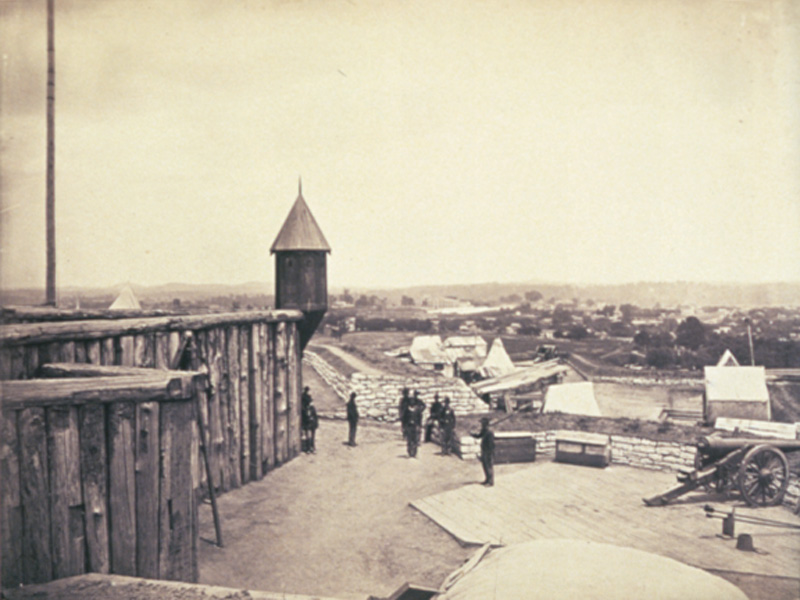
Fort Negley is a significant bastioned fortress constructed by Union forces during the American Civil War following their capture of Nashville, Tennessee. Situated about 2 miles (3.2 km) south of downtown Nashville, it was the largest inland fortification built in the United States during the conflict, reflecting the strategic importance of Nashville as a transportation and supply hub. Historical context and construction After Union troops took control of Nashville in early 1862, Confederate forces were pushed out of the city, prompting the Union army to establish a strong defensive position to protect their hold. Fort Negley was constructed rapidly using mainly limestone and earthworks, with thousands of enslaved African Americans and free blacks forced to work on its building under harsh conditions. The fort was named after Union General James S. Negley, who played a prominent role in the early battles around Nashville. The design of Fort Negley incorporated a bastioned fortress layout, which included angled walls and protruding bastions to allow defenders to cover all approaches with overlapping fields of fire. This design was typical of mid-19th-century military engineering aimed at countering artillery and infantry assaults. The fort's walls were reinforced with thick earthen embankments to absorb cannon fire, and it featured multiple artillery placements. Architectural features and layout Fort Negley was built primarily from local limestone and earth, forming a robust defensive structure. The fort's layout consisted of a large, irregular polygon with bastions at the corners, enabling enfilading fire along the walls. The interior contained barracks, powder magazines, and artillery platforms. The fort's walls varied in height but were generally substantial enough to provide effective protection against enemy attack. The fort was surrounded by a ditch or moat, adding an additional obstacle for any attacking forces. Access was controlled through fortified gates, and the interior space was organized to support a garrison of several hundred soldiers. The artillery placements included positions for large-caliber cannons capable of defending the approaches to Nashville. Military significance and use Fort Negley served as a key defensive stronghold for Union forces in the Nashville area throughout the Civil War. Its strategic location allowed Union troops to control vital railroads and supply lines, preventing Confederate attempts to retake the city. The presence of the fort helped secure Nashville as a major Union base of operations in the Western Theater. Although the fort never faced a direct assault, its mere existence as a formidable fortification deterred Confederate forces from launching significant attacks in the immediate vicinity. It also functioned as a training and staging area for Union troops preparing for campaigns further south. Post-war history and preservation After the Civil War ended in 1865, Fort Negley fell into disuse and gradually deteriorated. Over time, much of the fort was buried or obscured by urban development as Nashville expanded. In the 20th century, efforts were made to preserve and restore parts of the fort as a historic site. Today, Fort Negley is managed as a public park and historic landmark. Archaeological excavations and restoration projects have uncovered portions of the walls and bastions, allowing visitors to gain insight into Civil War military engineering. Interpretive signage and guided tours help explain the fort's history and significance. The site also serves as a memorial to the enslaved African Americans who were forced to build the fort under brutal conditions, highlighting an important and often overlooked aspect of Civil War history. Visiting Fort Negley Visitors to Fort Negley can explore the remains of the fort's walls, bastions, and earthworks. The park features walking trails, informational exhibits, and panoramic views of Nashville. It offers a unique opportunity to connect with the city's Civil War heritage and understand the military architecture of the period. Fort Negley is accessible year-round, with no admission fee. The site is suitable for history enthusiasts, students, and families interested in American Civil War history and military fortifications.

Post-Renaissance (17th–18th c.)
Details
60.8 km

Gallatin Castle

Gallatin, United States of America

Gallatin Castle, also known as Castle Boyle, is a distinctive private residence located in Gallatin, Tennessee. This remarkable home is designed to evoke the grandeur and romanticism of traditional European castles, standing prominently on a hilltop that offers commanding views of the surrounding landscape. The castle reflects the vision and passion of its owners, Ron and Linda Boyle, serial entrepreneurs who drew inspiration from their extensive travels across Europe and the world. The Boyles were particularly captivated by the iconic Neuschwanstein Castle in Germany, renowned for its fairy-tale appearance and elaborate Romanesque Revival and Gothic Revival architectural elements. Motivated by this inspiration, they acquired land in Gallatin to create their own castle-style residence. The resulting structure covers approximately 12,000 square feet and features numerous spires, towers, and castellations that contribute to its castle-esque silhouette. Architectural design and features Gallatin Castle's design incorporates key elements typical of European castles, including turrets with conical roofs, battlement-style parapets, and stone-like exterior finishes that lend an authentic medieval appearance. The castle's multiple towers rise above the main structure, creating an impressive skyline that echoes the romantic ideals of castle architecture. The castle's layout, while private, is known to blend historic castle motifs with modern living requirements, featuring spacious interiors suitable for contemporary residential use. The exterior's attention to detail in castellations and ornamental spires enhances the fantasy castle aesthetic. Exterior materials and craftsmanship The exterior walls are finished with materials that mimic traditional stone masonry, providing a durable and authentic facade. The turrets and rooflines are crafted to resemble medieval fortifications, with careful attention to historical architectural details such as corbelled battlements and arrow slits incorporated as decorative elements rather than functional defenses. Historical and cultural context Although Gallatin Castle is a contemporary construction rather than a medieval fortress, it exemplifies the lasting influence of European castle architecture on modern building projects. Unlike castles built for defense during the Middle Ages, this castle was designed as a luxurious private residence, emphasizing aesthetic grandeur over military function. The castle's location in Gallatin, Tennessee, adds a unique American dimension to this architectural homage. It stands as a notable landmark in the region, attracting interest for its unusual style and the story of its creation by private individuals rather than historical nobility or military orders. Cultural significance and public interest Gallatin Castle has gained regional attention through local media and online platforms, highlighting the owners' dedication to replicating the romantic charm of European castles. It serves as an example of how castle-inspired architecture continues to inspire private residences far beyond Europe. Private ownership and visitor information As a private residence, Gallatin Castle is not open to the public for tours or interior visits. The owners, Ron and Linda Boyle, request that their privacy be respected. Photography is generally limited to exterior views from public roads or nearby vantage points. Visiting tips Visitors interested in viewing the castle can do so from public areas around Gallatin, where the castle's distinctive silhouette is visible. It is advisable to respect private property boundaries and local regulations when photographing or approaching the site. Architectural inspiration and legacy The creation of Gallatin Castle highlights the enduring appeal of romantic neo-gothic and Romanesque Revival styles in contemporary architecture. The Boyles' project demonstrates how elements such as spires, towers, and battlements can be adapted to modern residential living, creating a unique fusion of fantasy and functionality. This castle stands as a testament to the global influence of iconic European castles like Neuschwanstein, inspiring individuals to bring historic architectural ideals into personal spaces. It is a distinctive landmark in Tennessee that celebrates the blend of old-world charm with modern lifestyle.

Contemporary (20th–21st c.)
Details
133.1 km

Ryan's Castle B&B

Sturgeon County, United States of America

Ryan's Castle B&B is an extraordinary example of medieval-inspired architecture nestled in the natural landscape of Alberta, Canada. This unique property stands out as a remarkable fusion of old-world European castle aesthetics and modern luxury hospitality. Designed to resemble a medieval castle, the exterior features a wealth of crenellations and arched gothic-style windows, evoking the grandeur and defensive motifs typical of Gothic castle architecture. This striking façade is complemented by the castle's secluded setting on 160 acres of wetland, providing guests with an exclusive and tranquil environment far from urban bustle. The castle offers an immersive experience reminiscent of the grandeur associated with historic European nobility. Inside, the rooms are lavishly decorated to create an atmosphere of luxury and comfort. Guests can enjoy a well-appointed bedroom styled for a king and queen, complete with elegant furnishings that enhance the old-world charm. A standout feature is the large indoor private swimming pool, a rare amenity that adds a modern touch of indulgence to the castle experience. Architectural design and features The design of Ryan's Castle B&B is heavily influenced by Gothic revival elements, evident in the use of pointed arches and crenellated battlements that mimic fortifications from the medieval period. The castle's exterior walls are crafted to evoke the solidity and imposing presence of traditional stone castles, though the construction materials and techniques reflect contemporary building standards suitable for a comfortable residence and guest accommodation. The castle is accessed via a long driveway that crosses through wetlands, enhancing the sense of seclusion and security. This approach, guarded by locked gates, ensures privacy and exclusivity for visitors. The setting amidst wetlands also adds a unique natural ambiance, blending architectural grandeur with serene natural surroundings. Historical and cultural context While Ryan's Castle B&B is a modern construction rather than a historical fortress, it draws inspiration from the medieval castles of Europe and the romanticized vision of aristocratic life exemplified by estates like Downton Abbey. This thematic approach appeals to guests seeking a distinctive and immersive lodging experience that transports them to an era of nobility and chivalry. Located just northwest of St. Albert, the castle is strategically positioned within easy reach of Edmonton, allowing visitors to explore urban attractions while enjoying the peaceful retreat of the castle grounds. Nearby amenities include numerous golf courses and fine dining options in St. Albert, enhancing the appeal for leisure travelers. Guest experience and amenities Guests at Ryan's Castle B&B benefit from a personalized and intimate stay, as the owners reside on-site and are available to provide attentive service. The accommodation emphasizes safety and security, with controlled access through locked gates and a private driveway. The indoor swimming pool offers a unique recreational feature uncommon in castle-themed lodgings. Additional services include the option for a candlelight dinner prepared by a chef, available upon request, which adds to the romantic and luxurious ambiance of the stay. The castle's design and amenities cater to those seeking a blend of historic charm and modern comfort, making it a standout choice for visitors in the Edmonton area. Location and accessibility Ryan's Castle B&B is located at 55018 Range Road 265 in Sturgeon County, Alberta, Canada. The property is approximately 15 minutes northwest of St. Albert and about a 25-minute drive from the West Edmonton Mall, one of the largest shopping and entertainment complexes in North America. The surrounding area offers a mix of natural beauty and recreational opportunities, including wetlands and golf courses, contributing to a well-rounded visitor experience. Visitors can reach the castle via the main road, with the only access point secured by locked gates, ensuring privacy and exclusivity. The castle's unique combination of medieval aesthetics, modern luxury, and natural setting makes it an exceptional destination for travelers seeking a distinctive lodging experience near Edmonton.

Details

