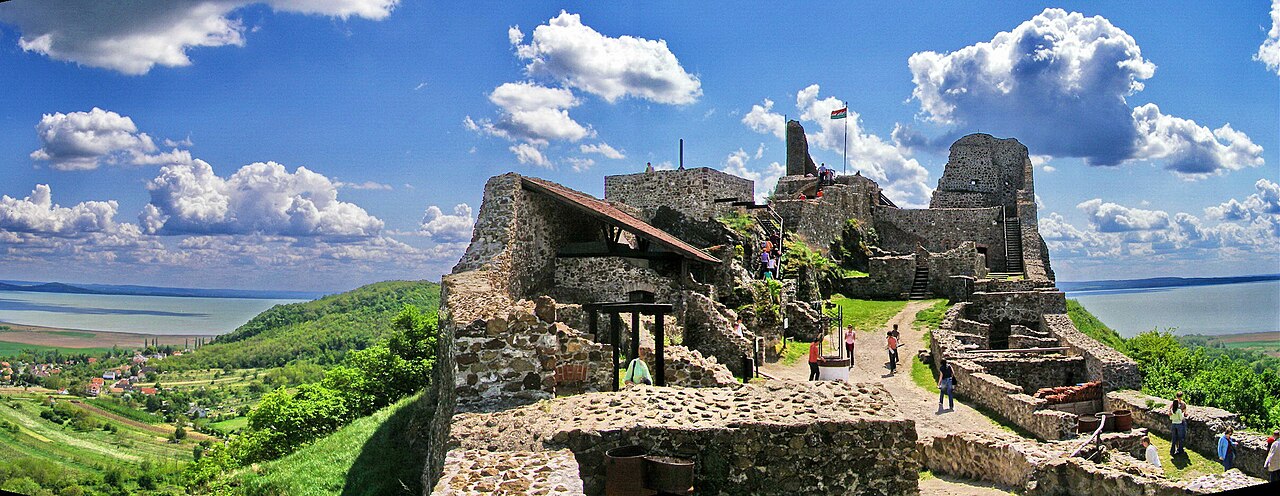
Castle Fácános, located in Fonyód, Hungary, stands as a significant relic of the turbulent 16th century when the region faced repeated Ottoman incursions. This hill castle was strategically constructed to fortify the area and protect local inhabitants during a period marked by conflict and shifting power dynamics. The castle's history is deeply intertwined with the early settlement of Fonyód, originally under the ownership of the Lád clan following the Hungarian conquest and later controlled by the Pannonhalma Abbey, reflecting its ecclesiastical ties.
The earliest documented mention of Castle Fácános dates to 1548, but the fortification efforts began earlier, around 1544, under the guidance of Boldizsár Lengyel, a nobleman from Lengyeltóti. He reinforced the existing Árpád-era church and its surroundings, creating what became known as the Lower Castle (Alsóvár). This transformation included the construction of protective walls and moats, a direct response to the Ottoman conquest of Buda in 1541, which heightened the need for robust local defenses.
Architectural features and fortifications
The castle's layout was a roughly 60 by 60-meter square enclosure, featuring a double-layered defense system comprising an outer and inner ward. This design was typical of medieval fortifications aimed at providing multiple lines of defense. The walls were primarily wooden palisades, supplemented by water-filled moats that served to slow and deter attackers. The main entrance faced what is now Szent István Street, controlled by drawbridges spanning the outer moat and connecting the outer and inner courtyards.
Within the inner ward, the foundational remains of the fortified Árpád-period church mark the castle's core. This stone foundation served as a refuge during sieges. Surrounding the church were thick defensive walls enclosing several wooden buildings, including a watchtower used for surveillance and early warning against enemy advances. Although the original wooden structures have largely decayed, reconstructions based on historical plans have provided insights into their original form.
Historical significance and military role
Castle Fácános was a vital defensive stronghold during the Ottoman-Hungarian conflicts. Under the command of Palonai Magyar Bálint, who inherited the fortress through marriage, the castle's fortifications were enhanced to withstand repeated Ottoman attacks. The castle successfully resisted several sieges until 1575, the year of Magyar Bálint's death and the castle's eventual capture and destruction by Ottoman forces.
The castle's importance is underscored by its inclusion in a detailed 1569-70 plan created by the imperial engineer Giulio Turco. This plan not only documented the castle's layout but later became instrumental in archaeological excavations conducted in the mid-20th century.
Archaeological excavations and preservation efforts
Between 1957 and 1959, archaeologist Jenő Fitz led excavations at the site, utilizing Giulio Turco's historic plans to accurately identify the castle's footprint and structural elements. These studies revealed the configuration of the moats, surviving wall footings, and the layout of the Lower Castle, enriching understanding of the castle's defensive architecture.
From the late 1950s until 2013, the site hosted the Fonyódi Hadijátékok, annual reenactments commemorating the castle's military history. Although these events have ceased, the wooden structures built for them remain on site, gradually succumbing to natural decay.
Current state and visitor experience
Today, Castle Fácános exists primarily as an archaeological site with visible earthworks and stone foundations that outline its former stronghold. Visitors can explore the remains of the fortified church, the moats, and the castle's general layout within a park setting that also serves as a playground. While the wooden reconstructions have deteriorated, the site offers a tangible connection to Hungary's 16th-century defensive heritage and the historical struggles against Ottoman expansion.
The castle's location on a hill provided strategic oversight of the surrounding landscape, a critical factor in its defensive capabilities. Its design reflects the adaptation of medieval fortification techniques to the challenges posed by the Ottoman threat, emphasizing layered defenses and controlled access points.
Architectural style and construction period
Castle Fácános is classified as a hill castle built during the high to late medieval period, specifically in the mid-16th century. Its construction incorporated traditional medieval defensive elements such as wooden palisades, moats, and a central fortified church, blending ecclesiastical architecture with military needs. The use of wood and earthworks, rather than extensive stone masonry, reflects the urgent and resource-conscious nature of fortifications built during this era of frequent conflict.
Historical context and ownership
The castle's history is closely linked to the broader geopolitical struggles in Hungary during the 16th century, particularly the Ottoman expansion following the fall of Buda. Ownership transitioned from noble families like the Lád clan and Lengyel family to ecclesiastical authorities such as the Pannonhalma Abbey, illustrating the intertwined secular and religious interests in regional defense.
Palonai Magyar Bálint's role in maintaining and enhancing the castle's defenses highlights the importance of noble leadership in local military organization. The castle's eventual fall in 1575 marked a significant moment in the Ottoman conquest of the region, ending its active military role but leaving a lasting historical legacy.
Frequently asked questions (FAQ)
- How do I get to Castle Fácános?
- Castle Fácános is conveniently located in Hungary, easily accessible by car or public transport. If driving, follow the main roads leading to the town, and look for signs directing you to the castle. Public transport options include local buses that stop nearby, making it simple for visitors to reach the site.
- What is the historical significance of Castle Fácános?
- Castle Fácános dates back to the medieval period and played a crucial role in the region's defense against invasions. It has witnessed numerous historical events, including battles and royal gatherings, making it a significant landmark in Hungarian history. The castle reflects the architectural styles of its time, offering insights into the past.
- When was Castle Fácános built?
- Castle Fácános was constructed in the late 13th century, with subsequent modifications made in the following centuries. Its design showcases the evolution of medieval architecture in Hungary, with features that reflect both defensive and residential purposes. The castle has been preserved to provide visitors with a glimpse into its storied past.
- Can I take guided tours of Castle Fácános?
- Yes, guided tours are available at Castle Fácános, providing an in-depth look at its history and architecture. These tours are led by knowledgeable guides who share fascinating stories and insights about the castle and its surroundings. It's recommended to check the schedule in advance, as tours may vary seasonally.
- Why is Castle Fácános a popular tourist destination?
- Castle Fácános attracts visitors due to its rich history, stunning architecture, and beautiful surroundings. The castle offers breathtaking views of the landscape, making it a picturesque spot for photography and exploration. Additionally, its accessibility and engaging tours enhance the visitor experience, drawing history enthusiasts from near and far.
- Is it possible to visit Castle Fácános year-round?
- Yes, Castle Fácános is open to visitors year-round, although hours may vary by season. It's advisable to check the official website for the most current opening hours and any special events that may affect accessibility. Visiting during different seasons also offers a unique perspective on the castle's beauty.
- What are the ticket prices for Castle Fácános?
- Ticket prices for Castle Fácános are typically affordable, making it accessible for visitors of all ages. Discounts may be available for children, seniors, and groups, so be sure to inquire about these options at the ticket office. It's a good idea to purchase tickets in advance during peak tourist season to avoid long lines.
- What is the best time to visit Castle Fácános?
- The best time to visit Castle Fácános is during the spring and early autumn months when the weather is mild and the surrounding nature is in full bloom. These seasons provide ideal conditions for exploring the castle grounds and enjoying outdoor activities. Additionally, visiting during weekdays can help you avoid large crowds.
- Are there any nearby attractions to visit with Castle Fácános?
- Yes, there are several nearby attractions to explore alongside Castle Fácános, including scenic hiking trails and quaint villages rich in culture. Visitors can also enjoy local restaurants offering traditional Hungarian cuisine. Combining your visit with these nearby sites can enhance your overall experience in the region.
Information
Website
Visit websiteSources & official resources
Verify the information above using these authoritative references.
Loading map...
Visitor reviews
No reviews yet. Been here? Write the first review and help other travelers!
Write the first reviewVisited this castle? Share your experience
Your review helps other travelers and adds first-hand knowledge to our encyclopedia.