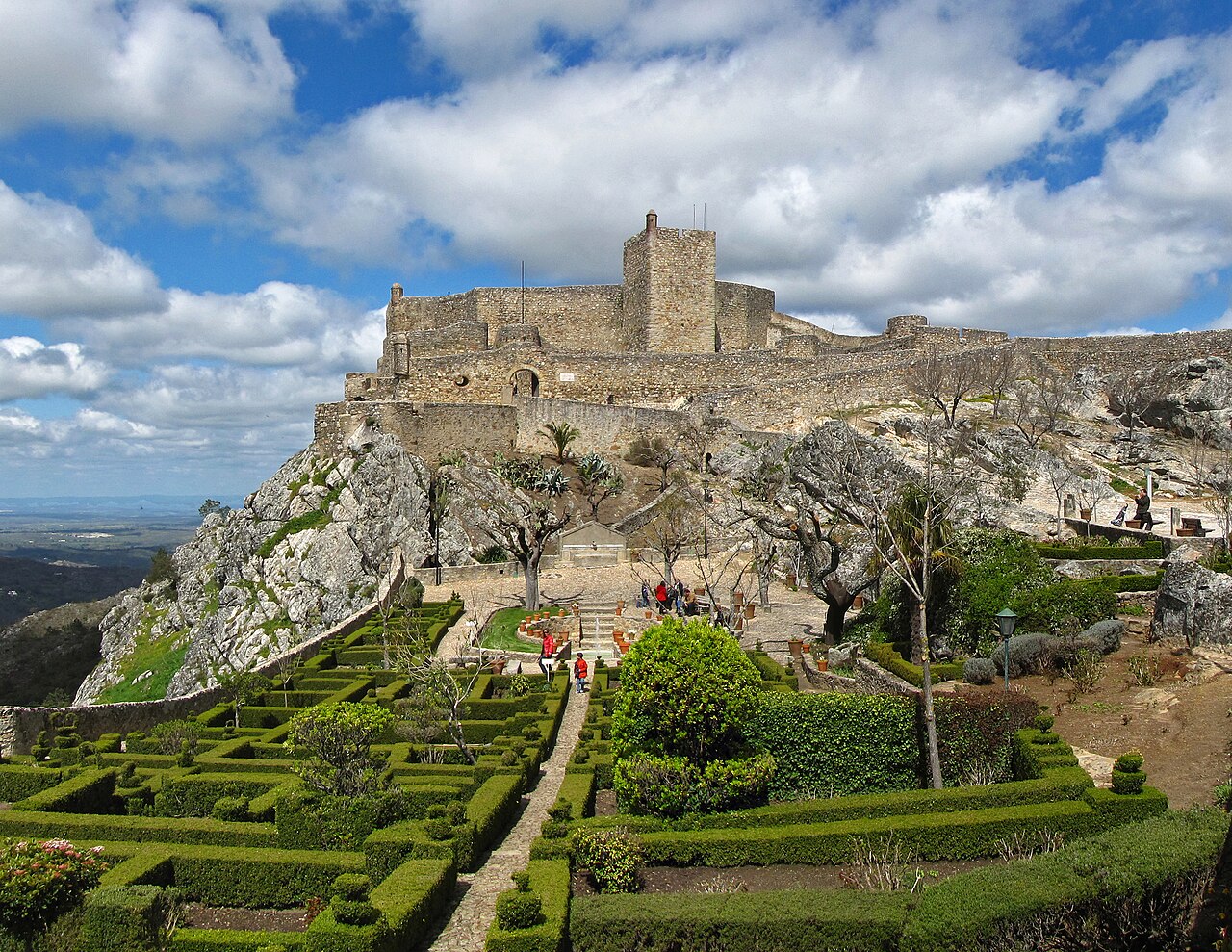
Castillo de Valencia de Alcántara
The Castillo de Valencia de Alcántara stands as a significant hill castle located in the historic town of Valencia de Alcántara, Spain. Established around 1220, this fortress was born from the turbulent era of the Christian Reconquista, when García Sánchez, master of the military religious Order of Alcántara, seized the site under the command of King Alfonso IX. Its strategic location near the border between Spain and Portugal, known as La Raya, made it a critical defensive stronghold throughout the Middle Ages and into the early modern period.
The castle's military importance is underscored by its frequent involvement in conflicts between the Spanish and Portuguese kingdoms from the 13th century through the 17th and 18th centuries. Control of the fortress oscillated multiple times as a result of these border disputes, reflecting the shifting political landscape of the Iberian Peninsula.
Medieval origins and architectural layout
The original fortress featured a roughly quadrangular layout with irregular sides, adapting to the natural terrain. By the 16th century, the castle was characterized by four principal towers at each corner: the Torre del Homenaje, Torre de las Barreras, Torre del Corral del Concejo, and Torre Nueva. These towers served as vital defensive and observation points, providing a stronghold against invaders.
A unique feature of the castle was the Torre del Homenaje, initially constructed as an albarrana tower. This type of tower was detached from the main walls but connected by a wall or bridge, allowing defenders enhanced flexibility and protection. Subsequent modifications integrated this tower fully into the castle's main walls, positioning it centrally along the fortress's most important flank.
Additionally, a fifth tower, the Torre del Caracol, guarded the main entrance, reinforcing the castle's frontline defenses and controlling access to the interior. This arrangement was crucial for repelling attackers and maintaining security.
Fortifications and military evolution
As military technology and tactics evolved, particularly during the 17th and 18th centuries, the castle's defenses were significantly upgraded. The fortress saw the addition of bastions and ravelins—projecting defensive structures designed to cover walls and eliminate blind spots. These enhancements were primarily located along the northwest and southwest faces of the fortress, allowing defenders to monitor and repel enemy advances more effectively.
Behind these new bastions, platforms were constructed to mount artillery, reflecting the adaptation of the castle to the era's increasing use of gunpowder weaponry. These modifications were part of a broader effort to modernize the fortress and maintain its strategic relevance.
Damage and restoration efforts
Despite its formidable defenses, the castle suffered serious damage during the Portuguese Restoration War (1641–1664), a conflict that saw numerous sieges and assaults on the fortress. The prolonged warfare left the castle largely in ruins by the end of hostilities.
Recognizing the fortress's ongoing strategic value, King Charles III initiated restoration and modernization campaigns between 1765 and 1766. These efforts included expanding existing bastions and adapting the structure to contemporary military architectural standards. Military engineers such as Juan de Landaeta and Juan de Subreville played key roles in documenting and executing these improvements.
The castle and its urban context
The town surrounding the castle was historically enclosed by defensive walls dating from the 16th century. Notable gates such as the Puerta de Juan Durán (later renamed Puerta de las Huertas) marked entry points into the walled town. These fortifications defined the medieval urban perimeter and contributed to the overall defensive system.
Over time, as the town expanded beyond its original boundaries, these walls gradually fell into ruin and were dismantled. However, historic maps and documents, including the 1710 Atlas Massé and the 1724 plan by Juan de Landaeta, preserve the memory of these fortifications and their layout.
Religious and cultural elements
An important religious structure, the Iglesia de Rocamador, originally stood outside the castle's fortifications but was later enclosed within the expanded walls following the eighteenth-century modifications. This inclusion highlights the increasing complexity of the fortress and the need to protect key community buildings within its defenses.
Historical documentation and legacy
Extensive documentation about the castle survives in archives in both Spain and Portugal, including the Biblioteca Nacional de España and the Biblioteca de Ajuda in Lisbon. These materials provide detailed insights into the castle's architectural evolution, military significance, and the broader geopolitical context of the Iberian borderlands.
Photographic evidence and inscriptions found on-site further connect the fortress to its past inhabitants and underscore its role as a military bastion through centuries of conflict and change.
Today, the Castillo de Valencia de Alcántara remains a powerful symbol of frontier defense, embodying the layered history of a site that adapted through medieval, early modern, and 18th-century military architectural developments. Its ruins continue to attract historians, architects, and visitors interested in the complex history of Spanish-Portuguese relations and the evolution of fortification design.
Frequently asked questions (FAQ)
- When was the Castillo de Valencia de Alcántara built?
- The castle was established around 1220 during the Christian Reconquista under the command of King Alfonso IX and García Sánchez of the Order of Alcántara.
- What architectural features define the castle?
- The fortress features a quadrangular layout with four main towers at the corners, a fifth tower near the main gate, bastions, and ravelins added in the 17th and 18th centuries to adapt to evolving military technology.
- How did the castle's strategic importance affect its history?
- Located near the Spain-Portugal border, the castle was a focal point in numerous conflicts from the 13th to 18th centuries, changing hands multiple times and undergoing damage and restoration accordingly.
- Is the castle accessible to visitors today?
- The castle remains in ruins but is accessible to visitors interested in historical architecture and the military history of the Spanish-Portuguese border region.
- What restoration efforts have been made on the castle?
- Significant restoration and modernization were carried out between 1765 and 1766 under King Charles III, including expanding bastions and updating defenses to contemporary standards.
Information
Website
Visit websiteSources & official resources
Verify the information above using these authoritative references.
Loading map...
Visitor reviews
No reviews yet. Been here? Write the first review and help other travelers!
Write the first reviewVisited this castle? Share your experience
Your review helps other travelers and adds first-hand knowledge to our encyclopedia.