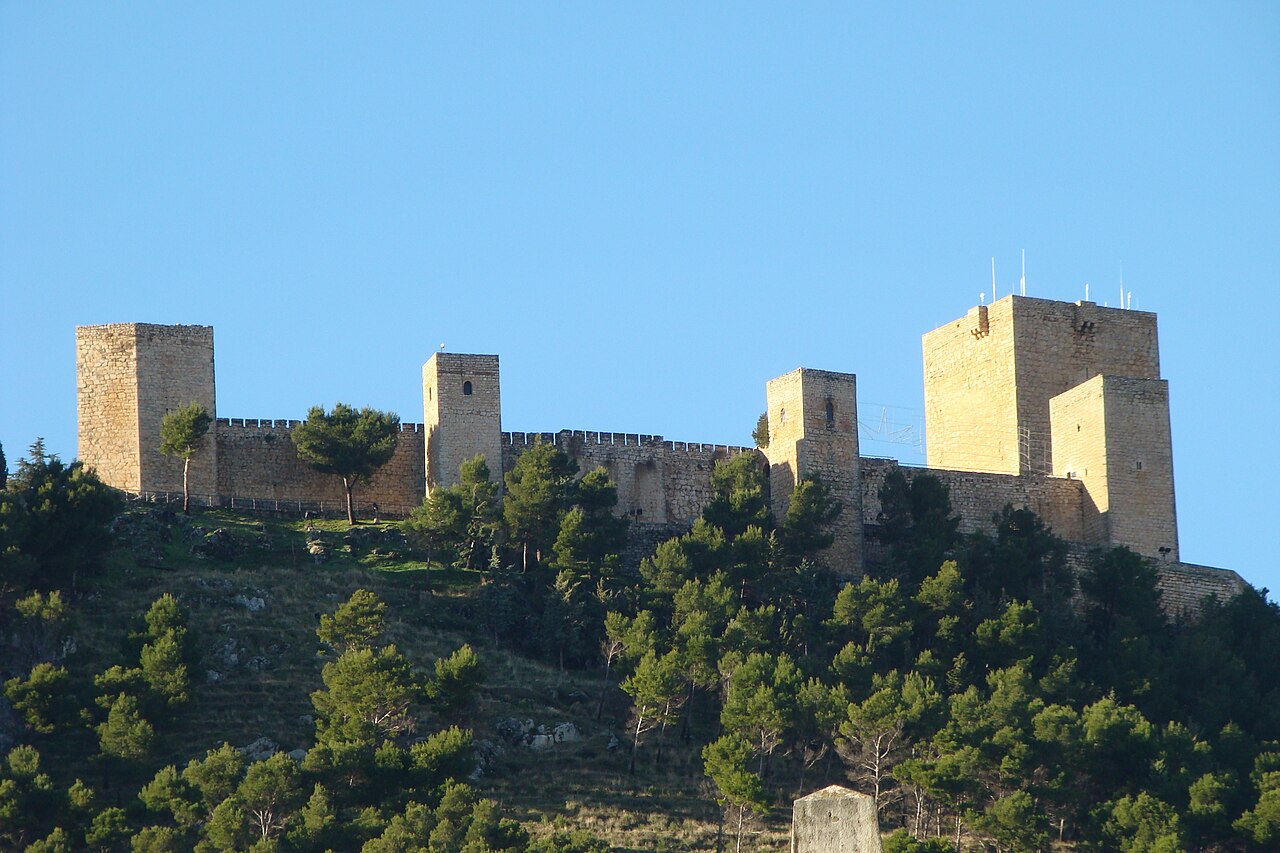
Castillo de Otíñar
The Castillo de Otíñar stands as a remarkable example of a medieval hill castle strategically positioned in the municipality of Jaén, Spain. Built primarily in the second half of the 13th century, this fortress played a crucial role in the Christian consolidation of Andalusia following the mid-1200s. Its location on a hill overlooking narrow mountain passes made it an essential stronghold for controlling access between Jaén and the Prebetic mountain range near Granada.
Following the Pact of Jaén in 1246, which established the border between the Kingdom of Castile and the Nasrid Kingdom of Granada, the castle emerged from what was once a modest agricultural village into a vital defensive outpost. The fortress was part of a broader defensive network centered on Jaén, designed to secure the frontier and provide early warning of enemy movements. It maintained visual communication with other fortifications, including the Torrebermeja watchtower, facilitating coordinated defense efforts across the region.
Historical context and strategic importance
The Castillo de Otíñar was constructed during a period marked by intense military and political activity as Christian forces expanded southward during the Reconquista. The castle's placement on a hillside took full advantage of the natural terrain, especially the steep eastern slopes, to enhance its defensive capabilities. This positioning allowed it to guard critical mountain passes that were vital for controlling movement between the interior of Castile and the Nasrid territories.
Archaeological studies reveal that the castle was built atop earlier Andalusian fortifications, indicating the site's long-standing strategic value. This layering of historical occupation reflects the complex cultural and military history of the region, where successive powers adapted and reinforced existing structures to suit their defensive needs.
Architectural features and layout
The castle exhibits an elongated layout that follows the contours of the hill, with enclosing masonry walls that integrate seamlessly with the natural landscape. The walls form a protective perimeter that maximizes defense, particularly on the eastern side where the terrain is steepest. A modest bastion on the western flank further strengthens the fortress against potential attacks from that direction.
Within the enclosure, remnants of residential buildings suggest that the castle supported a permanent garrison and possibly administrative functions. A significant feature is the aljibe, a cistern used for water storage, which was indispensable for sustaining the inhabitants during sieges or droughts.
The 15th-century alcázar and keep tower
One of the castle's most notable later additions is the alcázar constructed in the 15th century at the southern end of the enclosure. Built on rocky outcrops, this fortified residence was crafted with finely dressed ashlar masonry, highlighting an evolution from purely military architecture to include residential and administrative functions.
The alcázar includes a prominent two-story keep tower perched atop a crag, serving as the fortress's central stronghold. The tower's interior rooms feature brick barrel vaults, a structural technique providing both strength and protection from the elements. Access to the upper floors is gained via an external staircase attached directly to the fortress walls, a design choice that enhanced defense by controlling movement within the tower.
Defensive role and military significance
Throughout its history, the Castillo de Otíñar functioned as a key military outpost on the Castilian frontier. Its role extended beyond mere defense; it was integral to a network of fortifications that enabled rapid communication and coordinated military responses. The castle's vantage point allowed sentries to monitor enemy movements and relay information to nearby strongholds, including the city of Jaén's main castle.
The fortress's design reflects the evolving military architecture of the medieval period, combining natural topography with man-made defenses to create a formidable barrier against incursions. The addition of the alcázar in the 15th century also indicates a shift towards accommodating administrative and residential needs as the frontier stabilized.
Archaeological significance and preservation
Today, the Castillo de Otíñar stands as a partially preserved medieval fortress that offers valuable insights into the military and architectural history of Andalusia. Its walls, bastion, residential remains, and cistern remain visible, providing a tangible link to the region's turbulent past. The 15th-century alcázar and keep tower are particularly significant for understanding the adaptation of medieval fortresses to changing political and social contexts.
The castle's integration with the natural landscape exemplifies medieval defensive strategies that prioritized terrain advantages. Preservation efforts focus on maintaining the structural integrity of the remaining walls and the alcázar, ensuring that this historic site continues to educate visitors about the complex history of frontier defense during the Reconquista.
Visiting castillo de otíñar
Visitors to the Castillo de Otíñar can explore the ruins and appreciate the strategic location that once controlled vital mountain passes. The site offers a compelling glimpse into medieval military architecture and the historical dynamics between Christian and Muslim kingdoms in southern Spain. While the castle is in a state of partial preservation, the remaining structures—including the walls, bastion, aljibe, and alcázar—allow for an engaging experience that combines history, architecture, and stunning natural scenery.
The castle is accessible from Jaén and nearby towns, making it a worthwhile destination for those interested in Spain's medieval heritage and the Reconquista period. Interpretive signage and guided tours may be available to enhance understanding of the site's historical context and architectural features.
Frequently asked questions (FAQ)
- How do I get to Castillo de Otíñar from Jaén?
- Castillo de Otíñar is located a short drive from the city of Jaén. Visitors can reach the site by car or taxi, with parking available nearby. The castle is accessible via local roads leading to the hill where it stands.
- What is the historical significance of Castillo de Otíñar?
- The castle was a key frontier fortress built in the 13th century to defend the Kingdom of Castile's border with the Nasrid Kingdom of Granada. It played an important role in the Reconquista and regional defense network.
- Can I explore the interior ruins of Castillo de Otíñar?
- Yes, visitors can explore the exterior and some interior ruins, including the walls, bastion, aljibe, and the 15th-century alcázar with its keep tower. However, some areas may be restricted for safety reasons.
- When is the best time to visit Castillo de Otíñar?
- The best time to visit is during spring and autumn when the weather is mild and comfortable for hiking and exploring the hilltop site. Summers can be hot, so early morning visits are recommended.
- Are there guided tours available at Castillo de Otíñar?
- Guided tours may be offered by local tourism offices or the municipality. These tours provide detailed historical and architectural information to enrich the visitor experience.
Information
Sources & official resources
Verify the information above using these authoritative references.
Loading map...
Visitor reviews
No reviews yet. Been here? Write the first review and help other travelers!
Write the first reviewVisited this castle? Share your experience
Your review helps other travelers and adds first-hand knowledge to our encyclopedia.