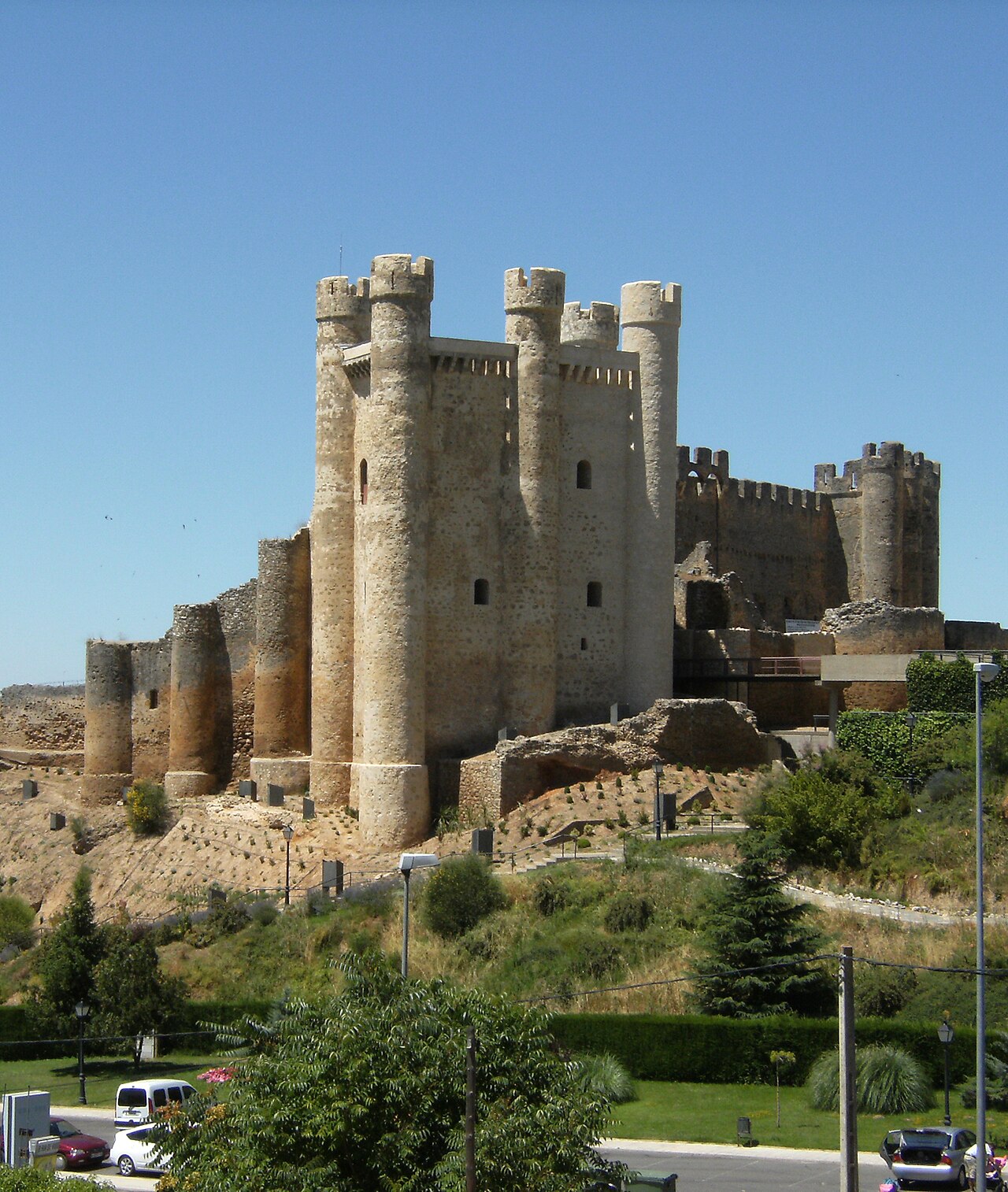
Castillo de León
The Castillo de León stands as a significant historic fortress located in the city of León, Spain. Its origins trace back to the ancient Roman settlement that once occupied the area, where it initially formed part of the city's northern defenses integrated within the Roman walls. Over the centuries, the castle evolved from a Roman military installation into a prominent medieval fortress and noble residence, reflecting the complex layers of Spanish history and architectural development.
From at least the 10th century, the castle played a crucial defensive role under the name Torres de León. It was strategically positioned at the city's northern gate, known as the Puerta del Conde (Gate of the Count), which guarded access along the important Roman decumanus street. This gate and fortress combination underscored its military importance as a key point of control and protection for León.
Medieval military and noble functions
The castle's historical records highlight its use as a prison during the early medieval period. Notably, it housed significant prisoners such as the counts of Castile after the Battle of Valdejunquera in 920, King Alfonso IV of León in 931, and Count Fernán González between 943 and 945. These incarcerations emphasize the fortress’s role in regional power struggles and its function as a secure detention site.
In the early 11th century, the castle transitioned into a noble residence, accommodating figures like Count Munio Fernández and his wife Elvira. Later, Berenguela of Castile, queen consort of Alfonso IX of León and mother of Ferdinand III of Castile, initiated restoration and transformation efforts. Her work adapted the fortress into a palace, blending defensive architecture with residential grandeur, which was typical of castles serving dual military and noble purposes.
Architectural features and fortifications
The Castillo de León is enclosed by an ovoid-shaped masonry wall approximately seven meters high. This wall preserves the footprint of the complex as it developed from Roman through medieval times, showcasing the evolution of military architecture in the region. The robust construction reflects a blend of ancient Roman techniques and medieval fortification methods designed to withstand sieges and attacks.
Two large contiguous cylindrical towers, known as cubos, are attached to the remains of the Roman decumanus gate. These towers served defensive and observational roles, controlling access through the main east-west thoroughfare of the city. Their proximity to the Roman walls highlights the castle’s integration with earlier urban defenses.
Adjacent to the cubos stands the taller Torre del Conde (Count’s Tower), a medieval tower that functioned as the residence of the city's military commander. Although partially ruined today, the tower’s remaining structure reveals its dual role as a lookout point and fortified dwelling within the castle complex.
Within the castle’s enclosure, two courtyards flank the ancient Roman wall, providing open spaces that supported the castle’s internal activities. A cistern connected ingeniously to León’s water supply ensured a reliable source of water during sieges, an essential feature for prolonged defense.
Later modifications and adaptive reuse
During the 15th and 16th centuries, under the reigns of the Catholic Monarchs and Philip II, the castle underwent maintenance and upgrades aligned with evolving military needs and political centralization. However, its military importance declined during the Bourbon dynasty, as the castle lieutenant positions were abolished, leading to gradual abandonment.
By the year 1800, the site was repurposed as a prison, marking a shift from military fortress to incarceration facility. This function continued intermittently into the 20th century, including during the Spanish Civil War when it held political prisoners. The castle ceased prison operations in 1960.
A significant 19th-century addition to the site was a three-story square building topped by a clock, which housed administrative offices and served as the prison entrance. This structure reflects the adaptive reuse of the castle to meet changing institutional needs over time.
Following two decades of disuse, rehabilitation efforts began in 1979 to transform the castle into the Provincial Historical Archive of León. Completed by 1982, this project marked a new cultural chapter for the castle, preserving its historical legacy while repurposing it for public and scholarly use.
Current condition and cultural significance
Today, the Castillo de León remains a well-preserved example of a hill castle that encapsulates multiple historical layers, from Roman military architecture through medieval fortifications to modern adaptations. While the Torre del Conde is partially ruined, the overall site retains key structural elements, including its walls, towers, courtyards, and water cistern, allowing visitors to appreciate the castle’s strategic design and historical importance.
The castle is an important cultural landmark in León, reflecting the city’s rich past and its role in regional defense, governance, and incarceration across centuries. Its transformation into a historical archive ensures ongoing preservation and public engagement with León’s heritage.
Frequently asked questions (FAQ)
- What is the historical significance of Castillo de León?
- Castillo de León is historically significant as a fortress originating from Roman times, serving as a key medieval defensive structure, noble residence, and prison, reflecting León's strategic importance.
- Can visitors explore the Torre del Conde at Castillo de León?
- Visitors can view the Torre del Conde, although it is partially ruined. The tower remains an important feature demonstrating medieval military architecture and the castle's defensive role.
- When was Castillo de León transformed into the Provincial Historical Archive?
- The castle was rehabilitated and transformed into the Provincial Historical Archive of León between 1979 and 1982, marking its transition from military and prison use to a cultural institution.
- Is Castillo de León accessible to the public?
- Castillo de León is accessible to the public as it houses the Provincial Historical Archive, offering visitors a chance to explore the historic site and its architectural features.
- What architectural features are notable at Castillo de León?
- Notable architectural features include the ovoid-shaped masonry walls, two large cylindrical towers (cubos), the medieval Torre del Conde, courtyards, and a water cistern connected to the city supply.
Information
Website
Visit websiteSources & official resources
Verify the information above using these authoritative references.
Loading map...
Visitor reviews
No reviews yet. Been here? Write the first review and help other travelers!
Write the first reviewVisited this castle? Share your experience
Your review helps other travelers and adds first-hand knowledge to our encyclopedia.