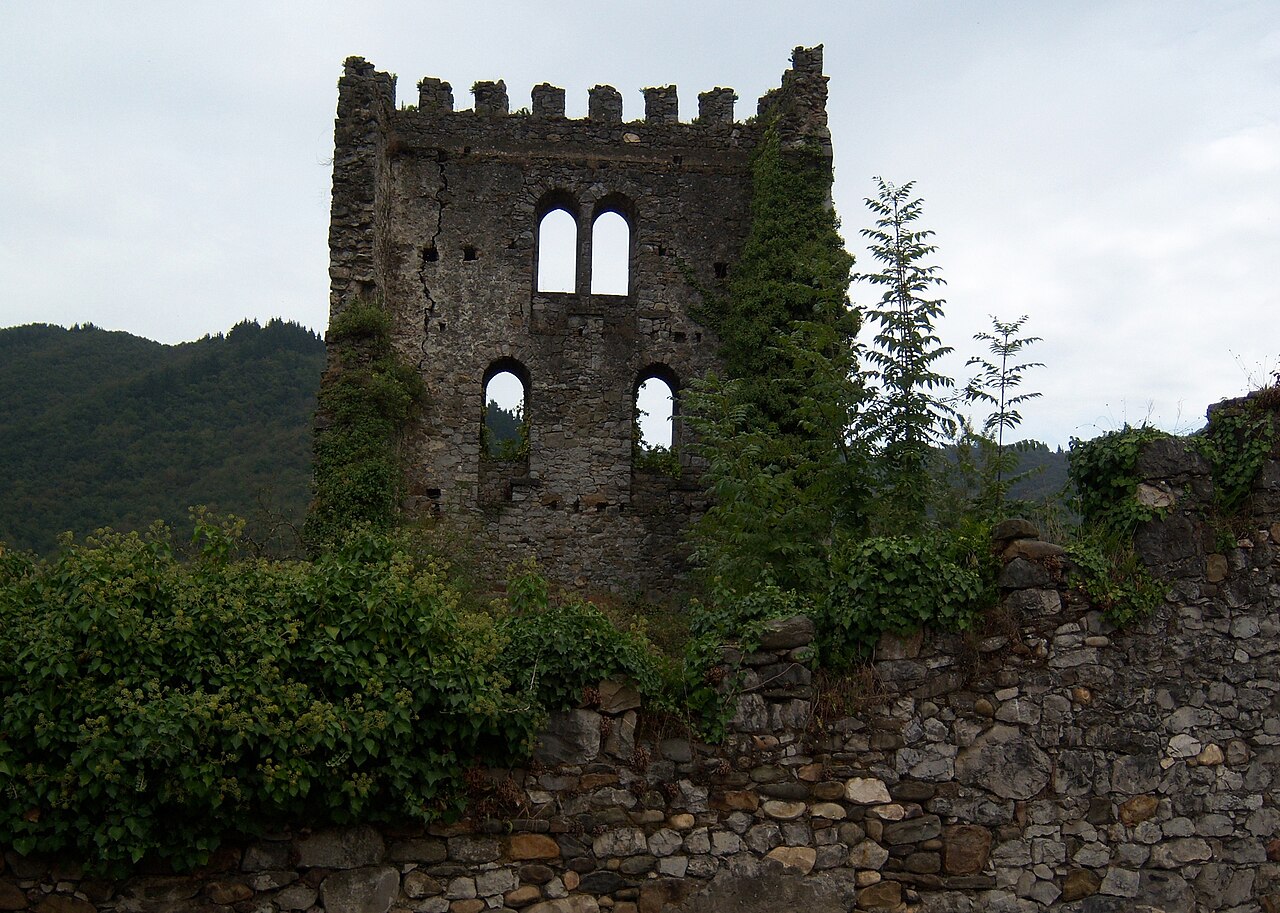
Castillo de Aviados
The Castillo de Aviados is a significant medieval fortress located in the locality of Aviados, within the municipality of Valdepiélago in the province of León, Spain. This hill castle was strategically positioned atop a prominent limestone outcrop on the southern slopes of the Cantabrian Mountains, offering commanding views over the surrounding landscape. Its location was chosen to control and defend important routes, including those associated with the historic Camino de Santiago pilgrimage, making it a critical node in regional defense and communication during the Middle Ages.
Local tradition associates the origins of Castillo de Aviados with Gundemaro, a Visigothic nobleman from the early 7th century. However, while this connection influenced later genealogical claims linking the noble Guzmán family to Gundemaro, documentary evidence supports a construction date in the late 11th century. This period corresponds to the broader expansion and fortification efforts in the Kingdom of León, as Christian kingdoms consolidated power during the Reconquista.
Historical significance and ownership
From the late 13th century onward, Castillo de Aviados became closely tied to the aristocratic House of Guzmán. This association began through the marriage of María Ramírez de Cifuentes and Juan Pérez de Guzmán, which brought the castle into the Guzmán family holdings. The Guzmáns, lords of Toral, used the castle as a summer residence, highlighting its dual role as a defensive fortress and a noble retreat.
The castle was involved in various local power struggles throughout the Middle Ages, particularly territorial disputes between the Guzmán family and neighboring noble houses. It also holds historical connections to notable figures such as Leonor de Guzmán, a royal mistress of King Alfonso XI of Castile, underscoring its importance within Castilian noble networks. In the 14th century, Pedro Núñez de Guzmán sought refuge within the castle during a period of royal persecution under King Pedro the Cruel.
The Castilian War of the Communities and decline
During the Castilian War of the Communities (1520-1522), the Guzmán family sided with the rebels opposing royal authority. As a consequence, King Charles I ordered the destruction of Castillo de Aviados, forcing the Guzmáns to flee to Portugal. Although the family’s properties were restored by royal decree in 1532, the fortress itself was not rebuilt and gradually fell into ruin.
Since the mid-20th century, the remains of Castillo de Aviados have been protected under Spain’s heritage laws, recognizing its cultural and historical significance despite its ruined state.
Architectural features and layout
Castillo de Aviados was designed with a focus on strategic defense. Its elevated position atop a large limestone outcrop allowed defenders to monitor and control access routes effectively. The castle’s layout featured three concentric stone walls that enclosed a rectangular tower situated at the highest point of the site. This configuration contributed to its reputation as one of the most formidable fortresses in the León region during the late medieval period.
The fortifications were constructed using locally sourced limestone, employing robust masonry techniques characteristic of the late 11th century and subsequent medieval modifications. The concentric walls provided multiple defensive layers, enhancing the castle’s ability to withstand sieges and assaults.
Current condition and remains
Today, the castle is primarily a ruined site, with the main rectangular tower and many internal buildings no longer standing. The surviving elements mainly consist of the fragmentary stone walls that outline the castle’s footprint and defensive perimeter. Despite the loss of much of its superstructure, the remaining walls clearly convey the scale and defensive intent of the original construction.
Castillo de Aviados was part of a broader network of fortifications including nearby castles at Toral and Vegas del Condado. Together, these castles controlled and protected key routes in the region, particularly those linked to the Camino de Santiago and local trade.
Historical legacy and cultural importance
The castle’s historical narrative is closely intertwined with the fortunes of the Guzmán family and the broader political dynamics of medieval Castile and León. Its association with prominent historical figures and events, including royal conflicts and noble rebellions, underscores its importance as a symbol of feudal power and regional control.
While the castle lacks ornamental or decorative elements, its martial architecture reflects the practical military concerns of its era. The absence of inscriptions or artistic embellishments in the ruins highlights its primary function as a fortress rather than a palace.
Today, the site is protected as a cultural heritage monument, ensuring the preservation of its ruins for future generations. Visitors to Castillo de Aviados can appreciate its commanding location and the enduring legacy of medieval fortification strategies in northern Spain.
Frequently asked questions (FAQ)
- How do I get to Castillo de Aviados?
- Castillo de Aviados is located in Valdepiélago, Spain, and can be accessed by car via the N-630 road. Public transportation options are limited, so driving is recommended for convenience.
- What is the historical significance of Castillo de Aviados?
- Castillo de Aviados dates back to the medieval period, serving as a strategic fortification during local conflicts. Its historical importance lies in its role in protecting the region and its architectural representation of the era.
- When was Castillo de Aviados built?
- The exact date of construction for Castillo de Aviados is not definitively known, but it is believed to have been built in the 13th century. This makes it a significant example of medieval military architecture in Spain.
- Can I visit Castillo de Aviados year-round?
- Yes, Castillo de Aviados is open to visitors throughout the year, although visiting hours may vary by season. It is advisable to check the official website or local tourism information for specific opening times before planning your visit.
- Why is Castillo de Aviados considered an architectural gem?
- Castillo de Aviados features impressive stonework and unique design elements typical of medieval fortresses. Its well-preserved structure provides insight into the construction techniques and defensive strategies of the time.
- Is it possible to take guided tours of Castillo de Aviados?
- Yes, guided tours are available at Castillo de Aviados, offering visitors a deeper understanding of its history and architecture. These tours can enhance your experience and provide fascinating stories about the castle.
- What are the ticket prices for visiting Castillo de Aviados?
- Ticket prices for Castillo de Aviados are generally affordable, with discounts available for children, students, and seniors. It's best to check the official website for the most current pricing information before your visit.
- When is the best time to visit Castillo de Aviados?
- The best time to visit Castillo de Aviados is during the spring and fall when the weather is mild and pleasant. This allows for a more enjoyable exploration of the castle and its surroundings.
- What nearby attractions should I consider visiting?
- Nearby attractions include the beautiful landscapes of Valdepiélago and other historical sites in the region. Exploring the local area can enhance your visit and provide a richer cultural experience.
Information
Loading map...
Visitor reviews
No reviews yet. Been here? Write the first review and help other travelers!
Write the first reviewVisited this castle? Share your experience
Your review helps other travelers and adds first-hand knowledge to our encyclopedia.