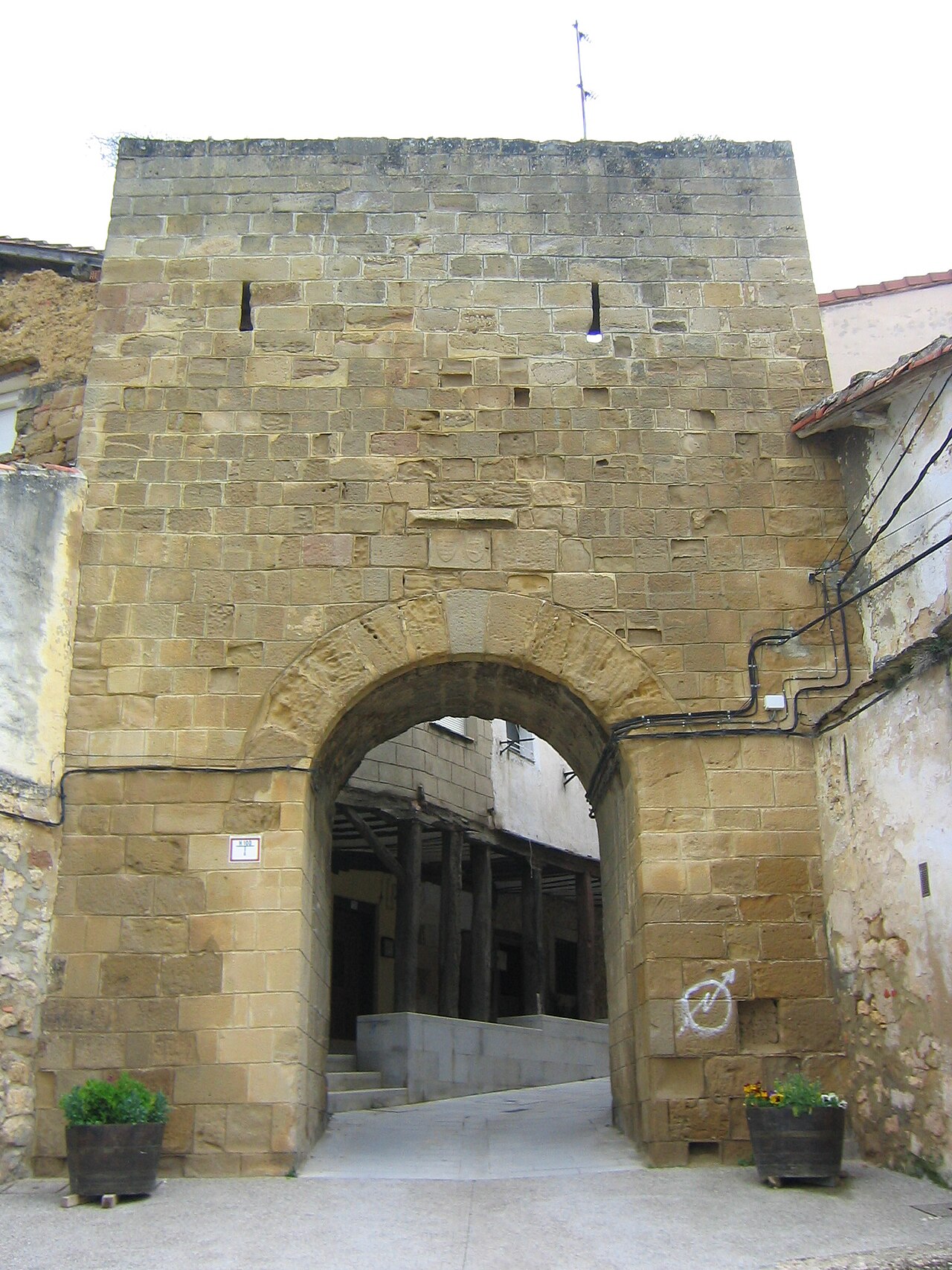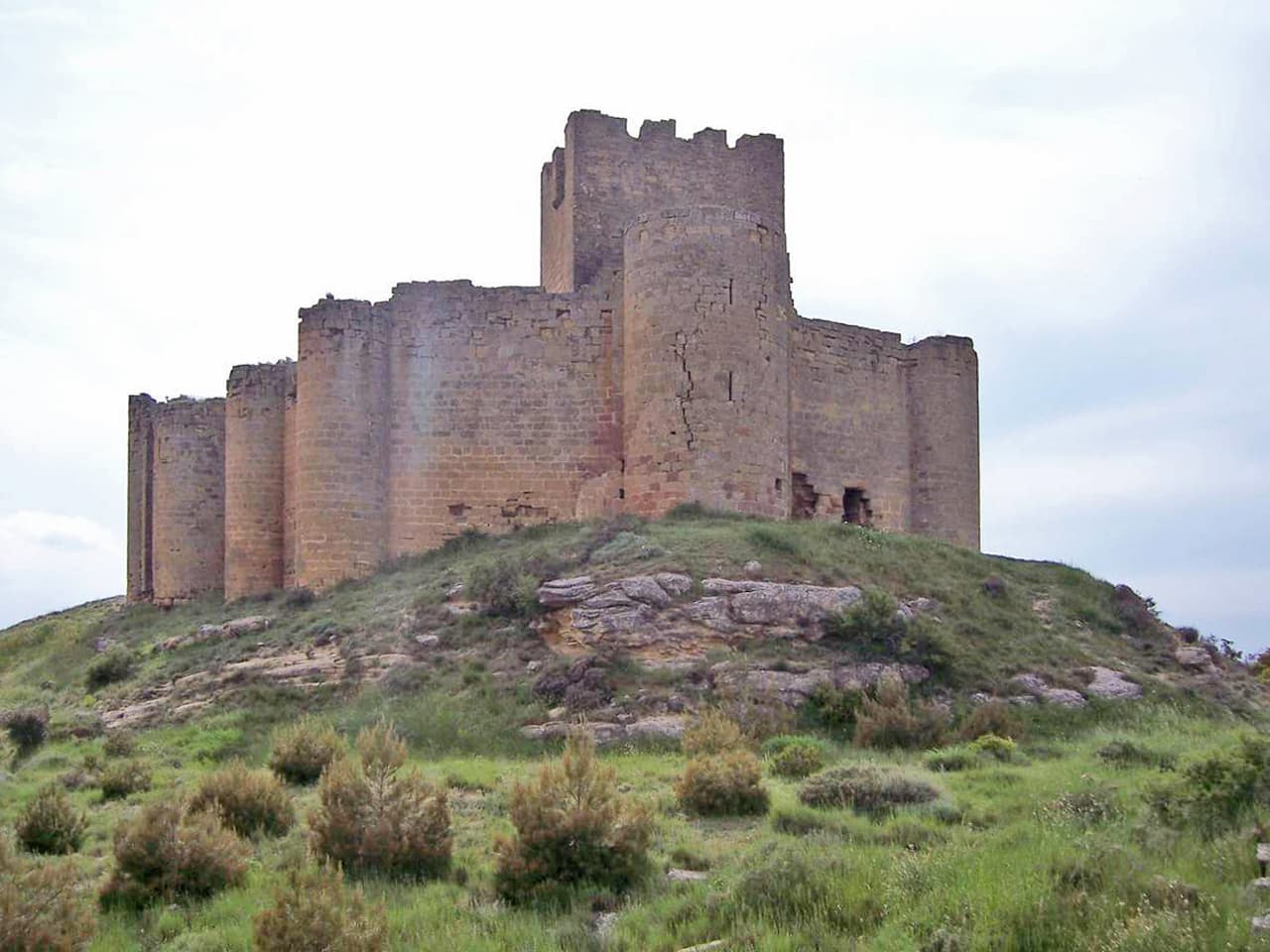
Castillo de Davalillo
Castillo de Davalillo is a significant medieval fortress situated in the municipality of San Asensio, in the region of La Rioja, Spain. Constructed during the late 12th or early 13th century, this hill castle played a crucial role as a defensive stronghold along the contested borderlands between the Kingdom of Castile and the Kingdom of Navarre. Its strategic location near the fortified bridge of San Vicente de la Sonsierra allowed it to guard a vital passage and monitor military movements in this turbulent frontier zone.
Historical context and significance
The construction of Castillo de Davalillo likely dates to the reign of Alfonso VIII of Castile, sometime after 1177. It does not appear in earlier records of frontier fortresses compiled by the Navarrese king Sancho VI, suggesting its establishment was part of Castile's efforts to consolidate control over contested territories following new border delineations. The castle's primary purpose was to defend Castilian lands from incursions by Navarrese forces, reflecting the ongoing conflicts and shifting alliances characteristic of the High to Late medieval period in northern Spain.
The earliest documented mention of Castillo de Davalillo comes from a 1367 record during diplomatic negotiations between Enrique de Trastámara and Carlos II of Navarre. At this time, the castle was among several fortresses transferred to Navarre's authority, indicating the fluid political control of border fortifications. By the late 14th century, the castle came under the ownership of the Manrique family, holders of the title Dukes of Nájera. The Manriques maintained possession through inheritance and legal arrangements well into the 17th century, demonstrating the castle's continued importance in regional noble power structures.
During the mid-15th century, disputes between the Manrique and Velasco families led to significant demographic changes. In 1465, the Velasco family acquired the villages of Davalillo and San Asensio. This acquisition resulted in the depopulation of the village of Davalillo, with inhabitants relocating primarily to San Asensio. This shift contributed to the decline of the castle's immediate surroundings and diminished its role as a local center.
In modern times, the castle remained privately owned by descendants of the Marqués de Riscal until 2018, when it was sold to the Compañía Vinícola del Norte de España (Bodegas CVNE). Restoration efforts began in 2019, aiming to preserve the castle's historical fabric and architectural features for future generations.
Architectural design and defensive features
Layout and construction
Castillo de Davalillo is constructed on a seven-sided polygonal plan, a design that demonstrates a careful adaptation to the natural terrain and strategic defensive requirements. The walls are primarily built using ashlar sandstone blocks, a technique involving well-cut stones bonded with a rubble-filled core. This method provided both strength and durability, essential for withstanding sieges and the effects of time.
The curtain walls form a robust perimeter around the fortress, largely intact despite some alterations to the original battlements. These walls were designed to provide a continuous defensive barrier, with battlements allowing defenders to protect the castle while remaining shielded.
Towers and entrance fortifications
The fortress features multiple round towers positioned at corners and midpoints along the walls. These towers were primarily solid structures, enhancing the castle's defensive capabilities by allowing defenders to flank attackers attempting to scale the walls. One tower near the main entrance includes a narrow vertical loophole, designed for archers or crossbowmen to fire upon enemies while minimizing exposure.
The main entrance is fortified by two hollow cylindrical towers, creating a formidable gateway. This entrance is preceded by a vestibule approximately two meters long, covered by a pointed barrel vault that added an extra layer of defense. Originally, the entrance featured a pointed arch, typical of Gothic military architecture, but it was later modified to include a horizontal lintel.
Internal structures and keep
Within the castle walls, architectural evidence such as putlog holes, corbels, and carved grooves reveal the former presence of auxiliary buildings. These likely included soldiers’ quarters, stables, and storage rooms, essential for daily operations and sustaining long-term habitation during sieges.
The keep, or torre del homenaje, is attached to the eastern curtain wall and has a distinctive square footprint. This tower originally had four floors, each supported by pointed barrel vaults, a structural feature common in medieval architecture for its strength and ability to span large spaces.
The ground floor of the keep likely served as a chapel, characterized by a rectangular plan covered by a barrel vault and illuminated by three loophole-style openings. Two of these openings are located on the western wall, with a third centered on the semicircular apse. Access to the upper floors was through a small door with a semicircular arch on the second floor's northern side.
Surrounding structures and village remains
Outside the main fortress walls lie the remnants of a secondary enclosing wall that likely surrounded the former village of Davalillo. This wall descends the hillside, marking the extent of the settlement that was depopulated following noble family disputes in the 15th century. These remains provide valuable insight into the relationship between the castle and the civilian population it protected or controlled.
Preservation and current status
Today, Castillo de Davalillo is recognized as an important cultural and historical monument. Its well-preserved curtain walls, towers, and keep offer a tangible connection to the medieval history of the Castile-Navarre border region. The restoration efforts initiated by Bodegas CVNE aim to stabilize and conserve the site, ensuring that its architectural and historical significance endures.
Visitors to the castle can appreciate the strategic design and robust construction that reflect the military and political challenges of medieval Spain. The site stands as a testament to the complex history of border fortifications and noble power struggles in the region.
Frequently asked questions (FAQ)
- What is the historical significance of Castillo de Davalillo?
- Castillo de Davalillo is a remarkable example of medieval military architecture in Spain, dating back to the 11th century. It played a crucial role in the defense against invasions and has witnessed various historical events, reflecting the region's turbulent past and cultural heritage.
- When was Castillo de Davalillo built?
- The construction of Castillo de Davalillo began in the early 11th century, indicating its importance during the Reconquista period. Over the centuries, it has undergone several renovations, preserving its original architectural elements while adapting to changing military needs.
- Can I visit Castillo de Davalillo?
- Yes, Castillo de Davalillo is open to visitors, allowing you to explore its historic grounds and enjoy stunning views of the surrounding landscape. Guided tours are often available, providing insight into the castle's rich history and architectural features.
- What are the opening hours for Castillo de Davalillo?
- Castillo de Davalillo typically opens to the public from 10 AM to 6 PM during the summer months and has reduced hours in the off-season. It is advisable to check the official website or local tourist information for any seasonal changes or special events.
- Is it possible to access Castillo de Davalillo with mobility aids?
- While Castillo de Davalillo is a historic site, some areas may present challenges for visitors using mobility aids due to uneven terrain and steep pathways. However, the site management is working to improve accessibility, so it's best to contact them in advance for specific accommodations.
- What is the best time to visit Castillo de Davalillo?
- The ideal time to visit Castillo de Davalillo is during the spring and fall when the weather is mild and pleasant. These seasons also attract fewer tourists, allowing for a more peaceful exploration of the castle and its surroundings.
- Are there any nearby attractions to visit after Castillo de Davalillo?
- Yes, after exploring Castillo de Davalillo, you can visit nearby attractions like the charming town of San Asensio, known for its beautiful wineries and local cuisine. Additionally, the surrounding vineyards and natural landscapes offer great opportunities for hiking and relaxation.
- What are the ticket prices for Castillo de Davalillo?
- Ticket prices for Castillo de Davalillo are generally affordable, with discounts available for students, seniors, and children. It's a good idea to check the castle's official website for the latest pricing information and any special promotions that may be offered.

Information
Loading map...
Visitor reviews
No reviews yet. Been here? Write the first review and help other travelers!
Write the first reviewVisited this castle? Share your experience
Your review helps other travelers and adds first-hand knowledge to our encyclopedia.