Castillo de Colomares

Castillo de colomares: tribute to columbus and discovery of america
Benalmadena, Spain
Contemporary (20th–21st c.)
Well Preserved

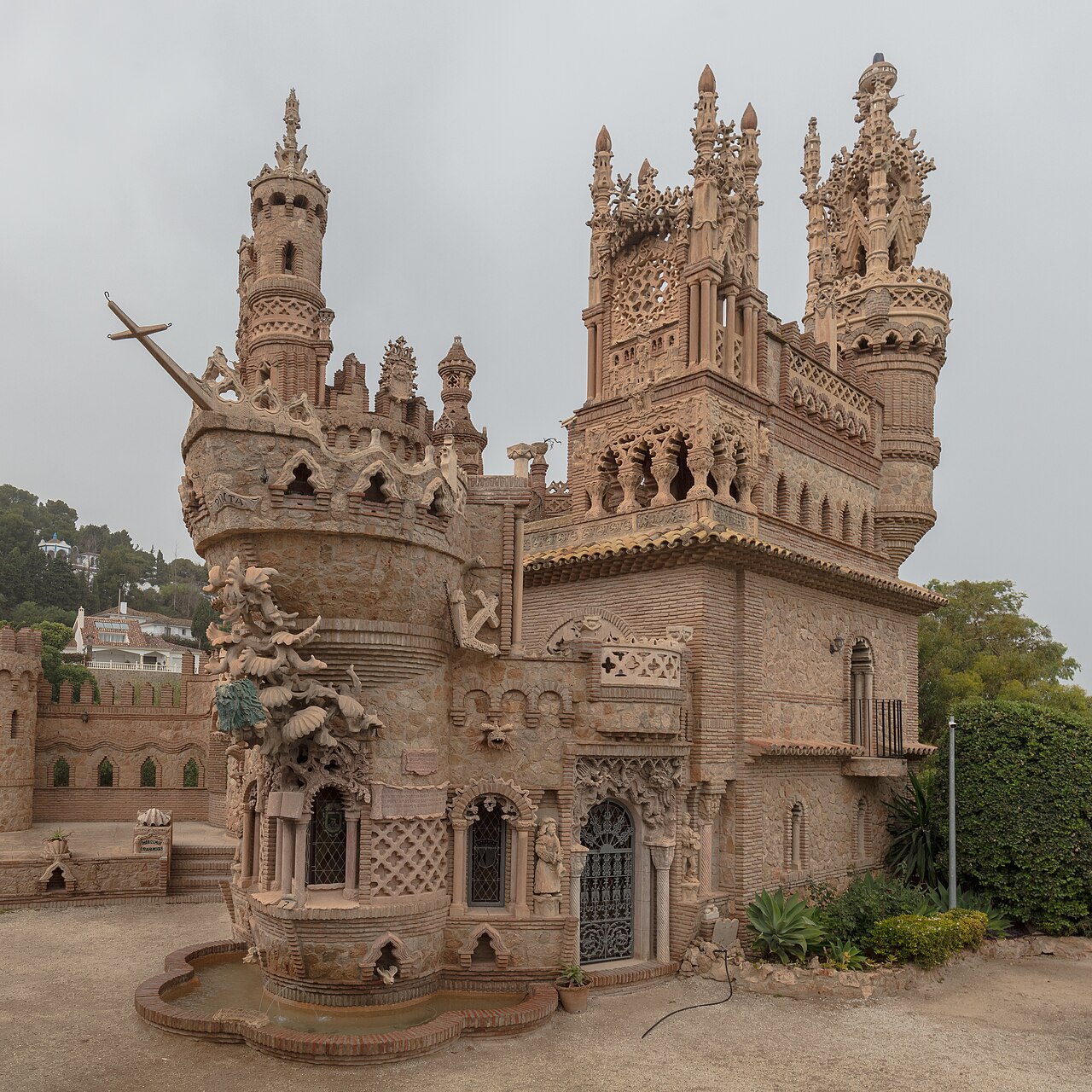
Castillo de Colomares is a unique and fascinating monument located in Benalmadena, Spain, constructed between 1987 and 1994 by the Spanish doctor and historian Dr. Esteban Martín Martín. This extraordinary castle is not a traditional medieval fortress but rather an architectural homage dedicated to Christopher Columbus and the historic event of the Discovery of America in 1492. It blends various architectural styles and symbolic elements to narrate the story of Columbus's voyages and the cultural significance of his discovery.

Architectural synthesis and symbolic design

The castle's design is an eclectic mix of Romanesque, Gothic, Mudejar, and Renaissance architectural elements, reflecting the diverse influences present in Spanish architecture during the late 15th century. Although it was built in the 20th century, the castle emulates the styles prevalent in the late medieval and early Renaissance periods to create a romanticized vision of the era of Columbus.

The monument incorporates a variety of symbolic features, including towers, battlements, arches, and courtyards, each representing different aspects of Columbus's life and the historical context of his voyages. The use of stone masonry and intricate detailing emphasizes the craftsmanship typical of the periods it seeks to evoke.

Notable interior features

One of the most remarkable aspects of Castillo de Colomares is its interior, which houses the smallest chapel in the world, measuring just 1.96 square meters. This chapel is dedicated to Saint Elizabeth of Hungary, a saint known for her charity and compassion. The chapel's diminutive size contrasts with the grandeur of the castle's exterior, offering an intimate spiritual space within the monument.

Additionally, the castle contains an empty mausoleum intended to one day hold the remains of Christopher Columbus. This mausoleum symbolizes the enduring legacy and mystery surrounding Columbus's final resting place, which has been subject to historical debate.

Historical and cultural significance

While Castillo de Colomares is not a fortress built for defense or residence, it serves as a cultural and historical landmark celebrating one of the most pivotal moments in world history: the European discovery of the Americas. The castle stands as a tribute to the spirit of exploration and the profound impact of Columbus's voyages on global history.

Its construction during the late 20th century reflects a renewed interest in commemorating historical figures through architectural monuments, blending education, art, and tourism. The castle attracts visitors who are interested in history, architecture, and the legacy of the Age of Discovery.

Visitor experience and location

Situated in the coastal town of Benalmadena in the Andalusia region of southern Spain, Castillo de Colomares offers visitors a unique blend of history, architecture, and scenic views. The castle's location near the Mediterranean coast enhances its appeal as a tourist destination.

Visitors can explore the castle's intricate exterior details, wander through its courtyards, and reflect in the small chapel. The monument is open to the public, providing educational insights into the life of Columbus and the historical context of his voyages.

Frequently asked questions (FAQ)

How do I get to Castillo de Colomares?
Castillo de Colomares is located in Benalmadena, Spain, and is easily accessible by car or public transport. If you are driving, follow the signs to Benalmadena and look for parking nearby. Public buses also run regularly to the area from major towns.
What is the historical significance of Castillo de Colomares?
Castillo de Colomares was built between 1994 and 1994 as a tribute to Christopher Columbus and the discovery of America. The castle blends various architectural styles, symbolizing the cultural fusion that occurred during the Age of Exploration. Its intricate design and rich history make it a significant landmark in the region.
When was Castillo de Colomares completed?
Construction of Castillo de Colomares was completed in 1994. Despite its recent construction, the castle embodies a historical narrative that spans centuries, representing a unique fusion of different architectural influences. Visitors often marvel at its stunning craftsmanship and artistic details.
Can I take photographs inside Castillo de Colomares?
Yes, visitors are welcome to take photographs inside Castillo de Colomares. The castle's stunning architecture and intricate details provide a perfect backdrop for memorable photos. However, please be respectful of other visitors and avoid using flash photography.
Why is Castillo de Colomares considered an architectural marvel?
Castillo de Colomares is considered an architectural marvel due to its unique blend of styles, including Romanesque, Gothic, and Mudejar influences. The castle features elaborate sculptures, towers, and intricate mosaics that showcase the artistry of its creator, Dr. Esteban Martín Martín. This diverse design reflects the cultural heritage of Spain and the impact of Columbus's voyages.
Is it possible to visit Castillo de Colomares year-round?
Yes, Castillo de Colomares is open to visitors year-round, though hours may vary by season. It's advisable to check the official website for current opening hours before your visit, especially during holidays. The castle's enchanting atmosphere is a delightful experience at any time of the year.
What are the ticket prices for Castillo de Colomares?
The ticket prices for Castillo de Colomares are generally affordable, with discounts available for children, seniors, and groups. Tickets can be purchased on-site, and it's a good idea to check for any special offers or events that may be happening during your visit. Prices may vary, so visiting the official website for the latest information is recommended.
What is the best time to visit Castillo de Colomares?
The best time to visit Castillo de Colomares is during the spring and fall months when the weather is mild and pleasant. These seasons provide an ideal backdrop for exploring the castle and its surroundings. Summer can be quite hot, while winter may bring cooler temperatures, so plan accordingly for the best experience.
Are there any nearby attractions to see after visiting Castillo de Colomares?
Yes, there are several nearby attractions to explore after visiting Castillo de Colomares. The beautiful Parque de la Paloma and the stunning beaches of Benalmadena are just a short drive away. Additionally, you can visit the Benalmadena Marina and the Teleférico cable car for breathtaking views of the coast.

Information

Mixed / Complex

Sources & official resources

Verify the information above using these authoritative references.

Loading map...

Visitor reviews

No reviews yet. Been here? Write the first review and help other travelers!

Write the first review

Visited this castle? Share your experience

Your review helps other travelers and adds first-hand knowledge to our encyclopedia.
Write a review

(5/5)

0/2000 characters

Your review will be visible after admin approval

Nearby castles

0.7 km
Colomares Castle — Spain castle

Colomares Castle

Benalmádena, Spain

The Castillo de Colomares, located in Benalmádena in the province of Málaga, Andalusia, Spain, stands as a remarkable modern monument dedicated to Christopher Columbus and the historic Discovery of America. Unlike traditional castles built in medieval times, this structure was constructed between 1987 and 1994 by Dr. Esteban Martín Martín, a Spanish physician and historian who left his medical career to create a lasting tribute to Columbus and the era of the Catholic Monarchs. Dr. Martín’s vision was to build a monument that not only celebrated Columbus’s voyages but also encapsulated the rich cultural and religious tapestry of medieval Spain. The Castillo de Colomares is an eclectic blend of neo-Byzantine, neo-Romanesque, neo-Gothic, and neo-Mudéjar architectural styles, reflecting the diverse influences of Christianity, Judaism, and Islam that coexisted during the late 15th century. The monument’s design incorporates symbolic elements representing Columbus’s life, his ships, and the historical context of his expeditions. Architectural composition and symbolism The castle covers approximately 1,500 square meters and features a complex arrangement of towers, walls, staircases, sculptures, and paintings. Although it is called a castle, it is not a defensive fortress but rather a symbolic monument combining artistic expression with historical storytelling. The construction was carried out manually using traditional building methods without machinery, showcasing exceptional craftsmanship. Among the most notable features is a chapel dedicated to Saint Elizabeth of Hungary, which holds the Guinness World Record for being the smallest church in the world at just 1.96 square meters. This chapel adds a spiritual dimension to the monument, reflecting the religious devotion of the period. Another key element is the empty mausoleum with a Gothic rose window, symbolizing Columbus’s uncertain final resting place and his journey towards eternity. The monument artistically represents Columbus’s three ships: La Niña, La Pinta, and La Santa María. La Niña is positioned beneath an arch symbolizing La Rábida Monastery, where Columbus prepared for his voyage. La Pinta is prominently displayed on the main facade supported by a Pegasus figure, representing sailor Martín Alonso Pinzón, a key collaborator of Columbus. La Santa María is placed separately to allude to its sinking off the coast of Santo Domingo. A Chinese pagoda is also included to signify Columbus’s original intention to reach Asia by sea. Historical context and cultural significance The Castillo de Colomares serves as a multifaceted tribute not only to Columbus but also to the Catholic Monarchs Isabel and Ferdinand, who sponsored his voyages. Statues of historical figures such as Juana La Loca, Isabel’s daughter, and bronze shields representing the monarchs are incorporated into the design. The monument also acknowledges the complex legacy of Columbus’s expeditions, including the cultural exchanges and conflicts that shaped the Americas and Spain. The inclusion of Islamic decorative motifs and references to Judaism alongside Christian symbolism reflects the multicultural heritage of Spain during the late Middle Ages. This aspect highlights the coexistence and tensions among the three major religions of the Iberian Peninsula before the completion of the Reconquista. Location and visitor experience Situated approximately 182 meters above sea level on a hilltop in Benalmádena, the monument offers stunning views of the Mediterranean Sea and the surrounding Andalusian landscape. Visitors can explore the gardens, fountains, and intricate architectural details for a modest entrance fee, making it an accessible cultural attraction. The Castillo de Colomares is open daily, inviting tourists and history enthusiasts to immerse themselves in a unique blend of art, history, and architecture. Despite being a modern construction, it has become a significant landmark celebrating Spain’s maritime heritage and the enduring impact of Columbus’s voyages. Construction challenges and legacy Dr. Esteban Martín faced considerable challenges during the monument’s construction, including financial difficulties and skepticism from local institutions and authorities. For over fifteen years, he dedicated his fortune and effort to realize his vision, often being perceived as eccentric or even mad. Despite a lack of official support, his determination resulted in the creation of the largest monument worldwide dedicated to Christopher Columbus. The Castillo de Colomares stands today not only as a testament to Columbus’s legacy but also as a symbol of individual passion and perseverance in preserving historical memory through architecture. Its unique combination of styles and rich symbolism offers visitors a comprehensive narrative of a pivotal era in world history.

Contemporary (20th–21st c.)
Details
3.7 km

Castillo de Bil Bil

Benalmádena, Spain

Castillo de Bil Bil stands as a unique architectural landmark in the municipality of Benalmádena, Spain. Constructed in the 1930s, this castle is a remarkable example of neo-Arab architecture, reflecting a revivalist style that draws heavily from the Islamic art and architecture of southern Spain's Nasrid dynasty. The castle’s design was the vision of Enrique Atencia, an architect who sought to blend historical inspiration with modern functions, initially conceiving the building as a "casa de baños" or bathhouse near a prominent coastal road. Historical background and ownership The completion of Castillo de Bil Bil in 1936 marked the fulfillment of a private commission by the Hermann couple. Unfortunately, the outbreak of the Spanish Civil War prevented them from residing in the property. After the war, the Hermanns returned to France, and the castle passed into new hands. Subsequently, the castle was acquired by the American Schestrom family, who renamed it "Bil Bil," a name derived from the combination of the names Elsa and William, family members. The Schestroms lived in the castle for about three decades during a period when the surrounding coastal area experienced significant growth, particularly driven by the rise of tourism. In the late 1970s, ownership changed again when Gerard Saintmoux purchased the property. Unfortunately, during his tenure, the castle fell into neglect. Recognizing the cultural value of the site, the local government, led by Mayor Enrique Bolín, designated the surrounding land as a green zone in the 1980s to prevent speculative development. Eventually, Saintmoux sold the castle to the municipality. Since municipal acquisition, Castillo de Bil Bil has been repurposed as a cultural center, hosting various events and exhibitions. Restoration efforts have been undertaken twice, once in the 1980s and again in the 1990s, to preserve the architectural integrity and decorative richness of the building. The castle's distinctive appearance and ambiance have also made it a favored filming location for several Spanish films and television series, including "El coleccionista de cadáveres" (1967), "Cuidado con las señoras" (1968), and the TV series "Toy Boy." Architectural style and design features Castillo de Bil Bil is designed as a modestly sized palace that evokes the appearance of a fortress. Its layout is organized around a central courtyard, which serves as the focal point and spatial organizer for the surrounding rooms. This arrangement creates a harmonious balance between private interiors and open communal spaces, a characteristic feature of traditional Andalusian architecture. The castle’s exterior is distinguished by its striking red plaster coating, which contrasts vividly with the intricate decorative elements inspired by the Nasrid palaces of the Alhambra, such as the Comares and Lions halls. These decorations include complex tilework, bas-relief sculptures, and ornate plasterwork, all executed with exceptional craftsmanship. The decorative program incorporates epigraphic inscriptions and interlaced geometric patterns known as lacería, which adorn dado panels both inside and outside the building. These elements were crafted under the supervision of Antonio Santiesteban, a conservator renowned for his expertise in traditional Granadan Arab techniques, linking the castle’s artistry directly to the heritage of the Alhambra. Additional ornamental features include wrought iron grilles and delicate latticework, which add texture and visual interest while reinforcing the building’s Moorish aesthetic. The main entrance is marked by triple horseshoe arches, a signature motif of Islamic architecture in Spain, which creates a grand and inviting portal. A distinctive architectural highlight is the castle’s tower, designed to resemble a minaret. This feature further emphasizes the building’s connection to Western Arab architectural traditions and serves as a vertical counterpoint to the castle’s cubic volumes. Gardens and surroundings The castle is set within gardens that were introduced during later renovations to complement the architectural style. These gardens include fountains and palm trees, elements that enhance the ambiance and evoke the lush courtyards typical of Andalusian palaces. The green zone designation by the local government has helped preserve the natural setting around the castle, maintaining its aesthetic and cultural context. Cultural significance and preservation Today, Castillo de Bil Bil stands as a well-preserved example of 20th-century neo-Arab architecture in southern Spain. Its blend of historic inspiration and local craftsmanship offers valuable insight into the revivalist movements of the early 20th century that sought to celebrate and reinterpret Spain’s Islamic architectural heritage. The castle’s use as a cultural center and filming location has helped raise public awareness of its architectural and historical importance. Ongoing municipal care and restoration ensure that the intricate decorative features and structural integrity are maintained for future generations. Visitors to the castle can experience a unique fusion of historical styles and modern adaptation, witnessing firsthand the artistic dialogue between past and present embodied in Castillo de Bil Bil. Its preservation contributes to the cultural richness of the Costa del Sol region and highlights the enduring legacy of Andalusian architectural traditions.

Post-Renaissance (17th–18th c.)
Details
9.5 km
Sohail Castle — Spain castle

Sohail Castle

Fuengirola, Spain

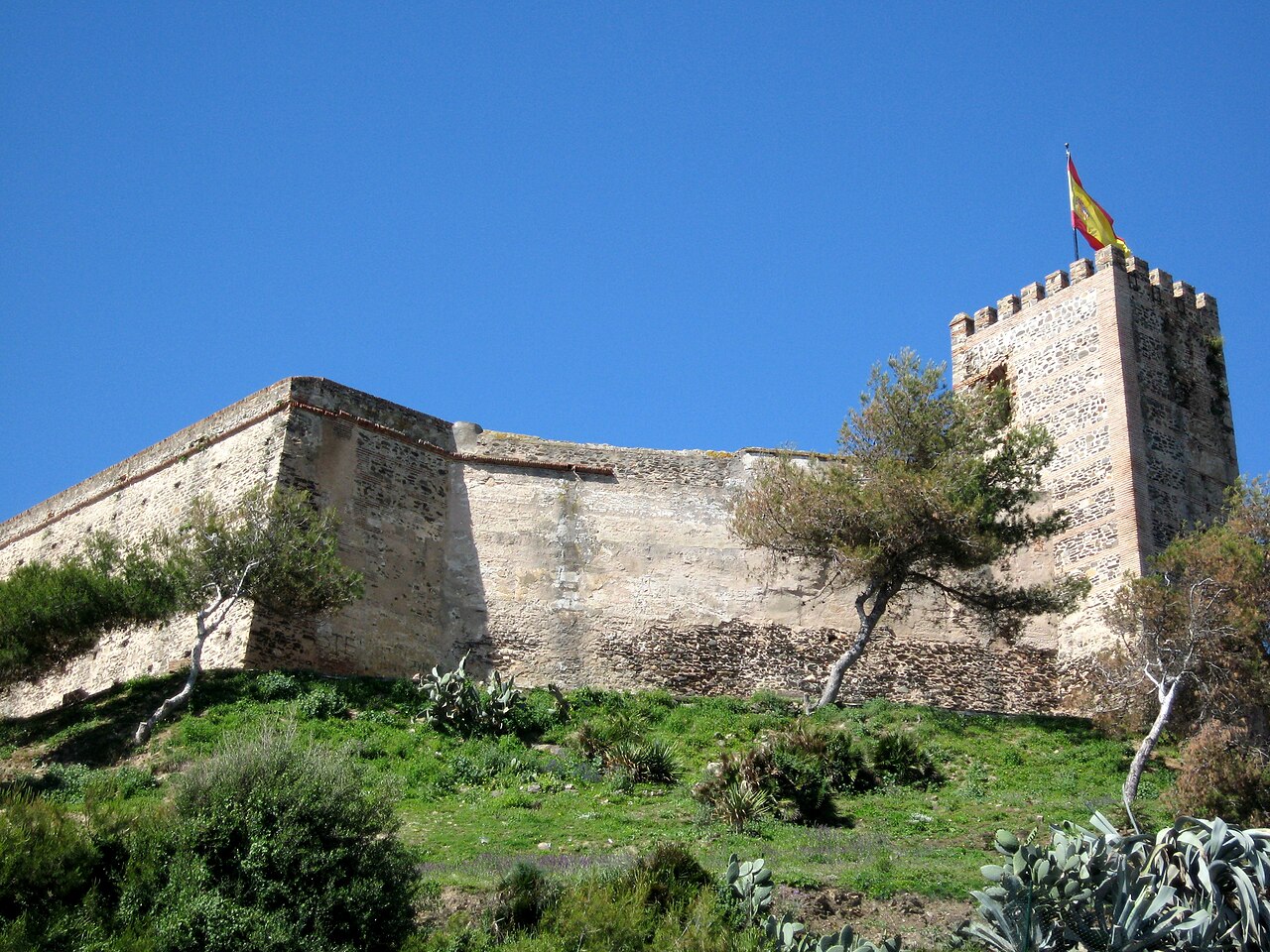
Sohail Castle, located in Fuengirola, Spain, is a remarkable example of a hill castle with a rich history spanning over a millennium. Originally constructed in 956 AD by the Cordoban Caliph Abd-ar-Rahman III, the fortress was strategically positioned to strengthen the coastal defenses of the region during the era of Al-Andalus. The castle was built atop the remains of the Roman settlement known as Suelitania, itself founded on earlier Phoenician and Punic settlements, highlighting the site's long-standing military and economic significance. The castle's initial design was a modest fortress intended to secure the coastline and oversee the mouth of the Fuengirola River, which was navigable during Roman times and served as a vital trade route. In the 12th century, under the rule of the Almoravid dynasty, the fortress was expanded into an alcazaba—a fortified enclosure with an irregular octagonal floor plan adapted to the terrain's slopes. This phase introduced eight curtain walls and defensive towers, although notably, the castle lacks a traditional keep or donjon. The walls were constructed using a combination of stone masonry, brick courses, and tapial (rammed earth), reflecting a blend of Roman building techniques and Islamic military architecture. Historical context and military significance Muslim period and almoravid expansion During the 10th to 12th centuries, Sohail Castle served as a critical defensive stronghold for Muslim rulers controlling southern Spain. The castle's position on a hill 38 meters above sea level allowed it to oversee both maritime and land routes, particularly the corridor between Málaga and Marbella. The Almoravid enhancements transformed the fortress into a formidable military complex, with curtain walls reinforced by towers at each corner and a horseshoe-arched main gate featuring arrow slits for archers. Christian conquest and subsequent modifications The castle was captured by Christian forces during the Reconquista on 7 August 1485, marking a significant turning point in its history. The siege caused extensive damage, necessitating substantial repairs and adaptations to the fortress. In the 16th century, the castle was modernized to accommodate artillery, including the addition of cannon batteries on the northeastern walls facing the sea. These modifications reflected the evolution of military technology and the changing nature of warfare. Role in the peninsular war and later history In 1810, during the Peninsular War, French troops occupied Sohail Castle. The fortress was recaptured by Spanish forces under General Ballesteros in 1812, after which the retreating French destroyed parts of the castle, including the southwest tower and adjacent walls. This conflict marked the last major military engagement involving the castle. Following the war, the castle's military importance declined. It was sold at public auction and passed into private hands, leading to a period of neglect. Over time, it served various non-military functions, including housing cavalry units and later serving as a residence for tuberculosis patients after the Spanish Civil War. These adaptations illustrate the castle's shifting role in local society. Architectural features and layout Fortification design and materials Sohail Castle is characterized by its irregular octagonal plan, with eight curtain walls and six surviving towers. The walls are notably thick and topped with an adarve (wall walkway) that connects the towers, allowing defenders to patrol the ramparts. Access to the battlements is provided by narrow spiral staircases within the towers, facilitating defense while maintaining structural integrity. The main entrance is through a gate facing northwest, approached by a ramp fortified with a barbican—a secondary defensive structure designed to slow attackers. The gate tower features a distinctive horseshoe arch, a hallmark of Islamic architecture, and is equipped with arrow slits for archers. A modern service gate has been added along the southwest wall, also incorporating defensive arrow slits. The construction materials reflect the castle's layered history. The walls combine stone masonry with courses of brick, a technique inherited from Roman builders to enhance strength. Additionally, tapial (rammed earth) and carefully cut ashlar blocks are used in certain sections, demonstrating a mix of building traditions over centuries. Interior structures and water supply While the original internal buildings have not survived intact due to centuries of conflict and reconstruction, fragments of partition walls provide clues about the castle's internal layout. A notable feature is the covered well within the enclosure, which supplied water from the nearby Fuengirola River. This reliable water source was essential for sustaining the garrison during sieges and prolonged military campaigns. Cultural heritage and modern restoration 20th-century restoration efforts After a long period of neglect, restoration efforts began in 1969 under the ownership of Leopoldo Werne de Bolin. Between 1990 and 1997, the Escuela-Taller Castillo Sohail undertook a major rehabilitation project that stabilized and repaired the ruins, preserving the castle's structural integrity and historical character. Current use and public access Today, Sohail Castle is a well-known cultural venue and tourist attraction in Fuengirola. The castle hosts concerts, festivals, and other public events, integrating the historic fortress into the modern urban fabric. The surrounding park and urban infrastructure, including the nearby A-7 highway, frame the castle, highlighting its transition from a medieval military fortress to a cherished heritage site. Archaeological significance The site also features excavated stone ruins at the western base of the hill, dating back to at least 300 BC, predating the Roman Republic's occupation. These remains attest to the area's continuous human presence and strategic importance over millennia, enriching the historical narrative of Sohail Castle. Artillery and defensive adaptations Archaeological discoveries in 1914 uncovered several artillery pieces within the castle, including cannons mounted on the northeastern walls. These artifacts highlight the castle's adaptation to the advent of gunpowder weaponry in the 16th century, marking a significant evolution in its defensive capabilities. The positioning of these cannons facing the sea underscores the fortress's role in coastal defense against naval threats. Strategic location and military role Perched on a hill overlooking the mouth of the Fuengirola River, Sohail Castle commanded a crucial junction between the Mediterranean coast and inland routes. Its control over the corridor connecting Málaga and Marbella made it a pivotal military asset for various rulers, from the Phoenicians and Romans to Muslim and Christian forces. This enduring strategic value shaped the castle's architectural development and historical significance throughout the centuries.

Early Medieval (5th–10th c.)
Details