Castillo de Bil Bil
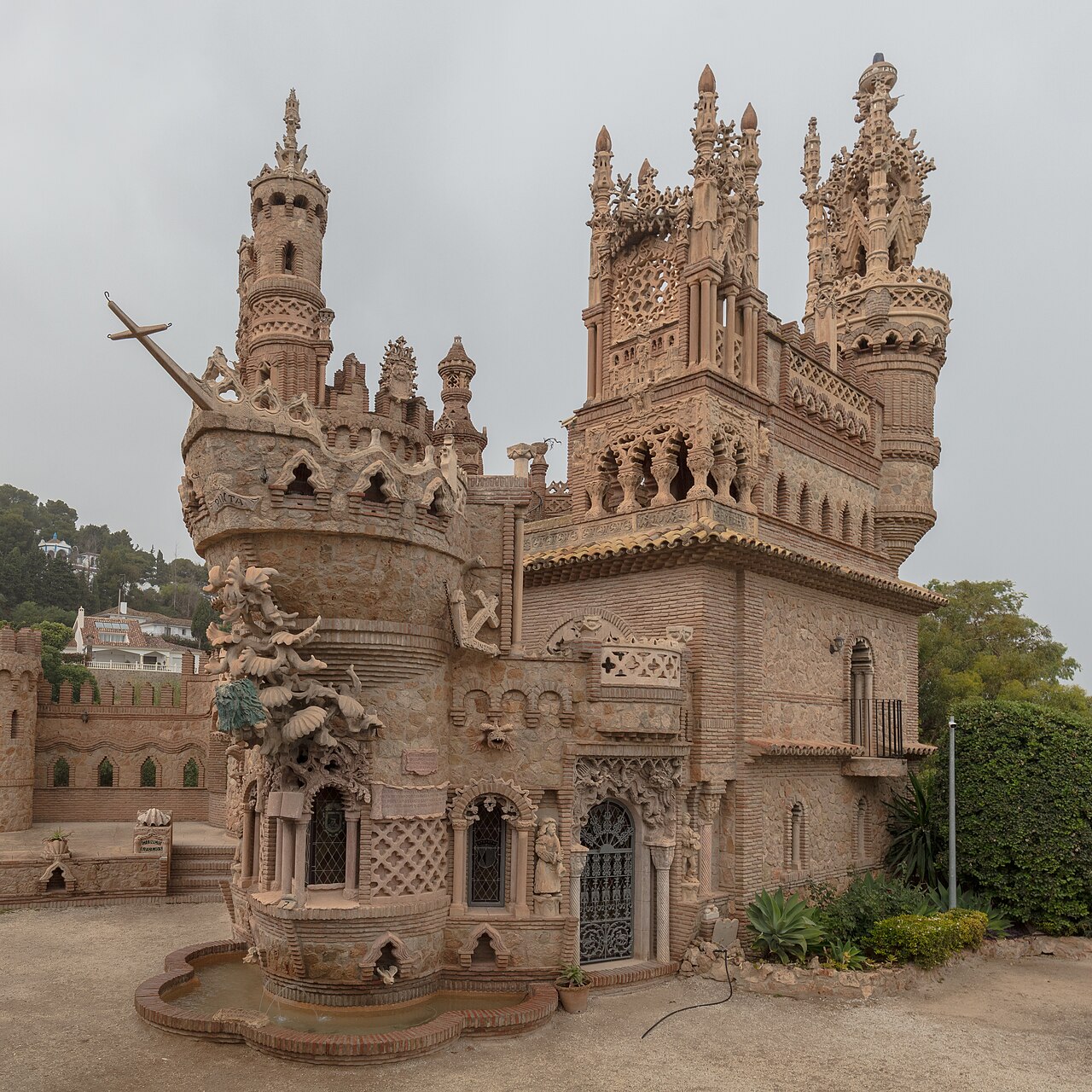
Castillo de Bil Bil stands as a unique architectural landmark in the municipality of Benalmádena, Spain. Constructed in the 1930s, this castle is a remarkable example of neo-Arab architecture, reflecting a revivalist style that draws heavily from the Islamic art and architecture of southern Spain's Nasrid dynasty. The castle’s design was the vision of Enrique Atencia, an architect who sought to blend historical inspiration with modern functions, initially conceiving the building as a "casa de baños" or bathhouse near a prominent coastal road.
Historical background and ownership
The completion of Castillo de Bil Bil in 1936 marked the fulfillment of a private commission by the Hermann couple. Unfortunately, the outbreak of the Spanish Civil War prevented them from residing in the property. After the war, the Hermanns returned to France, and the castle passed into new hands.
Subsequently, the castle was acquired by the American Schestrom family, who renamed it "Bil Bil," a name derived from the combination of the names Elsa and William, family members. The Schestroms lived in the castle for about three decades during a period when the surrounding coastal area experienced significant growth, particularly driven by the rise of tourism.
In the late 1970s, ownership changed again when Gerard Saintmoux purchased the property. Unfortunately, during his tenure, the castle fell into neglect. Recognizing the cultural value of the site, the local government, led by Mayor Enrique Bolín, designated the surrounding land as a green zone in the 1980s to prevent speculative development. Eventually, Saintmoux sold the castle to the municipality.
Since municipal acquisition, Castillo de Bil Bil has been repurposed as a cultural center, hosting various events and exhibitions. Restoration efforts have been undertaken twice, once in the 1980s and again in the 1990s, to preserve the architectural integrity and decorative richness of the building. The castle's distinctive appearance and ambiance have also made it a favored filming location for several Spanish films and television series, including "El coleccionista de cadáveres" (1967), "Cuidado con las señoras" (1968), and the TV series "Toy Boy."
Architectural style and design features
Castillo de Bil Bil is designed as a modestly sized palace that evokes the appearance of a fortress. Its layout is organized around a central courtyard, which serves as the focal point and spatial organizer for the surrounding rooms. This arrangement creates a harmonious balance between private interiors and open communal spaces, a characteristic feature of traditional Andalusian architecture.
The castle’s exterior is distinguished by its striking red plaster coating, which contrasts vividly with the intricate decorative elements inspired by the Nasrid palaces of the Alhambra, such as the Comares and Lions halls. These decorations include complex tilework, bas-relief sculptures, and ornate plasterwork, all executed with exceptional craftsmanship.
The decorative program incorporates epigraphic inscriptions and interlaced geometric patterns known as lacería, which adorn dado panels both inside and outside the building. These elements were crafted under the supervision of Antonio Santiesteban, a conservator renowned for his expertise in traditional Granadan Arab techniques, linking the castle’s artistry directly to the heritage of the Alhambra.
Additional ornamental features include wrought iron grilles and delicate latticework, which add texture and visual interest while reinforcing the building’s Moorish aesthetic. The main entrance is marked by triple horseshoe arches, a signature motif of Islamic architecture in Spain, which creates a grand and inviting portal.
A distinctive architectural highlight is the castle’s tower, designed to resemble a minaret. This feature further emphasizes the building’s connection to Western Arab architectural traditions and serves as a vertical counterpoint to the castle’s cubic volumes.
Gardens and surroundings
The castle is set within gardens that were introduced during later renovations to complement the architectural style. These gardens include fountains and palm trees, elements that enhance the ambiance and evoke the lush courtyards typical of Andalusian palaces. The green zone designation by the local government has helped preserve the natural setting around the castle, maintaining its aesthetic and cultural context.
Cultural significance and preservation
Today, Castillo de Bil Bil stands as a well-preserved example of 20th-century neo-Arab architecture in southern Spain. Its blend of historic inspiration and local craftsmanship offers valuable insight into the revivalist movements of the early 20th century that sought to celebrate and reinterpret Spain’s Islamic architectural heritage.
The castle’s use as a cultural center and filming location has helped raise public awareness of its architectural and historical importance. Ongoing municipal care and restoration ensure that the intricate decorative features and structural integrity are maintained for future generations.
Visitors to the castle can experience a unique fusion of historical styles and modern adaptation, witnessing firsthand the artistic dialogue between past and present embodied in Castillo de Bil Bil. Its preservation contributes to the cultural richness of the Costa del Sol region and highlights the enduring legacy of Andalusian architectural traditions.
Frequently asked questions (FAQ)
- When was Castillo de Bil Bil built and by whom?
- Castillo de Bil Bil was built in the 1930s and designed by architect Enrique Atencia. It was completed in 1936 for the Hermann couple.
- What architectural style characterizes Castillo de Bil Bil?
- The castle is designed in a neo-Arab style inspired by the Nasrid dynasty's Islamic architecture, featuring intricate tilework, horseshoe arches, and a minaret-like tower.
- Can visitors explore the gardens surrounding Castillo de Bil Bil?
- Yes, the castle is surrounded by gardens with fountains and palm trees, which were added during later renovations to complement the neo-Arab architectural style.
- Has Castillo de Bil Bil been used in films or television?
- Yes, the castle has served as a filming location for several Spanish films and TV series, including "El coleccionista de cadáveres" (1967) and "Toy Boy."
- Is Castillo de Bil Bil open to the public?
- Castillo de Bil Bil functions as a cultural center managed by the municipality, and it is generally accessible to visitors, though specific opening hours may vary.
Information
Sources & official resources
Verify the information above using these authoritative references.
Loading map...
Visitor reviews
No reviews yet. Been here? Write the first review and help other travelers!
Write the first reviewVisited this castle? Share your experience
Your review helps other travelers and adds first-hand knowledge to our encyclopedia.