Castillo de Burgalimar
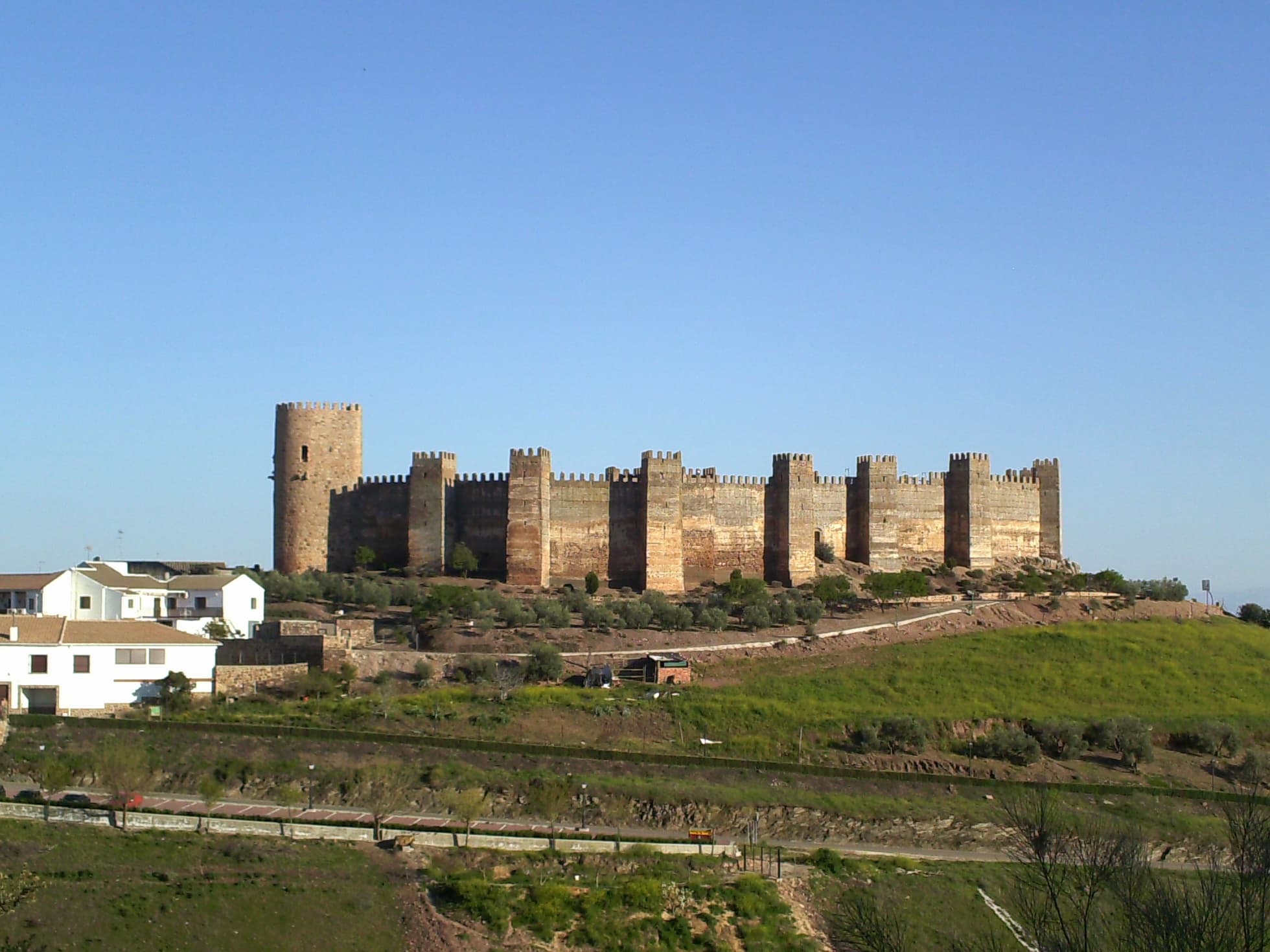
Castillo de Burgalimar stands as a remarkable example of 10th-century Muslim military architecture in southern Spain. Perched on a small rocky hill overlooking the town of Baños de la Encina in the province of Jaén, this fortress was strategically built to control access to the Guadalquivir valley and the vital routes leading to the city of Córdoba. Its location and robust design reflect the military and political priorities of the Umayyad Caliphate of Córdoba during a period of relative peace and consolidation in Al-Andalus.
The castle's construction is historically documented by a marble inscription dated 968 CE, which confirms that it was commissioned by Caliph Al-Hakam II. This makes Castillo de Burgalimar one of the earliest and most authentic surviving examples of Muslim fortifications in the Iberian Peninsula. The fortress was part of a wider defensive network designed to house troops, particularly Maghrebi mercenaries, who were tasked with maintaining control over the region.
Historical significance and military role
Construction and early history
The castle was built during the early medieval period as a hill castle with the primary function of overseeing and defending the surrounding territory. Its position on a rocky outcrop provided natural defensive advantages, while the architectural design incorporated advanced military features for its time. The fortress was a key element in the Umayyad strategy to secure the Guadalquivir valley, a crucial agricultural and communication corridor.
Transitions of control during the reconquista
Following the collapse of the Caliphate of Córdoba in the 11th century, Castillo de Burgalimar became a contested site during the Christian Reconquista. The castle changed hands multiple times between Muslim and Christian forces. It was first captured by Alfonso VII in 1147, reverted to Muslim control after 1157, and was again taken by Christian kings Alfonso VIII and Alfonso IX in 1189. Despite these changes, the fortress remained a significant military and administrative center.
The decisive Battle of Las Navas de Tolosa in 1212 marked a turning point in the Reconquista, but the castle briefly returned to Muslim hands before being definitively conquered by Ferdinand III of Castile in 1225. After this conquest, the castle was granted to the Archbishop of Toledo and its defense was entrusted to the Order of Santiago, a military-religious order that played a crucial role in consolidating Christian rule in the region.
Later history and preservation
In the 15th century, the castle underwent significant modifications under Christian ownership. King Henry IV granted it to his constable Miguel Lucas de Iranzo in 1458, which sparked local opposition. By 1466, the city council of Baeza reclaimed the fortress for the crown and added the distinctive Torre del Homenaje (keep), a semi-cylindrical stone tower showing Gothic architectural influences. This tower faces the town rather than the surrounding landscape, reflecting its role in local authority rather than purely military defense.
During the Napoleonic Wars, French troops occupied the castle, and in the 19th century, it was repurposed as a parish cemetery until 1828. Recognized for its outstanding state of preservation and historical importance, the castle was declared a National Monument in 1931. It remains under the ownership of the municipality of Baños de la Encina, with restoration and preservation efforts managed by the Directorate of Fine Arts.
Architectural features and layout
Fortification design
The Castillo de Burgalimar occupies an oval-shaped enclosure approximately 100 meters long and 46 to 50 meters wide, covering about 2,700 square meters. The fortress is enclosed by a crenellated curtain wall constructed using rammed earth (tapial), a technique common in Muslim military architecture that gives the walls a characteristic brown to reddish hue. This method provided both strength and flexibility, allowing the walls to absorb impacts from siege weaponry.
The curtain wall is reinforced by fourteen square or rectangular towers of similar height, each rising three to four floors depending on the terrain. These towers feature merlons (solid upright sections of battlements) and arrow slits for archers and crossbowmen to defend the fortress effectively. The uniform height of the towers and walls created a continuous defensive line, enhancing the castle's ability to repel attackers.
Entrances and defensive mechanisms
The main entrance is located on the southern side of the fortress, positioned between two tall towers. It consists of a straight passage flanked by two large horseshoe arches, a hallmark of Islamic architecture. Above the entrance is a machicolation, an opening through which defenders could drop stones, boiling oil, or other objects onto attackers attempting to breach the gate. This defensive feature is particularly well preserved and highlights the castle's military sophistication.
A secondary, smaller gate exists on the northern wall, providing an additional point of access and escape if necessary. The design of the gates and towers reflects a careful balance between accessibility for inhabitants and defensibility against enemies.
Interior structures and courtyard
Within the enclosure lies a large courtyard known as the plaza de armas, which served as the main gathering and operational space for the garrison. Central to the courtyard is a vaulted cistern divided into two sections by pillars and covered with barrel vaults. This cistern was essential for storing water during sieges, ensuring the fortress could withstand prolonged attacks.
Foundations and fragments of a small Christian-era fortification remain within the courtyard, including a circular tower connected to the outer walls by two sections of wall. This structure divides the courtyard into two parts, indicating adaptations made after the Christian conquest to meet their defensive needs.
The torre del homenaje
The Torre del Homenaje, or keep, is a later addition dating to the 15th century. Unlike the original Muslim structures built primarily with rammed earth, this tower is constructed of stone and exhibits Gothic architectural influences. Its semi-cylindrical shape and orientation towards the town reflect its role as a symbol of local power and authority during the late medieval period.
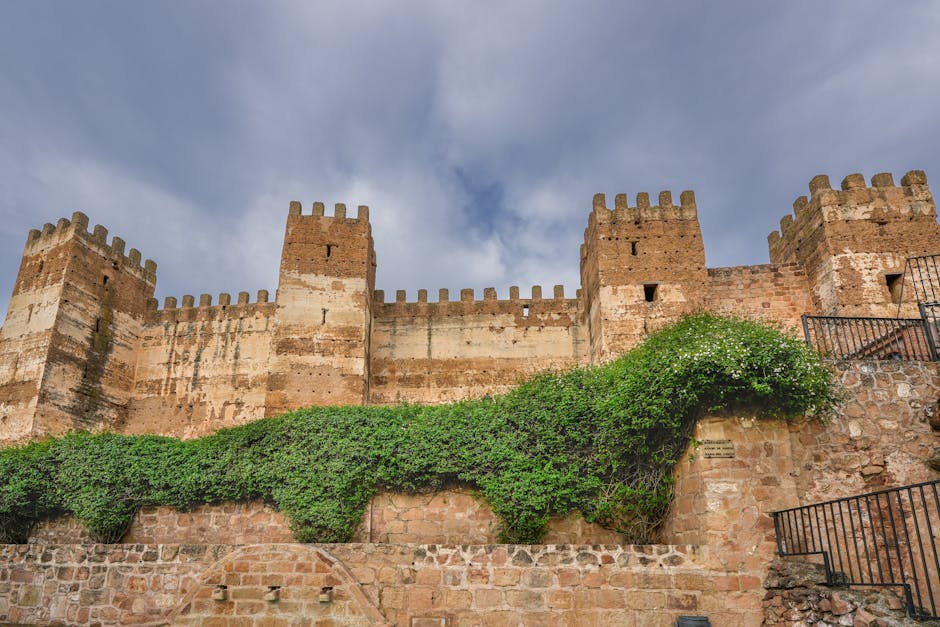
Photo by Emilio Sánchez Hernández
Archaeological significance and earlier settlements
Archaeological excavations at the site have revealed a rich history of human occupation predating the castle. Evidence includes Bronze Age remains, an Iberian fortified settlement from the 4th century BCE, and a Roman mausoleum. These findings underscore the strategic importance of the site across multiple historical periods and cultures.
The continuity of occupation highlights the location's natural defensive advantages and its significance as a control point over the surrounding landscape. The layers of history visible at Castillo de Burgalimar make it a valuable site for understanding the cultural and military evolution of the region.
Current status and visitor information
Today, Castillo de Burgalimar is one of the best-preserved Muslim fortresses in Spain and is recognized as the second oldest castle in Europe. Its exceptional state of preservation allows visitors to experience firsthand the architectural ingenuity and historical depth of early medieval Islamic military construction.
The castle is owned by the municipality of Baños de la Encina and managed with the support of the Directorate of Fine Arts, which oversees ongoing restoration efforts to maintain its structural integrity and historical authenticity. Visitors can explore the extensive curtain walls, towers, and the impressive Torre del Homenaje, gaining insight into the fortress's layered history from its Islamic origins through its Christian adaptations.
The site offers a unique opportunity to appreciate a fortress that has withstood centuries of conflict and change, standing as a testament to the rich cultural heritage of Andalusia and the broader Iberian Peninsula.
Frequently asked questions (FAQ)
- How do I get to Castillo de Burgalimar?
- Castillo de Burgalimar is located in Baños de la Encina, Spain, and is easily accessible by car. If you are traveling from the city of Jaén, it takes approximately 30 minutes by road. Public transportation options are limited, so driving is recommended for convenience.
- What is the historical significance of Castillo de Burgalimar?
- Castillo de Burgalimar is one of the best-preserved medieval castles in Spain, dating back to the 10th century. It served as a defensive fortress during the Islamic period and later played a significant role in the Reconquista. The castle's historical architecture reflects the rich cultural heritage of the region.
- When was Castillo de Burgalimar built?
- The construction of Castillo de Burgalimar began in the early 10th century, making it a key example of Islamic military architecture. It was built during the reign of the Caliphate of Córdoba. Over the centuries, it has undergone various renovations that highlight its historical evolution.
- Can I visit Castillo de Burgalimar year-round?
- Yes, Castillo de Burgalimar is open to visitors throughout the year, although hours may vary by season. It's advisable to check the official website or local tourism information for specific opening hours before planning your visit. The castle's stunning views and rich history make it a worthwhile destination regardless of the season.
- Why is Castillo de Burgalimar a popular tourist attraction?
- Castillo de Burgalimar attracts visitors due to its impressive architecture, historical significance, and stunning panoramic views of the surrounding landscape. The castle is an excellent example of Moorish military architecture and offers insights into Spain's complex history. Its picturesque setting and well-preserved structure make it a favorite among history enthusiasts and photographers alike.
- Is it possible to tour the castle with a guide?
- Yes, guided tours are available at Castillo de Burgalimar, providing visitors with in-depth knowledge of its history and architecture. Guided tours can enhance your experience by offering detailed insights into the castle's significance and stories from the past. It's recommended to book in advance, especially during peak tourist seasons.
- What are the ticket prices for Castillo de Burgalimar?
- Ticket prices for Castillo de Burgalimar are generally affordable, with discounts available for students and seniors. As of the latest information, adult tickets are around €3, while children and groups may enjoy reduced rates. Keep an eye on any special promotions or family packages that may be offered.
- What is the best time to visit Castillo de Burgalimar?
- The best time to visit Castillo de Burgalimar is during the spring and fall when the weather is mild and pleasant. Summer months can be quite hot, making exploration less comfortable. Additionally, visiting during off-peak times can help you avoid crowds and enjoy a more personal experience.
- Are there any nearby attractions to see when visiting Castillo de Burgalimar?
- Yes, there are several nearby attractions worth exploring, including the charming village of Baños de la Encina itself, which features traditional Andalusian architecture. Other nearby sites include the Sierra de Andújar Natural Park, perfect for nature lovers and hiking enthusiasts. Combining your visit to the castle with these attractions can enrich your overall experience.
Photo gallery


Information
Website
Visit websiteSources & official resources
Verify the information above using these authoritative references.
Loading map...
Visitor reviews
No reviews yet. Been here? Write the first review and help other travelers!
Write the first reviewVisited this castle? Share your experience
Your review helps other travelers and adds first-hand knowledge to our encyclopedia.