Castillo de Beselga
The Castillo de Beselga stands prominently on the northern slope of Monte Garbí, near the town of Estivella in Spain. This hill castle is a remarkable example of the region's layered history, showcasing architectural and cultural influences from both the Almohad Muslim period and later Christian Reconquista eras. Originally established as a modest fortress and watchtower, it played a crucial role in the military defense network alongside the nearby Castillo de Morvedre, overseeing and protecting the surrounding settlements from strategic vantage points.
Historical context is key to understanding the castle's evolution. The site was initially constructed by Muslim builders during the Almohad period, reflecting the architectural techniques and defensive needs of that era. Following the Christian reconquest of the region, the castle's ownership and function transformed significantly. The earliest documented Christian lord was the knight Adam de Paterna in 1248, as recorded in the medieval "Libro del Repartiment." Over subsequent centuries, the castle passed through the hands of notable figures such as Roger de Lauria in 1292 and Guillem de Colom in 1374. Influential families like the Sanfeliú and Monsoriu clans also held the castle, with Gracián Monsoriu undertaking significant construction in 1449 to adapt the fortress to changing military and residential demands.
Medieval transformations and military significance
By the early 16th century, the castle faced turbulent times. In 1506, under the ownership of Jaime de Aguilar, the castle suffered major damage when it was deliberately demolished to prevent its use by the agermanados, rebels involved in the War of the Germanías. This conflict marked a turning point, leading to the castle's decline as a military stronghold. Despite this, the Monsoriu family regained possession and played a role in the repopulation efforts after the expulsion of the Moriscos in 1610, reflecting the castle's ongoing importance within the region's socio-political landscape.
Throughout its history, the castle was part of the jurisdiction of Morvedre (modern-day Sagunto) until 1535. It functioned not only as a defensive fortress but also as a noble residence and administrative center, illustrating the multifaceted role castles played in medieval and early modern Spain. However, after the extensive damage in the early 16th century and the depopulation of the nearby village in the 19th century, the castle fell into ruin. By the modern era, it had transitioned from a military and noble seat to a site used for summer homes, indicating a shift in its cultural and functional significance.
Architectural features and layout
The Castillo de Beselga is characterized by its elongated layout, oriented from east to west, which closely follows the natural contours of the hillside. This adaptation to the terrain results in a stretched form that maximizes defensive advantage while accommodating the slope. The castle's construction materials and techniques reveal a blend of Muslim and later Christian building traditions, showcasing the site's complex history.
The western tower
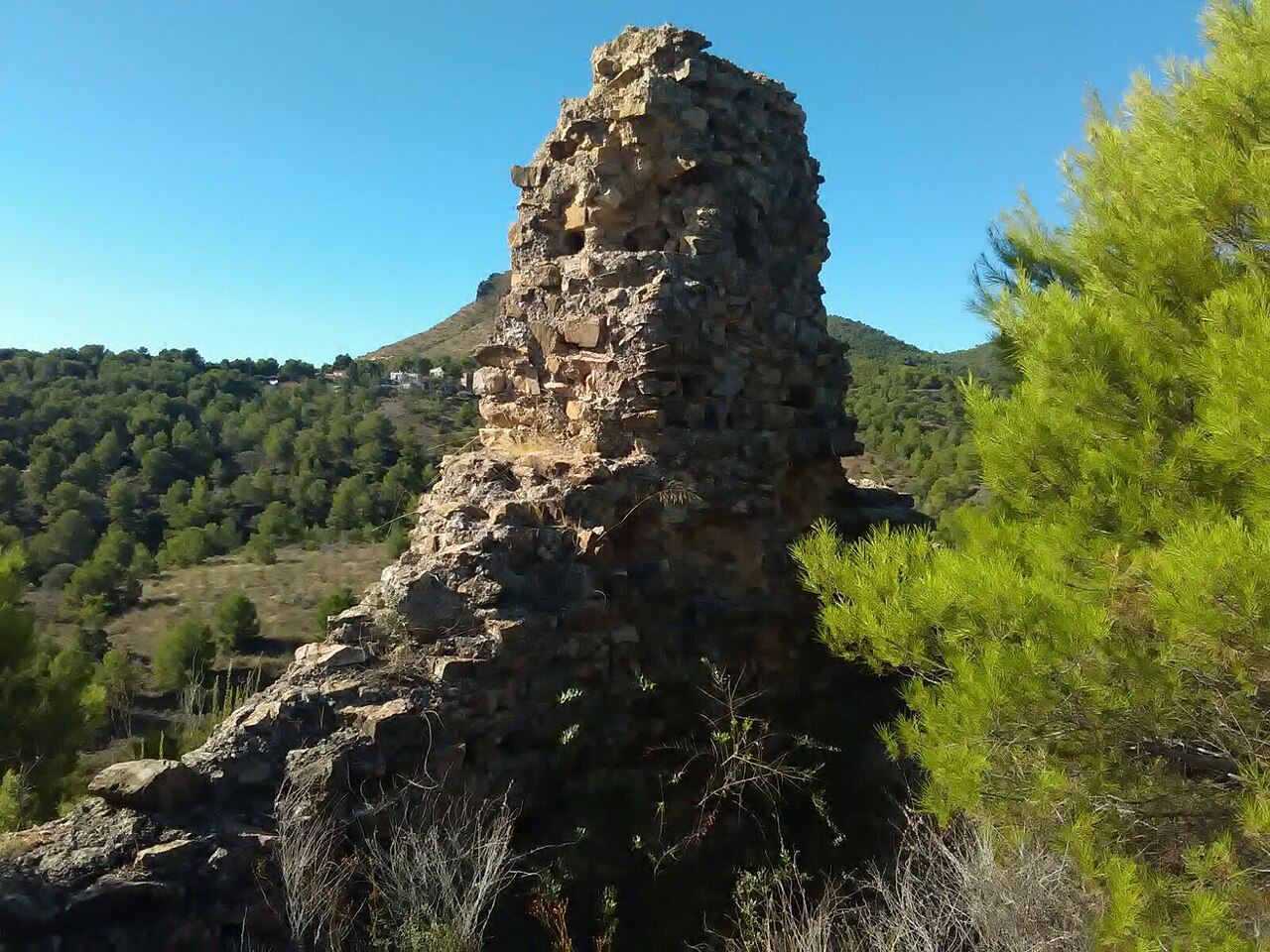
At the western end of the castle stands a prominent rectangular tower, measuring approximately 7.10 by 7.30 meters, with walls exceeding one meter in thickness. This tower was constructed using the tapia technique, involving rammed earth compacted in layers, a method typical of Muslim military architecture in the region. Stone is used sparingly, primarily in the internal staircases and supporting arches. The tower rises three stories, each pierced by windows, and is topped by a terrace offering panoramic views of the surrounding landscape.
Originally, access to the tower was via a removable ladder, a defensive feature that could be withdrawn to prevent enemy entry. The lowest level likely served as a cistern (or aljibe), used for water storage and reconstructed during the Christian period. The middle floor provided living quarters, while the upper floor functioned as a lookout station with defensive loopholes on all sides, allowing surveillance and protection.
The castle-palace complex
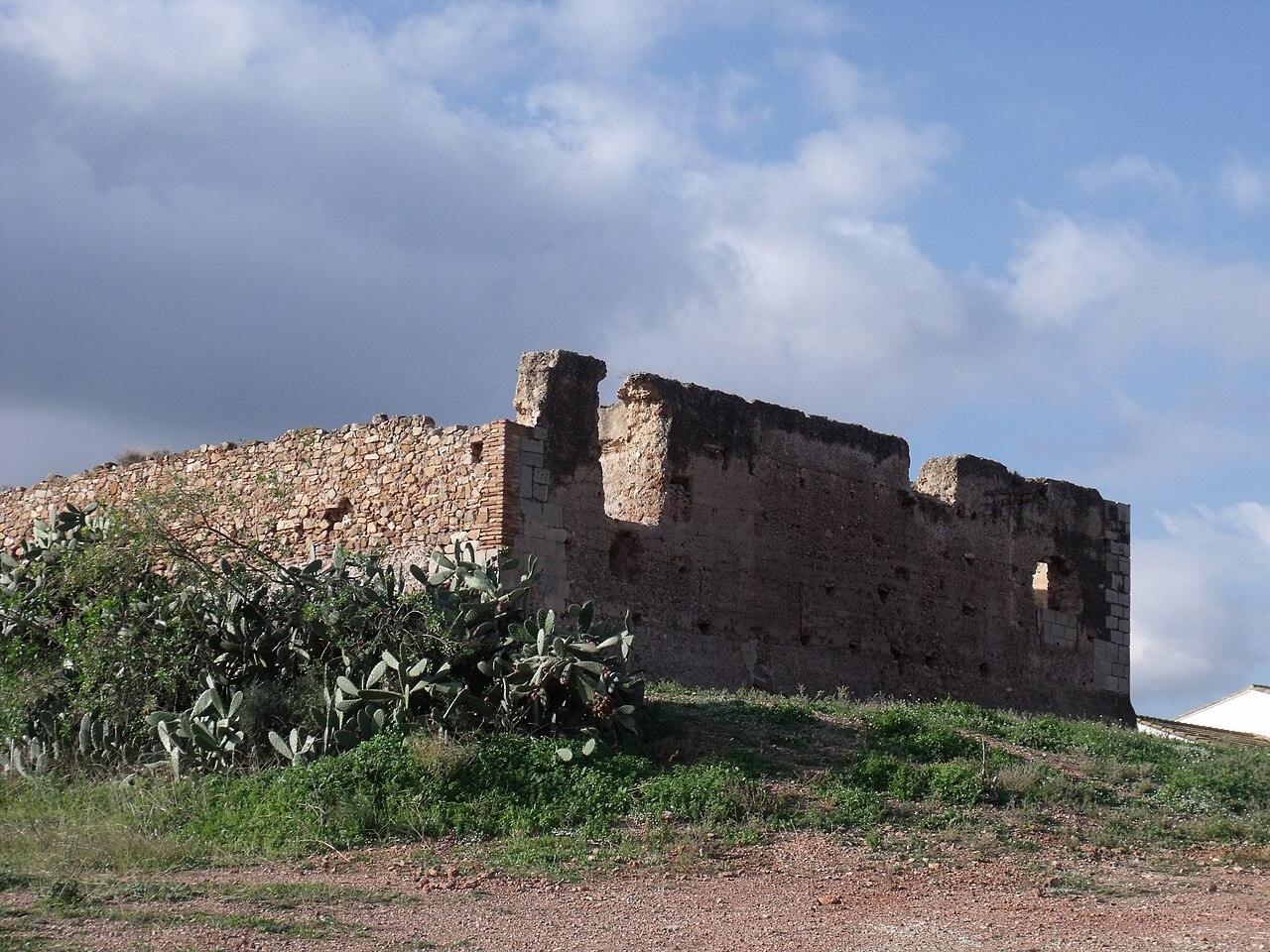
Adjacent to the tower is a castle-palace built at the end of the 15th century during the Christian era. This rectangular building measures about 22.5 meters in length and nearly 8 meters in width, rising two stories with an accessible rooftop terrace. The northern façade features a main entrance framed by a semicircular arch composed of large, precisely cut voussoirs, each nearly 65 centimeters high. Above the doorway are two large Gothic twin windows, adding architectural distinction and elegance.
The interior of the palace reflects a blend of defensive and residential functions. The lower floor is covered by semicircular vaults running north to south, providing structural strength. The upper floor employs wooden beam ceilings, a traditional technique known as viguery. Small windows on the top level and attached battlements along the castle walls integrate fortification elements with comfortable living spaces. This combination underscores the castle's evolution from a purely military fortress to a noble residence emphasizing status and comfort.
Modern preservation and cultural significance
By the 19th century, the castle had fallen into ruin due to depopulation and the decline of its strategic importance. However, in the 21st century, efforts have been made to preserve and stabilize the remaining structures. In 2004, consolidation work was carried out on the tower, followed by masonry repairs and improved access in 2011. These interventions aim to protect the castle's historical fabric and promote its cultural heritage.
Today, Castillo de Beselga is valued not only as a historic military site but also as a symbol of the region's rich cultural tapestry, reflecting the complex interplay between Muslim and Christian influences in medieval Spain. Its architectural features, layered history, and scenic hillside location make it a significant landmark for visitors interested in history, architecture, and Spanish heritage.
Frequently asked questions (FAQ)
- When was Castillo de Beselga originally built?
- Castillo de Beselga was originally established during the Almohad period by Muslim builders, reflecting early medieval Islamic military architecture.
- What architectural styles are present in Castillo de Beselga?
- The castle features a blend of Muslim Almohad construction techniques and later Christian Gothic elements, illustrating its layered historical development.
- Can visitors see the castle's tower and palace structures?
- Yes, the rectangular tower and the adjacent castle-palace remain partially preserved, with access improved through recent restoration efforts.
- Why was the castle demolished in the early 16th century?
- The castle was deliberately demolished by Jaime de Aguilar in 1506 to prevent its use by the agermanados rebels during the War of the Germanías.
- What is the significance of the castle's location?
- Situated on the northern slope of Monte Garbí, the castle's hilltop position provided strategic military advantages for surveillance and defense over the surrounding region.
Information
Loading map...
Visitor reviews
No reviews yet. Been here? Write the first review and help other travelers!
Write the first reviewVisited this castle? Share your experience
Your review helps other travelers and adds first-hand knowledge to our encyclopedia.