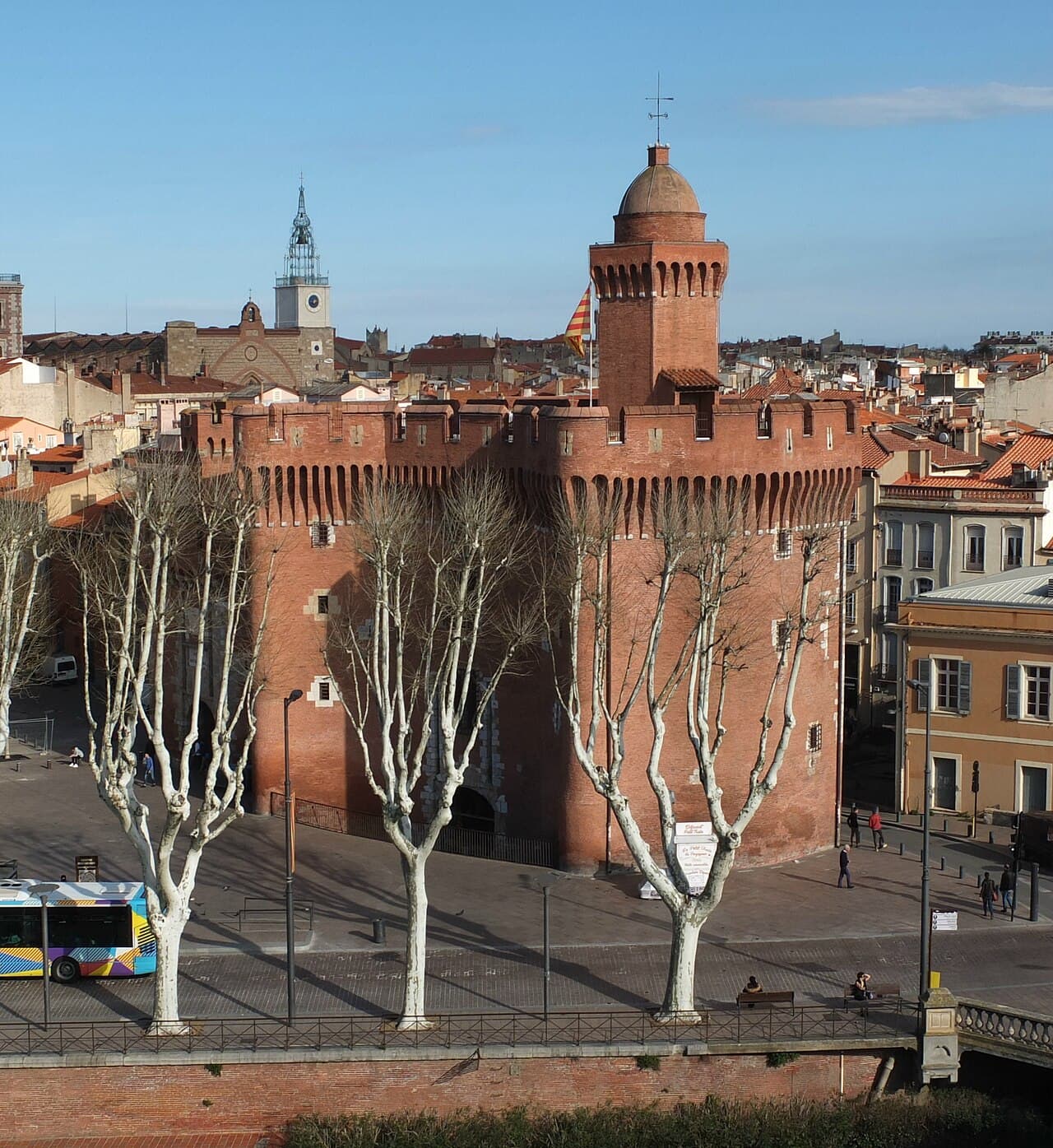
The Castillet, located in Perpignan, in the Pyrénées-Orientales region of France, is a notable example of a late medieval bastioned fortress that served as a fortified city gate and defensive structure. Its name, meaning "small castle" in Catalan, reflects its original function as a stronghold protecting the city. The Castillet has become a symbol of Perpignan and today functions as the Museu Català de les Arts i Tradicions Populars, a museum dedicated to Catalan popular arts and traditions.
Historical context and construction
The Castillet was constructed in the 14th century during the late medieval period, a time when fortifications were crucial for the defense of cities in the region. It was built as part of the city's fortifications and played a key role in controlling access to Perpignan. The structure originally comprised three main components: the big Castillet, the small Castillet (which served as the city gate), and a polygonal bastion that reinforced the defensive capabilities of the complex.
Architectural features and layout
The big Castillet is the most prominent part of the complex, characterized by its robust stone walls and imposing presence. It served as a watchtower and defensive keep, overseeing the surrounding area. The small Castillet functioned as the main city gate, controlling entry and exit from Perpignan. The now-lost polygonal bastion was an angular defensive structure designed to provide a wider range of fire and better protection against artillery, reflecting the evolution of military architecture in the late medieval period.
Defensive design elements
The bastioned design of the Castillet was part of a broader trend in fortress construction that responded to the increasing use of gunpowder artillery. The polygonal bastion allowed defenders to cover adjacent walls with crossfire, reducing blind spots and strengthening the fortress's defenses. The thick walls and narrow openings minimized vulnerability to siege weapons.
Changes and preservation
In the early 20th century, the polygonal bastion was demolished, likely due to urban development and changing military needs. However, the big and small Castillet were preserved, escaping demolition that befell many similar medieval structures. Their preservation has allowed the Castillet to remain a visible reminder of Perpignan's medieval past.
Current use and cultural significance
Today, the Castillet houses the Museu Català de les Arts i Tradicions Populars, which showcases the rich cultural heritage of the Catalan people in the region. The museum exhibits traditional crafts, costumes, and artifacts, linking the fortress's historical significance with the cultural identity of the area. The Castillet stands not only as an architectural monument but also as a cultural landmark in Perpignan.
Visitor experience
Visitors to the Castillet can explore the preserved towers and gate, gaining insight into medieval fortification techniques and the history of Perpignan. The museum inside offers educational displays about Catalan traditions, making it a destination of both historical and cultural interest.
Frequently asked questions (FAQ)
- What is the historical significance of the Castillet in Perpignan?
- The Castillet served as a fortified city gate and bastioned fortress in the 14th century, playing a key role in the defense of Perpignan. It is a symbol of the city's medieval heritage and Catalan culture.
- Can I visit the Castillet museum?
- Yes, the Castillet currently houses the Museu Català de les Arts i Tradicions Populars, which is open to visitors interested in Catalan arts and traditions.
- What architectural features make the Castillet unique?
- The Castillet features a combination of a large tower, a city gate, and a polygonal bastion (now demolished), showcasing late medieval bastioned fortress design adapted for artillery defense.
- Is the Castillet fully preserved?
- The big and small Castillet towers are partially preserved, while the polygonal bastion was demolished in the early 20th century due to urban development.
- Where is the Castillet located exactly?
- The Castillet is located in the city of Perpignan, in the Pyrénées-Orientales region of southern France, near the historic center.
Photo gallery

Information
Loading map...
Visitor reviews
No reviews yet. Been here? Write the first review and help other travelers!
Write the first reviewVisited this castle? Share your experience
Your review helps other travelers and adds first-hand knowledge to our encyclopedia.