Castelo dos Mouros

Castelo dos Mouros in Sintra, Portugal
Sintra, Lisboa, Portugal
Early Medieval (5th–10th c.)
Ruins

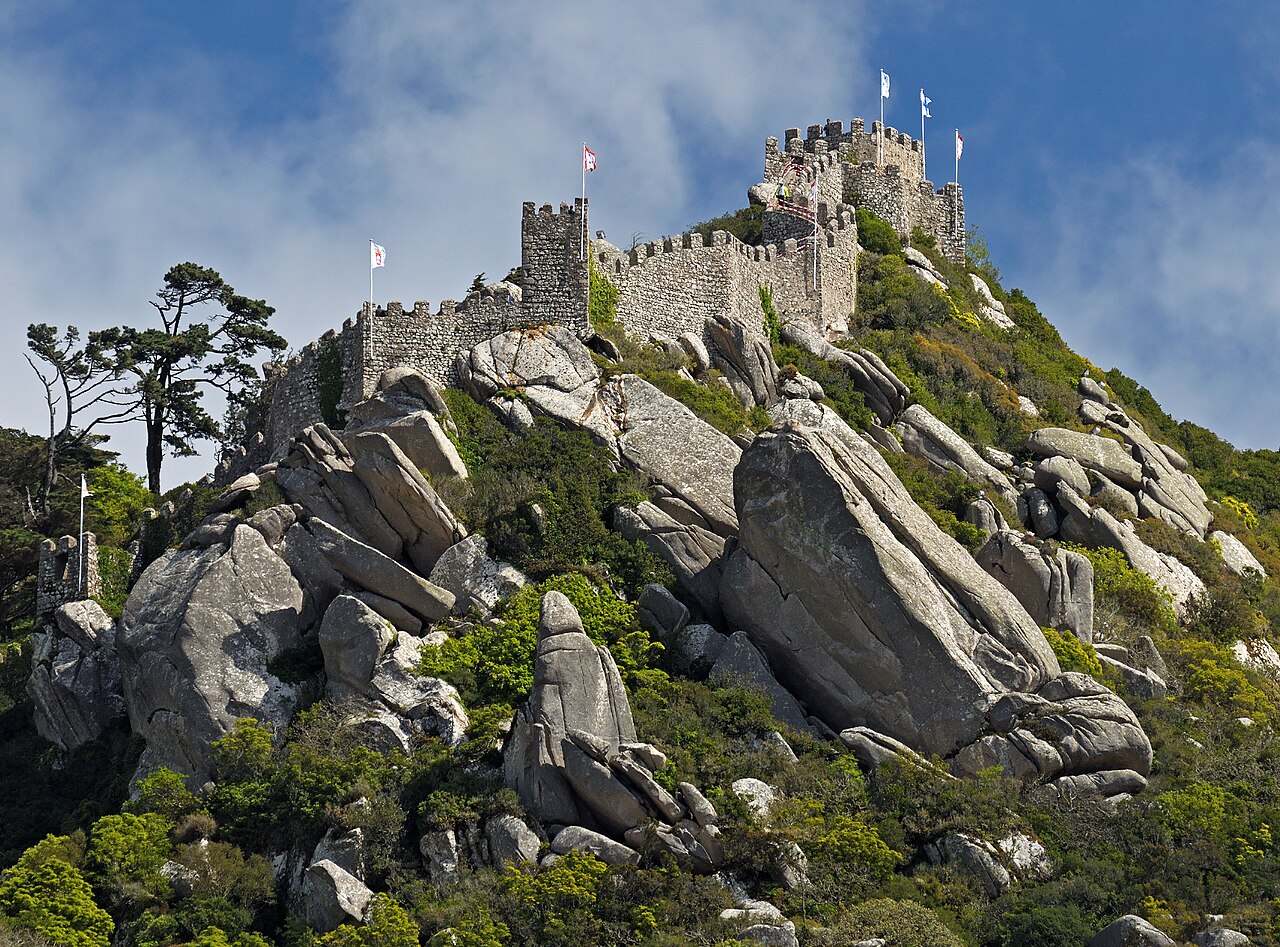
Castelo dos Mouros, also known as the Moorish Castle, is a striking medieval fortress perched atop the rugged hills of Sintra, in the Lisboa region of Portugal. This hill castle is renowned for its dramatic ruins that command panoramic views over the lush Sintra-Cascais Natural Park and the surrounding landscape. The castle's origins date back to the early medieval period, with construction believed to have begun in the 8th or 9th century during the time of the Moorish occupation of the Iberian Peninsula.

Historical context and significance

The Castelo dos Mouros was strategically built to control the surrounding territory and to serve as a defensive stronghold for the Moors during their rule in Portugal. Its location on a steep hilltop provided a natural vantage point, enabling surveillance over the nearby Atlantic coast and the fertile lands below. The castle played a vital role during the Reconquista, the Christian reconquest of the Iberian Peninsula, when it was captured by King Afonso Henriques in the mid-12th century, marking a significant turning point in Portuguese history.

Architectural features and layout

The castle is characterized by its irregular polygonal walls that follow the contours of the hill, encompassing an area of approximately 10,000 square meters. Its defensive walls are punctuated by numerous towers and battlements, which were used for both lookout and defense. The walls are constructed from local stone and exhibit the typical Moorish military architectural style, emphasizing functionality and adaptability to the rugged terrain.

Defensive structures

The fortress includes several watchtowers strategically placed to maximize visibility and protection. Some towers are square, while others have a more rounded form, reflecting different phases of construction and repair over the centuries. The castle's main gate is fortified and was designed to withstand sieges, featuring narrow access points and defensive mechanisms to repel attackers.

Internal features

Inside the walls, the remains of cisterns can be found, which were essential for water storage during sieges. There are also traces of residential quarters and military installations, though much of the internal structures have not survived intact. The castle's layout reflects its primary function as a military fortress rather than a royal residence.

Restoration and current condition

Today, the Castelo dos Mouros stands as ruins, having suffered centuries of neglect and damage, including destruction during the 1755 Lisbon earthquake. However, restoration efforts in the 20th century have stabilized the remaining walls and towers, allowing visitors to safely explore the site. The castle is managed as a cultural heritage site and is part of the Sintra UNESCO World Heritage designation, highlighting its importance in Portuguese history and architecture.

Visitor experience and significance

Visitors to the castle can walk along the ancient walls, enjoying breathtaking views of Sintra's palaces, the Atlantic Ocean, and the dense forests below. The castle's evocative ruins and rugged setting offer a tangible connection to Portugal's medieval past and the complex cultural layers shaped by Moorish and Christian influences. Interpretive signage throughout the site provides historical context, enhancing the educational value of the visit.

Access and facilities

The castle is accessible via hiking trails from Sintra's town center, with paths that wind through the natural park. The site has basic visitor amenities, including a small ticket office and informational displays. It is recommended to wear comfortable footwear due to the uneven terrain and to allow ample time to explore the extensive walls and towers.

Frequently asked questions (FAQ)

How do I get to Castelo dos Mouros?
Castelo dos Mouros is located in Sintra, Portugal, and can be easily accessed by public transport from Lisbon. The Sintra train station is a short walk from the town center, where you can catch a bus or take a scenic hike up to the castle.
What is the historical significance of Castelo dos Mouros?
Castelo dos Mouros dates back to the 8th and 9th centuries, originally built by the Moors during their rule in the Iberian Peninsula. The castle played a crucial role in the defense of the region, and its ruins today offer a glimpse into the rich history of medieval Portugal.
When was Castelo dos Mouros built?
Construction of Castelo dos Mouros began in the 8th century, with significant modifications made during the 9th century. The castle was part of the defensive system established by the Moors and later became a strategic fortress for the Christian reconquest.
Can I visit Castelo dos Mouros with children?
Yes, Castelo dos Mouros is a family-friendly destination with plenty of open spaces for children to explore. The castle's fascinating history and breathtaking views make it an engaging experience for visitors of all ages.
Why is the architecture of Castelo dos Mouros unique?
The architecture of Castelo dos Mouros is characterized by its Moorish design, featuring thick stone walls and a series of towers that offer panoramic views of the surrounding landscape. Its strategic positioning on the hilltop enhances its historical significance as a defensive structure.
Is it possible to hike to Castelo dos Mouros?
Yes, there are several hiking trails that lead to Castelo dos Mouros, offering scenic views of the Sintra landscape. The trails vary in difficulty, making it an enjoyable option for both casual walkers and more experienced hikers.
What are the opening hours for Castelo dos Mouros?
Castelo dos Mouros is typically open from 9:30 AM to 8:00 PM during the summer months and 9:30 AM to 6:00 PM in the winter. However, it's advisable to check the official website for any seasonal changes or special events that may affect opening hours.
What are the ticket prices for Castelo dos Mouros?
As of now, the ticket prices for Castelo dos Mouros are approximately €8 for adults, with discounts available for seniors and children. It's wise to purchase tickets in advance online to avoid long queues at the entrance.
What nearby attractions can I visit while in Sintra?
While visiting Castelo dos Mouros, you can also explore other nearby attractions such as the Pena Palace and the National Palace of Sintra. The charming town of Sintra itself is filled with beautiful gardens, quaint shops, and delightful cafes, making it a perfect day trip destination.

Information

Hill Castle

Loading map...

Visitor reviews

No reviews yet. Been here? Write the first review and help other travelers!

Write the first review

Visited this castle? Share your experience

Your review helps other travelers and adds first-hand knowledge to our encyclopedia.

Write a review

(5/5)

0/2000 characters

Your review will be visible after admin approval

Nearby castles

9.6 km

Pena Palace

São Pedro de Penaferrim, Portugal

Pena Palace stands as one of the world's most extraordinary examples of 19th-century Romantic architecture, perched majestically atop the Sintra hills in Portugal. This iconic palace, with its vibrant yellow and red facades, offers a breathtaking panorama of verdant landscapes and the distant Atlantic Ocean, making it a landmark of cultural and architectural significance. Historical roots and royal transformation The site of Pena Palace traces its origins back to the Middle Ages, initially marked by a humble chapel dedicated to Our Lady of Pena. According to legend, the chapel was built following an apparition of the Virgin Mary, which imbued the location with spiritual importance. In the early 16th century, King Manuel I commissioned the construction of a monastery here, entrusting it to the Order of Saint Jerome. For centuries, the monastery served as a tranquil retreat for meditation and religious devotion. The peaceful existence of the monastery was shattered by the devastating 1755 Lisbon earthquake, which reduced the structure to ruins. These ruins remained largely untouched until the mid-19th century when King Ferdinand II, known as the King-Artist for his cultural contributions, acquired the property in 1838. Inspired by the Romantic movement sweeping through Europe, Ferdinand envisioned transforming the ruins into a magnificent summer palace. Architectural innovation and romantic style The reconstruction was entrusted to Wilhelm Ludwig von Eschwege, a German mineralogist and mining engineer with a keen interest in architecture. Over 12 years, von Eschwege crafted a palace that embodies the eclectic and imaginative spirit of Romanticism. The design harmoniously blends elements from Gothic, Moorish, Renaissance, and Manueline styles, creating a fairy-tale castle that captivates visitors with its colorful towers, ornate battlements, and intricate stonework. The palace's striking rose-red tower draws inspiration from the famous Belem Tower in Lisbon, while the incorporation of the Manueline Cloister from the original monastery preserves a tangible link to the site's religious past. One of the palace's most enchanting features is the Triton Terrace, named after the mythological sea god whose figure adorns its entrance, symbolizing the connection between the palace and the surrounding natural elements. Interior grandeur and royal legacy Inside, Pena Palace is richly decorated with opulent furnishings, intricate frescoes, and dazzling stained-glass windows that illuminate the grand halls. The Great Hall serves as a central social space, designed for leisure and entertainment, while the Sitting Room features a unique mural painting that uses perspective to create an illusion of expanded space. Other notable rooms include the Dining Room, the Bedroom of King Ferdinand II, and the Chambers of King Carlos I, the last monarch before the 1910 Republican Revolution. The Queen's Terrace offers stunning views of the palace's architecture and features a historic sundial cannon that once fired daily at noon. The romantic park and natural surroundings The palace is enveloped by an extensive park that reflects the Romantic fascination with nature and exoticism. King Ferdinand II personally oversaw the planting of trees and plants from every continent, resulting in a diverse botanical collection. Visitors can explore a maze of paths leading to serene spots such as the Queen's Fern Valley, the Grotto of the Monk, and the Chalet and Garden of the Countess of Edla. The chalet, designed by Ferdinand's second wife, the Countess of Edla, is an alpine-style retreat seamlessly integrated into the forest, notable for its exterior adorned with local cork. This charming structure exemplifies the harmonious blend of architecture and nature that characterizes the entire estate. Cultural significance and modern-day heritage Recognized as a UNESCO World Heritage Site and one of the Seven Wonders of Portugal, Pena Palace remains a symbol of Portugal's rich cultural heritage and architectural innovation. Its eclectic style, combining Gothic, Manueline, Moorish, and Baroque influences, reflects the diverse historical layers of Portuguese architecture. Today, Pena Palace is a premier tourist attraction, drawing visitors from around the world to experience its fairy-tale charm, panoramic views, and lush surroundings. Its preservation as a well-preserved 19th-century Romantic palace ensures that future generations can appreciate this masterpiece of European architectural history.

Modern (19th–20th c.)
Details
9.7 km
Belém Tower — Portugal castle

Belém Tower

Lisbon, Portugal

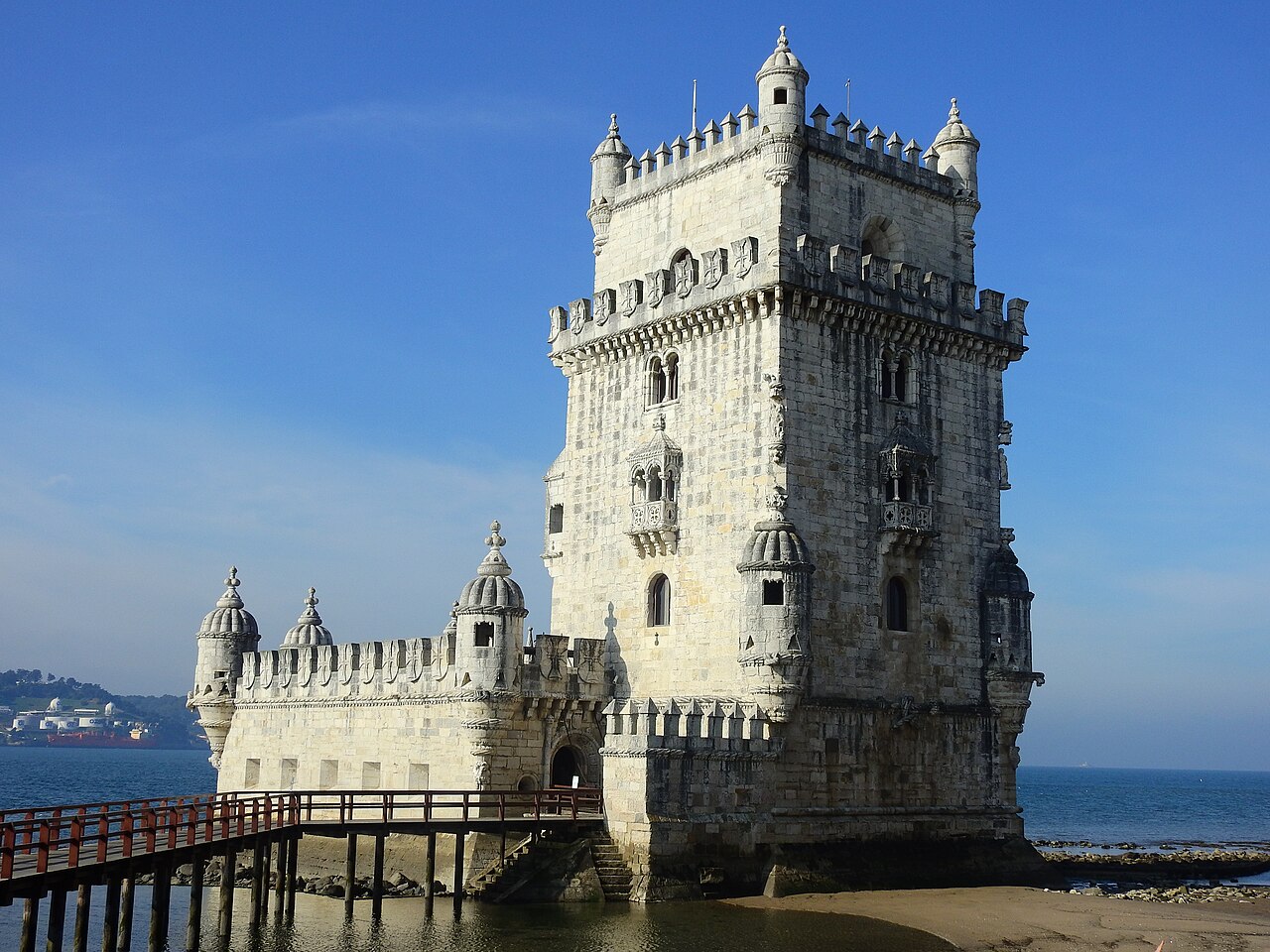
Belém Tower, also known as Torre de Belém or officially Torre de São Vicente, is one of the most iconic landmarks in Lisbon, Portugal, and a celebrated symbol of the city's maritime heritage. Situated on the northern bank of the Tagus River in the Lisboa region, this fortified tower was constructed during the early 16th century and remains a prime example of the distinctive Manueline architectural style, which flourished during the Portuguese Age of Discoveries. The tower was commissioned initially by King John II of Portugal in the late 15th century as part of a strategic defense system to protect Lisbon from naval attacks. Although John II passed away before plans were finalized, his successor, King Manuel I, revived the project around 1514. The construction was completed by 1519 under the direction of the architect Francisco de Arruda, who infused the fortress with elaborate Manueline decorative elements that blend maritime motifs with Gothic and Renaissance influences. Architectural design and features Belém Tower was originally built as a four-storey tower on a small rocky island at the mouth of the Tagus River. The structure is primarily constructed from lioz limestone, a dense, durable stone native to the Lisbon region, which has helped preserve the tower's intricate carvings and robust form over centuries. The tower consists of a bastion and a tall keep, reaching approximately 30 meters in height. The bastion was added shortly after the initial construction, around 1571, to enhance the tower's defensive capabilities against evolving military threats. This riverside bastion features rounded watchtowers topped with ornate Moorish-style domes, which are among the tower's most distinctive visual elements. The main tower is adorned with numerous Manueline motifs, including twisted ropes, armillary spheres, crosses of the Order of Christ, and maritime symbols such as anchors and sea creatures. The windows and balconies display finely carved stonework, combining elements of Venetian Gothic with traditional Portuguese design. The tower also includes an arched loggia, which offers panoramic views of the river and surrounding landscape. Interior layout and defensive structures Inside, the tower contains several levels with distinct functions. The ground floor originally housed the gunpowder magazine and storage rooms. The upper floors accommodated the garrison's quarters, the governor's chamber, and a chapel. The top level features a terrace and bartizans (small overhanging turrets) that provided vantage points for lookouts and artillery placement. The tower's dungeons were used as a prison from the late 16th century until the early 19th century. Its strategic position allowed it to control maritime traffic entering Lisbon, serving as both a defensive fortification and a ceremonial gateway welcoming explorers returning from overseas voyages. Historical significance and transformations Belém Tower played a crucial role during the Portuguese Age of Discoveries, a period marked by extensive overseas exploration and expansion. It was part of a larger defensive network guarding Lisbon, which was then one of the most important ports in Europe. In 1580, during the Iberian Union, the tower's garrison surrendered to Spanish forces after a brief confrontation. Subsequently, the bastion was rebuilt and reinforced in the 1580s to strengthen its defenses. The tower's military importance declined over the centuries, but it remained a symbol of Portugal's maritime prowess. During the Peninsular War (1808–1814), French troops occupied Lisbon and used Belém Tower as a military post. The tower also functioned as a customs house for ships until 1833, after which it gradually fell into neglect. In the mid-19th century, the tower was restored to preserve its historical and architectural legacy. The devastating 1755 Lisbon earthquake had altered the course of the Tagus River, connecting the tower to the mainland rather than leaving it on a small island as originally built. This change significantly affected the tower's defensive role but enhanced its accessibility and symbolic presence. Belém Tower today: cultural heritage and tourism Today, Belém Tower is recognized as a UNESCO World Heritage Site, alongside the nearby Jerónimos Monastery, for its outstanding contribution to the maritime history of Portugal and its exceptional architectural value. The tower attracts millions of visitors annually, drawn by its scenic location overlooking the Tagus River and its rich historical significance. Visitors can explore the tower's interior, including its battlements, chambers, and terraces, which offer spectacular views of the river and the city skyline. Due to limited space inside, visitor numbers are controlled, and queues can be long during peak tourist seasons. The tower is accessible for a fee, and guided tours provide in-depth insights into its history and architecture. Belém Tower continues to captivate tourists and historians alike with its blend of defensive architecture and ornate decoration. Its role as a maritime sentinel and symbol of Portugal's Age of Discoveries makes it an indispensable part of Lisbon's cultural landscape.

Late Medieval (14th–15th c.)
Details
10.3 km
Castle of the Moors — Portugal castle

Castle of the Moors

Sintra, Portugal

The Castle of the Moors is a striking hilltop medieval castle situated in the civil parish of Santa Maria e São Miguel, within the municipality of Sintra, approximately 25 kilometers northwest of Lisbon, Portugal. This fortress stands prominently amidst the lush, verdant forests of the Serra de Sintra, offering commanding views over the surrounding landscape, including the Tagus River valley and the town of Sintra itself. The castle is a significant historical monument, reflecting the complex cultural and military history of the Iberian Peninsula during the early Middle Ages and the Reconquista period. Constructed originally by the Moors in the 8th and 9th centuries, the castle was strategically positioned to guard the town of Sintra and to oversee the important routes and fertile lands of the region. The Moors, who were North African Muslim conquerors, established this fortress as part of their defensive network in the Iberian Peninsula. The castle's location was chosen for its natural defensive advantages, perched on a rocky hilltop that allowed for early warnings of approaching enemies and control over the surrounding territory. Architectural features and fortifications The castle's fortifications include extensive walls that stretch over the hilltop, encompassing an irregular perimeter adapted to the natural contours of the terrain. These walls are punctuated by several towers and battlements that provided vantage points for surveillance and defense. The castle's design is characterized by robust stone masonry typical of early medieval military architecture, with thick curtain walls and crenellated parapets. The remains of the main gate and several towers still stand, offering insight into the castle's defensive capabilities. Within the castle walls, there are remnants of various structures, including a chapel built in the 12th century during the Christian period, which served as the parish seat for a time. The castle also housed residential quarters and storage facilities necessary for sustaining a garrison during sieges. The layout reflects the dual function of the castle as both a military fortress and a small fortified settlement. Historical significance and timeline The Castle of the Moors played a pivotal role during the Reconquista, the centuries-long series of campaigns by Christian kingdoms to reclaim territory from Muslim rule. It was captured briefly by Christian forces led by King Alfonso VI of Castile in 1093 but was retaken by the Moors the following year. The castle's most significant change of hands occurred in 1147 during the second Christian crusade, when a much larger crusading army successfully seized it following the fall of Lisbon. This event marked the castle's integration into the emerging Portuguese kingdom. Following the Christian conquest, the castle underwent various modifications and expansions, particularly under the reigns of King Sancho I and King Ferdinand I in the 12th and 14th centuries respectively. These improvements enhanced the castle's defensive structures to adapt to evolving military technologies and threats. However, over the centuries, the castle's military importance waned as the population gradually moved to the nearby town of Sintra. By the 15th century, the castle had largely lost its strategic value and was inhabited primarily by a small Jewish community until their expulsion under King Manuel I in the early 16th century. The castle fell into disuse and suffered significant damage from natural disasters, including a devastating fire caused by lightning in 1636 and the catastrophic 1755 Lisbon earthquake, which severely damaged the walls and the chapel. 19th-century restoration and romanticism In the 19th century, the castle was rediscovered and romanticized by King Ferdinand II of Portugal, an avid patron of the arts and architecture. Fascinated by medieval history and aesthetics, he initiated a restoration project to preserve and enhance the ruins, transforming the site into a picturesque romantic ruin. This restoration was part of a broader movement in Sintra, including the construction of the nearby Pena Palace, which celebrated medieval and Gothic revival styles and contributed to Sintra's reputation as a cultural and architectural landmark. King Ferdinand II's work included reinforcing the existing walls, reconstructing parts of the battlements, and landscaping the surrounding grounds to create a contemplative environment for visitors. His vision was to integrate the castle ruins into the natural beauty of the Sintra hills, making it a key attraction within the Sintra Cultural Landscape, which is now recognized as a UNESCO World Heritage Site. Cultural and touristic importance today Today, the Castle of the Moors is a well-preserved historical monument and a popular tourist destination. Visitors can explore the extensive ramparts, climb the towers, and enjoy panoramic views of Sintra, the Atlantic coast, and Lisbon in the distance. The castle's rugged ruins, intertwined with dense forest vegetation, create a unique atmosphere that contrasts with the more ornate palaces and estates in the area. The castle is part of the Sintra Cultural Landscape, a protected area that includes several palaces, gardens, and natural parks. Its designation as a National Monument underscores its importance in Portuguese heritage and history. The site is accessible to the public and offers educational opportunities about medieval military architecture, the history of the Reconquista, and the cultural synthesis of Moorish and Christian influences in Portugal. Visiting the castle Visitors to the Castle of the Moors can walk along the preserved walls and towers, which provide excellent vantage points for photography and sightseeing. The castle's location on a hilltop requires some physical exertion to reach, but the paths are well-maintained. Informational signage throughout the site helps contextualize the historical and architectural significance of the ruins. The castle is often combined with visits to other nearby attractions in Sintra, such as the Pena Palace and the Quinta da Regaleira, making it a key part of the region's cultural tourism circuit. Seasonal events and guided tours are sometimes offered to enrich the visitor experience.

Early Medieval (5th–10th c.)
Details