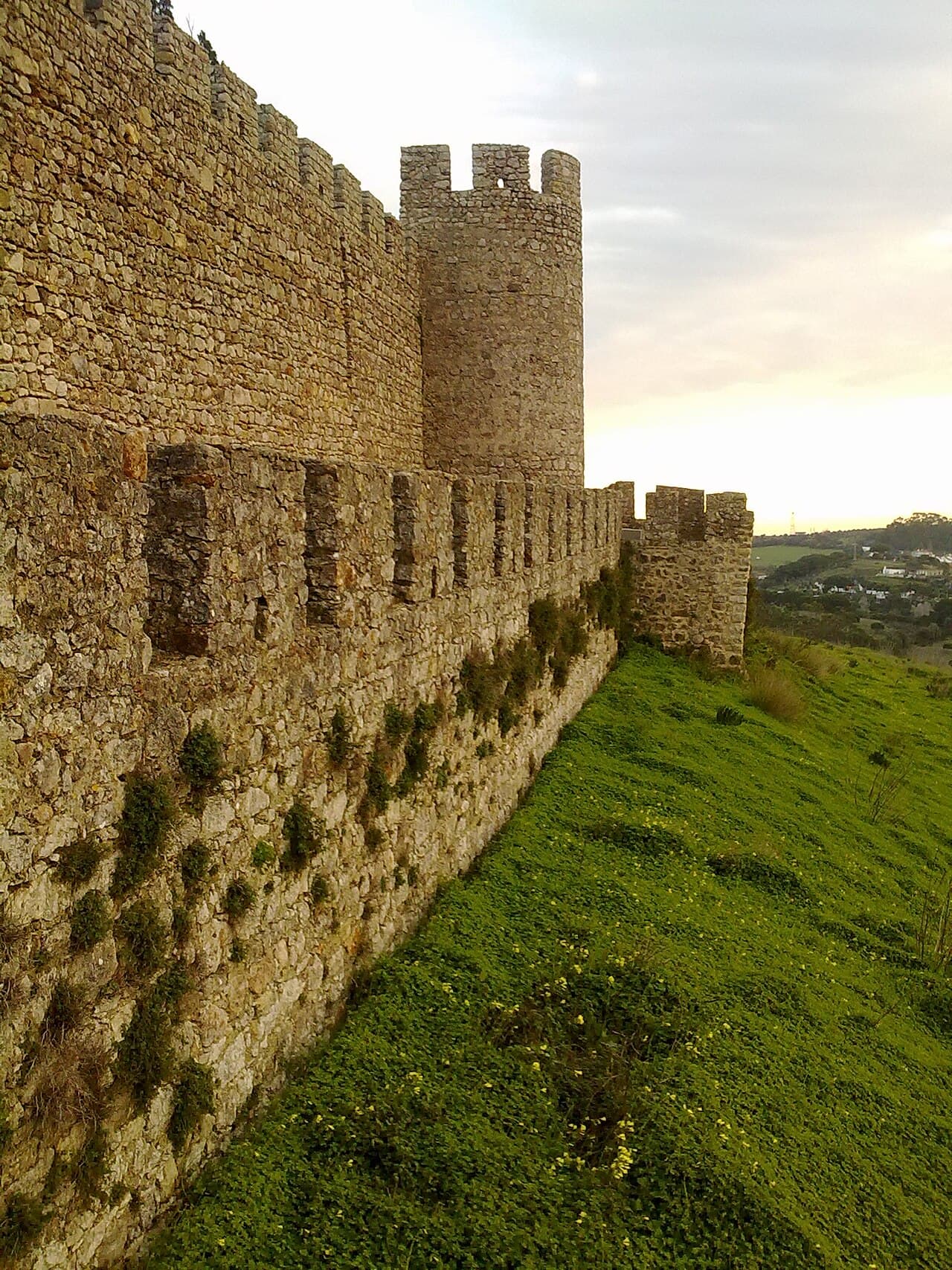
Castelo de Santiago do Cacem
Castelo de Santiago do Cacém stands as a remarkable example of a Moorish fortress dating back to the 10th century, located in the town of Santiago do Cacém in southern Portugal. This early medieval castle played a pivotal role during the turbulent period of the Iberian Peninsula's Reconquista, witnessing the ebb and flow of Christian and Muslim control over the region.
Origins and Moorish construction
The castle was originally constructed by the Moors during their occupation of the Iberian Peninsula. Its strategic position atop a hill provided commanding views over the surrounding landscape, allowing control over important routes and the nearby Atlantic coastline. The fortress was designed with typical early medieval military architecture in mind, featuring robust stone walls and defensive towers to withstand sieges.
The reconquest and Christian control
During the 12th century, the castle became a focal point in the Christian efforts to reclaim territory from Muslim rule. In 1157, the forces of Afonso I of Portugal (reigned 1112–1185), the first king of Portugal, successfully captured Santiago do Cacém for the first time. This victory was part of a broader campaign to expand Portuguese territory southwards.
Following its capture, the castle underwent modifications to reinforce its defenses and accommodate the needs of its new rulers. It served as a military stronghold and administrative center, overseeing the surrounding lands and protecting the local population.
Decline after the Portuguese Restoration War
Despite its early importance, the castle's strategic value diminished after the Portuguese Restoration War in the 17th century, which restored Portugal's independence from Spanish rule. As military technology and political boundaries evolved, the fortress lost its critical defensive role.
By the 18th century, specifically in 1759, the castle and its lands returned to direct crown control. However, the fortress was gradually abandoned, leading to its deterioration and partial ruin.
Later uses and preservation efforts
In the 19th century, the castle grounds were repurposed as the town's cemetery, reflecting its transition from a military site to a community space. This change contributed to the loss of some original features but also preserved the site from complete destruction.
Recognizing its historical and cultural significance, the Portuguese government declared Castelo de Santiago do Cacém a national monument on 23 June 1910. Since then, various restoration projects have been undertaken, particularly funded by the Direcção Geral dos Edifícios e Monumentos Nacionais (DGEMN), to stabilize and preserve the remaining structures.
Architectural features and layout
The castle exhibits characteristics typical of early medieval Moorish fortifications, including thick curtain walls punctuated by towers that provided vantage points for surveillance and defense. The layout likely included a keep or main tower serving as the last line of defense and a residence for the lord or military commander.
Remnants of the original gatehouse and sections of the defensive walls remain visible, offering insight into the castle's former strength. The use of local stone materials and the adaptation to the hilltop terrain demonstrate the builders' strategic and practical considerations.
Visiting Castelo de Santiago do Cacém today
Today, the castle ruins are accessible to visitors interested in medieval history and Moorish architecture. The site offers panoramic views of the surrounding countryside and the town below, making it a popular destination for cultural tourism in the Alentejo region.
Ongoing conservation efforts ensure that the castle remains a valuable heritage site, preserving its legacy for future generations. Visitors can explore the remains of the walls and towers, imagining the castle's role in the complex history of Portugal's formation.
Frequently asked questions (FAQ)
- When was Castelo de Santiago do Cacém originally built?
- Castelo de Santiago do Cacém was originally constructed by the Moors in the 10th century, during the early medieval period.
- What role did the castle play during the Reconquista?
- The castle was a key military stronghold during the Reconquista, captured by Afonso I of Portugal in 1157 as part of the Christian efforts to reclaim territory from Muslim rule.
- Is Castelo de Santiago do Cacém open to visitors?
- Yes, the castle ruins are open to visitors who can explore the remains and enjoy panoramic views of the surrounding region.
- What architectural features are notable at Castelo de Santiago do Cacém?
- Notable features include thick stone curtain walls, defensive towers, and remnants of the gatehouse, typical of early medieval Moorish fortifications.
- Why did the castle lose its strategic importance?
- The castle lost strategic importance after the Portuguese Restoration War in the 17th century, as military technology and political boundaries evolved.

Information
Sources & official resources
Verify the information above using these authoritative references.
Loading map...
Visitor reviews
No reviews yet. Been here? Write the first review and help other travelers!
Write the first reviewVisited this castle? Share your experience
Your review helps other travelers and adds first-hand knowledge to our encyclopedia.



