Castello di Villincino
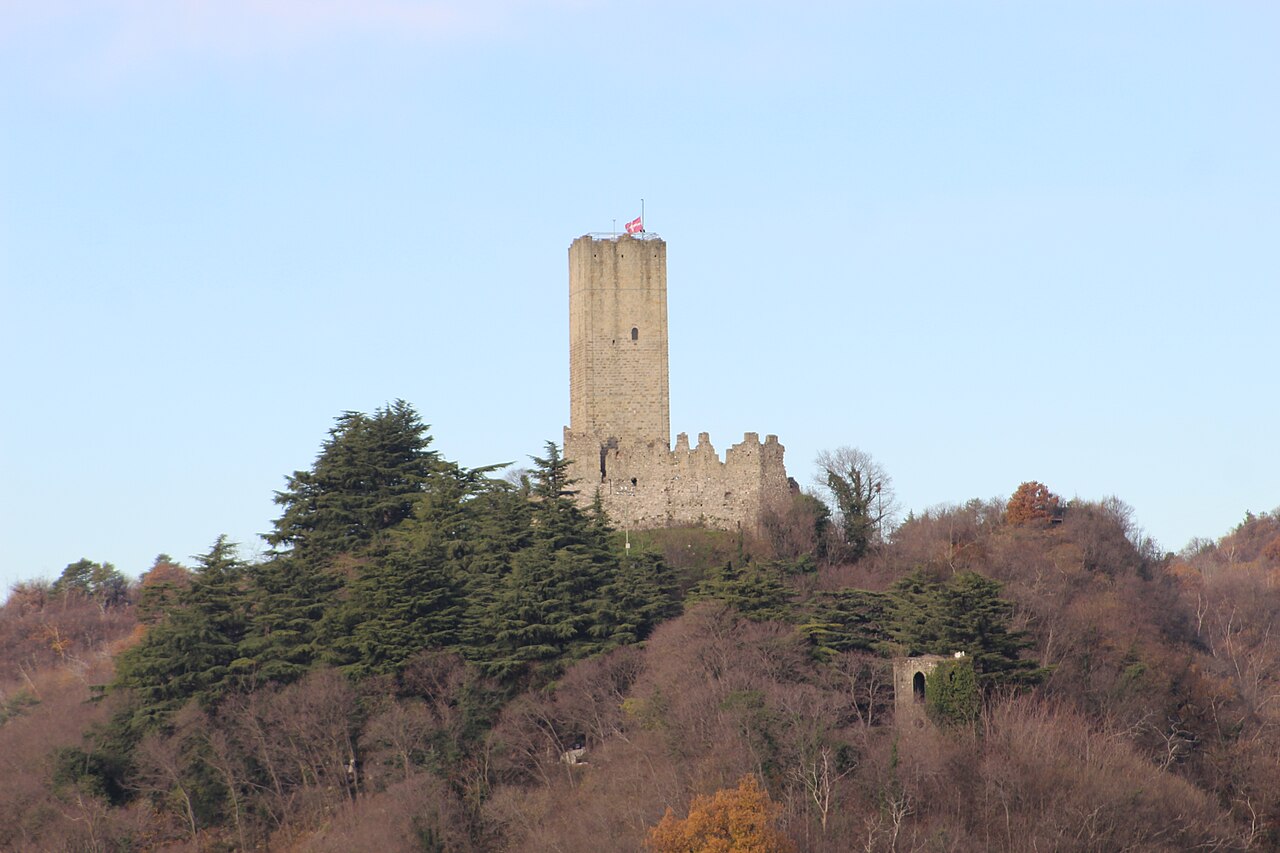
The Castello di Villincino stands as a significant medieval hill castle located in the town of Erba, Italy. Established in the early centuries of the Middle Ages, around the 10th century, this fortress originally functioned as a small fortified settlement, or "castello di borgo," designed to protect the local population from external threats. Its strategic position on elevated terrain allowed it to serve as a defensive stronghold during turbulent times, particularly guarding against incursions by Hungarian raiders who posed a serious threat to northern Italy during that era.
Early history and military significance
During its formative years, the Castello di Villincino played a crucial role in the defense of the surrounding region. The fortress was integral in safeguarding the area from the frequent Hungarian raids that challenged the stability of northern Italian territories. As the political landscape shifted, the castle's military importance grew, especially during the communal wars that embroiled the city-states of Como and Milan. The castle was notably involved in events linked to the Battle of Carcano, a key conflict illustrating the intense power struggles between these rival cities in the medieval period.
Ownership and noble connections
The castle was initially under the control of the Carpani family, a noble lineage prominent in the region through the late Middle Ages. Their influence is evidenced by the nearby Stallazzo residence, which belonged to the last known member of the family. Around this residence, a distinctive portico with pointed arches was constructed in the late 14th century, reflecting the architectural styles and residential expansions linked to the castle complex during that time. This feature highlights the dual military and residential functions the site assumed as it evolved.
Transformation and later uses
Following the Battle of Desio in the early 15th century, the fortress was abandoned as a military installation. The decline in its defensive role coincided with broader political changes in northern Italy. By the 16th century, the castle found a new purpose as a residence for clerical figures, marking a shift from military to religious habitation. This transition illustrates the adaptability of the site and its continued relevance within the local community. In 1810, the castle was sold at a public auction to a member of the Casati family, signaling its passage into private ownership and a new chapter in its history.
Architectural features and remaining structures
The surviving remains of Castello di Villincino offer valuable insights into its medieval architecture, primarily dating from the 13th and 14th centuries. The castle's layout is centered on robust stone construction, typical of fortifications designed to endure sieges and raids. Among the most notable features is the main entrance portal, which is vaulted and topped by a bifora window. This window, divided vertically into two openings and supported by a marble column from the renowned Candoglia quarries, exemplifies the castle's architectural refinement.
The pusterla tower
Close to the entrance, the Pusterla tower remains remarkably intact. Constructed with exposed stone, it features several small pointed-arch windows that balance defense with the need for light and ventilation. The tower's entrance is framed by a granite portal, and above it sits a rustic loggia, a covered exterior gallery that may have served for observation or practical purposes. Its proximity to the former tax collector's house underscores its strategic administrative and defensive roles.
The stallazzo and portico
Adjacent to the Stallazzo residence, the portico with pointed arches constructed in the late 14th century reflects the blending of military and residential architecture within the castle complex. This element adds to the site's architectural diversity and illustrates the evolution of the castle from a purely defensive fortress to a noble residence.
Archaeological finds and cultural significance
Archaeological discoveries at the site, such as an Early Middle Ages fork found near the Pusterla tower, provide tangible evidence of the daily life and material culture associated with the castle's early occupation. This artifact, preserved in the Civic Museum of Erba, enriches our understanding of the castle's historical context and the people who lived there.
Overall, Castello di Villincino embodies the historical trajectory of many northern Italian fortresses, transitioning from a defensive stronghold to a noble residence and later a religious retreat. Its architectural remnants and artifacts offer a coherent narrative of adaptation and resilience through centuries of regional conflict and changing social functions.
Visiting castello di villincino today
Today, the castle remains a site of interest for historians, architects, and visitors intrigued by medieval military architecture and northern Italy's rich history. While the castle is primarily in a ruined state, the surviving structures such as the Pusterla tower and main entrance portal provide a compelling glimpse into its past grandeur. The site is accessible to the public, often visited for its historical ambiance and scenic hilltop location overlooking the town of Erba.
Access and visitor information
Visitors to Castello di Villincino can explore the ruins and appreciate the blend of military and residential architecture. The castle's location in Erba makes it accessible from nearby cities, and its historical significance is often highlighted in local cultural tours and heritage events. While facilities may be limited due to its ruinous condition, the site offers a valuable educational experience for those interested in medieval fortifications and the history of Lombardy.
Frequently asked questions (FAQ)
- How do I get to Castello di Villincino?
- Castello di Villincino is located in Erba, Italy, and can be reached by car or local transport from nearby cities such as Milan and Como. The castle is situated on a hill, so be prepared for a short uphill walk to reach the site.
- What is the historical significance of Castello di Villincino?
- The castle played a key defensive role during the early Middle Ages, protecting the area from Hungarian raids and later serving as a military base in the communal wars between Como and Milan. It also reflects the region's transition from medieval fortification to noble residence and religious site.
- Can I visit the Pusterla tower?
- Yes, the Pusterla tower is one of the best-preserved parts of the castle and is accessible to visitors. It features distinctive pointed-arch windows and a rustic loggia, offering insight into medieval military architecture.
- Is Castello di Villincino suitable for families and children?
- The castle ruins can be explored by families, but visitors should be cautious as the site is in a ruinous state with uneven terrain. Supervision is recommended for children, and appropriate footwear is advised.
- When is the best time to visit Castello di Villincino?
- The best time to visit is during the spring and autumn months when the weather is mild, allowing comfortable exploration of the hilltop ruins. Summer can be warm, and winter visits may be challenging due to weather conditions.
Information
Loading map...
Visitor reviews
No reviews yet. Been here? Write the first review and help other travelers!
Write the first reviewVisited this castle? Share your experience
Your review helps other travelers and adds first-hand knowledge to our encyclopedia.